Hepper is reader-supported. When you buy via links on our site, we may earn an affiliate commission at no cost to you. Learn more.
Guinea Pig Pregnancy: Stages of Reproduction & Care (Vet-Approved)


In this article
It can be difficult to tell when a guinea pig is pregnant, but if you at least suspect that your guinea pig is expecting, the first thing that you should do is consult your vet.
If they confirm the pregnancy, you’ll then want to become familiar with its stages so you can care for and support your pet during this time.
Here’s a week-by-week look at the stages of guinea pig pregnancy, in addition to any issues that might occur. You will be prepared for the onslaught of adorable little bundles of fluff in no time!

How Long Are Guinea Pigs Pregnant?
Guinea pigs (also called cavies) are pregnant longer than many other small animals. The pregnancy can range from 59 to 72 days, averaging 68 days (roughly 9 weeks).
They can have between one and eight offspring, with the average being three to four pups in a litter.
The 5 Stages of a Guinea Pig's Pregnancy
1. Early Stages (Weeks 1–3)
During this time, it can be challenging to determine if your guinea pig is pregnant. Once you have established that she is, she should eat and drink as much as she wants.
You’ll need to offer alfalfa hay in addition to her regular grass hay, as it is richer in nutrients, including calcium and protein, which are necessary for her growing pups.
You might find your sow (female guinea pig) eating more and preferring fruits and veggies high in vitamin C during this time.
2. Middle Stages (Weeks 4–6)
At about 21-24 days, the pups will be visible on ultrasound, which is when your vet can check on their development.
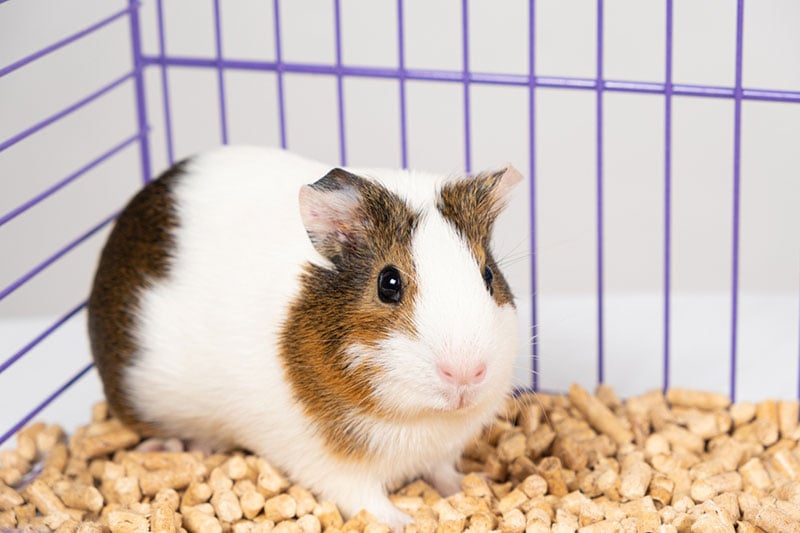
Your cavy should be noticeably larger at this stage, but how large she gets depends on how many pups she carries. By weeks 5 and 6, her abdomen and hindquarters should be more prominent.
You should weigh her every week to monitor her weight to see that she’s gaining steadily. Weight gain that happens too quickly can lead to complications, as can losing weight.
3. Late Stages (Weeks 7–9)
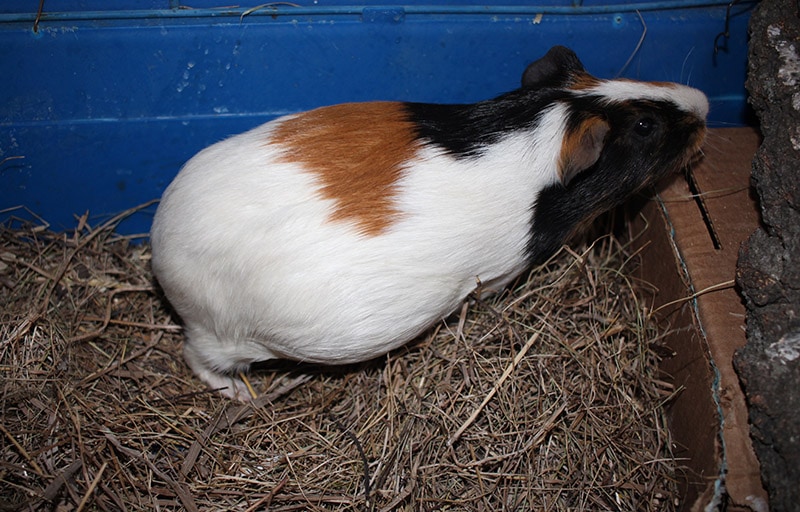
By week 7, you should be able to feel and see the pups moving, and her abdomen will be quite distended. She might have difficulty getting around in these later stages of her pregnancy.
At this point, she must be kept in a stress-free environment, which includes removing any boars (males) from the enclosure.
Don’t remove the sow from her regular cage, though, as you’ll want things to remain familiar for her. The less stress for her, the easier the birth will be.
4. The Week Before Birth
Unlike many other animals, guinea pigs don’t create a nest for their upcoming birth, so you’ll want to provide your guinea pig with a comfortable space.
Add a soft, small blanket to where she sleeps, and place a towel or blanket over the cage on the side, also where she sleeps. You’ll want to do spot cleaning every day without removing your cavy.
Try not to handle her at this time in order to avoid stressing her out.
5. Labor and Birth
Most guinea pigs give birth at night or in the early morning, and most of the time, labor typically only lasts about 15-30 minutes. The sow will lick and ingest the amniotic sacs on her pups, along with the placenta.
If your guinea pig is in labor for more than 30 minutes without producing any pups or showing signs of distress, you’ll need emergency veterinary help. It’s likely a cesarean section will be necessary.
Signs of Pregnancy
Before any of this occurs, you’ll need to know if your guinea pig is pregnant or not. If your female cavy was housed with an intact male, she’s likely pregnant. As the pups develop, you’ll notice the following signs:
- An increase in appetite and thirst
- A belly that has visibly grown
- Weight gain
- Lumps that you can see and feel in the abdomen
The best way to tell if your guinea pig is pregnant is to take her to your vet for an ultrasound, though the pups will be more noticeable when the sow has been pregnant for about 21 days.
Complications
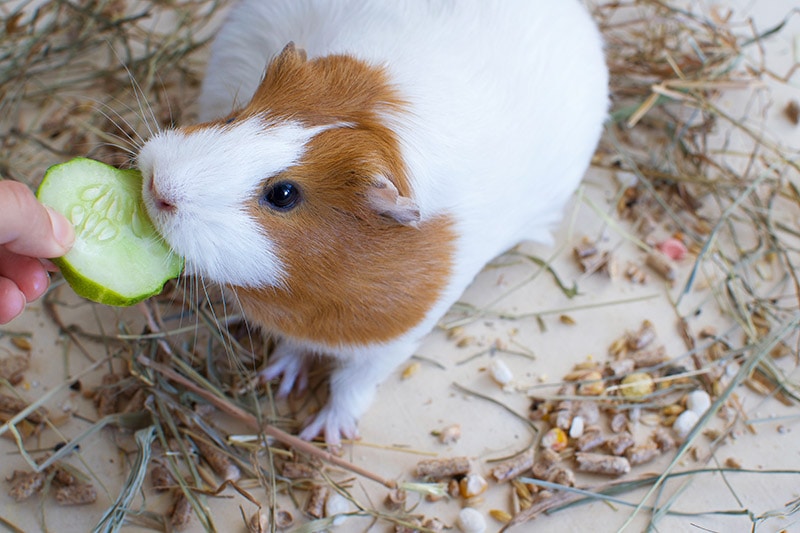
Unfortunately, there can be complications that crop up during pregnancy and birth. It’s critical that you’re familiar with these conditions so you can act swiftly if the unthinkable occurs.
Pregnancy Toxemia
Pregnancy toxemia is also known as ketosis, which is a serious condition that can occur in the last several weeks of pregnancy or shortly after giving birth. It’s when the body produces too many ketones.
It commonly affects cavies that are pregnant with their first or are obese or carrying large litters. Unfortunately, some guinea pigs die from ketosis without any signs of trouble, but others will show the following signs:
- Loss of appetite
- Loss of energy
- No desire to drink
- Muscle spasms and tremors
- Clumsiness and disorientation
- Coma
- Death (occurs within 5 days of a coma)
The best way to prevent ketosis is to ensure that your guinea pig is eating high-quality and nutritious food over the course of the pregnancy.
Closely monitor her weight and appetite, particularly in the last 3 weeks of the pregnancy. Speak to your veterinarian if you notice any changes.
Labor Dystocia
If your guinea pig is in labor for more than 30 minutes without producing any pups, she might be experiencing labor dystocia, which means “difficult labor.”
It can happen if a pup gets stuck in the birth canal due to the pelvic bones fusing. This can occur when a guinea pig ages or is a first-time mother that is over 7 months of age. After that, the fibrocartilaginous joint stiffens and cannot stretch enough to allow the pups to pass.
Other signs of dystocia are:
- Labor lasting more than 40 minutes
- Labor hasn’t begun after the due date
- Only part of a pup emerges but doesn’t progress
- Excessive straining without any results
- Significant bleeding while in labor
- Extreme pain while in labor
This is an emergency situation, so the moment that you see your guinea pig struggling, take her to the vet immediately. She will need medical help to remove the pups, and a C-section might be necessary.
Guinea Pig Litters
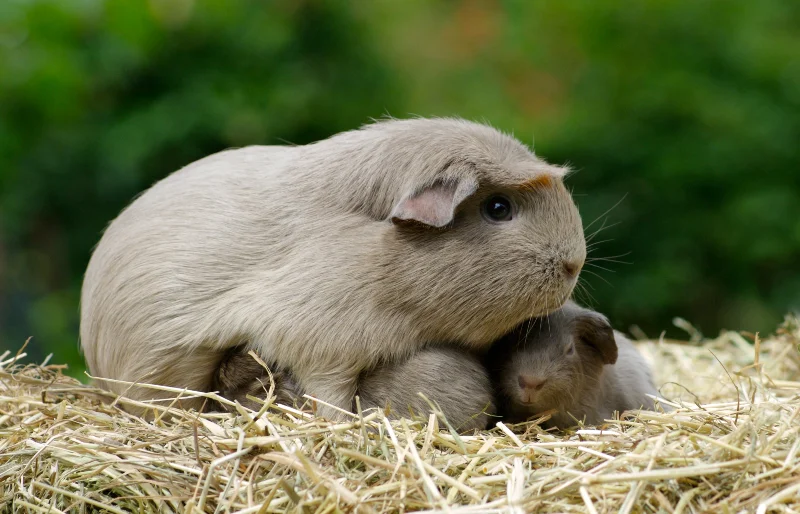
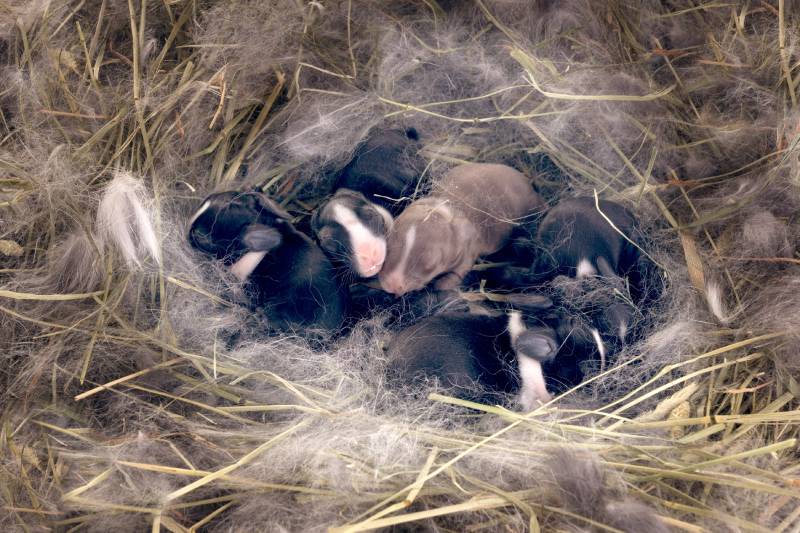
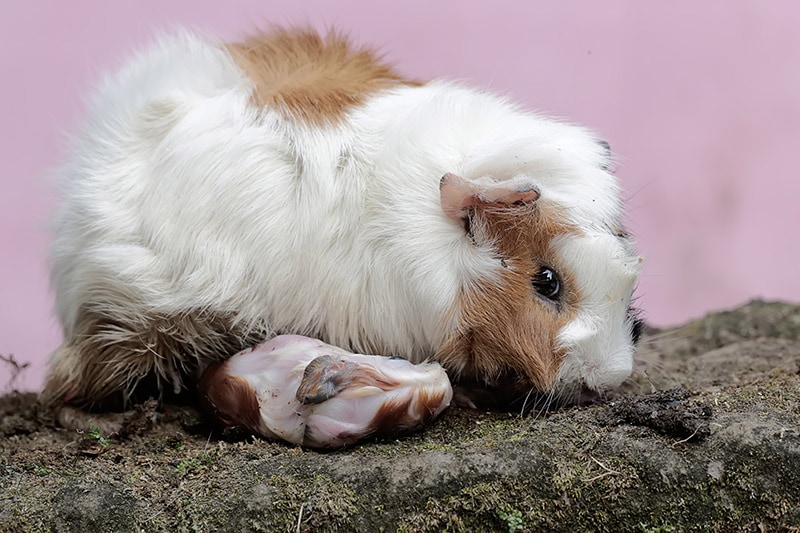
Guinea pig pups are born precocial. This means that unlike many other species (cats, dogs, rabbits, etc.), the pups are born practically ready to go. Their eyes and ears are open, they have fur, and they can start eating solid food shortly after birth.
Birth weights should be around 1.7 to 3.5 ounces (large litters will have small babies and vice versa). If a pup is under 1.4 ounces, they will require supplementation.
They will nurse from their mother for the first 21 days. After that, you should determine the sexes and remove the males from the females to avoid more pregnancies.
The pups should be weighed every day to ensure that they are gaining weight. They should be seen by the vet if they seem sick or aren’t eating or gaining weight.
Conclusion
Guinea pigs are pregnant for up to 9-10 weeks, though how long they are pregnant depends on the size of the litter. The fact that the pups come out nearly fully formed is due to the length of the pregnancy.
Of course, it is usually easy to tell if your cavy is pregnant when she’s a few weeks away from giving birth–your little potato will look more like a little pear!
But as long as you feed her well and watch her carefully and have your vet on standby, before you know it, you’ll have a whole bunch of super cute mouths to feed!
Sources
Featured Image Credit: Rabiul Hasan Rajon, Shutterstock
Get Hepper In Your Inbox


Pet care tips from our vets and experts, straight to your inbox.
You may opt-out at any time. View our Privacy Policy for more information.
Kathryn was a librarian in a previous lifetime and is currently a writer about all things animals. When she was a child, she hoped to work in zoos or with wildlife in some way, thanks to her strong love for animals. Unfortunately, she's not strong in the sciences, so she fills her days with researching and writing about all kinds of animals and spends time playing with her adorable but terribly mischievous tabby cat, Bella. Kathryn is hoping to add to her family in the near future – maybe another cat and a dog.
Join the conversation
Ask a question, share your story, or send private feedback.