Hepper is reader-supported. When you buy via links on our site, we may earn an affiliate commission at no cost to you. Learn more.
Can I Have a Cat if I Have Asthma? Facts & FAQ

In this article
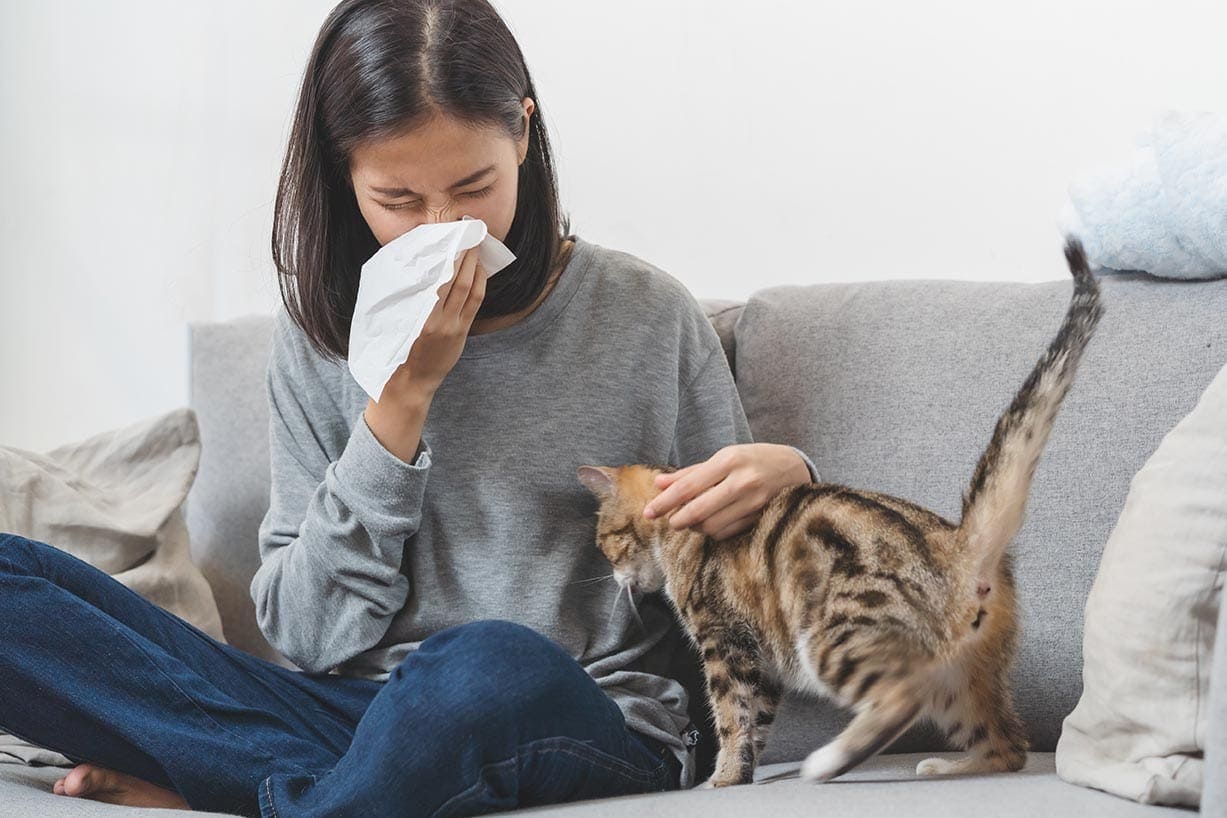
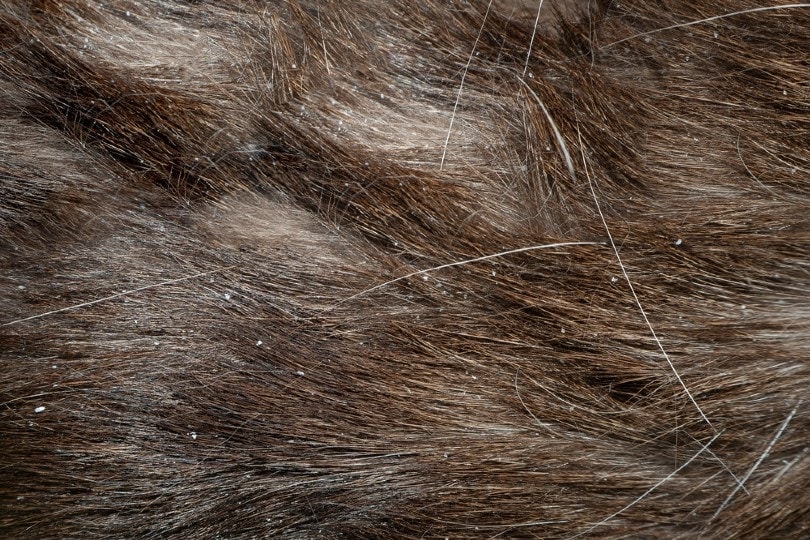
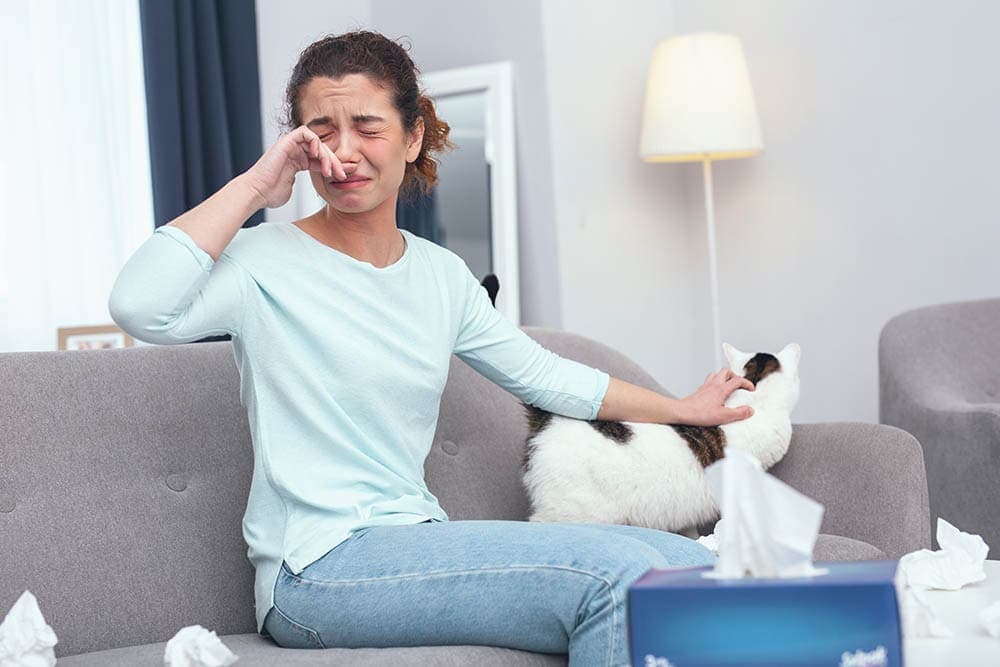
Asthma can be triggered by all kinds of things, including allergens, and sadly, cats are a huge producer of allergens. The proteins found in a cat’s dander, urine, and saliva can be a huge sticking point for many suffering from asthma. Breathing in these allergens can lead to asthma symptoms for many.
The sensitivity to these allergens does vary from person to person. Some are extremely sensitive and can have an allergic reaction even if the cat isn’t there. The dander floating through the air from a cat’s recent exploration can be enough to set off some people’s asthma symptoms.
Others basically have to rub the cat on their face and breath deeply to be affected, though. And yet others aren’t affected by cat allergens at all, even if their asthma is triggered by other allergens.
Either way, even if you are sensitive to your cat’s dander, you likely don’t want to give them up. Many cat owners do not wish to part with their cats, even if they are the cause of their asthma.
Luckily, you don’t have to necessarily part from your cat—even if your asthma is irritated by them.

Is All Asthma Allergy-Induced?
There are many people with asthma that are completely fine with cats because their asthma is not induced by allergens. In fact, the vast majority of people with asthma likely are not going to have a reaction to a cat.
Allergy-induced asthma is characterized as asthma that is caused when you come into contact with allergens. The exact allergens you may react to vary. Some people react to cats, while others will not. The severity of your symptoms will also differ.
This is an extremely personal disease, so you’ll have to make a point to understand your body and symptoms before moving forward.

Why Do Cats Cause Asthma Symptoms?
All cats produce proteins. These proteins literally make up their body, especially their skin, urine, and saliva. Sometimes, our immune system confuses these proteins for attackers and sets off an immune response. In some cases, this response can lead to asthma.
Cats actually make several different types of proteins. You may only be allergic to one or two. For instance, most people are allergic to Fel D1, which also happens to be the one that cats make the most of. However, if you’re allergic to a different one that is made in lesser quantities, you may not actually have many symptoms around your cat.
Treatment
Sadly, the only way to completely prevent allergy-induced asthma when you’re allergic to cat dander is to remove the cat from your home. Of course, many cat owners do not want to do this. Plus, even if you do, the dander may settle in your home for years, so you’ll likely keep experiencing symptoms.
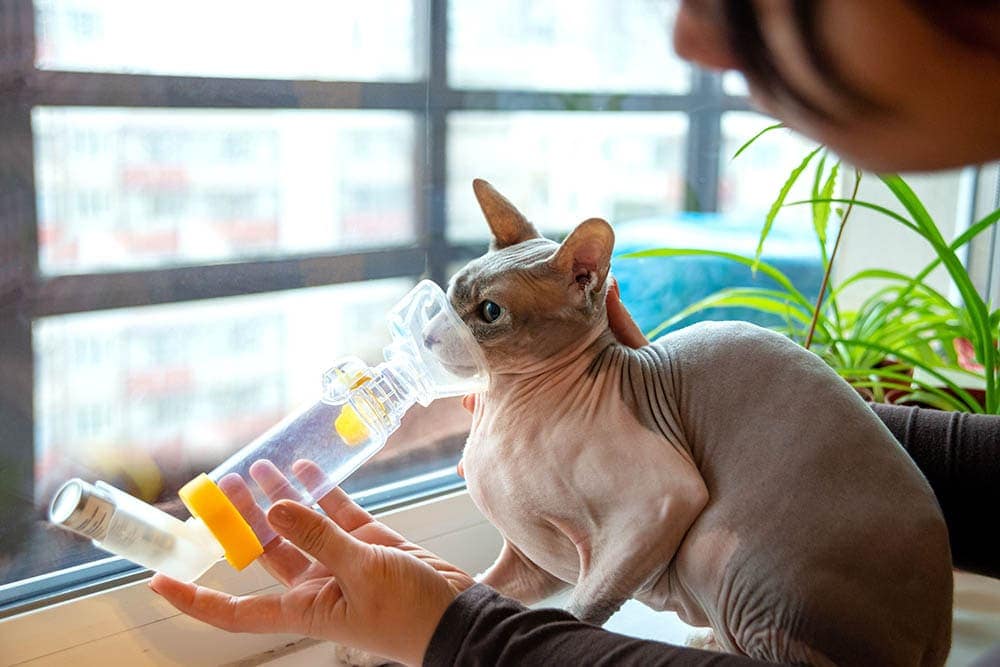
Luckily, there are several treatments that can potentially lessen your symptoms:
Lifestyle Changes
On top of medications, you can also make many lifestyle changes to reduce the number of allergens you come into contact with. This is true even if you decide to keep your feline.
- Create a cat-free zone. Keep your cat out of your bedroom to reduce the allergens you come into contact with. You spend a lot of time sleeping in your bedroom, so you can effectively cut your exposure by half by making it a cat-free zone.
- Replace your carpets. Carpets and other soft surfaces hold in allergens. Instead, opt for hard floors that are easier to remove dander from.
- Use a HEPA air filter. An air filter is designed to remove allergens from the air. Therefore, by installing one in your home, you can reduce the amount of dander that hangs around.
- Clean regularly. Vacuuming can remove allergens from your environment, reducing the odds of you developing asthma symptoms.
- Change your clothes regularly. Your clothes also tend to hang onto dander which can further your symptoms. We highly recommend that you change your clothes after hanging out with your cat to reduce exposure.
- Bathe your feline. Yes, cats do not like baths. However, bathing your feline can remove dander and saliva from their fur, which can further reduce allergens.
- Give your cat medicine. Sometimes, doctors recommend using a low dose of acepromazine, which may reduce the allergens your cat produces in their saliva. However, doing this long-term has not been well studied.
- Try a dander-neutralizing shampoo. Some cat shampoos are specifically designed to reduce allergens.
What About Hypoallergenic Cats?
While the term hypoallergenic was originally used to refer to dogs, scientists have quickly figured out that hypoallergenic dogs don’t exist. All dogs produce allergens. It really doesn’t matter how much they shed, since hair isn’t what causes allergic reactions.
However, cats are a different story. Science has found that certain cats produce less Fel D1 than others, which means that they are less likely to cause allergy symptoms.
For instance, the Siberian cat has been shown to have some genetic variation that limits the production of Fel D1. In other words, some Siberians may produce less Fel D1 than the average cat.
Balinese cats are also thought to have less Fel D1 protein than others, but this is not well studied or proven.
The best way to determine if a particular cat produces lots of Fel D1 is to spend lots of time with that particular cat before adoption. If you don’t experience symptoms after plenty of time with the cat, then you probably don’t have to worry about having a reaction later on.

Conclusion
Just because you have asthma does not mean that you have to get rid of your pet. In fact, only those with allergy-induced asthma will develop symptoms when around allergens—and only a small subset of those individuals will react specifically to cats.
Therefore, the odds of you needing to give up your cat due to allergy diagnoses is quite low.
Plus, there are lots of medications and lifestyle choices you can make to reduce the allergens in your home. Therefore, it is more than possible for many people to continue to live with their cats even if they are sensitive to cat dander.
See Also:
Featured Image Credit: Yuriy Seleznev, Shutterstock
Get Hepper In Your Inbox


Pet care tips from our vets and experts, straight to your inbox.
You may opt-out at any time. View our Privacy Policy for more information.

Kristin is passionate about helping pet parents create a fulfilling life with their pets by informing them on the latest scientific research and helping them choose the best products for their pets. She currently resides in Tennessee with four dogs, three cats, two fish, and a lizard, though she has dreams of owning chickens one-day!
Join the conversation
Ask a question, share your story, or send private feedback.