Hepper is reader-supported. When you buy via links on our site, we may earn an affiliate commission at no cost to you. Learn more.
What Is Cat Dander? Vet-Reviewed Facts & FAQ


In this article
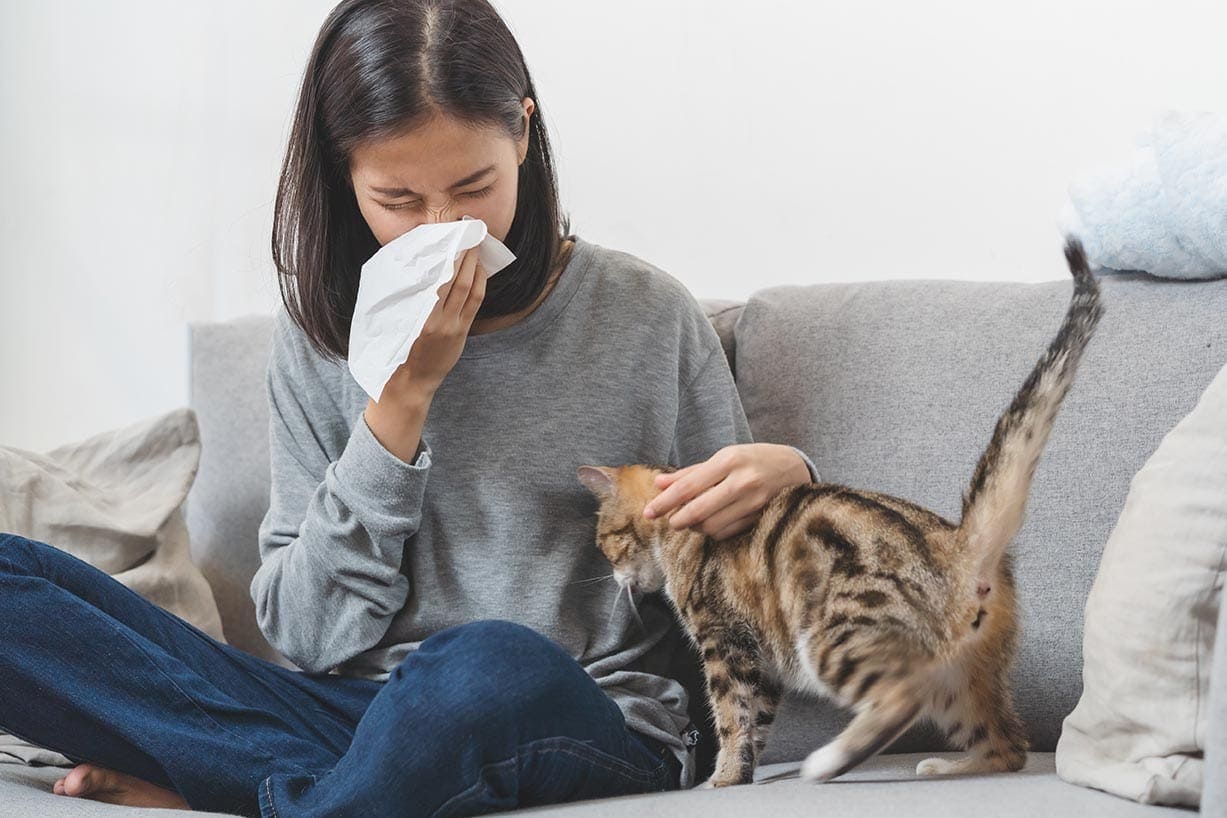
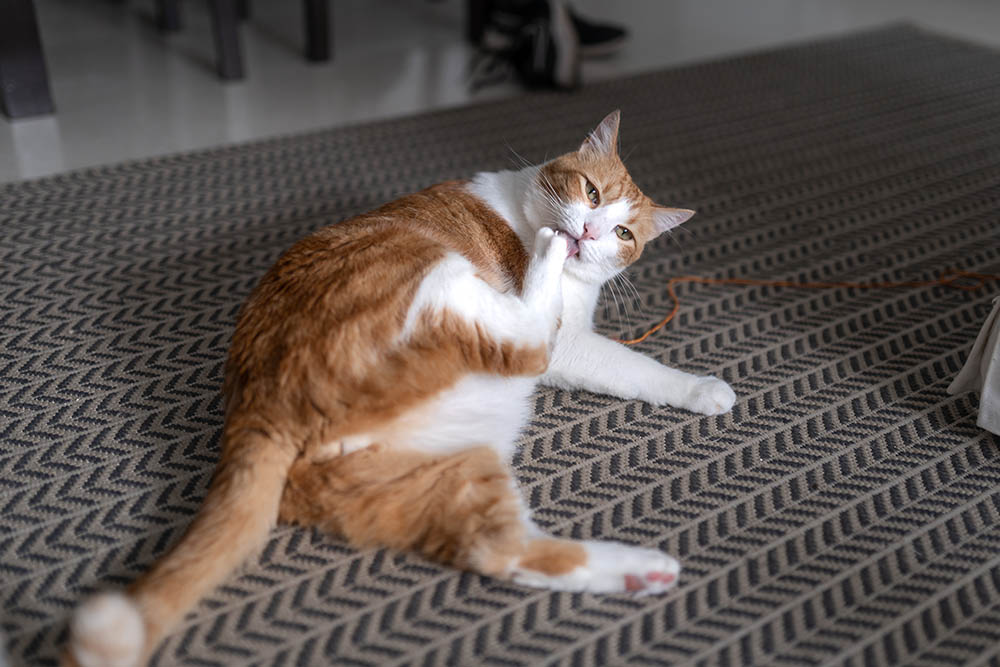
Many people with a cat allergy assume that cat hair is the culprit. However, the most common cause of cat allergies is microscopic dead skin cells called dander. Avoiding dander is impossible if you share your home with felines. Cats shed dead skin cells, which they inadvertently fling around whenever they groom themselves.
Cat dander isn’t universally bad for humans. Many of us co-exist with cats and their dead skin cells just fine. But others have allergic reactions that range from mild to life-threatening. Learn more about how cat dander triggers allergic reactions, what (if any) cat breeds are hypoallergenic, and how you can reduce cat dander in your home.

Why Does Cat Dander Cause Allergies? How Does It Work?
To understand how cat dander causes an allergic reaction, we must delve into a bit of science. A protein called Fel d 1 is present in a cat’s saliva, skin cells, and urine. While cats produce at least eight other proteins that can cause allergies in humans, Fel d 1 accounts for most allergic reactions.
Assuming your cat uses their litterbox, cat urine is easy to avoid. But even if you never touched your cat, you would still be exposed to Fel d 1 through their saliva and dead skin cells. Cats groom themselves with their tongues throughout the day. If you could put your home under a microscope, you’d find dander pretty much everywhere. Dander can even be found in homes and workplaces where cats have never been, as it can cling to people’s clothing.
Why Is Cat Dander Bad for Some People?
The majority of people can be around cat dander without experiencing any problems. But an estimated 10% to 20% of people worldwide have an allergy to cats or dogs, and cat dander can harm them. When people with a Fel d 1 allergy are exposed to cats, their immune system gets on the defense. The result is symptoms like sneezing, watery or itchy eyes, congestion, skin rash or hives, and asthma attacks.
Don’t automatically assume that your kitty is to blame for your allergy symptoms. You should have an allergist or healthcare provider confirm your Fel d 1 allergies. People can be allergic to just about anything, and cat dander may not be to blame. For example, outdoor pets can bring in pollen and other environmental allergens on their fur. And long-haired cats can collect dust on their coats.
Do All Cats Produce Dander? What About Hypoallergenic Cat Breeds?
Yes. All warm-blooded animals produce dander, even humans.
Despite what some breeders and breed enthusiasts claim, there is no such thing as a “100% hypoallergenic” cat. The Fel d 1 protein is present in all cats, but factors such as gender may influence how much. Recent research has shown that, on average, unneutered male cats produce more Fel d 1 protein than female cats.
Some breeds like the Balinese, Oriental shorthair, sphynx, and Siberian have gained a reputation for being “low allergy” cats. If cat allergies could be a problem for you or someone in your home, it’s best to spend time with and handle a cat before you adopt or purchase it.
Does Brushing My Cat Help With Dander?
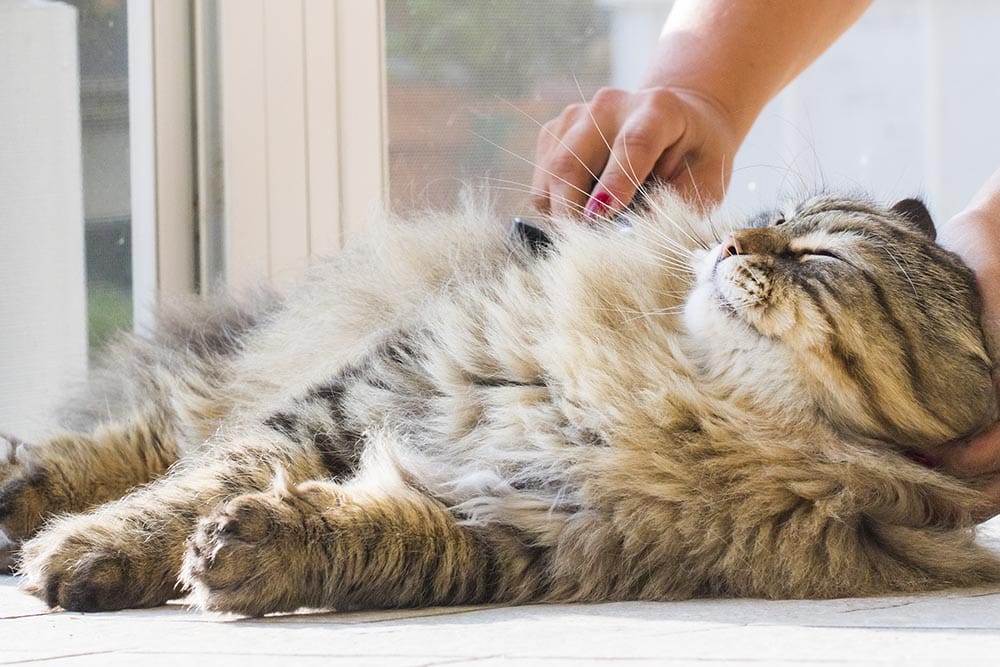
Regularly brushing your cat reduces the loose dander that ends up all over your home. You can also contain dander by brushing your cat outdoors or in a closed-off area of your home. Just be sure to clean off your cat’s brush and vacuum thoroughly after each brushing session.
Another way to reduce loose dander is to regularly bathe your cat, something few cats are agreeable to! A nice compromise is liquid dander remover that you apply to your cat’s body with a cloth but don’t need to wash off.
Can Cat Allergies Come on Suddenly? Does a Cat Allergy Ever Go Away?
What’s so frustrating about allergies is their unpredictable nature. You can develop a cat allergy at any time, even when you’ve spent years cuddling cats. Cat dander allergies can worsen over time or even disappear altogether.
Contact an allergist if you suspect you have a cat allergy or if a confirmed cat allergy worsens. Having to rehome your cat may not be necessary. You may be able to manage your symptoms with medication or immunotherapy.
What Is the Difference Between Cat Dander and Dandruff?
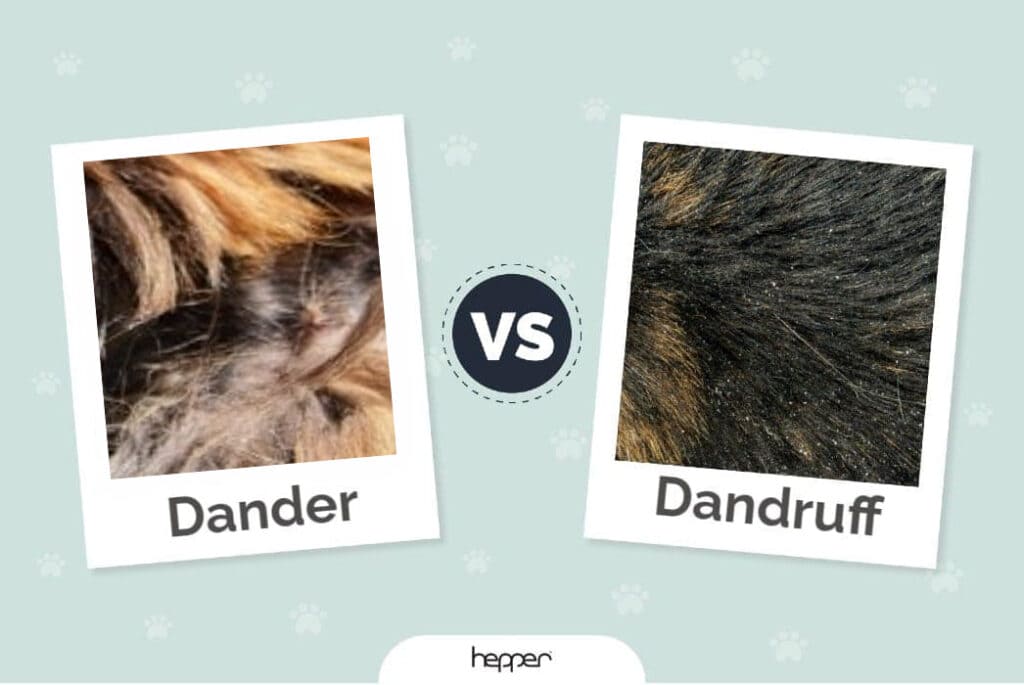
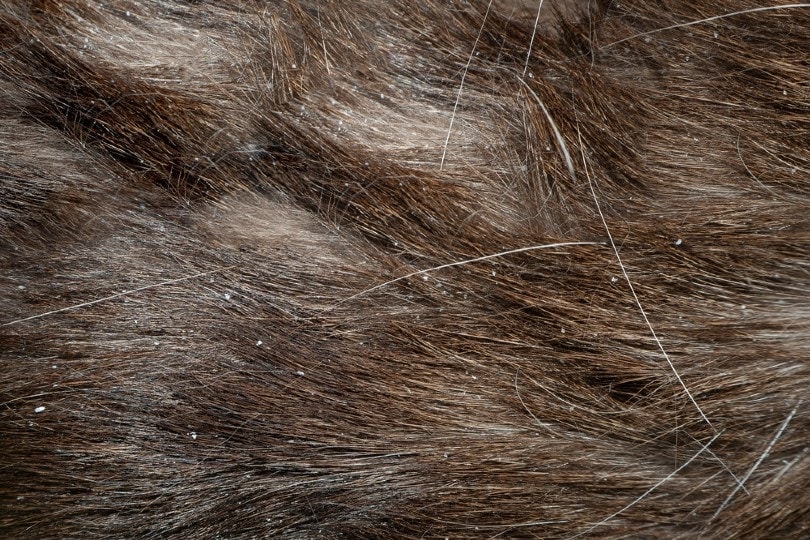
The most noticeable difference between cat dander and dandruff is size. Dander is typically microscopic and can’t be seen with the naked eye. Any visible flakes you see on your cat are most likely dandruff.
Dandruff is dry, flaky skin. Dryer winter weather can commonly cause cat dandruff. Older or obese cats who cannot groom themselves can develop dandruff, too. If dandruff persists despite regular grooming and brushing, talk with your vet. Your cat may have a nutritional deficiency or a parasitic skin disorder.

Frequently Asked Questions (FAQs)
How Do You Know If You Have Cat Dander at Home?
Cats continually develop new skin cells and shed dead ones. If you have a cat in your home, it’s a guarantee that you have cat dander. Remember that dander is typically microscopic, so you may not see it, but it is there. Cat dander clings to shed cat hair, your clothing, upholstered furniture, and carpeting—pretty much anything.

Do Black Cats Have Less Dander?
There is currently no conclusive evidence to back that black cats produce less dander than any other cats. A handful of studies over the last 20 years looked for correlations between cat fur color and dander. These studies had varying results, which explains why differing hypotheses exist.
How Long Does Cat Dander Stay in the House? Does Cat Dander Go Away?
Cat dander won’t go away on its own. It settles onto every surface in your home, including furniture, shelving, floors, curtains, and clothing. You can reduce the cat dander in your home by regularly vacuuming and dusting. Washing any fabrics that your cat comes in contact with also helps. If possible, swap out carpeting and rugs for hard-surfaced flooring.
You can contain dander by limiting which rooms your cat accesses. Not allowing your cat in your bedroom substantially reduces the hours you’re exposed to dander each day.
Adding a HEPA air filter can also help to reduce the presence of cat dandlers in your environment.
Conclusion
Cat dander is dead skin cells that your cat sheds as new skin cells form. Cat dander doesn’t bother most people, but a protein called Fel d 1 can trigger an allergic reaction. While some cat breeds are more tolerable to those with allergies, there is no such thing as an “allergy-free” or “100% hypoallergenic” cat. See an allergist to confirm whether you have a cat dander allergy or if another allergen causes your symptoms. You can reduce your exposure to cat dander by keeping your cat out of your bedroom, frequently brushing your cat, adding air filtration systems, and doing routine housecleaning.
See also:
Sources
Featured Image Credit: Lemalisa, Shutterstock
Get Hepper In Your Inbox


Pet care tips from our vets and experts, straight to your inbox.
You may opt-out at any time. View our Privacy Policy for more information.
Cassandra is a professional writer living in the Upper Midwest of the U.S. Much of her writing centers around home and family life, but she's been known to dabble in fiction. Her favorite topics to write about are pets, parenting, and food. Cassandra shares her home with two rescue pets: Liam, a Siamese mix, and Harley, a beagle.
Join the conversation
Ask a question, share your story, or send private feedback.