Hepper is reader-supported. When you buy via links on our site, we may earn an affiliate commission at no cost to you. Learn more.
How to Get Rid of Cat Dander: 10 Vet-Approved Tips



If you’re a cat lover but also have allergies, you’re clearly in a bit of a pickle! Your love for your cat is probably at war with the discomfort of your allergy symptoms, so what’s a cat lover to do?
Contrary to popular belief, cat dander isn’t the instigator of cat allergies. In fact, cat dander is completely harmless. An allergic reaction is caused by your immune system and actually has very little to do with your cat.
For your immune system, the main instigator of cat allergies is a protein naturally found on cat skin and saliva. Cat dander, however, is the “vehicle” that spreads this protein around your house.
Here, we teach you a few effective methods for reducing the amount of cat dander floating around your home. We hope that this helps you and anyone else in the household with allergies to be more comfortable. It also means you can spend more time with your cat!

Understanding Cat Allergies
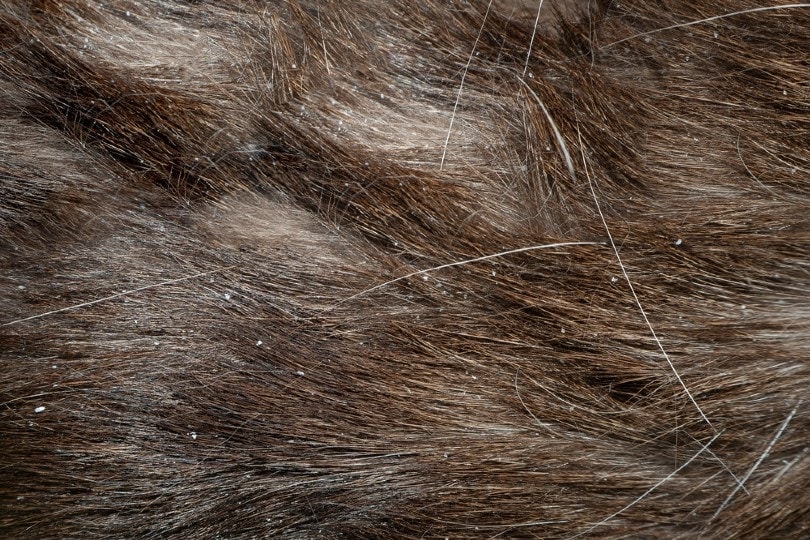
Before attempting to tackle the dander issue in your house, it’s worth understanding what’s causing your cat allergy issues. Begin by understanding that there’s nothing wrong with your cat, and your cat isn’t the culprit here. All cats naturally produce dander, which is a microscopic composition of bits of dead skin that they shed daily as their skin regenerates.
In addition, cats also produce many proteins that are distributed along their saliva, skin, and urine. A major protein with regards to cat allergies is known as Fel d1, which is produced primarily by your cat's skin. Dander contains this protein, which is distributed around your house as your cat naturally sheds. People with cat allergies are, in fact, allergic to a specific protein contained in dander. Though Fel d1 is the main protein when it comes to cat allergies, there are other proteins your cat may produce that you could be allergic to.
The immune system of folks with a cat allergy accidentally identifies these harmless proteins as “bad” and produces specific antibodies against them, which triggers an allergic reaction. The extent of the allergic reaction varies from individual to individual.
Cat dander is extremely small – even smaller than dust particles and stays airborne for long periods of time. This allows it to easily spread all around your house and settle on many different surfaces. Because all cats produce the Fel d1 protein and shed dander, no individual cat is truly hypoallergenic. Therefore, by proxy, no breed of cat is truly hypoallergenic either. However, the amount of proteins produced and shed by each individual cat may vary.

10 Tips for Minimizing Cat Dander (It Starts With You)
1. Visit Your Family Doctor
If you think you have an allergy to your cat, the first thing you should do is seek professional medical advice for yourself. Allergy tests can determine whether you are actually allergic to your cat or not. There are other environmental allergens that may elicit the same response from your body. Therefore, knowing what your allergens are is a good start. Your doctor can also ascertain the extent of your allergies and prescribe medication, allergy immunotherapy, or other medical treatments, as deemed necessary for you.
Though many people with cat allergies are able to manage living with a cat, individuals with a severe allergy may not be able to happily coexist with a feline. Discuss the severity and extent of your allergies with your doctor before deciding your next steps.
2. Assess Yourself With Your Cat, if Possible

Because the amount of allergy-causing proteins and dander production varies from cat to cat, it may be a good idea to spend some time with a prospective cat you wish to adopt to see how you are around them. Try spending some time alone with just the cat in a clean, well-ventilated room and see how you handle their presence with respect to your allergies. At times, you might be lucky and find a cat that you’re not overly allergic to. Such a cat would be the best fit for your house.
In addition, if you do know you have a cat allergy, it may be best to not adopt multiple cats, as this increases the concentration of allergens in your house.
3. Clean Your House
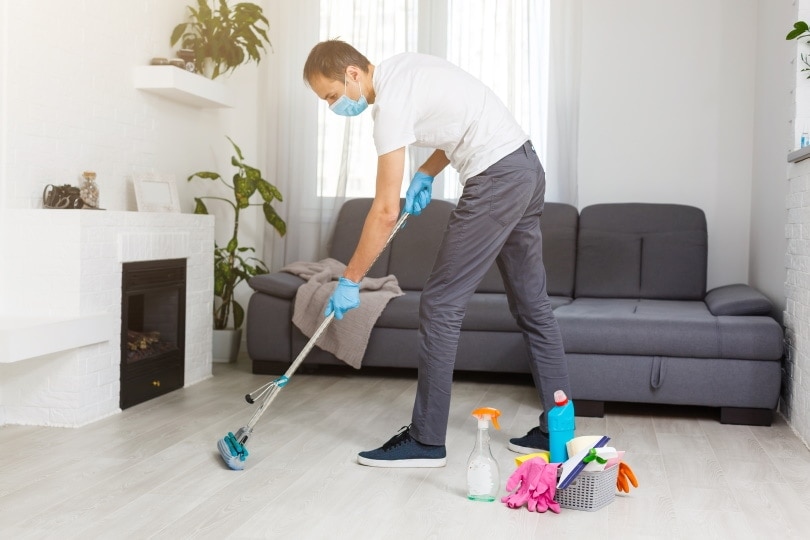
If you find that your allergies are somewhat manageable, the best way to keep them under control is by cleaning your house. The more dander lying on surfaces, the more it will trigger allergies. Regularly clean and wipe down surfaces such as walls, counters, tabletops, and baseboards.
Because cleaning your house may release pet dander into the air, it is a good idea to wear a mask before starting. Consider investing in an upholstery vacuum with a HEPA filter, which will make your job cleaning curtains, chairs, and couches easier. Vacuum thoroughly around the house at least once or twice a week. It may also be a good idea to ask for help from a family member, friend, or a professional cleaning service crew for carpets and upholstery, as they hold more dander than smooth surfaces. Alternatively, an automated vacuum cleaner that is pet-safe may also be used.
Avoid using “dry” cleaners such as brooms and feather dusters, as these may lead to dander being airborne all over your house. Statically charged cleaners, such as a Swiffer, are preferred if a vacuum is out of your budget.
In addition, replace any carpets in your house with smooth flooring wherever possible. Carpets are the primary “reservoirs” of allergens in your home and contain far more allergens than smooth surfaces like tile, wood, or linoleum. Professional steam cleaning is recommended for carpets that can’t be replaced, and using “wet” cleaners such as a mop is a fantastic option to trap and remove dander from smooth floors.
It’s also a good idea to declutter. The more odds and ends and knickknacks that you have in your home, the more surfaces you’ll need to clean.
4. Invest in an Air Filter
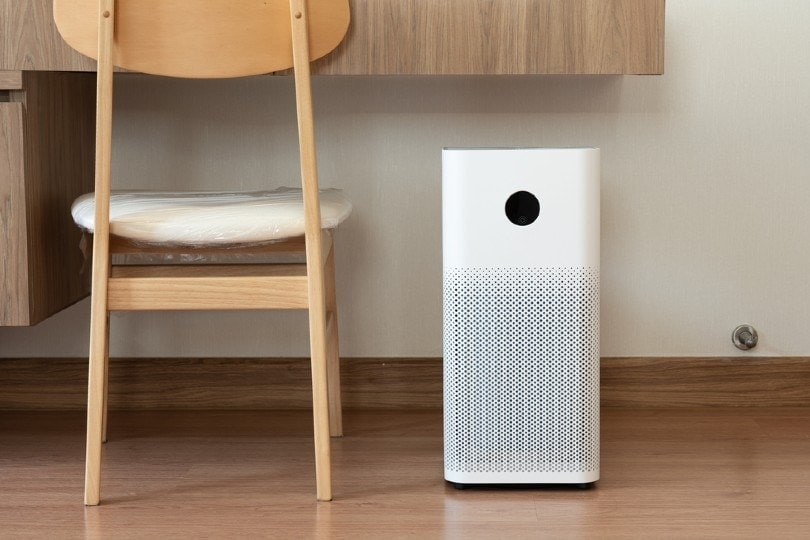
When you have allergies, a HEPA filter is your friend. You can install it in your home’s air ducts or invest in an air purifier that uses a HEPA filter. It won’t help with pet dander on surfaces, but it can help clean the air in your home and trap airborne dander.
If you go down the air purifier route, ensure that your air purifier is sufficient for the surface area of the room you place it in. Adding in more air purifiers is a great idea, and keeping them working well with frequent filter changes, cleaning, and maintenance as recommended by the manufacturer ensures optimal performance.
5. Establish Cat-Free Zones in Your House
It’s always a good idea to establish a cat-free zone or area in your house where your cat isn't allowed. The concentration of allergens around your house is highest in areas your cat spends the most time in. Therefore, keeping a particular room, such as your bedroom, cat-free may help you handle your allergies better.
6. Practice Good Hygiene
It goes without saying that practicing good hygiene can be very beneficial if you suffer from cat allergies. Before going into your cat-free zone or room, ensure you thoroughly wash your hands, shower or bathe yourself if needed, and ideally, change your clothes as well, as dander can accumulate on your clothes whenever you interact with your cats.
7. Stay on Top of the Laundry

In addition to keeping your home clean, you should also stay on top of the laundry. Since pet dander is on your clothing and other fabrics like your sheets (if you let your cat into your room), pillows, cat beds, and blankets, frequent washing will remove quite a large amount of dander.
If the fabric allows for it (check the washing instructions), try to wash everything in hot water and with a strong detergent at least once a month to remove the dander. Make a point of running your washer on a clean cycle every so often too. Remember that thoroughly cleaning your house and staying on top of your laundry schedule is great for your cat’s health as well!
Actions You Can Take for Your Cat
8. Gender Considerations (Pre-Adoption)
Research has indicated that male cats that are intact produce more allergens than when they are neutered. If you plan on adopting or having a male cat, neutering them may offer the benefits of the procedure to them and potentially provide you with some allergy relief as well.
Other research also indicates that female cats produce less of the allergen than male cats. If you haven’t gotten a cat yet, considering a female cat might be a slightly better option for your allergy woes.
9. Bathe Your Cat Regularly, if Possible
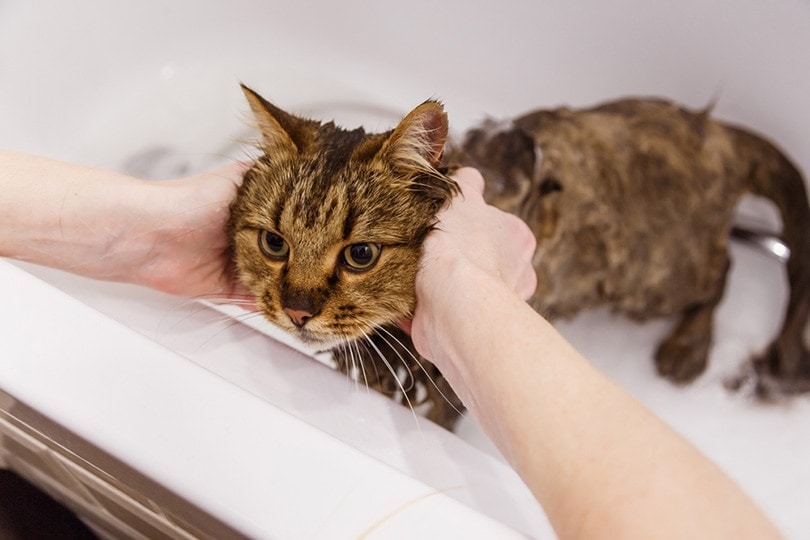
When it comes to your feline friends, the best possible “solution” is giving your cat regular baths, if possible. However, it is worth noting that this isn’t a fix. In fact, a bath may only lessen the dander in your house for a period of up to just 2 days. Therefore, environmental controls are far more effective than bathing your cat.
Nonetheless, bathing your cat once a week with a cat-friendly shampoo may temporarily decrease the concentration of allergens on your cat’s coat. However, as appealing and as obvious as this sounds, many cat owners have to face the harsh reality that not all cats appreciate a bath. Reassuring your cat with gentle pets, treats, and reinforcement may get a fidgety cat to more readily accept baths, but in some cases, professional groomers may be required to achieve this. If your cat loves baths though, you’re in luck.
When you bathe your cat, ensure that you focus heavily on their neck and use a gentle wipe on their face as well (never splash water directly on your cat’s face!). Contrary to popular belief, allergens are not equally distributed throughout your cat’s body; they are most heavily concentrated on their face and neck and chest. This also means that if you have a cat who doesn’t appreciate bath time, a gentle cleaning of their face and necks can be very helpful with your allergy issues.
10. Keep Your Cat Well Groomed and Healthy
Finally, keeping your cat well groomed can help with cat allergies. Brushing your cat often can help reduce dander. If brushing your cat while dealing with allergies seems daunting, try wearing a mask and gloves during this process, or seek the help of a friend or a professional groomer. It might also help to brush your cat on a porch or other room closed off from the rest of the house.
Grooming and brushing your cat enables you to remove loose hairs from their coats and prevent them from being deposited around your home. In addition, visiting your vet to ensure your cat is in good health and has a well-maintained, problem-free coat will minimize excess shedding and may help with your allergies.
Final Thoughts
If your allergies are serious, you should speak to your doctor before attempting to live with a cat. But with careful planning and regular cleaning, it is usually possible.
That said, you need to keep your cat’s best interests in mind. If you can’t interact with your cat without suffering from an allergy attack, it might be best to find a new home for them. As heart-breaking as it would be, your cat’s quality of life and your allergies are the critical factors here.
But if you can safely follow these tips, it just might work. Owning a cat while having allergies is a great deal of effort, but aren’t cats worth it?
Featured Image Credit: Tatyana Vyc, Shutterstock
Get Hepper In Your Inbox


Pet care tips from our vets and experts, straight to your inbox.
You may opt-out at any time. View our Privacy Policy for more information.
Kathryn was a librarian in a previous lifetime and is currently a writer about all things animals. When she was a child, she hoped to work in zoos or with wildlife in some way, thanks to her strong love for animals. Unfortunately, she's not strong in the sciences, so she fills her days with researching and writing about all kinds of animals and spends time playing with her adorable but terribly mischievous tabby cat, Bella. Kathryn is hoping to add to her family in the near future – maybe another cat and a dog.
Join the conversation
Ask a question, share your story, or send private feedback.