Hepper is reader-supported. When you buy via links on our site, we may earn an affiliate commission at no cost to you. Learn more.
Can I Use a Dog Flea Collar on My Cat? Our Vet Explains

In this article
Anyone who has been unfortunate enough to deal with a flea infestation knows that it's much better to prevent these pests than to face the difficult task of getting rid of them after they’ve found a way into your home!
Cats who spend time outdoors are the most likely to encounter fleas, but even indoor kitties can benefit from flea protection. Especially if they live in an apartment building, or with another pet who goes outside.
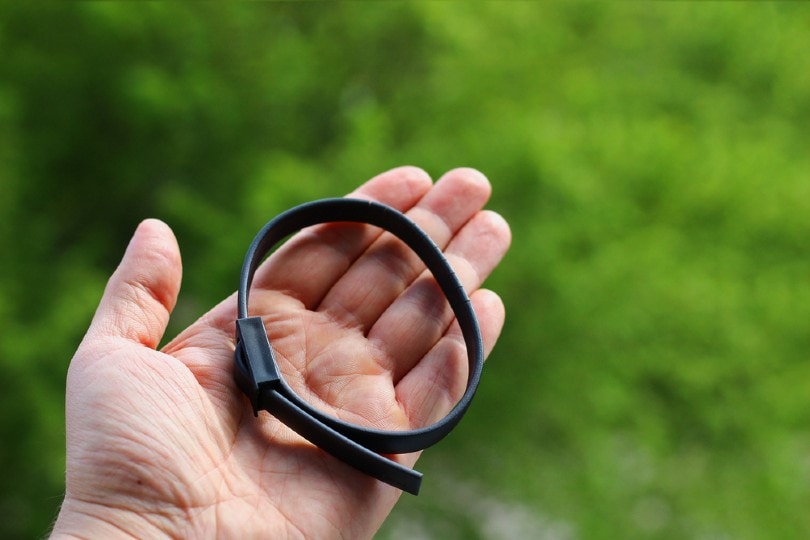
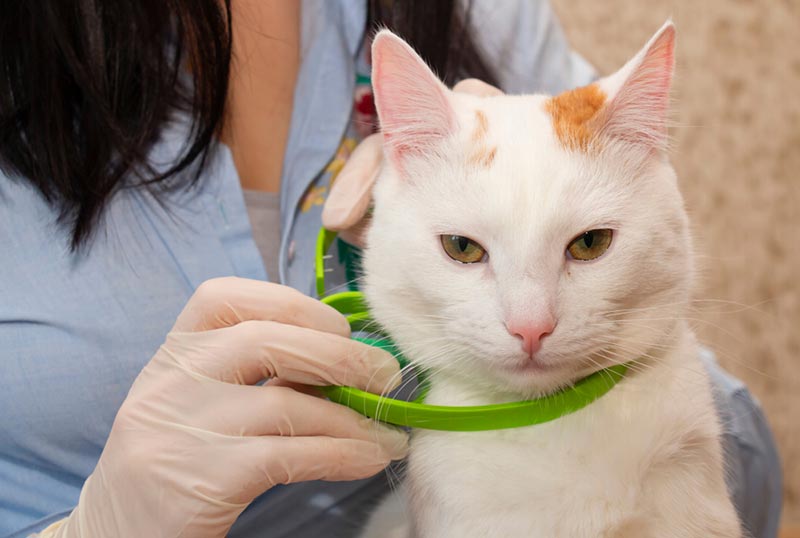
Flea collars may seem like a reasonable and inexpensive option for flea prevention. However, veterinarians often advise against flea collars for cats because they pose a strangulation risk (cats should only ever wear quick-release collars).
Many ingredients commonly found in dog flea collars are highly toxic to cats, so you should never use a dog flea collar on a cat!
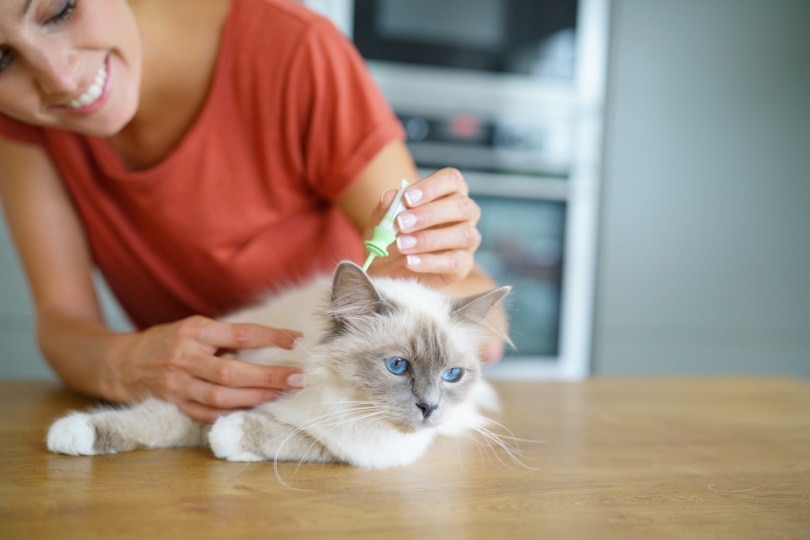
Fortunately, there are many other safe and effective products for flea control in cats, which often treat other parasites as well. Ask your veterinarian to help you choose the best option for your cat.

What Are the Dangers of Using Dog Flea Collars on Cats?
Aside from the strangulation risk, one of the biggest dangers of using a dog flea collar on cats is that it may cause severe toxicity.
As previously mentioned, dog flea collars often contain ingredients that are not safe for cats. Particularly harmful substances include:
As we have already mentioned, dog flea collars should never be used on cats.
Signs of a Negative Reaction to a Flea Collar
Cats can have a negative reaction to any flea collar, even if they are intended for feline use. Reactions can range from mild skin irritation and fur loss to signs of severe neurologic toxicity.
Signs that should prompt you to remove the collar and seek immediate veterinary attention include:
- Difficulty breathing
- Ataxia (wobbliness, general incoordination)
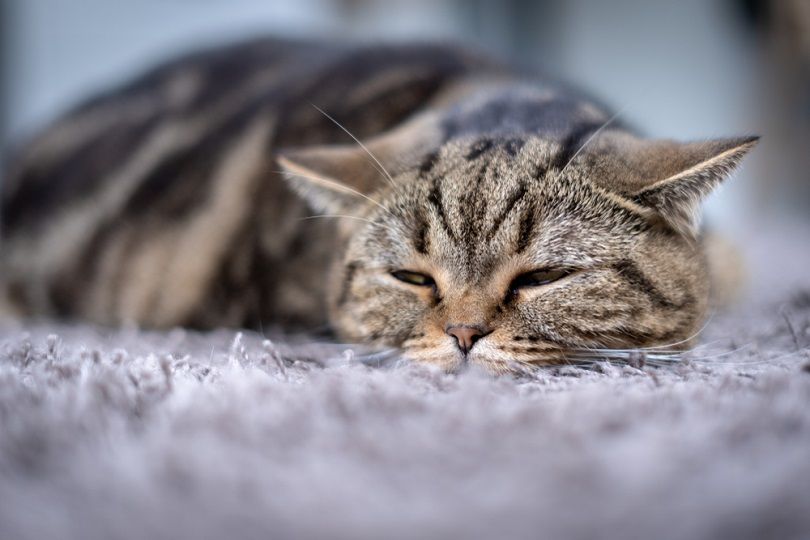
- Extreme tiredness (lethargy) and/or weakness
- Vomiting and/or diarrhea
- Elevated body temperature (feeling hot to the touch)
- Muscle twitching, tremors
- Seizures
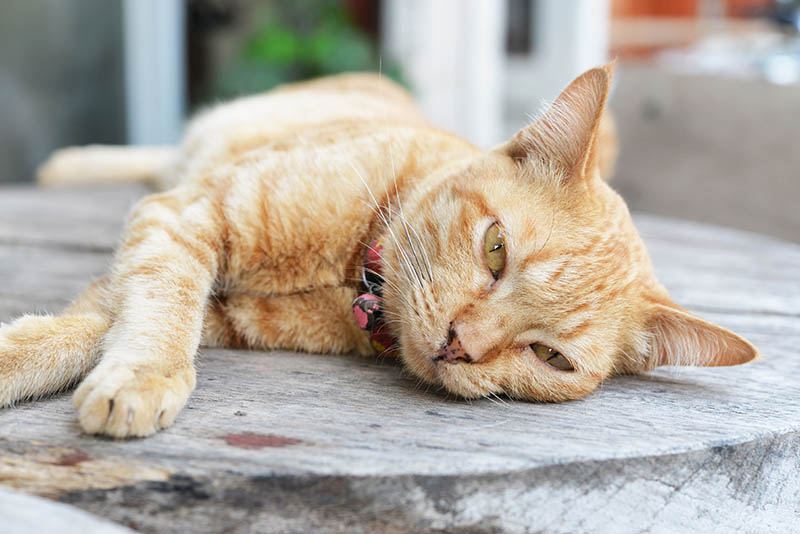
What to Do if You Suspect Your Cat Is Having a Bad Reaction to a Flea Collar
Here are some steps to take if you suspect your cat may be having a negative reaction to a flea collar:
- Remove the collar!
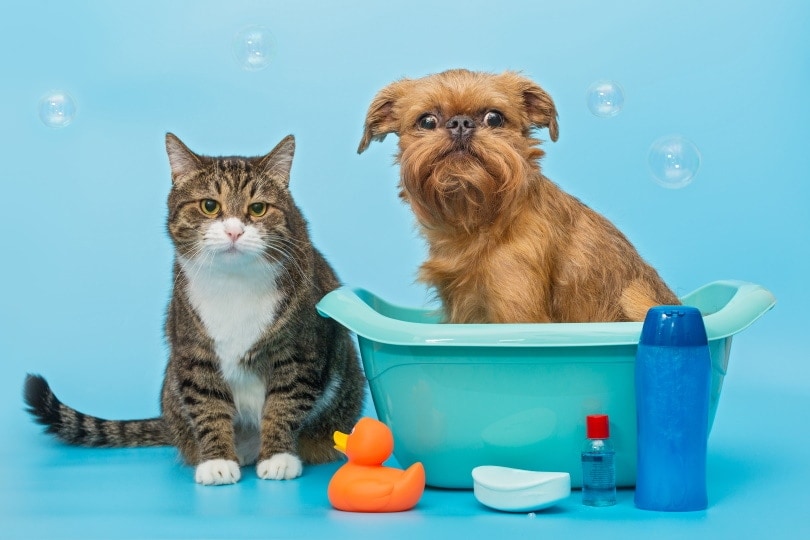
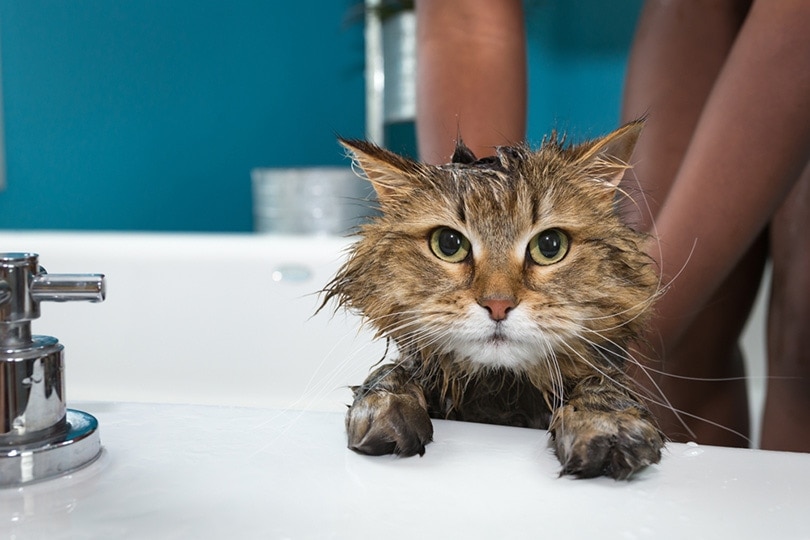
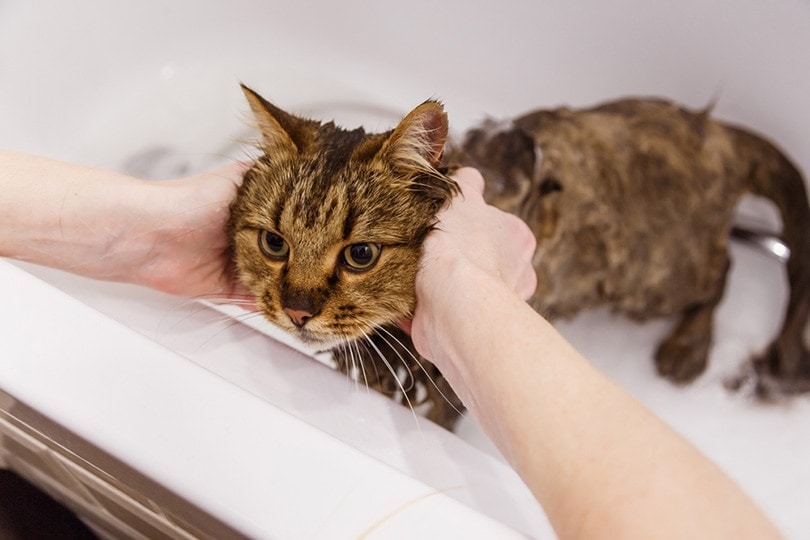
- If your cat is showing any of the signs listed above, seek urgent veterinary attention. If they just seem to have some mild irritation and are not showing signs of toxicity, you may bathe them in lukewarm water with liquid dish soap (e.g., Dawn) to remove any residue from the collar. Repeat if needed.
- After bathing, dry your cat thoroughly, keep them warm, and monitor them closely.
If at any time you become concerned about your cat’s health, please contact your vet or the nearest veterinary emergency clinic. You can also call the Pet Poison Helpline at 855-764-7661 (please note there is a fee for this service).
How Can I Safely Protect My Cat from Fleas?
There are many great options for flea prevention in cats, which are summarized nicely in this chart. Your veterinarian will be happy to help you pick the product that’s right for your kitty!
Here are some other important safety tips:
- Only use products that are specifically for cats
- Make sure to give the correct dose for your cat’s current weight
- Confirm that kittens are above the minimum age and body weight for the product you are using
- Do not use multiple products together without checking with your veterinarian
- Avoid using flea products in very old, sick, and debilitated cats (unless directed by a veterinarian)
Conclusion
There are so many products available for flea control in cats that are safer (and often more effective) than flea collars. Flea collars can pose a strangulation risk, and cats are known to be sensitive to many of the substances they commonly contain—especially flea collars designed for dogs.
Please remember to never put a dog flea collar on your cat!
Ask your veterinarian to help you decide which flea-prevention product is right for your cat.
Featured Image Credit: Inga Gedrovicha, Shutterstock
Get Hepper In Your Inbox


Pet care tips from our vets and experts, straight to your inbox.
You may opt-out at any time. View our Privacy Policy for more information.
Dr. Sharon (as she is known by her clients) has had an intense love for animals for as long as she can remember. She grew up in Guelph, Ontario and fulfilled her childhood dream by obtaining her Doctor of Veterinary Medicine (DVM) degree from the Ontario Veterinary College in 2009. She has since found joy working in a variety of small animal clinics, focusing on cat and dog care. She loves sharing her expertise and empowering pet owners to take the best possible care of their fur babies!
Sharon currently lives in beautiful British Columbia with her husband, daughter, and Parker, her loveable Great Dane. When she’s not at work, she enjoys clogging, photography, and exploring the outdoors with her family.
Dr. Sharon (as her clients call her), was raised in Guelph, Ontario, and has loved animals for as long as she can remember. She fulfilled her childhood dream when she obtained her Doctor of Veterinary Medicine (DVM) degree. Sharon now lives in British Columbia, Canada with her husband, daughter, and Parker, their loveable Great Dane. When she’s not working, she enjoys clogging, photography, hiking, and camping with her family.
Education
Dr. Sharon obtained her DVM in 2009 from the Ontario Veterinary College in Ontario, Canada.
Experience
Dr. Sharon loves sharing her knowledge and empowering people to take the best possible care of their fur babies, which she has been able to do through her work. She has practiced in a variety of small animal clinics since graduating, with a main focus on cats and dogs.
Check out some of our top posts written by our veterinary team:
Why Does My Dog Snore? Should I Act?
My Cat Ate Paint! Our Vet Explains What to Do Now
How Common is Heartworm in Cats? 7 Things to Know About Heartworm Disease
Join the conversation
Ask a question, share your story, or send private feedback.