Hepper is reader-supported. When you buy via links on our site, we may earn an affiliate commission at no cost to you. Learn more.
Can Indoor Cats Get Ringworm? Signs & FAQ (Vet Answer)

In this article
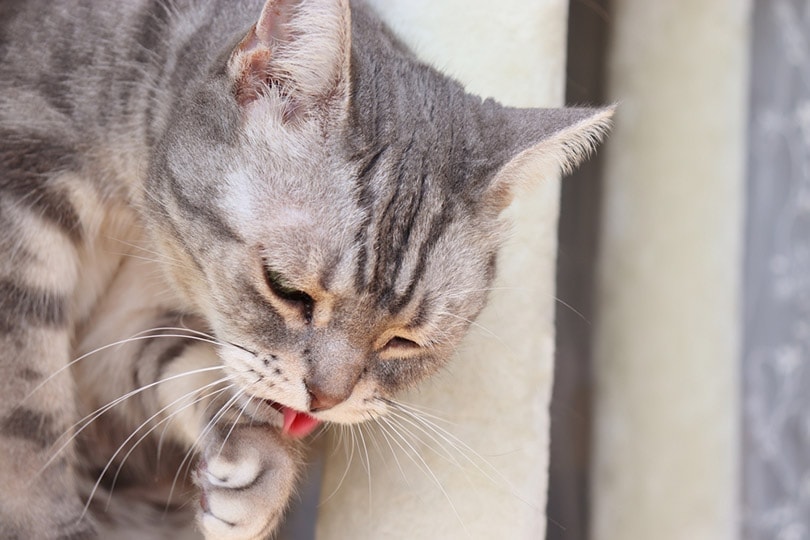
An indoor cat has a smaller chance of getting ringworm, but never say never. Ringworm is spread through direct contact or through fomites—an object that carries the ringworm from one place to another.
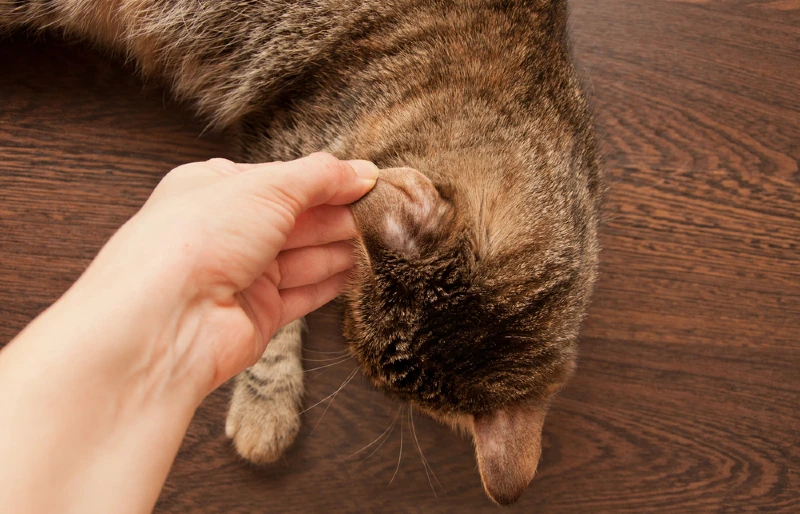
So, a cat outdoors meeting other cats is more likely to get ringworm than an indoor cat. However, the infecting spores can sit on an object and be transmitted, so if you get ringworm on your skirt or skin, you could infect your cat.
Ringworm will not travel into your house on a breeze, but you could pick it up on your shoes and bring it in. If you pet another animal (or person) infected with ringworm, you could give it to your cat, even if you don’t develop an infection.

How Common Is Ringworm?
Despite its infamy, ringworm is not that common in veterinary clinics. It is difficult to know exactly how common it is—what its prevalence is—but it is not as common as most owners think.
Other skin diseases are much more common, such as bacterial skin infections, allergy reactions, yeast infections, or mite infections.
Ringworm Is Contagious
Ringworm is a mild infection caused by a fungus. A healthy cat’s body usually clears it up on their own after a month or two. But it is very contagious and can spread from cat to cat, from cat to humans and between other pets. So, your indoor cat could get ringworm from you if you are infected with it. And your cat could get infected by your dog, who might have picked it up outside.
However, not everyone who is exposed develops an infection. Your or your dog could be exposed to ringworm and carry it indoors to your cat, who gets an infection even though you and Fido did not.
What Ringworm Looks Like
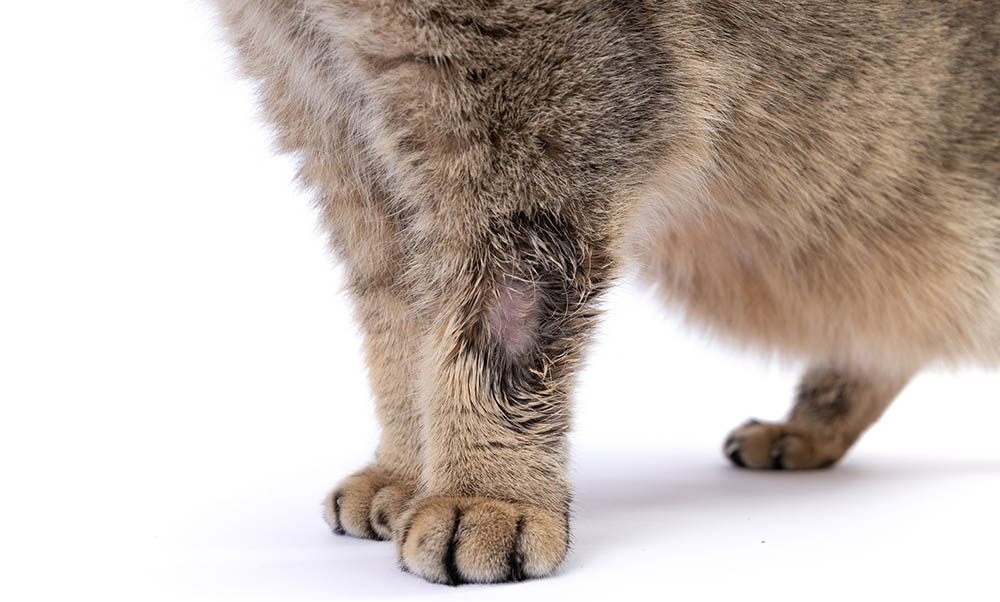
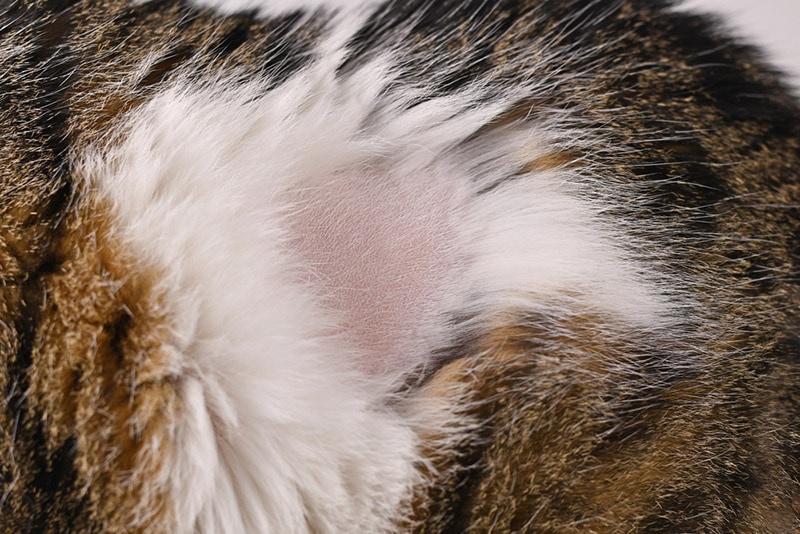
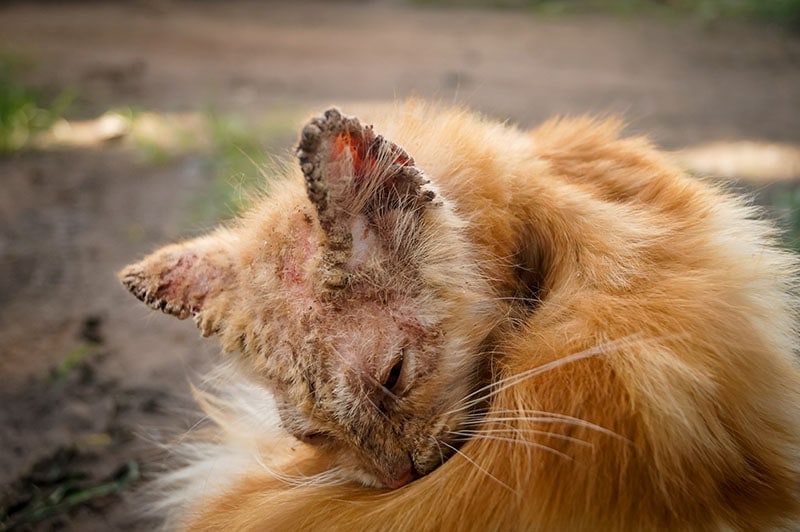
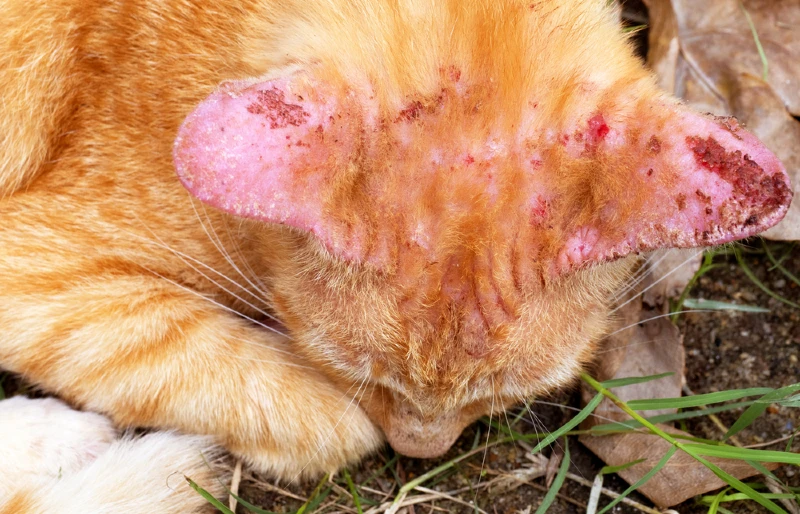
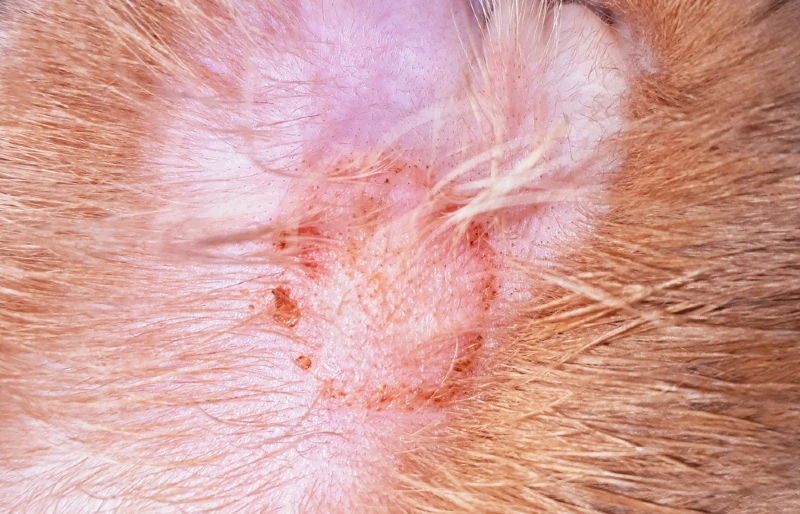
Ringworm is famous for causing a ring of dry, flakey, hairless skin. However, it can also be more diffuse, or it can cause the skin to become red and inflamed. It can also weep or be hard and scabby. It doesn’t always have to form a ring and can have a wide range of appearances.
Protect Others From the Contagion
The most important thing to remember during treatment is to keep it contained and keep it from spreading to other humans or animals in the house.
Wash your hands after touching your cat and avoid touching the infected area. It might be worth considering keeping the infected cat separate from others.
Frequently Asked Questions (FAQs)
What Is My Cat's Risk of Getting Ringworm?
Kittens are more likely to get ringworm. Their immune system is still developing, so they are more vulnerable.
Adult immunocompromised cats (their immune system is not working at 100%) are also more likely to get ringworm. Since their immune system is struggling to keep up because it is busy fighting off some other disease or has been harmed with medication or disease, it cannot fight off the ringworm, and infection sets in.
Cats stressed or living too close together are also more likely to get ringworm.

How Is Ringworm Diagnosed?
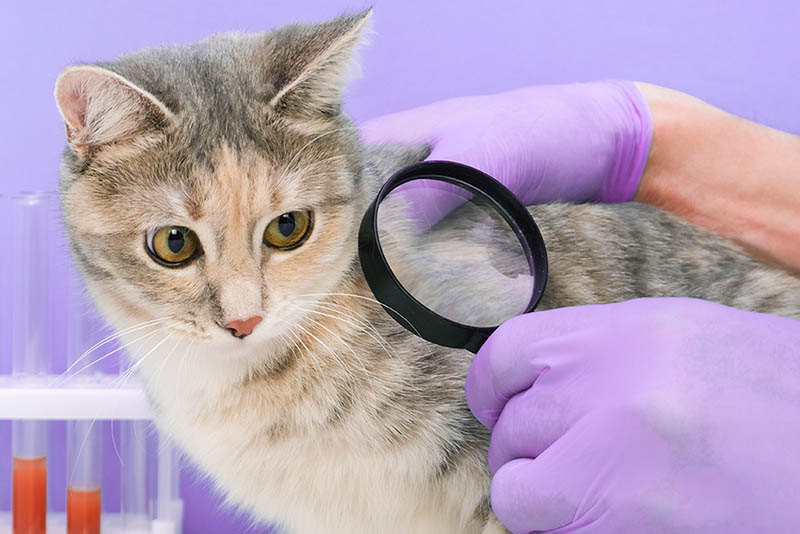
To confirm a ringworm infection, the veterinarian will need to perform tests. They might run a specific black light over the area because some ringworms fluoresce under it. However, this test has a high rate of false negatives. This means that if fluoresces is there, then it is ringworm, but if it is not glowing, it could still be there.
A vet can also send hair samples to the lab to grow—or not grow—the fungus on a Petri dish. It can sometimes be seen under a microscope as well.
How Do I Treat Ringworm?
Even though ringworm usually clears up on its own, it is probably a good idea to get it treated.
Treatment can shorten the amount of time it sticks around. So, it shortens the infection window, the period when you could get it too.
Treatment requires antifungal medication from the veterinarian. The treatment, however, does not stop the ringworm from being contagious. It will remain contagious until it is completely healed.
How Do I Clean It Up From the Environment or My Outdoor Clothes?
Ringworms do not grow in the environment as black mold does. But ringworm spores are strong and can stay hanging out in the environment for long periods of time—they do not die easily.
The spores stay in the environment until the ideal situation comes along, and they can begin growing. So, if environmental spores suddenly find themselves on a cat, they will try to grow, but if they are stuck on a wall, they do not.
The spores themselves are difficult to kill with soaps and sanitizers but are easy to rinse, wipe, or scrub away. So, using simple soap, water, and elbow grease is the best way to clean away ringworm spores. A washing machine will easily clean it out of clothes or bedding. Wiping surfaces with warm soapy water clears the spores away.
If you do have a ringworm infection, it is good to keep washing the areas where your cat likes to hang out—their bed, for example. Or if they have a favorite chair leg they rub against. You don’t want to clear a ringworm infection and then get a new one a month later.
Final Thoughts
Keeping your cat's immune system healthy with a good diet, vaccines, and reducing stress is your best defense against ringworm.
If you notice a spot on your cat that has lost hair, is dry or wet, is itchy or not, is scaley or flakey, have your vet examine it. All these signs could mean ringworm, but more than likely it means something else is wrong with your cat's skin.
Sources
Featured Image Credit: Nataliia Dvukhimenna, Shutterstock
Get Hepper In Your Inbox


Pet care tips from our vets and experts, straight to your inbox.
You may opt-out at any time. View our Privacy Policy for more information.
Dr. Chantal is passionate about the human-animal bond and improving animals' lives through their connections with their human companions. She has worked with many different species, big and small, including dogs, cats, birds, rabbits, guinea pigs, reptiles, amphibians, and even horses and mice. Chantal is excited to share her knowledge using her writing to help people connect with their animal friends.
Dr. Chantal believes that the best way for animals to be healthy is for their humans to understand their needs and well-being. She loves spreading her knowledge to as many people as she can through her writing.
Education
Dr. Chantal graduated from the Royal Veterinary College in London, England, where she received her vet degree. She then received her Masters in Conservation Medicine from Tufts University.
Experience
Dr. Chantal has worked with animals her entire life in many fields, even outside of veterinary medicine. She managed horse barns, worked as a dog trainer, and as a wildlife biologist before attending vet school. Chantal has been a veterinarian for over three years and continues to work with dogs, cats, and exotic animals. And, she still knows a thing or two about horses.
Join the conversation
Ask a question, share your story, or send private feedback.