Hepper is reader-supported. When you buy via links on our site, we may earn an affiliate commission at no cost to you. Learn more.
My Cat Just Threw Up Worms, What Should I Do? (4 Vet-Approved Steps)



In this article
Roundworm infections are, unfortunately, common with cats, and kittens are the most susceptible to becoming infected by these parasites. Routine testing and medications can help immensely with the prevention of infections. However, it’s still important for cat owners to be knowledgeable about roundworms in case their cats become affected by them.
Roundworms can be identified by their spaghetti-like appearance, as they are long and white and can grow to 3-6 inches. They first infect the cat’s digestive tract and can sometimes cause nausea and vomiting. If your cat threw up worms, it’s important to stay calm and promptly take the right next steps to effectively address the issue.

The 4 Things to Do if Your Cat Throws up Worms
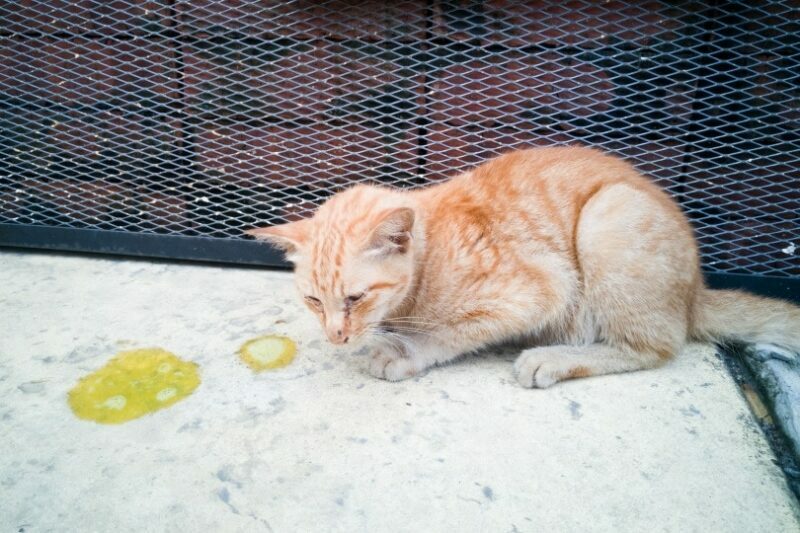
1. Dispose of the Vomit Properly
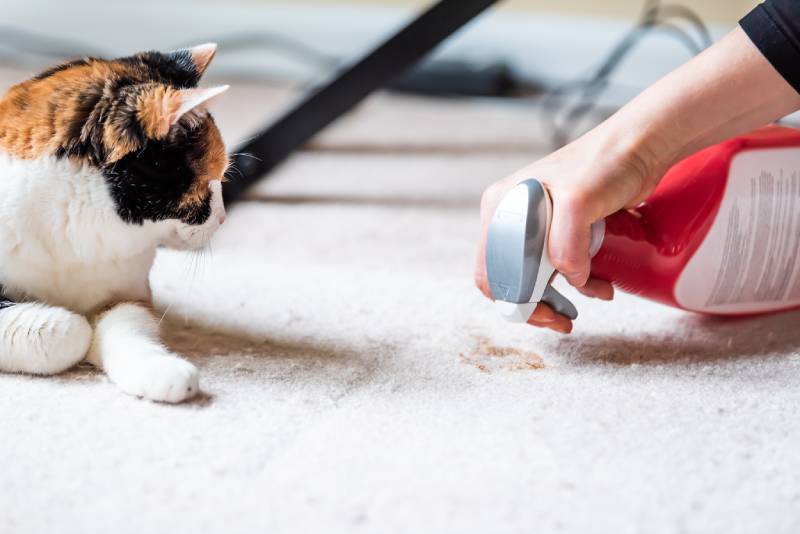
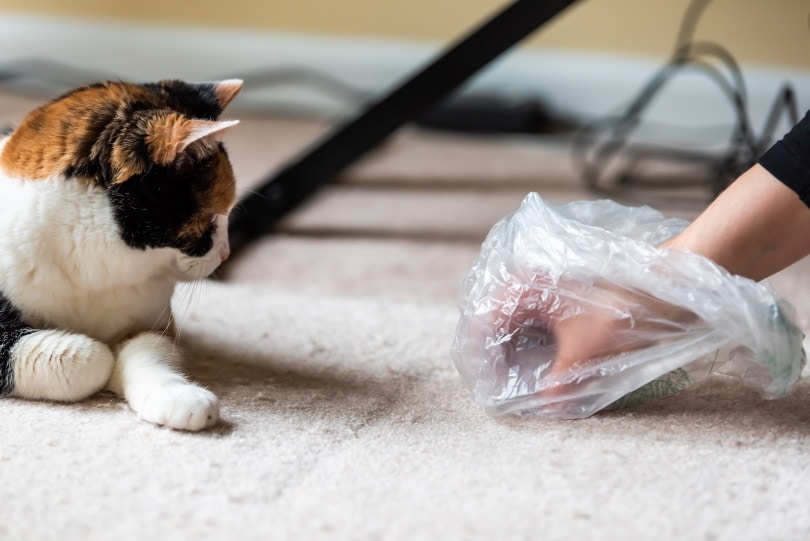
Because roundworms can be transmitted through vomit and fecal matter, it’s important to dispose of them and clean up the vomit properly. Make sure to keep children and other pets away from the vomit and put on a pair of disposable gloves. Use a scoop or waste bag to pick up the vomit.
Do not flush the vomit down the toilet, as wastewater treatment plants don’t effectively remove roundworms. It’s best to throw everything into a tightly sealed bag and toss it out in your trash bin.
Once the vomit has been cleared up, disinfect the area. You can use a pet cleaner or stain remover to get rid of any odors or stains from carpets and fabric. Always wash your hands after cleaning up your cat’s vomit.
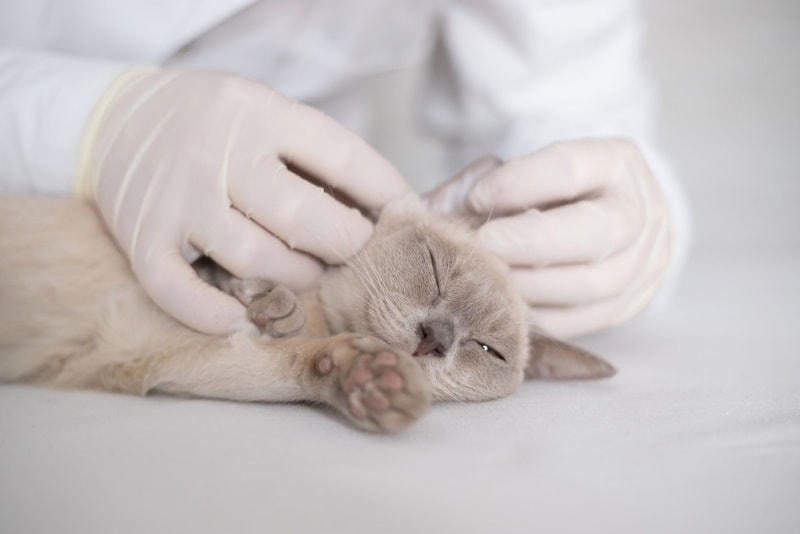
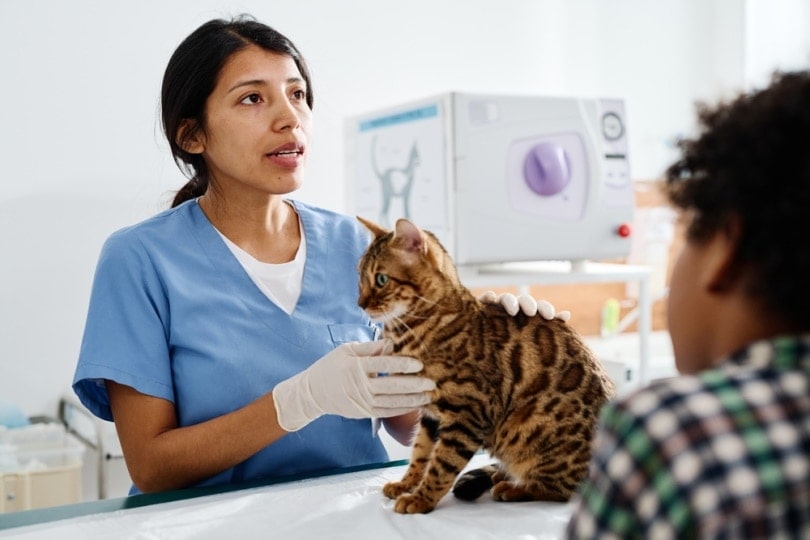
2. Schedule an Appointment with Your Veterinarian
Call your veterinarian to schedule an examination. Your veterinarian may ask you to bring in a recent stool sample or the worm from the vomit, so make sure to prepare yourself to gather a stool sample from your cat’s litter box right before your exam date.
Your veterinarian will use the sample to identify the parasite properly. While most cases will end up being roundworms, cats can also throw up tapeworms.
3. Clean Out the Litter Box
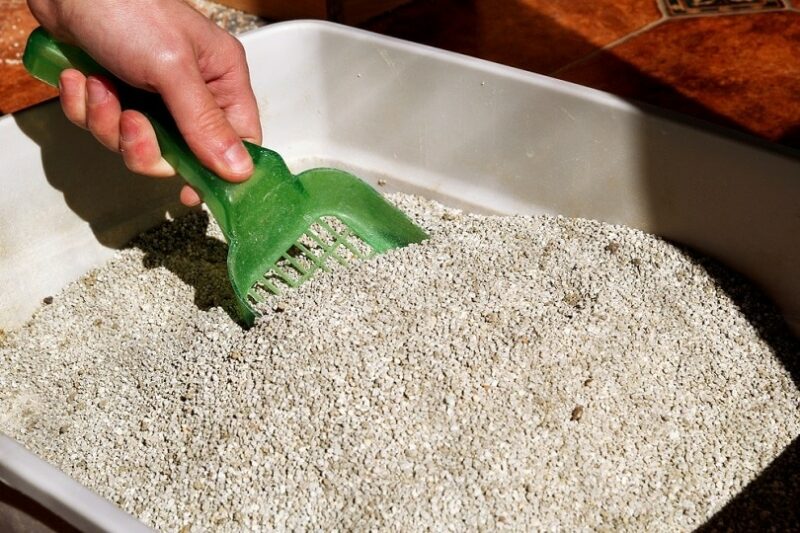
Roundworms can also be found in feces and be transmitted to other cats if they use the same litter box. So, do a thorough cleaning of your cat’s litter boxes. Roundworm eggs are microscopic and extremely resilient, so it’s important to destroy them properly.
You can use a bleach solution of 1 cup of bleach to 1 gallon of water to kill roundworm eggs. Soak the entire litter box in this solution and rinse it off. Keep in mind that when using bleach, it’s important to wash it off completely, as bleach is toxic to cats.
4. Stay on Top of Your Cat’s Roundworm Treatment
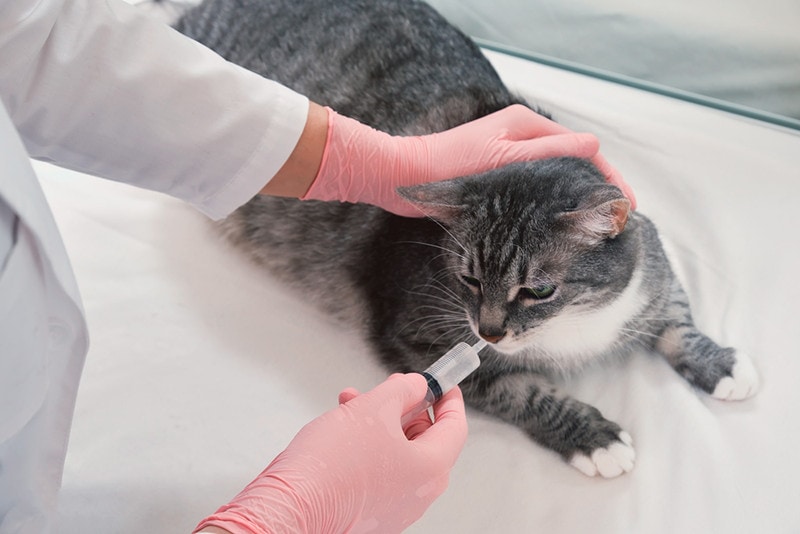
If your veterinarian diagnoses roundworms, you can start a treatment plan. The prognosis of cases of roundworms is often favorable as long as the medication is given promptly and consistently.
Most roundworm treatments are simple and affordable. Your cat will have to take deworming medication. The following are common medications your veterinarian may prescribe:
- Pyrantel pamoate
- Piperazine
- Fenbendazole
- Selamectin
- Emodepside
- Moxidectin
- Eprinomectin
- Milbemycin oxime
Roundworm medication must be taken several times to ensure that all the parasites are killed and removed from the body. So, it’s important to stay consistent with giving your cat its medication. Just because your cat’s stool doesn’t show traces of roundworms, it doesn’t mean that your cat’s completely cleared.

How Cats Can Get Infected by Roundworms
Roundworms are highly infectious and can be transmitted in several different ways. First, eggs can remain dormant in the soil until they find a host. Since they’re microscopic, it’s nearly impossible to detect contaminated soil without testing.
Roundworms can also be passed through fecal matter, which is why it’s important to have all cats in a home get examined if there’s a single case of roundworms. If they share a litter box, they can end up ingesting the parasite if anything gets close to their mouth.
Nursing mother cats infected by roundworms can also pass larvae through their milk. In some cases, roundworm larvae can encyst and remain dormant in a cyst until a cat becomes pregnant. The larvae can then transfer to kittens via the placenta. So, it’s often recommended for cats to get dewormed before pregnancy and during the later stages of pregnancy.
Outdoor cats are more susceptible to roundworm infections because they’re more likely to tread on soil and interact with other animals that may be roundworm hosts. Insects, rodents, and birds can all host roundworms and can pass them on to cats if they come in contact with each other.

How to Prevent Roundworm Infections
One of the simplest and most effective ways to prevent roundworm infestations is to stay on top of roundworm and routine parasite medication. It’s especially important to give this medication to your cat during seasons when roundworms are more prevalent and active. So, make sure to consult your veterinarian to create the most effective prevention plan for your cat.
New kittens should also be dewormed. Kittens can get dewormed safely as early as 2 to 3 weeks old. Make sure also to schedule a deworming with your veterinarian if you plan to breed your cat. Your cat should also receive a deworming later on in its pregnancy.
Routinely cleaning up your cat’s litter box can also reduce the risk of transmitting roundworms by removing their eggs from the litter box. Make sure to deep clean your cat’s litter box at least once a month. Since roundworm eggs can rest on any surface, take the time to disinfect any surfaces that come in contact with the litter box, such as sinks and bathtubs.
Conclusion
Roundworm infections can happen even under the watch of the most vigilant cat owners. Outdoor cats are more susceptible to roundworms, but indoor cats can still experience infections. So, while preventative measures can greatly reduce the risk of infestations, cat owners should also be prepared to know what to do if their cats end up vomiting roundworms.
Always make sure to dispose of the vomited worms properly and contact your veterinarian right away. Following through with treatment often leads to the successful eradication of the parasites. So, even though it may be a nuisance, make sure to stick to your veterinarian’s instructions. With time and patience, your cat will return to its normal healthy self.
Featured Image Credit: chie hidaka, Shutterstock
Get Hepper In Your Inbox


Pet care tips from our vets and experts, straight to your inbox.
You may opt-out at any time. View our Privacy Policy for more information.
Jessica is a freelance writer who spends most of her day reading and writing while her fluffy Cavapoo, Nora, naps beside her. She loves and appreciates pets and animals because there’s so much to learn from them, and they do so much for people. As a dog mom, she understands the special relationship that pet parents have with their pets. So, she loves sharing helpful information that people can use to better understand their pets. When she’s not writing, you can find her walking dogs, tending to her plant babies, or drinking her nth cup of coffee.
Join the conversation
Ask a question, share your story, or send private feedback.