Hepper blog

Search our database of over 9,984 posts with up-to-date information from our experts and veterinarians.

Hepper is reader-supported. When you buy via links on our site, we may earn an affiliate commission at no cost to you. Learn more.

Can Cats Get Ringworm? Vet-Reviewed Facts & FAQ

By Jordyn Alger · Reviewed & fact-checked by Dr. Lauren DemosVet Approved
Dr. Lauren Demos
Reviewed & Fact-Checked byDr. Lauren DemosVeterinarian
As a veterinarian, Lauren is happy to share her experience in emergency medicine and cats, with everyone. She enjoys sharing insightful, real life tips for having cats as part of your life, and what to do in critical situations with your pets.View authorThe information is current and up-to-date in accordance with the latest veterinarian research. Read about our vets
Share
Ask us a question in the comments
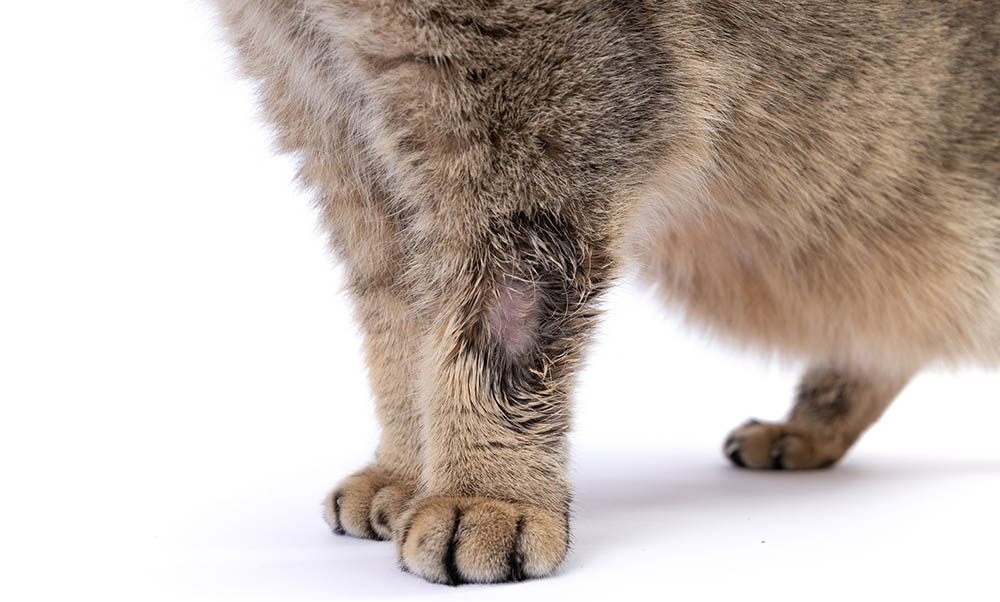
Close-up ringworm on cat's leg

Ringworm is often seen as a red, round-shaped ring of inflammation. Contrary to the name, ringworm is not caused by a worm but by a fungus. This fungus belongs to a group known as dermatophytes, which are fungi that affect the skin. Some dermatophytes affect only one type of species, while others can affect multiple types. In the case of ringworm, many species can become infected, and cats are just one among them.

What Is Ringworm and Where Does It Come from?

Ringworm is a fungus that affects the skin but can also affect the nails and hair. Ringworm causes a rash that is often itchy and circular. However, not all ringworm infections appear in the shape of a ring.

This fungus lives in the soil or on surfaces. If a surface becomes contaminated, the ringworm will not go away on its own. Fungal spores can remain on any surface for up to 18 months, so cleaning contaminated areas is vital.

Ringworm is transmitted via direct contact with the fungus, which includes direct contact with another infected animal or a contaminated surface. Not all contact will result in an infection 100% of the time, as the amount of contaminant and the age of the affected animal can determine whether it develops an infection.

Sometimes, infected cats may show no signs of having ringworm. This is especially true when long-haired cats are infected. Although there are no visible signs of ringworm, the condition is still contagious and can be passed to others if the infected cat comes in contact with them.
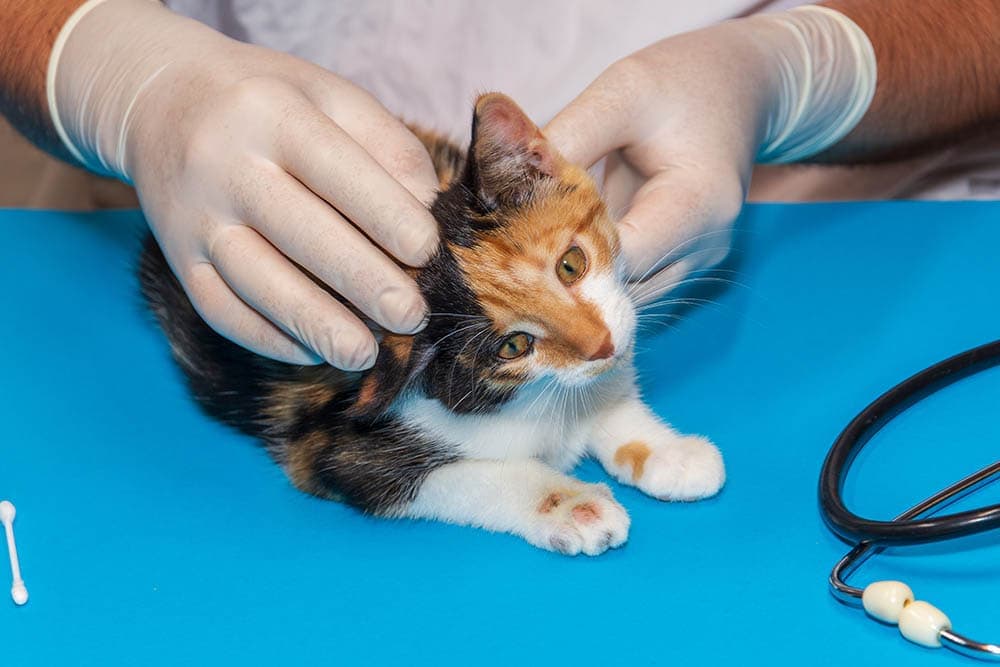
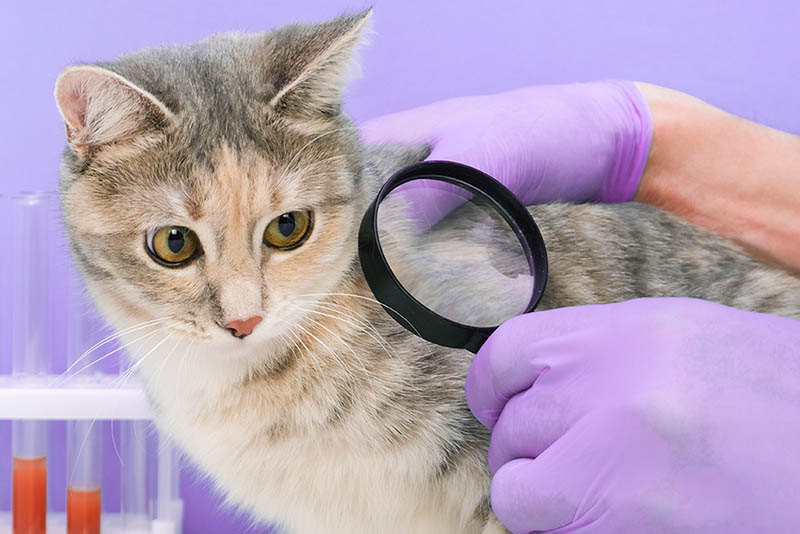
vet examining kitten with ringworm
Image Credit: Akimova Tatiana, Shutterstock

Signs of Ringworm in Cats

Ringworm feeds on keratin, which is found in the protective layers of your cat’s skin, hair, and nails. The deterioration of this protective layer makes way for infection as the spores take advantage of damaged skin and grow more rapidly.

Still, ringworm can be difficult to spot in cats. Sometimes, no signs are present at all. However, if your cat is showing signs of an infection, you will most likely notice the following:

  • Damaged, brittle hairs
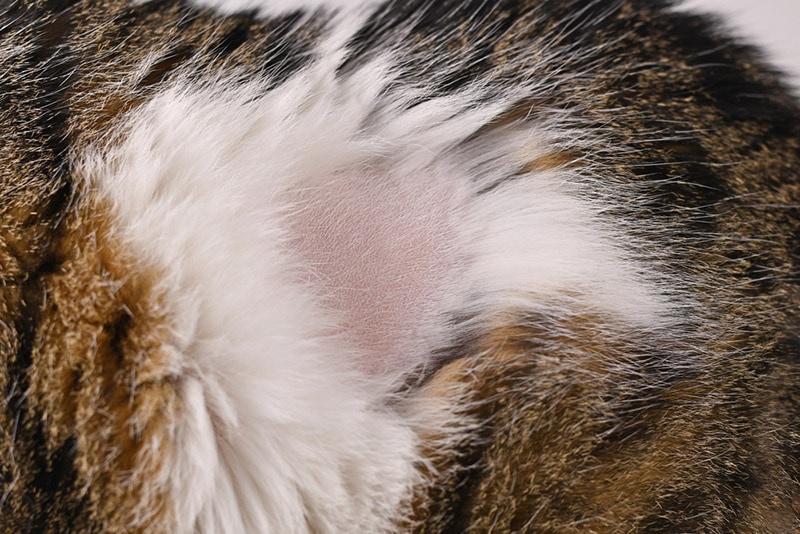
  • Hair loss (often in circular patterns)
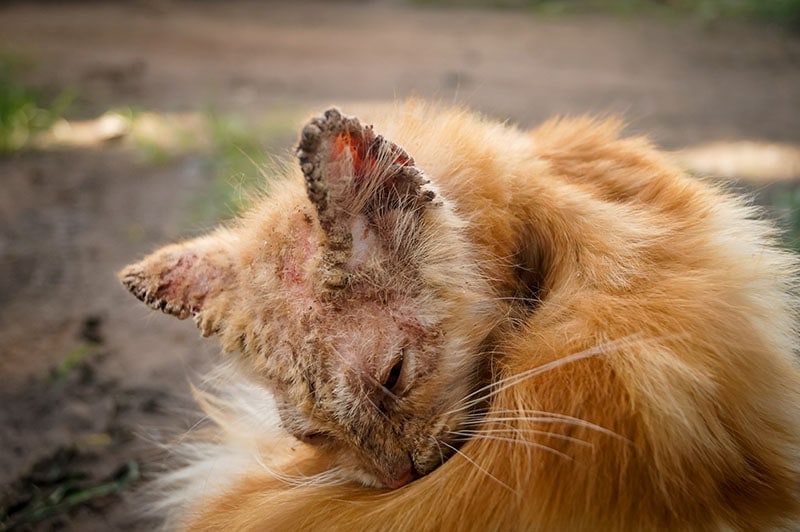
  • Inflammation of the skin
  • Dandruff
  • Crusty or scaly skin
  • Excessive grooming and scratching
  • Infected claws

Ringworm may present itself like other feline skin issues, such as feline acne, alopecia, and dermatitis. If you notice any unusual signs, take your cat to the vet for a diagnosis.
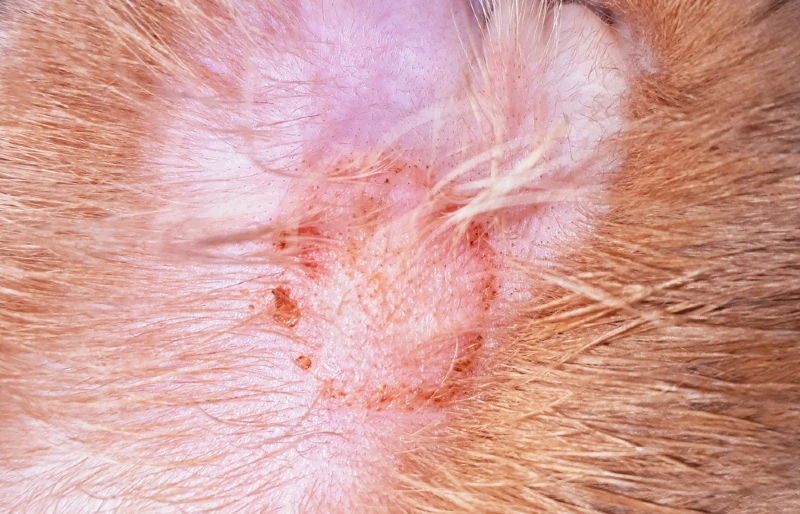
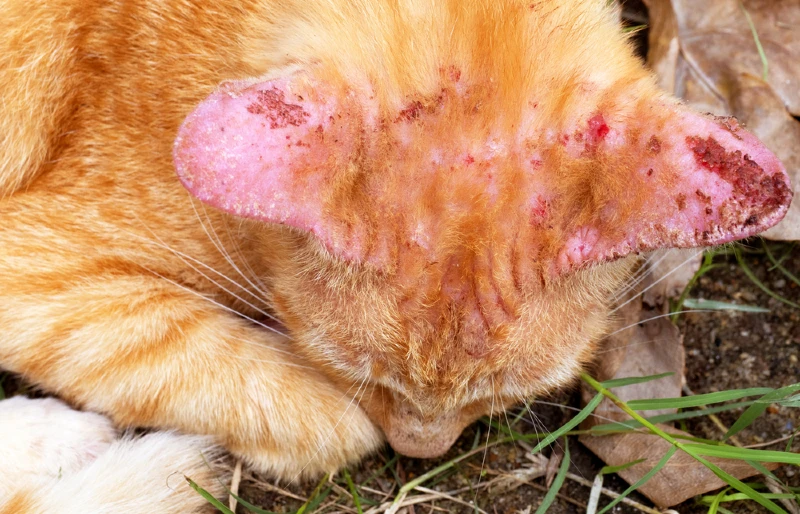
close up of cat lesion on ear due to ringworm
Image Credit: Yaya Photos, Shutterstock

How Do Cats Get Ringworm?

Ringworm is highly contagious, meaning that most cats spread it to each other. However, cats can become infected due to any physical contact with the fungus, including contact with infected dogs or contaminated household surfaces. They can even get ringworms from you.

Younger cats get ringworms more often due to their weaker immune systems. If your cat has longer hair, it may also have a higher chance of infection. It is more difficult for cats with long hair to groom themselves because fungus spores may be more easily trapped beneath long hairs.

Can Your Cat Spread Ringworm to You?

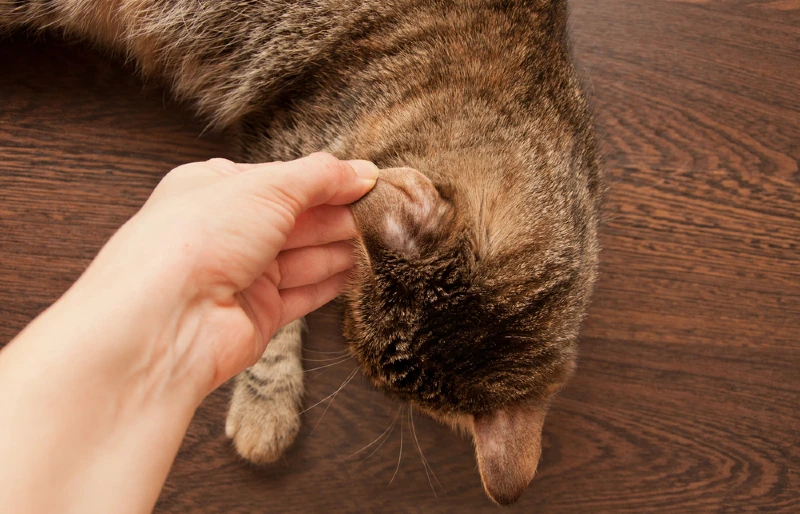
Ringworm is considered a zoonotic disease that can be transmitted between animals and humans. If your cat has ringworm, it can pass it on to you.
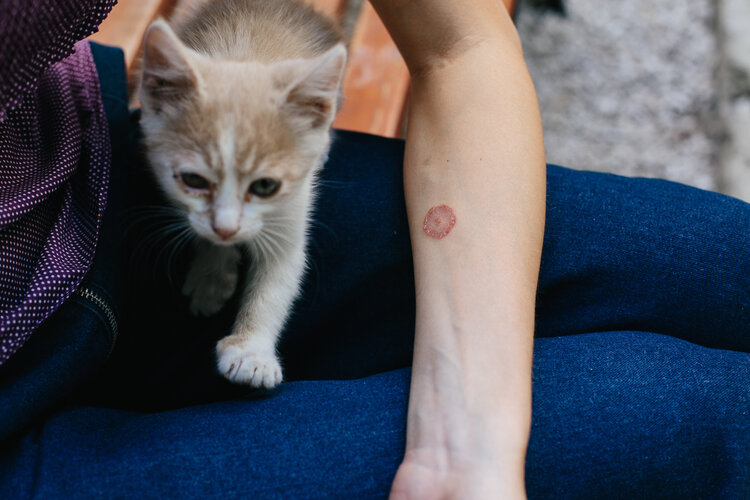
ringworm zoonoses
Image Credit: Ternavskaia Olga Alibec, Shutterstock

How to Stay Safe

Since ringworm is highly contagious, it is important to be diligent about always preventing the spread of ringworm or other zoonotic diseases. Some tips for preventing the spread include:

  • Taking your cat to annual checkups: If your vet can regularly assess your cat’s health, you will be able to take charge of your cat’s wellness and combat many preventable diseases.
  • Washing your hands regularly: Before cooking, eating, or cleaning your kitchen and dining area, make sure that your hands are clean. This is especially important if you have been playing with your cat. Wash your hands each time you touch or hold your cat.
  • Cleaning your cat’s items regularly: By keeping your cat’s toys, food bowls, water bowls, and bedding areas clean, you can eliminate any fungi, bacteria, or parasites that may have been lurking in its favorite places.
  • Take time before introducing new cats or dogs into the home: Having a quarantine room for a short period can help decrease the spread of infectious diseases.

Treating Ringworm in Cats

Topical products are the most common feline ringworm treatments. These include shampoos, ointments, and creams. Often, topical treatments may be used alongside regular oral medications. Ask your veterinarian what they recommend for your cat.

To ensure that the ringworm treatment is effective and recontamination does not occur, the environment your cat lives in must be cleaned. This includes bedding, couches, rugs, pillows, and other furniture.

Final Thoughts

Ringworm is a highly contagious fungus and can spread between cats, dogs, and people, so it is crucial to treat it promptly. Signs of infection will often manifest in the skin, coat, and nails, although there is also a chance that your cat will be entirely asymptomatic.

Treatment may include topical products and oral medications, but a thorough cleansing of the environment will also be necessary. If you suspect your cat has ringworm, take it to the vet as soon as possible.

Sources

Featured Image Credit: Nadya Bessonov, Shutterstock

Get Hepper In Your Inbox

Pet care tips from our vets and experts, straight to your inbox.

List

Select all that apply.

You may opt-out at any time. View our Privacy Policy for more information.

Jordyn Alger
Authored by

Jordyn Alger

Join the conversation

Ask a question, share your story, or send private feedback.

Rate this post
Required to post. Only our editors see your rating.
Who should see this?

A human reviews every comment before it appears. Your email is never published.

Picked to go with this article

How Cats Get Ringworm: Vet-Approved Causes, Symptoms & Prevention

How Cats Get Ringworm: Vet-Approved Causes, Symptoms & Prevention

Like all animals and people, cats can suffer from a variety of different skin and hair conditions. The most common infectious skin condition in cats is ringwor…

Nicole Cosgrove
By Nicole Cosgrove ·
Can Indoor Cats Get Ringworm? Signs & FAQ (Vet Answer)

Can Indoor Cats Get Ringworm? Signs & FAQ (Vet Answer)

An indoor cat has a smaller chance of getting ringworm, but never say never. Ringworm is spread through direct contact or through fomites—an object that carrie…

Dr. Chantal Villeneuve
By Dr. Chantal Villeneuve ·
How Long Should I Quarantine a Cat With Ringworm? Vet Approved Facts & FAQ

How Long Should I Quarantine a Cat With Ringworm? Vet Approved Facts & FAQ

If your cat has made their trip to the vet and been diagnosed with ringworm, treatment has likely already begun. But because this fungal infection is contagiou…

Ashley Bates
By Ashley Bates ·
Fungal Infection in Cats: Vet-Explained Causes, Prevention & Signs

Fungal Infection in Cats: Vet-Explained Causes, Prevention & Signs

Fungal infections are caused by fungi, parasitic organisms that produce spores. Infections can become established by ingestion, inhalation, or directly through…

Dr. Emma Chandley
By Dr. Emma Chandley ·

Keep reading

More stories you might like

8 Signs of Ringworm in Cats (With Pictures) - Vet Answer

Ringworm is a fungal infection of the skin, affecting the skin along any part of the body, including the back, nose, nails, and ears. It is usually mild and ca…

Dr. Chantal Villeneuve
By Dr. Chantal Villeneuve ·
8 Signs of Ringworm in Cats (With Pictures) - Vet Answer

Why Does My Cat Have a Bald Spot? 5 Vet-Approved Possible Reasons

Alopecia is the scientific word for partial or complete loss of hairs in areas where they would normally be present. One way alopecia can develop in cats is as…

Annaliese Morgan
By Annaliese Morgan ·
Why Does My Cat Have a Bald Spot? 5 Vet-Approved Possible Reasons

How Do Cats Get Mange? Vet Reviewed Signs, Causes & Treatment

Cat mange is a skin disease caused by parasitic mites. Some of its signs are excessive scratching, fur loss, and redness, which it also shares with other felin…

Nicole Cosgrove
By Nicole Cosgrove ·
How Do Cats Get Mange? Vet Reviewed Signs, Causes & Treatment

Can You Catch a Cold from Your Cat? Vet Approved Facts

Your cat sneezed a minute ago, and your nose is feeling itchy. Oh no, you may be thinking, have I caught my cat’s cold? There is no need to fear; the viruses t…

Jordyn Alger
By Jordyn Alger ·
Can You Catch a Cold from Your Cat? Vet Approved Facts

Cat Dander vs. Cat Dandruff: Differences & What to Do (Vet-Approved)

You are petting your beloved kitty and suddenly you notice a little dandruff of dry skin all over her silky coat. But is it really dandruff or dander? How can…

Genevieve Dugal
By Genevieve Dugal ·
Cat Dander vs. Cat Dandruff: Differences & What to Do (Vet-Approved)

Roundworms in Cats: Our Vet Explains Causes, Signs & Treatments

We do our best as humans not to think about the small creatures that want to make a home in our bodies. The thought of worms squirming around our insides is en…

Dr. Meg Barnes
By Dr. Meg Barnes ·
Roundworms in Cats: Our Vet Explains Causes, Signs & Treatments

Can Cats Get Lice from Humans? Vet-Approved Facts & FAQ

If you’re a parent, you may be familiar with the dreaded prospect of receiving word from your child’s school that head lice were discovered in the classroom. T…

Elizabeth Gray
By Elizabeth Gray ·
Can Cats Get Lice from Humans? Vet-Approved Facts & FAQ

How to Get Rid of Cat Dandruff: 7 Helpful Methods

Dandruff can be an embarrassing issue that is difficult to get rid of. Unfortunately, even our furry friends aren’t immune to the itchy, flaky skin of dandruff…

Nicole Cosgrove
By Nicole Cosgrove ·
How to Get Rid of Cat Dandruff: 7 Helpful Methods