Hepper is reader-supported. When you buy via links on our site, we may earn an affiliate commission at no cost to you. Learn more.
How Do Cats Get Mange? Vet Reviewed Signs, Causes & Treatment


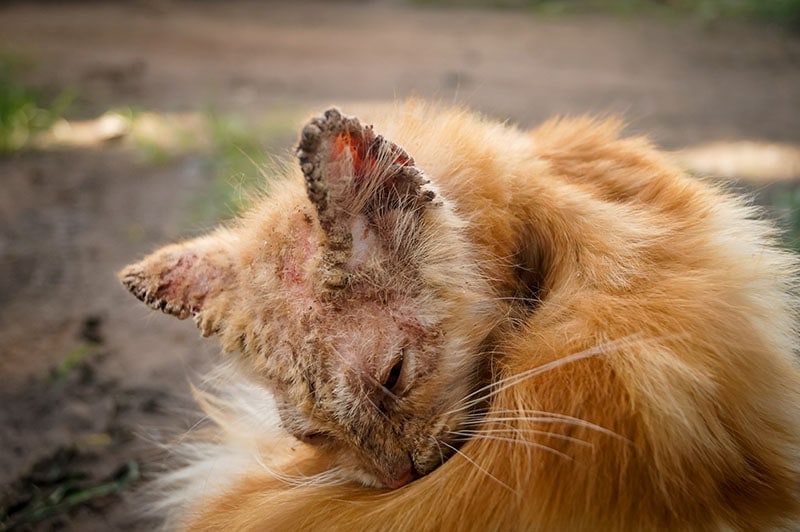
Cat mange is a skin disease caused by parasitic mites. Some of its signs are excessive scratching, fur loss, and redness, which it also shares with other feline skin issues. As such, it may be hard for cat owners to identify it right away.
The biggest problem with mange is that it’s incredibly contagious, and cats can catch mange from other cats, infected areas or objects. A cat with mange can spread it to other cats, other pets, and in rare cases, even to humans. And it only takes one pair of mites to cause an infestation that can take over an entire household.
In this article, we’ll take a closer look at mange in cats, including how cats can get it, diagnosis, treatment, and more.

The 3 Ways Cats Can Get Mange
Mange primarily spreads through contact, so even indoor cats are not immune to catching it. Here are some of the most common ways cats can get mange:
1. Encountering infected animals
The signs of mange don't appear until around 10 days to as long as eight weeks after infection. This means that infected cats can unknowingly spread the mites to other animals in their household or even to their owners. Cats can also get mange from dogs with canine scabies.
2. Being exposed to infected areas
Mange mites can live in soil for up to 10 days, during which they can be picked up by cats who encounter them. Outdoor cats are at a higher risk of exposure to mange mites from wildlife, such as foxes, coyotes, and raccoons.
3. Contact with infected objects
Cats can also get mange from encountering items that have been contaminated by the mites, like pet beds, collars, and leashes. These mites are also capable of living in carpets, drapes, furniture, beds, couches, grooming tools, and other household items.
Common Types of Cat Mange
Several types of mange can affect cats1:
- Sarcoptic mange (canine scabies): While more common among dogs, canine scabies can also infect cats.
- Notoedric mange (feline scabies): The signs of feline scabies are similar to canine scabies, but they're caused by another species of mites.
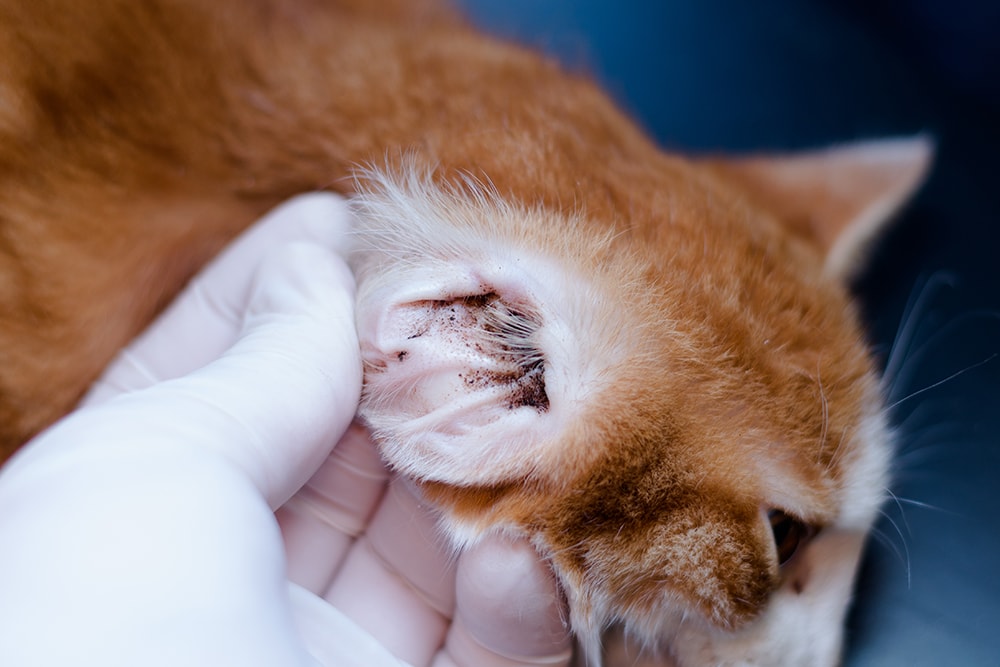
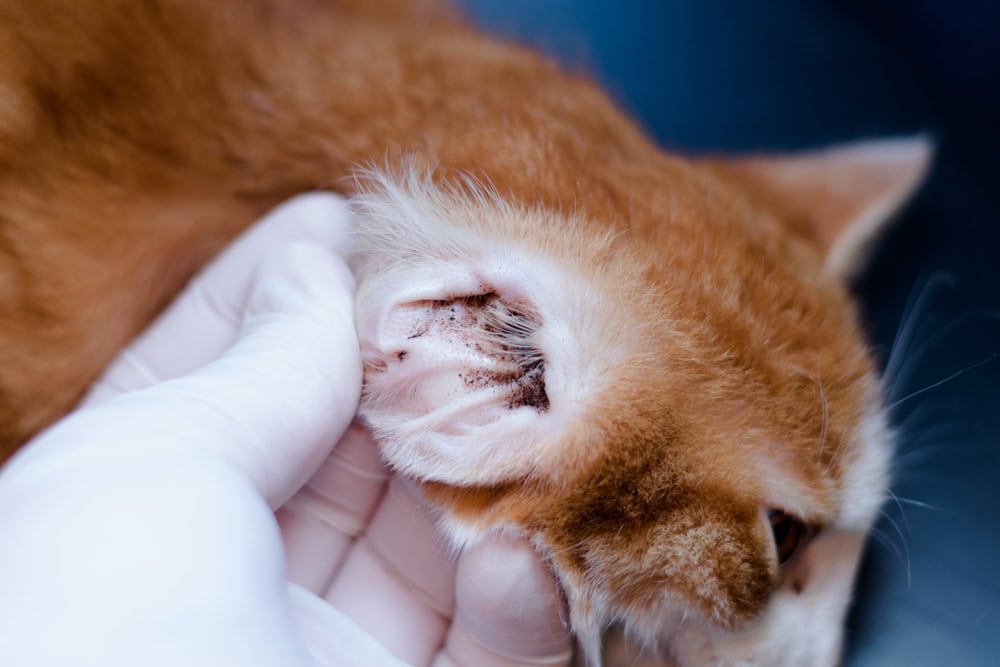
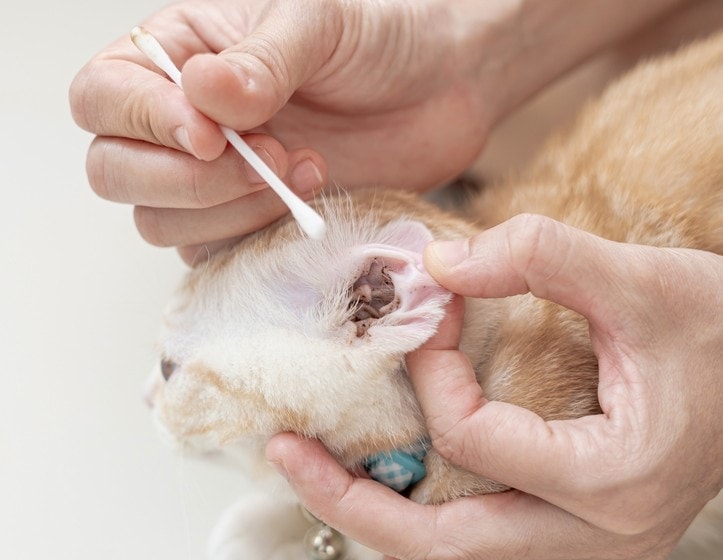
- Otodectic mange (ear mites): These mites target a cat's inner ear canal, but they can also spread to the outer ear. Untreated, it can eventually damage their ear drums.
- Cheyletiellosis (walking dandruff): This type of mange gets its name from how they look: small and white, just like dandruff. The "walking" part is because they move all over a cat's body. It's not just contagious to other cats but to humans and other animals as well.
- Trombiculosis (chiggers): Unlike other types of cat mange, these mites will feed on your cat's blood and then drop off. Chiggers look like tiny, orange ovals and usually appear on a cat's belly, paws, and head.
Symptoms of Mange in Cats
The signs of mange can vary depending on the type, but these are some of the most common signs to look out for:
- Excessive itching and scratching
- Sores
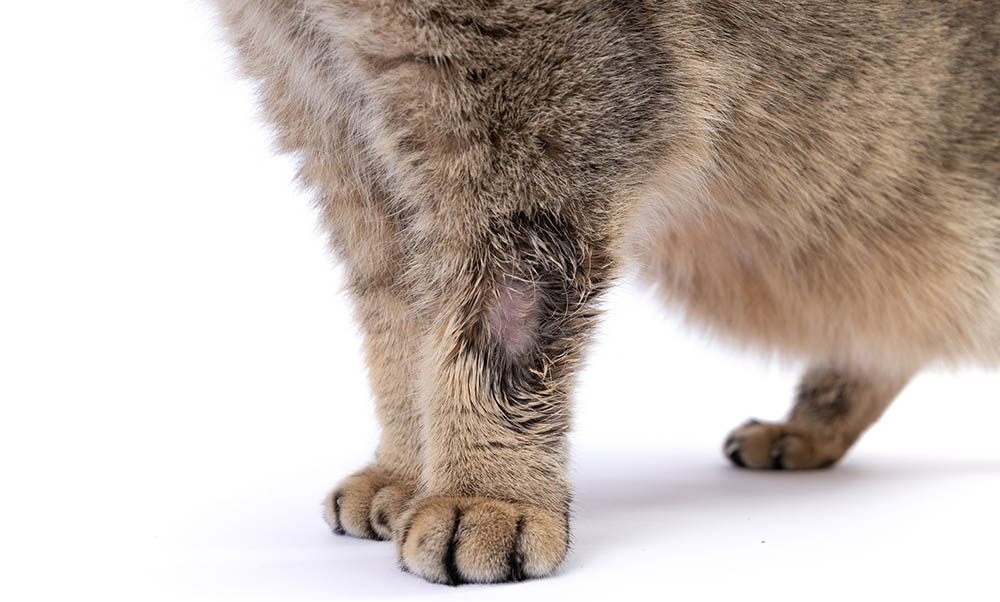
- Hair loss
- Excessive debris in the skin
- Headshaking
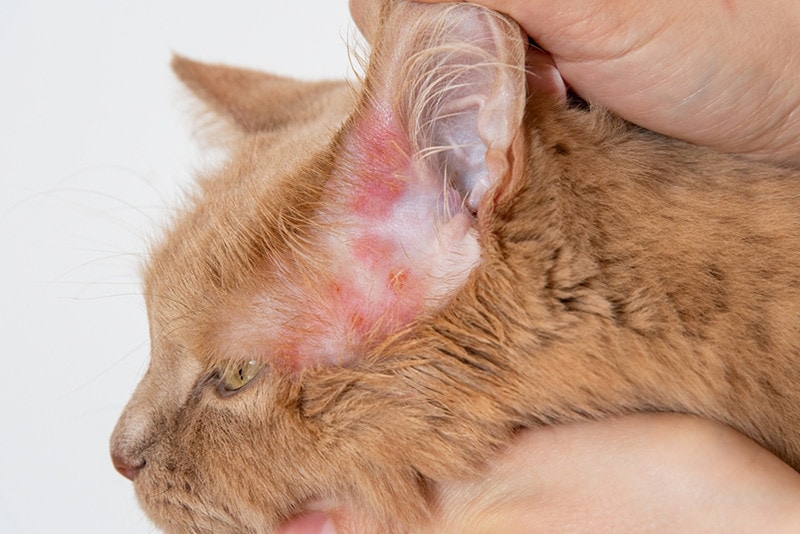
- Swelling and redness
- Skin lesions
- Bad odor and debris in the ears
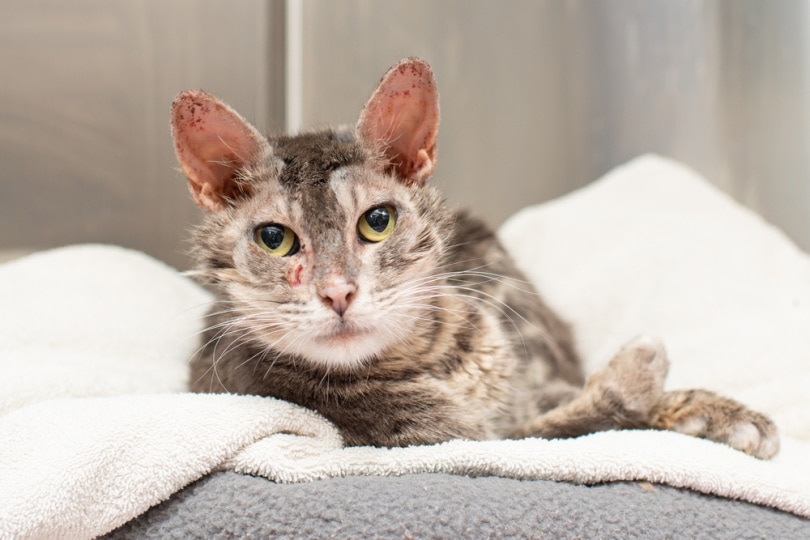
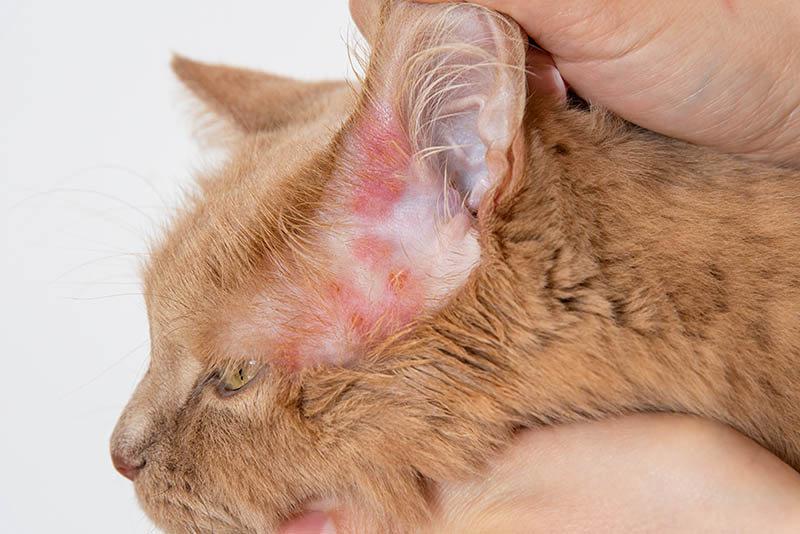
- Crusting (this usually begins around the ears, face, and legs and spreads all over the body)
- Scales and scabs
It's unlikely for mange to kill cats, but it's possible. Untreated mange, especially in malnourished or sick cats, can lead to secondary infections, anemia, and in severe cases, death.
Diagnosing Cat Mange
A vet will be able to diagnose if your cat has mange through a physical exam and skin scrape. They'll check your cat's signs and ask about their recent activities.
To confirm the diagnosis, the vet will perform a skin scrape to check for the presence of mites and eggs. This is done by collecting a small sample of your cat's skin or fur (i.e., scraping the affected area) and examining it under a microscope.
Treatments for Mange in Cats
Treating cat mange depends on the type and severity of the infection. The treatment regimen may include one or more of the following:
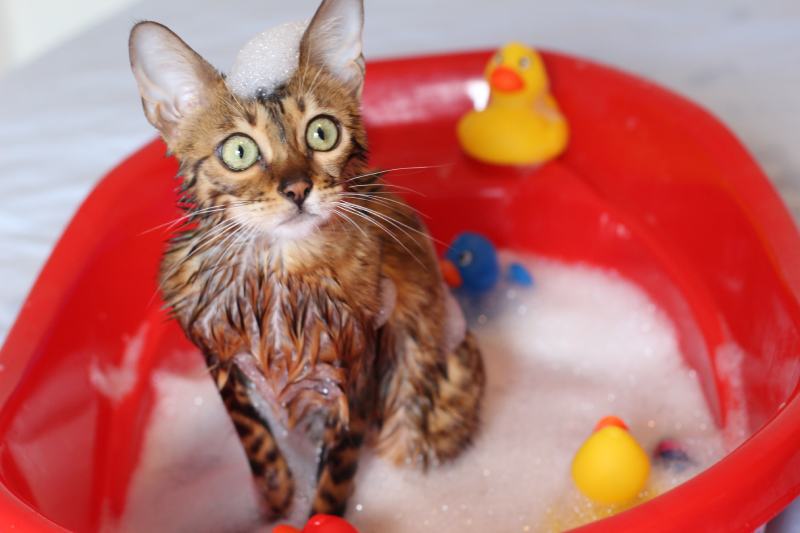
- Medicated shampoos
- Flea and tick control medication
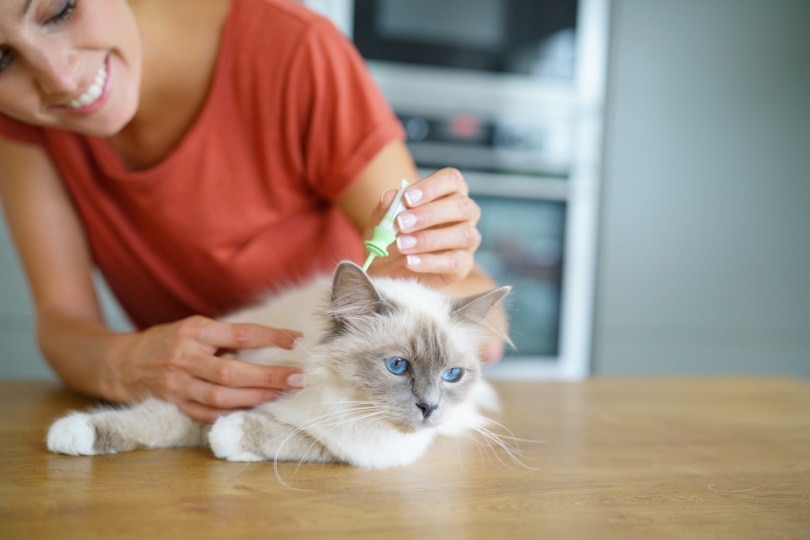
- Vet-prescribed ear drops for ear mites
- Soothing creams and ointments
- Lime sulfur dips
If you have a multi-pet household and one cat has mange, it's a good idea to treat the rest of your pets for it (with vet approval). Remember that the signs of cat mange can take up to four weeks to show, so other pets may already be infected without you knowing.
During the treatment, make sure to do the following as well:
- Isolate your cat from other pets to avoid spreading the infection.
- Wash with hot water all the linens, blankets, toys, and other items your cat has been in contact with.
- Vacuum your home thoroughly to remove any mites or eggs.
- Disinfect all areas that your cat frequents.
- Talk to your vet about any other measures you can take to prevent reinfection.
- Monitor your cat's signs closely and go back to the vet if they don't improve.
Preventing Cats From Getting Mange
While you can't completely get rid of the risk, you can reduce the chances of your cat getting infected with mange.
Use these tips:
Note that cats can get reinfected, so making these a regular part of your routine can go a long way in keeping your pet safe and healthy.
Final Thoughts
Mange can affect cats of any age, breed, or size. Knowing the signs to look for and taking preventive measures can help you keep your cat healthy and avoid any serious health problems.
If your cat does get infected, do not panic. Mange is highly treatable and rarely fatal. The key is starting treatment ASAP to prevent it from getting worse or spreading to other pets. With the right care, your cat will be feeling better in no time.
Featured Image Credit: Suharji Esha, Shutterstock
Get Hepper In Your Inbox


Pet care tips from our vets and experts, straight to your inbox.
You may opt-out at any time. View our Privacy Policy for more information.
Nicole is a lover of animals of all sizes but is especially fascinated with the feline variety. She’s the proud mom of Baby, a Burmese, and works every day so he can relax in the sunshine or by the fire. She’s always had a cat in her home and has spent countless days with others, observing behaviors and softening up even the grouchiest of the lot. Nicole wants to share her kitty expertise with you so you and your cat can live happy, healthy, and care-free.
Join the conversation
Ask a question, share your story, or send private feedback.