Hepper is reader-supported. When you buy via links on our site, we may earn an affiliate commission at no cost to you. Learn more.
Can Parrots Eat Plums? Vet-Reviewed Nutritional Facts


In this article
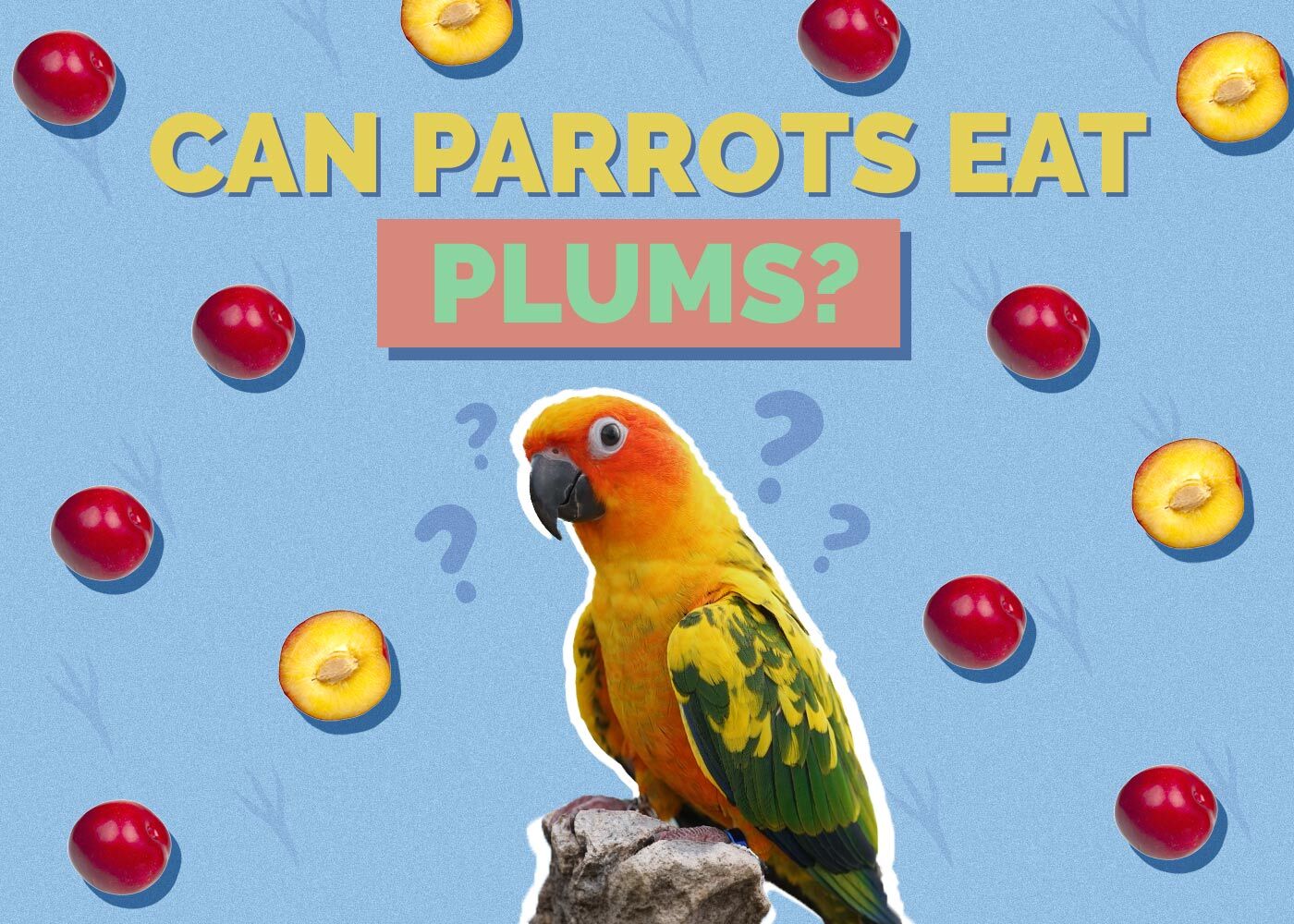
Parrots have grown in popularity as household pets. As more pet owners take parrots under their metaphorical wing, there is a greater need for guidelines about a parrot’s diet. You have likely heard that fresh fruits and vegetables are a great supplement to your parrot’s pellet food, but that doesn’t mean all produce is safe.
Fortunately, most fruits are safe for parrots, including plums.
There are some health concerns that you should be aware of before feeding plums to your parrot. In this article, we will discuss the benefits and health concerns of feeding plums to your parrot and provide tips for feeding plums to your pet properly.

Benefits of Feeding Plums to Your Parrot
Plums are a delicious and nutritious treat for your parrot.
They contain plenty of excellent vitamins and minerals, such as:
Since plums are a great source of calcium and vitamin A, parrots from the diminutive lovebirds (Agapornis spp.), African grey parrots (Psittacus erithacus), to the impressive macaw (Ara macao) can benefit from including these juicy fruits in their diet.
Health Concerns With Feeding Plums to Parrots
While plums can provide many benefits for your parrot, there are some considerations to keep in mind.
- The pit: Certain fruit pits and seeds should never be given to your bird. Not only could they cause choking or beak damage, but many of them contain levels of a chemical that converts into cyanide when digested. Although this chemical is normally in almost negligible amounts, for small creatures like parrots, it is a risk worth avoiding. Therefore, removing the flesh of the plum from its pit is crucial to ensuring your parrot’s safety.
- Sugar: When fed in moderation, this isn’t typically a problem; however, when fed in excess, parrots may develop health issues such as gastrointestinal upset or obesity. For owners of Amazon parrots (Amazona spp.), be extra cautious when feeding sugary foods to your pet because this parrot is prone to obesity.
More Fruits With Dangerous Pits
Plums aren’t the only fruit with dangerous cyanide levels within its pit. Other fruits include cherries, apples, peaches, and apricots. When feeding these fruits to your parrot, be cautious and ensure the pit is removed before placing it in your pet’s cage - it is always better to be safe than sorry.

How to Prepare Plums for Your Parrot
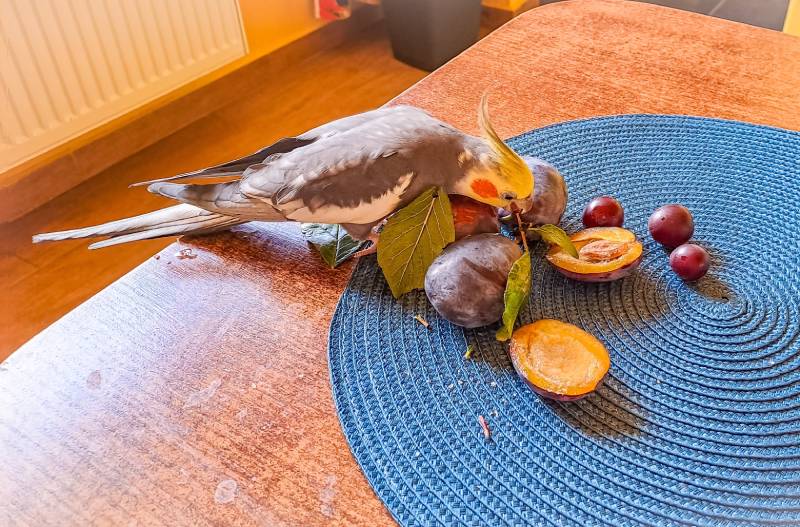
When feeding a plum to your parrot, the first step you should take is to wash the fruit thoroughly. Store-bought plums may have pesticides or preservatives lingering on the skin that can be hazardous to your parrot’s health, so wash them off before feeding.
Secondly, cut the fruit into manageable chunks and remove the pit. The pieces of fruit should be proportional to the size of your parrot.
Can Parrots Eat Prunes?
While plums can be a healthy treat for your parrot, prunes should be avoided. This is because prunes typically have a much higher sugar content than plums, making them much less healthy for your pet. Stick to fresh plums, and your parrot’s health will be better off.
What to Do if Your Parrot Eats Something They Shouldn’t
Accidents happen. And when they do, it is important to know how to respond. So, if your parrot eats something that they shouldn’t, such as a plum pit or a prune, what should you do?
Do not attempt to induce vomiting, as this will harm your bird. Instead, immediately call your vet or an emergency veterinarian clinic.
Follow your vet’s instructions. You may be told to check your bird’s mouth to see if they have truly swallowed the item in question or if it is still hiding. If it is hiding in your parrot’s mouth, you may be instructed to remove it carefully.
Otherwise, your vet will need to know what your parrot ate in as much detail as possible. This will help your vet know how to best respond. For instance, if your parrot snatched a single bite of a prune, there likely isn’t any reason to panic. While unhealthy, prunes are not toxic. In this instance, your vet may simply recommend that you monitor your parrot’s health over the next day or so.
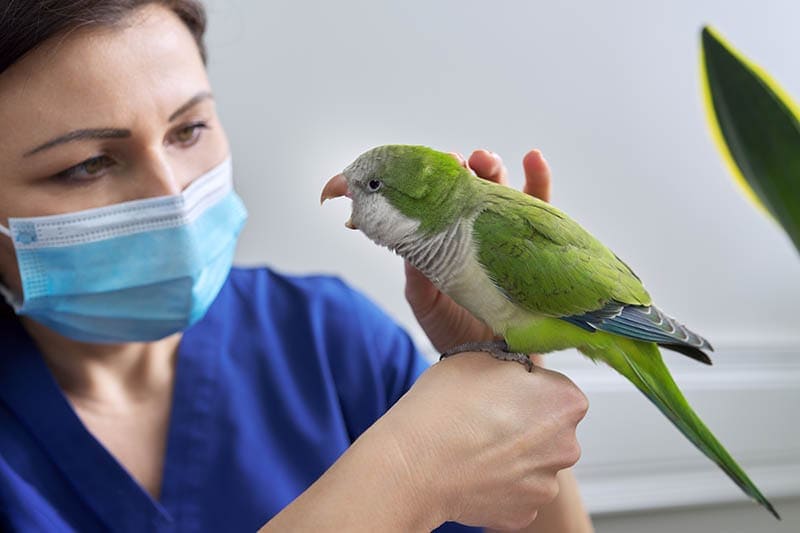
On the other hand, if your parrot swallowed a plum pit, your vet may insist that you bring your pet into the clinic. To determine any other underlying concerns, you may be asked questions about your parrot’s lifestyle, diet, health conditions, and more. Depending on the severity of the situation, your parrot may receive various forms of therapy, such as fluid or oxygen support.
Remember that prompt action increases your parrot’s chances of a speedy recovery. Birds are especially sensitive creatures, so responding quickly to a potential toxin may be the difference between life and death.
Frequently Asked Questions
What Foods Are Toxic for Parrots?
While not all foods are healthy for parrots, some should be avoided at all costs.
These include:
Are Seeds Good for Parrots?
Seeds have been a popular bird food for a long time. However, as we understand more about a parrot’s dietary needs, it becomes more and more evident that for most parrot species, a diet composed purely of seeds will result in nutritional deficiencies, and many parrots shouldn’t eat them at all.
Depending on the species of parrot, seeds can form a small part of the diet, whereas granivore species like parakeets (also known as budgerigars, Melopsittacus undulates) will eat quite a lot of them, but they still need other foods to ensure the right balance of nutrients.
This is why it is vital to know and understand your parrot species, as there is no “one rule fits all” when it comes to parrot nutrition.
What Should You Feed Your Parrot?
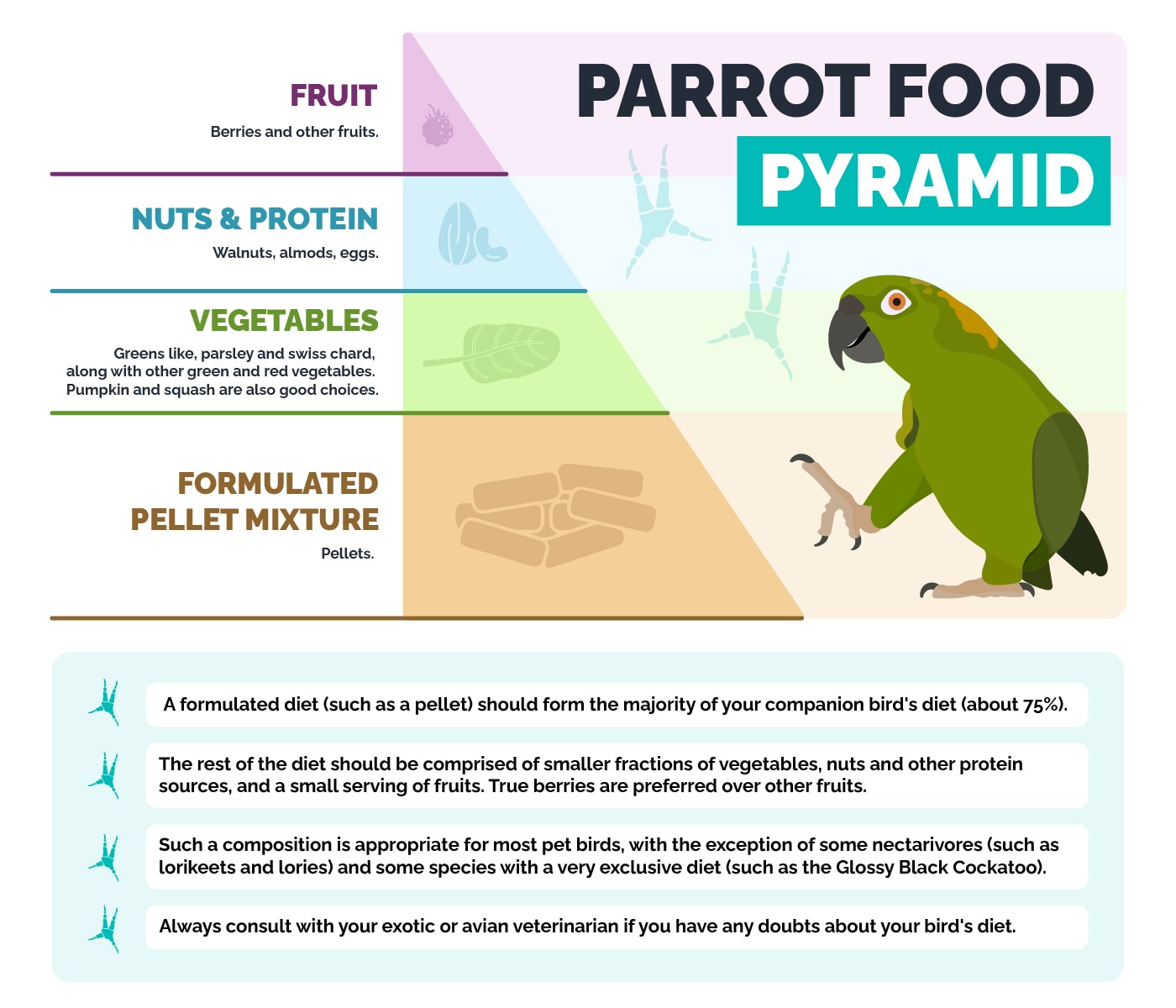
The bulk of your parrot’s diet should be species-specific pelleted bird food. Search for a commercial pellet food developed with your parrot’s species in mind to ensure that they receive a healthy diet. You should supplement this pellet food with fresh vegetables and fruits, such as plums. However, fruits should only be fed sparingly, as they are high in sugar.
Conclusion
Plums are a tasty treat for your parrot and can provide plenty of health benefits. At the same time, there are health concerns to be wary of, such as the presence of a potentially toxic pit. So long as you carefully remove the pit from the plum and feed only the flesh to your parrot, you shouldn’t have any issues.
Sources
Featured Image Credit by: Halil ibrahim mescioglu, Shutterstock.
Get Hepper In Your Inbox


Pet care tips from our vets and experts, straight to your inbox.
You may opt-out at any time. View our Privacy Policy for more information.
Pets are Jordyn’s passion, cats especially. Whenever she has the opportunity, she loves to learn about them and share her knowledge with everyone. She is devoted to her tabby cat named Jack and works hard to buy him his favorite treats and toys. Discovering new ways to better care for her pet is always on her to-do list, and she is eager to help pet parents everywhere who have similar pursuits. In her spare time, she loves to read, write, and take long walks. She has a creative spirit, which often helps her to come up with funny cat names.
Join the conversation
Ask a question, share your story, or send private feedback.