Hepper is reader-supported. When you buy via links on our site, we may earn an affiliate commission at no cost to you. Learn more.
Can Parrots Eat Walnuts? Vet-Verified Facts & FAQ


Parrots are often at the top of the list of avian choices when wanting a pet bird. Indoor birds like parrots have become exceptionally popular because these creatures are so beautiful, colorful, and intelligent. The numbers are continuing to grow as normal household pets, like dogs and cats. This may lead many parrot owners to wonder what, aside from their daily standard diet, can you feed your parrot, as it’s a fun and loving act to do.
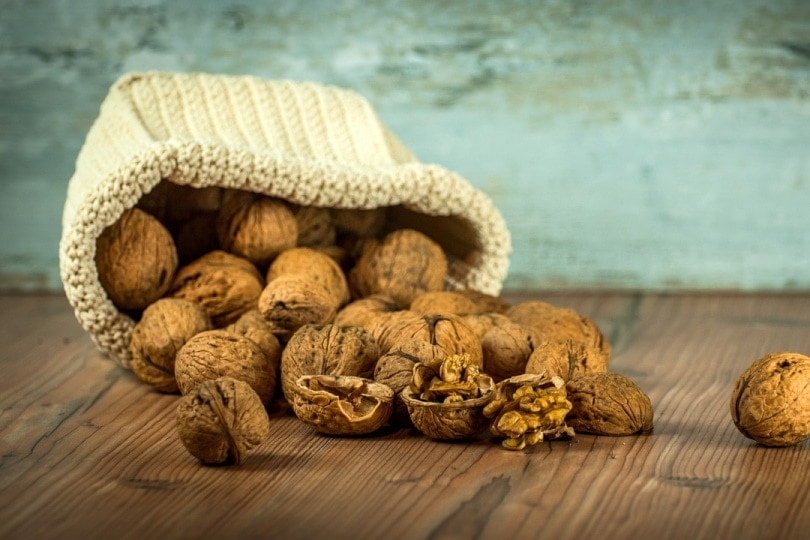
Nuts and seeds are popular snack options for parrots, and boy do they love them! Walnuts are widely available, commonly enjoyed by humans, and are in abundance, particularly around certain holiday times such as Christmas. As it happens, walnuts are also a great variety of nut to offer a parrot in moderation, so let's look into this nutty treat a bit more.

Can I Feed My Parrot Walnuts?
If the walnuts are shelled and unseasoned, then yes, you may feed your parrot a few of these nuts. Care does need to be exercised, however, as nuts tend to be high in fat meaning that they suit certain parrots better than others. There are over 400 species of parrot, and some species may end up packing on the pounds and become unhealthy very quickly if given a lot of high fat foods like nuts and other treats. In all cases, while walnuts can be fed to parrots these will need to be fed in moderation.
Walnuts (and other nuts) are treats and should only be offered as such, not as the sole source of food for them. A correct maintenance diet specifically designed for parrots needs to be their staple food.
As a general rule, due to the varied species of parrots and the risk of obesity from eating high-fat foods or eating too many of the wrong snacks, it is advisable to consult an expert if you are unsure if your particular parrot can eat nuts like walnuts and in what quantity.
Are Walnuts Healthy?
As mentioned in moderation, yes, walnuts are healthy. They are high in fat but also contain a lot of the healthy fats a body needs to function properly. Walnuts, it is suggested, also have an anti-inflammatory effect that can help keep blood vessels healthy in humans 1.
Other helpful nutritional elements of walnuts include (per 100g of English walnuts):
What Should a Parrot Eat?
As with any animal, parrots have a specific diet and specific requirements unique to them. It is best to speak with an avian veterinarian or specialist for an exhaustive explanation of their diet to prevent malnutrition and many illnesses. That being said, a common parrot diet is composed of 60-75% pellets (made for parrots and that do not contain additives) and 25-40% other foods. Other foods include vegetables, fruits, whole grains, seeds, and nuts.
If a daily balanced diet isn’t provided, your parrot will not be getting all the nutrition they need and illness may prevail. Malnutrition in parrots can lead to everything from feeling generally and consistently unwell to organ failure.

Signs of Malnutrition in Parrots
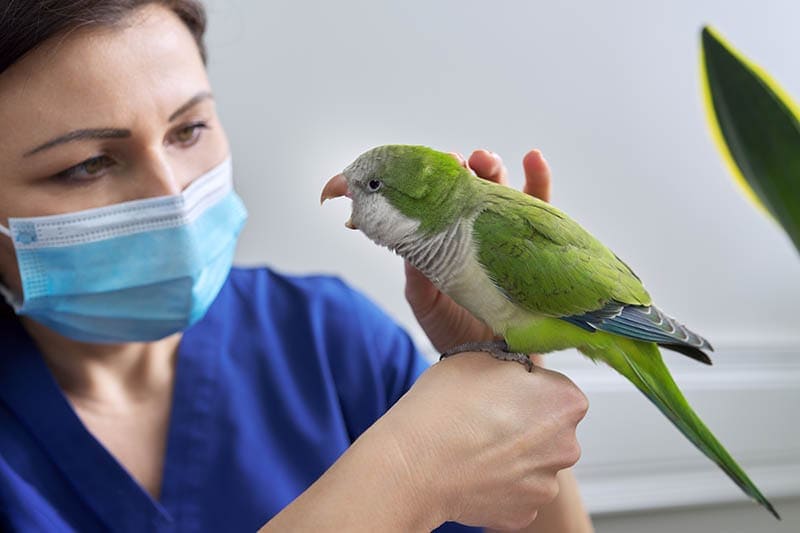
If the following signs are currently noted in your parrot or any of them begin to occur, then your parrot requires veterinarian attention.
- Listlessness/Lethargy
- Not eating
- Puffed feathers
- Weakness
Frequently Asked Questions
What Nuts Can Parrots Eat?
Other than walnuts, parrots can (and will) eat a variety of nuts, including almonds, pecan, Brazil nuts, cashews, hazelnuts, shelled peanuts, and pistachios. Again, all of these should be free of seasonings and fed in moderation. Speak to your veterinarian about proper amounts for your specific parrot.
Can I Feed My Parrot English Walnuts?
There are two main varieties of walnuts: English and Black. Both can be consumed by parrots, however, the English variety is typically the most common one used.
Can a Parrot Crack a Walnut?
Parrots have amazingly powerful beaks. Some species can exert up to 350–400 PSI with their bite, which is way stronger than humans and even dogs. Therefore, due to the strength and the shape of the beak, some parrot species can crack open many nuts, including walnuts. This skill may be bird-dependent.
Conclusion
There is no doubt most parrots will delight in being fed nuts, including walnuts! They are a healthy, widely available, and economical snack to offer parrots. In general, there should be no harm in this gesture or undesired consequences as long as they are fed in plain and in safe and healthy amounts for your particular species of parrot. This is best checked with an avian expert. If so, happy snacking!
See Also:
Sources
Featured Image Credit: engin akyurt, Unsplash
Get Hepper In Your Inbox


Pet care tips from our vets and experts, straight to your inbox.
You may opt-out at any time. View our Privacy Policy for more information.
Annaliese began her career as a veterinary nurse in Edinburgh, later advancing her qualifications with a diploma in advanced veterinary nursing in surgery from London. Her work in small and mixed veterinary practices led her to become a head nurse, where she trained other veterinary nurses, managed the nursing department, conducted nurse clinics, and developed new patient care protocols.
Throughout her career, Annaliese has cared for thousands of patients and their owners, setting higher standards in nursing regimes with a focus on surgery and anesthesia. She co-authored multiple veterinary nursing textbooks and contributed to various mainstream publications in the UK and USA. After more than twenty years in the veterinary and pet care professions, she retired from clinical practice to pursue full-time writing. Having cared for thousands of patients and owners, Annaliese specialized in surgery and anesthesia. She was asked to co-author several veterinary nursing textbooks and contributed to a number of other publications in the UK and USA. After more than two decades in the veterinary and pet care industries, she retired her scrub suit and now works as a full-time writer.
Annaliese Morgan has been a dedicated veterinary nurse for over two decades, having completed a diploma in advanced veterinary nursing in surgery from London and qualifying from Edinburgh. Her professional experience includes managing a nursing department, training other veterinary nurses, providing patient care, and running nurse clinics in both small and mixed veterinary practices.
As an expert in surgery and anesthesia, Annaliese has treated thousands of patients and owners. In addition to being asked to co-author multiple veterinary nursing textbooks, she has written for a variety of publications in the UK and USA. After a long and successful career in the veterinary and pet care professions, Annaliese now dedicates her time to writing full-time. You can find out more about her work at www.annaliesemorgan.com.
Join the conversation
Ask a question, share your story, or send private feedback.