Hepper is reader-supported. When you buy via links on our site, we may earn an affiliate commission at no cost to you. Learn more.
Can Turtles Eat Dog Food? Vet Approved Facts & Safety Guide


In this article
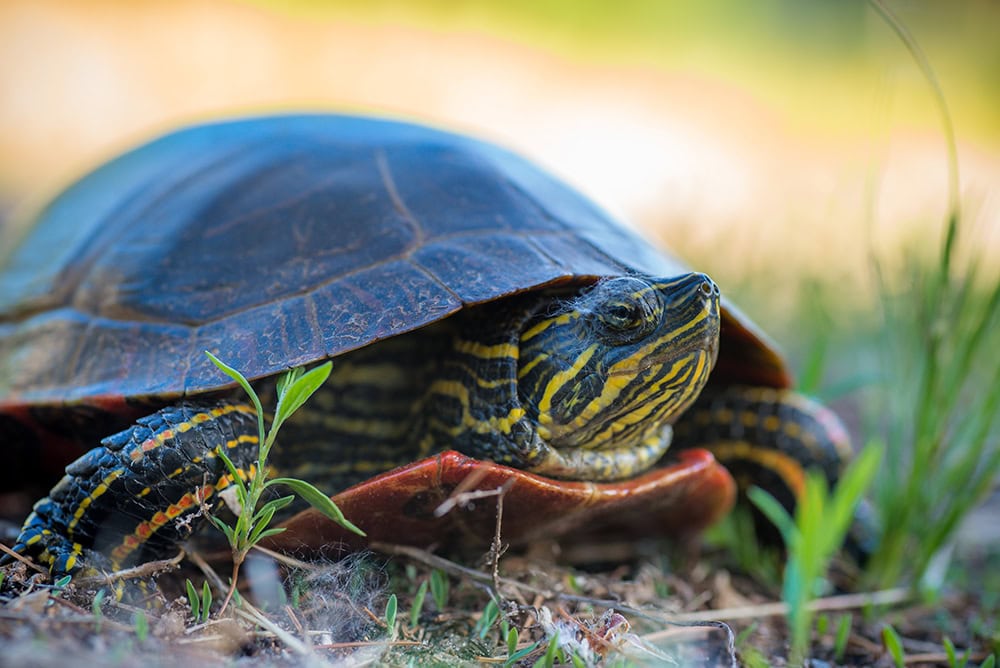
As omnivores, turtles need to eat a mix of plant and animal-based foods. Getting captive turtles to eat a balanced diet can be hard, so knowing which foods are okay to feed is important. While turtles can eat small portions of dog food, eating too much can cause long-term health issues for these reptiles.
In this article, we’ll discuss the pros and cons of feeding turtles dog food and how to do so safely. We’ll also cover the basics of a turtle’s daily diet, including other animal protein sources that might be better options than dog food.

Why Would You Want to Feed Turtles Dog Food?
Unlike herbivorous tortoises, turtles need to eat animal protein to stay healthy. The exact percentage of plant and animal food sources in a turtle’s diet will vary by age and species. Young, growing turtles generally need more animal protein than full-grown adults.
To provide the broadest mix of nutrients, it’s best to feed turtles a variety of animal-based foods. Because dogs are also omnivores, their kibble is typically high in protein. Dog food provides a low-cost, easily accessible source of protein for turtles.
The Problem With Dog Food
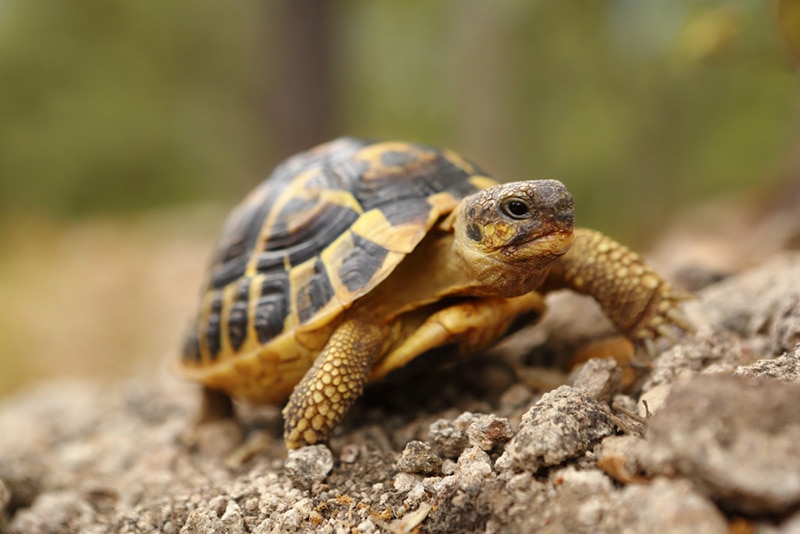
The primary problem with feeding dog food to turtles is that it’s not formulated for their nutritional needs. Dog food is nutrient-dense, and although it contains minerals and protein that turtles need, the amounts are unsuitable for turtles. Over time, these excess minerals build up in the turtle’s soft tissues.
Mineralized soft tissue, especially in the heart or kidneys, can cause dangerous, sometimes fatal health issues for turtles. Processed dog food may also contain ingredients that aren’t healthy for turtles, including artificial flavors and colors. It has more fat, sugar, or salt than a turtle should eat.
How to Feed Dog Food to Your Turtle
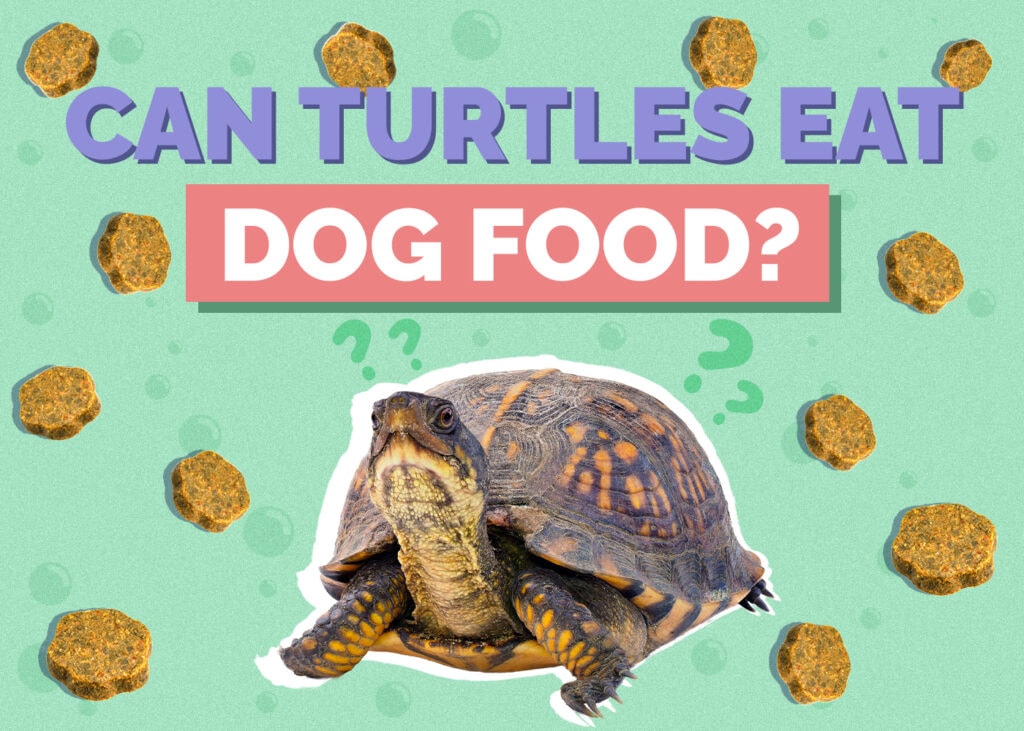
In very small amounts, dog kibble is quite safe to feed your turtle as a treat, but remember that treats shouldn’t make up more than 5% of a turtle’s daily diet.
What Other Animal Proteins Can Turtles Eat?
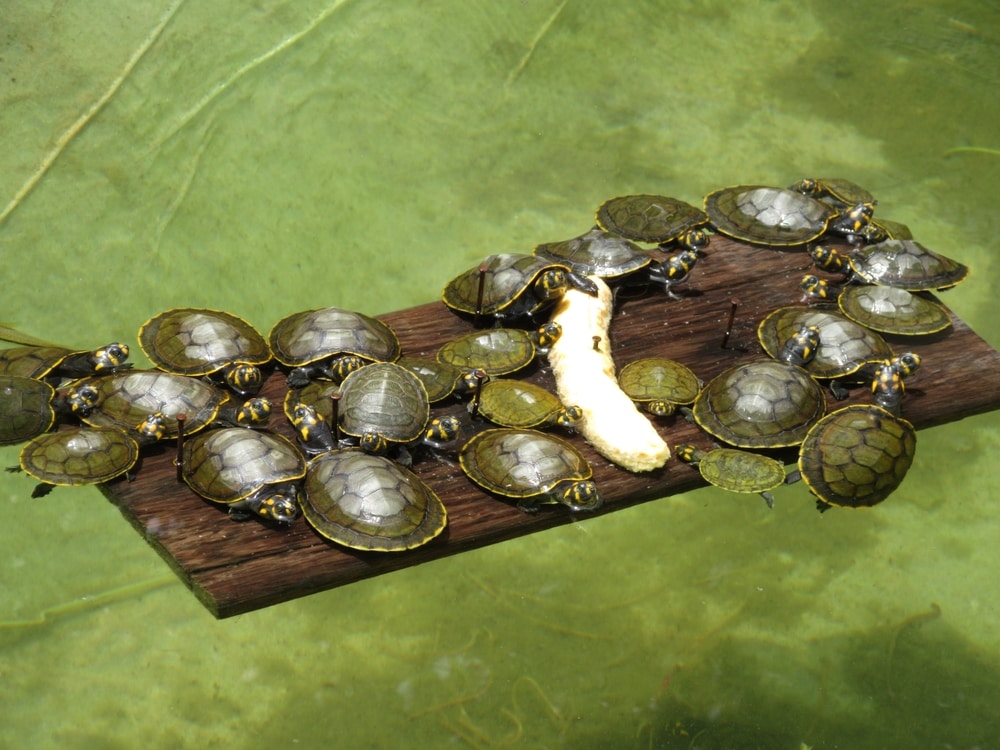
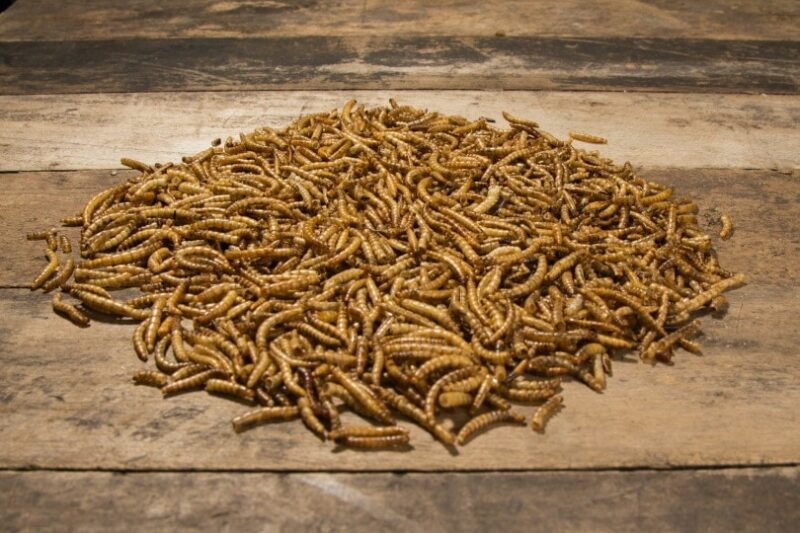
Commercial turtle pellets are the most reliable way of providing your turtle with the right balance of nutrients, but here are some live food choices as well:
- Earthworms
- Mealworms
- Feeder fish
- Slugs
- Snails
- Shrimp
What Else Should Turtles Eat?
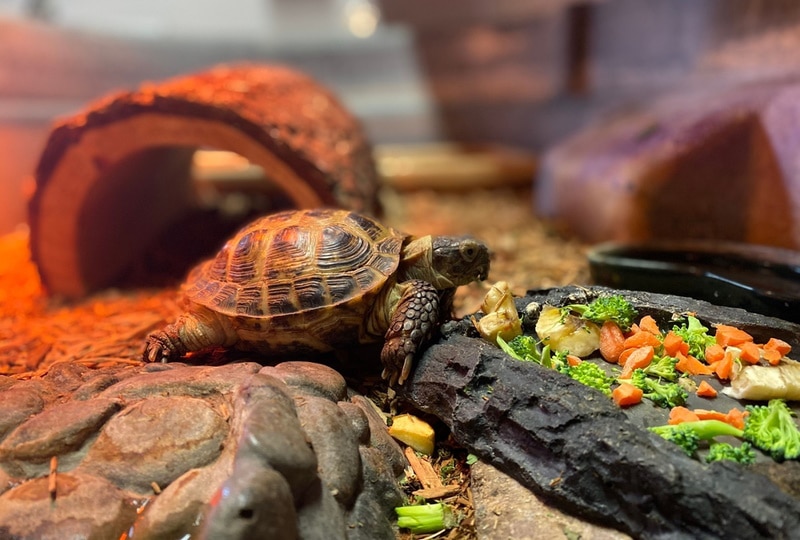
Again, depending on their age and species, around half of a turtle’s diet should be made up of plant-based foods. Provide a variety of foods and rotate what you offer to provide as much nutrition as possible. Vegetables, especially dark leafy greens, are a good option.
Here are some vegetables you can feed your turtle:
Turtles can eat fruit but only in small quantities or as treats. Some safe fruits to offer include melon, apples, and berries. Some species must take calcium and vitamin supplements to ensure they receive all the necessary nutrients, but never add supplements to food without first checking with your vet or reptile specialist that they need it.
Small amounts of plain cooked meat, like chicken or beef, can also be fed as a treat, but large amounts of meat can lead to kidney damage.
Final Thoughts
While turtles can enjoy dog kibble as an occasional treat, there are potential long-term health concerns if they consume it regularly. To ensure your turtle is receiving the appropriate balance of nutrients, they need to be fed a diet of commercial turtle pellets, plants and vegetables, and animal protein.
Sources
Featured Image Credit: Jiri Hera, Shutterstock
Get Hepper In Your Inbox


Pet care tips from our vets and experts, straight to your inbox.
You may opt-out at any time. View our Privacy Policy for more information.
A lifelong lover of all creatures great and small, Elizabeth got her first cat at 5 years old and at 14, she started working for her local veterinarian. After spending more than 20 years working as a veterinary nurse, Elizabeth decided to step away to become a stay-at-home parent to her daughter. Now, she is excited to share her knowledge with our pet parents. Elizabeth lives in Iowa with her family, including her two fur kids, Linnard, a husky mix and Algernon, the worldʻs most patient cat. When not writing, she enjoys reading, watching soccer, and spending time outdoors with her family.
Join the conversation
Ask a question, share your story, or send private feedback.