Hepper is reader-supported. When you buy via links on our site, we may earn an affiliate commission at no cost to you. Learn more.
Cat Coat Genetics 101: Explaining the Essentials (Vet Reviewed)


In this article
Cat genetics are combined in all sorts of wild ways to create lovely coat colors of various shades and patterns. Breeders closely analyze hereditary trends to develop cats of desirable colors. Provided that the genes mix just right, incredibly specific outcomes are possible.
But what exactly determines how the parents' genes will impact their kittens? Here, we go over the basics of what you need to know about cat coat color.

Cat Coat Genetics: General Info
As you may guess, genetics is a pretty extensive topic. We need to be clear that this article is meant to be a general guideline, not a complete guide on genetics. If you need more in-depth information, turn to professionally written books that delve into the science.
Chromosomes
Chromosomes are defined as threadlike structures of nucleic acids and proteins found in the nucleus of most living cells, carrying genetic information in the formation of genes. Each chromosome is made up of a protein and a singular molecule of DNA and contains thousands of genes encoded in the DNA. When passed to the cat’s offspring, it contains the information that makes each kitten unique.
Inside the cells, chromosomes are found in pairs. Each cell contains two separate copies of each gene (alleles). Kittens inherit half of their genetic makeup from each parent, which equals 19 chromosomes in each, totaling 38.
Alleles are two of the alternative forms to express the same genes. They have small differences in their DNA code—in other words, the two possible versions to express a gene. X and Y chromosomes are what determine the sex of each kitten. Females have XX chromosomes, while males have XY chromosomes.
Genes
All life has a genetic makeup of bases. There are only four nitrogenous bases: A, C, G, and T. These tiny particles combine in pairs to build small strands and form the genetic codes that make up the DNA genome that contains all biological information about each living thing.
An Example of Genetics
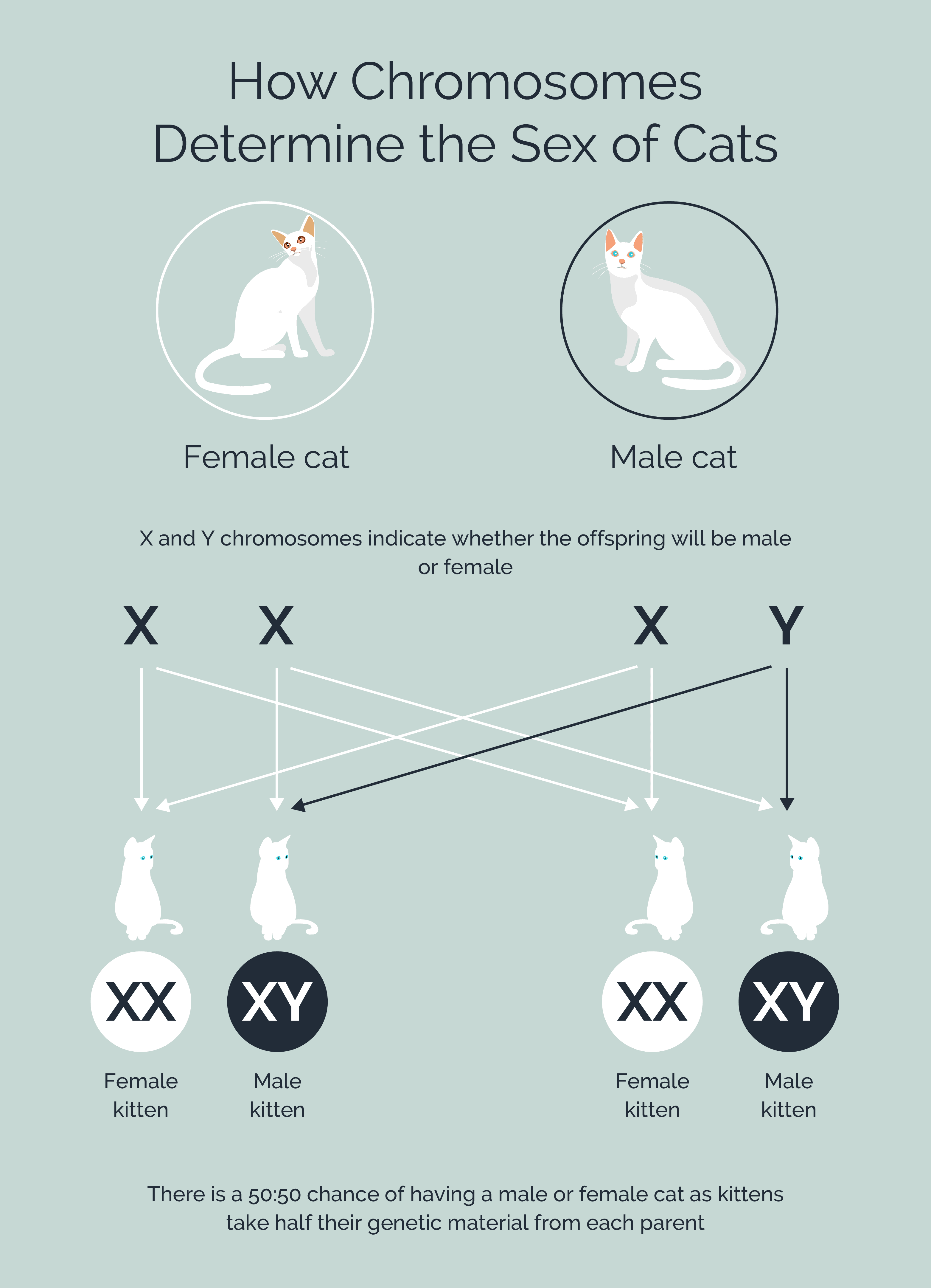
An example of how genetics play into a cat's existence goes a little something like this. We have a mother and father cat. For this example, let’s say that one is black and the other is white, and no other color exists in either genome, to keep it simple.
When the two breed and a successful pregnancy occurs, this means half of the mother’s genetics and half of the father’s genetics pass to each kitten in the litter. The parents carry both recessive and dominant traits. Depending on how the genetics line up, you will either get a black cat or a white cat—and only the immediate parents can determine the color and pattern of the kittens.
However, there is much more to genetics than colors. There are also patterns and recessive colors to consider, so it is not that straightforward.
How Genes Come Together
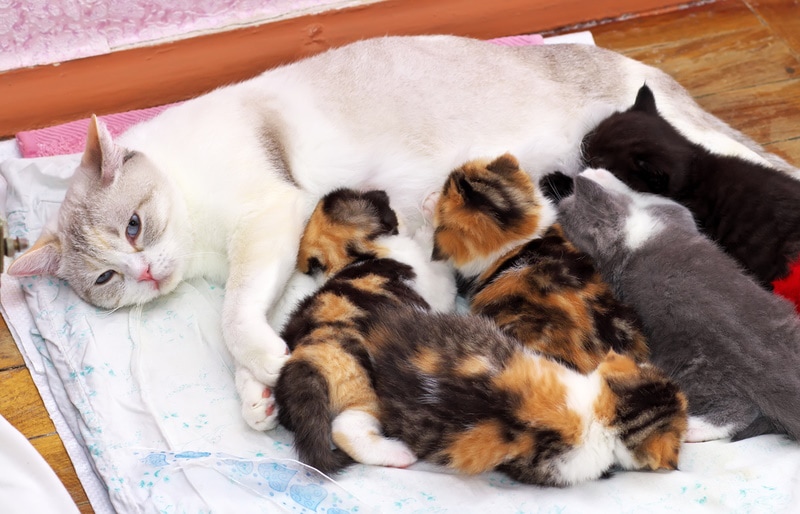
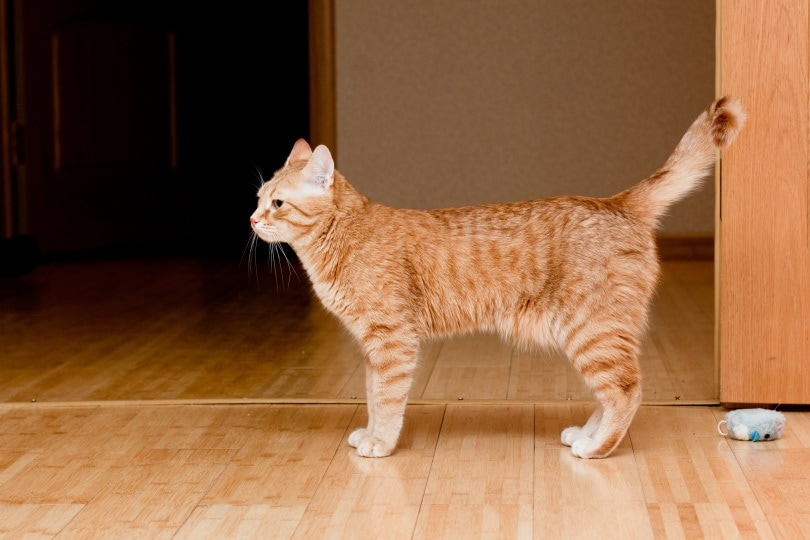
All cats originate from two colors: orange and black. That’s pretty phenomenal, considering how many coat colors exist today. You’ve probably seen a female with a litter of kittens and none of them look like her. They’re all sorts of patterns and colors, but not hers. Have you ever wondered why? There is a specific coat color and pattern to consider when it comes to appearance. For example, the orange gene is simply orange, or B. The black gene is b. However, black has recessive variations, including chocolate, cinnamon, and dilute.
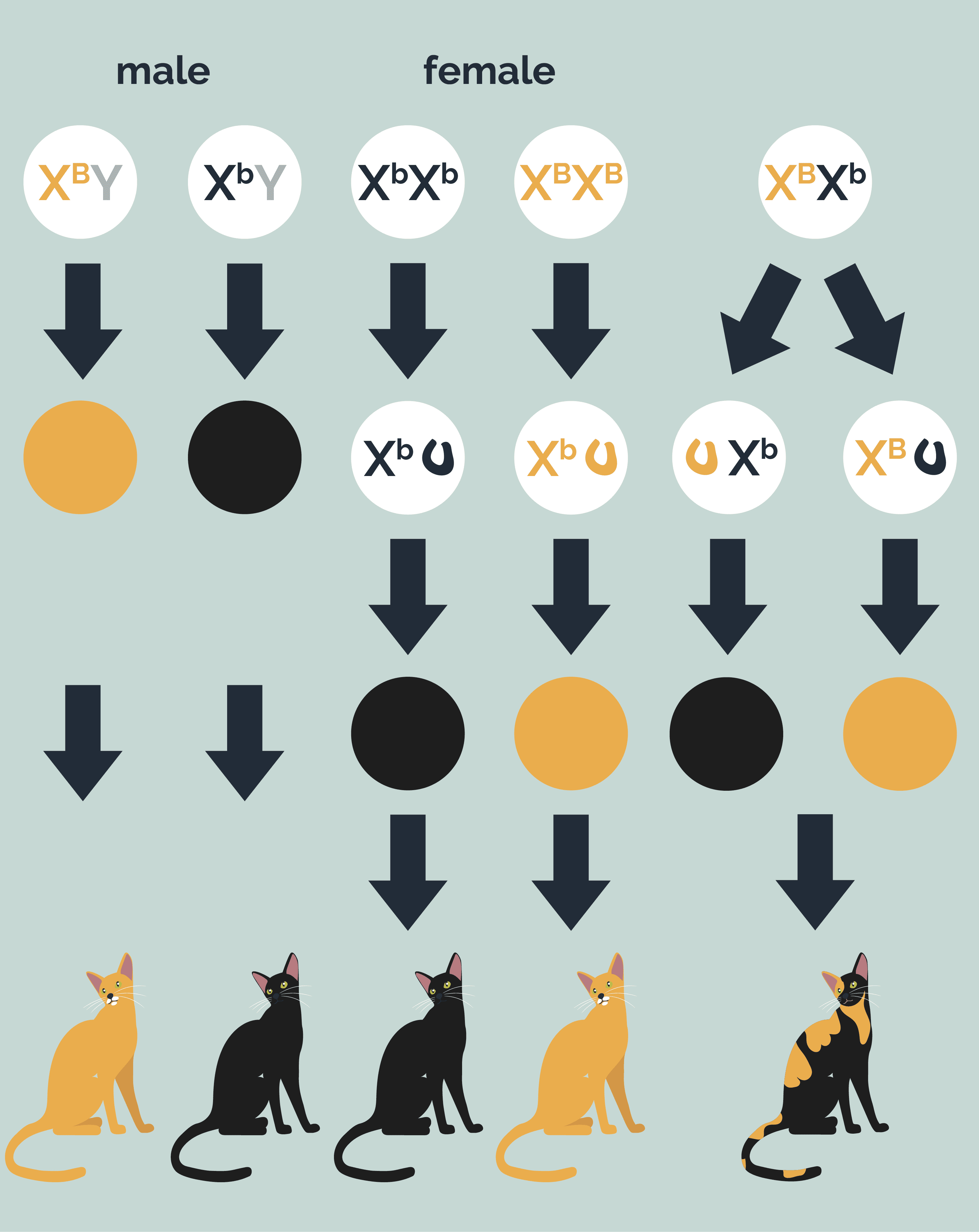
Another interesting fact is related to sex. Orange is much more common in male cats than females. A whopping 80% of all orange cats are male. Why? It turns out that one of the several genes that determine a cat’s color is located in the X chromosomes, and since males have only one X chromosome, the expression of their fur’s color is straightforward. Carrying only one allele to express a gene is known as hemizygosity. Females need to have an orange gene from both parents on the X chromosome, which tells them to take the orange color. That means females need two X B chromosomes, and males need only one.
In a female cat, an interesting process called lyonization prevents the female from expressing double the number of X-linked gene products as a male. During the embryonic development of every female mammal (including cats), one of the two X chromosomes in each cell inactivates by supercoiling into a structure called Barr body. Only the alleles on the active (uncoiled) X chromosome are expressed.
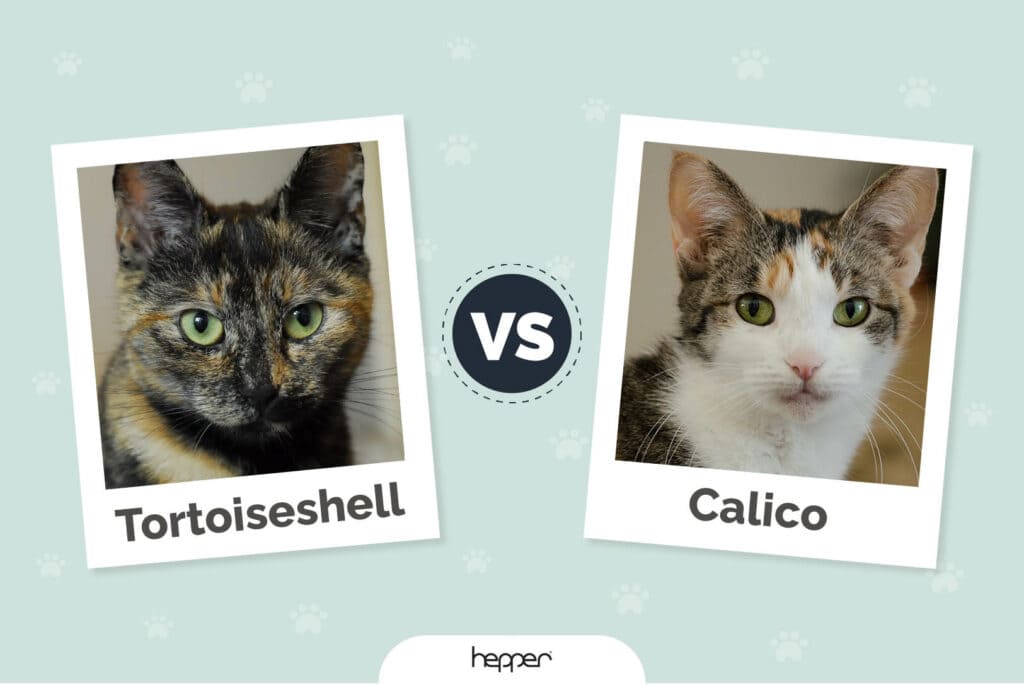
Calicos & Tortoiseshells: Why They Differ
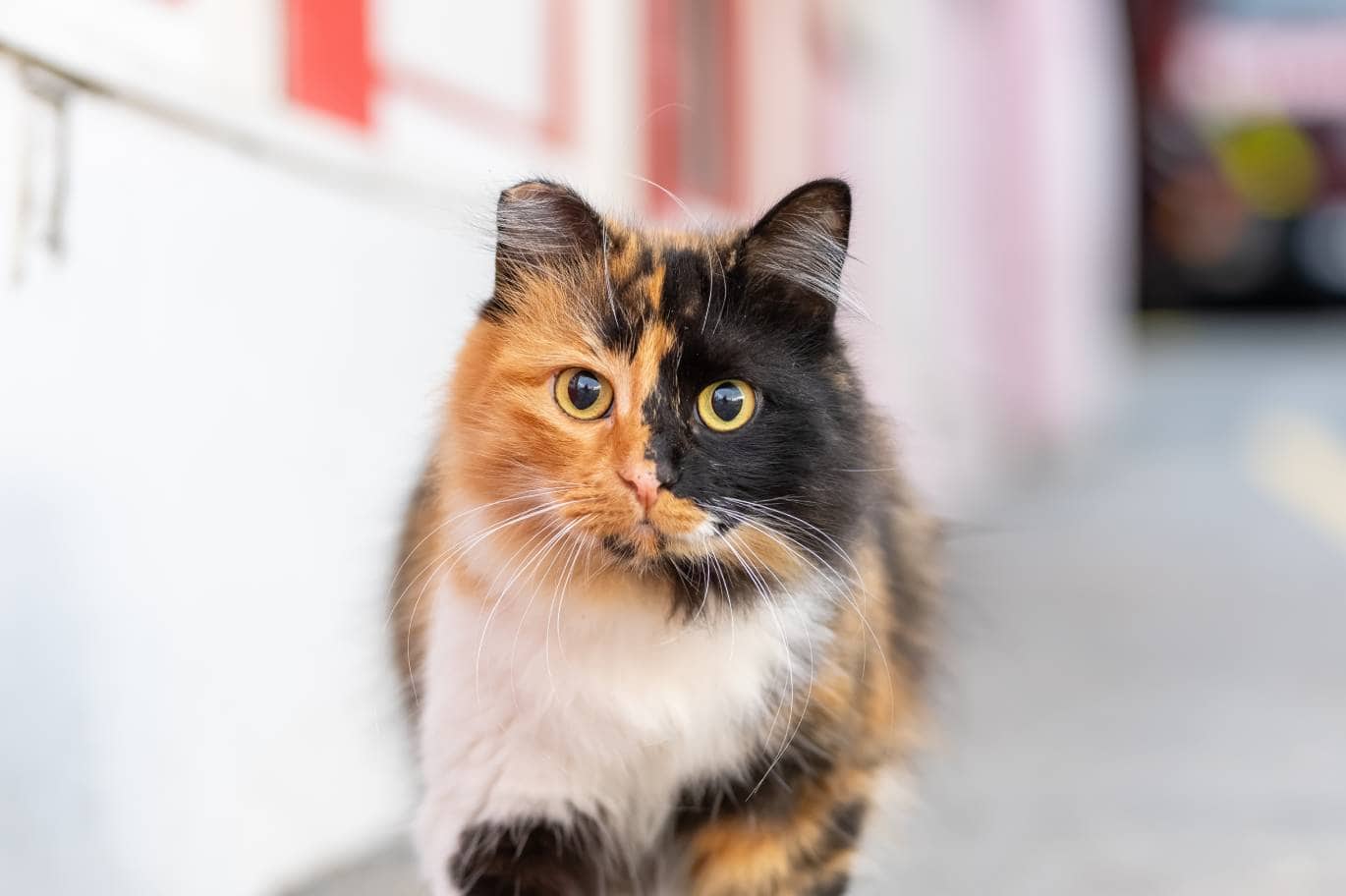
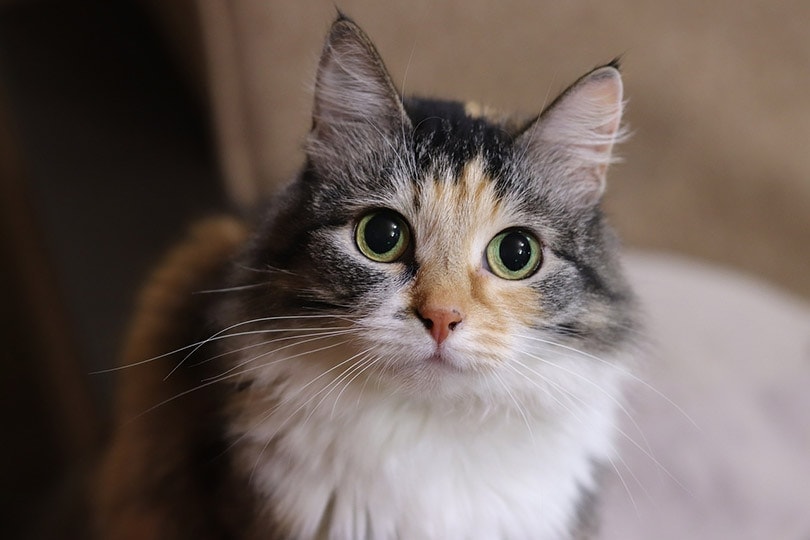
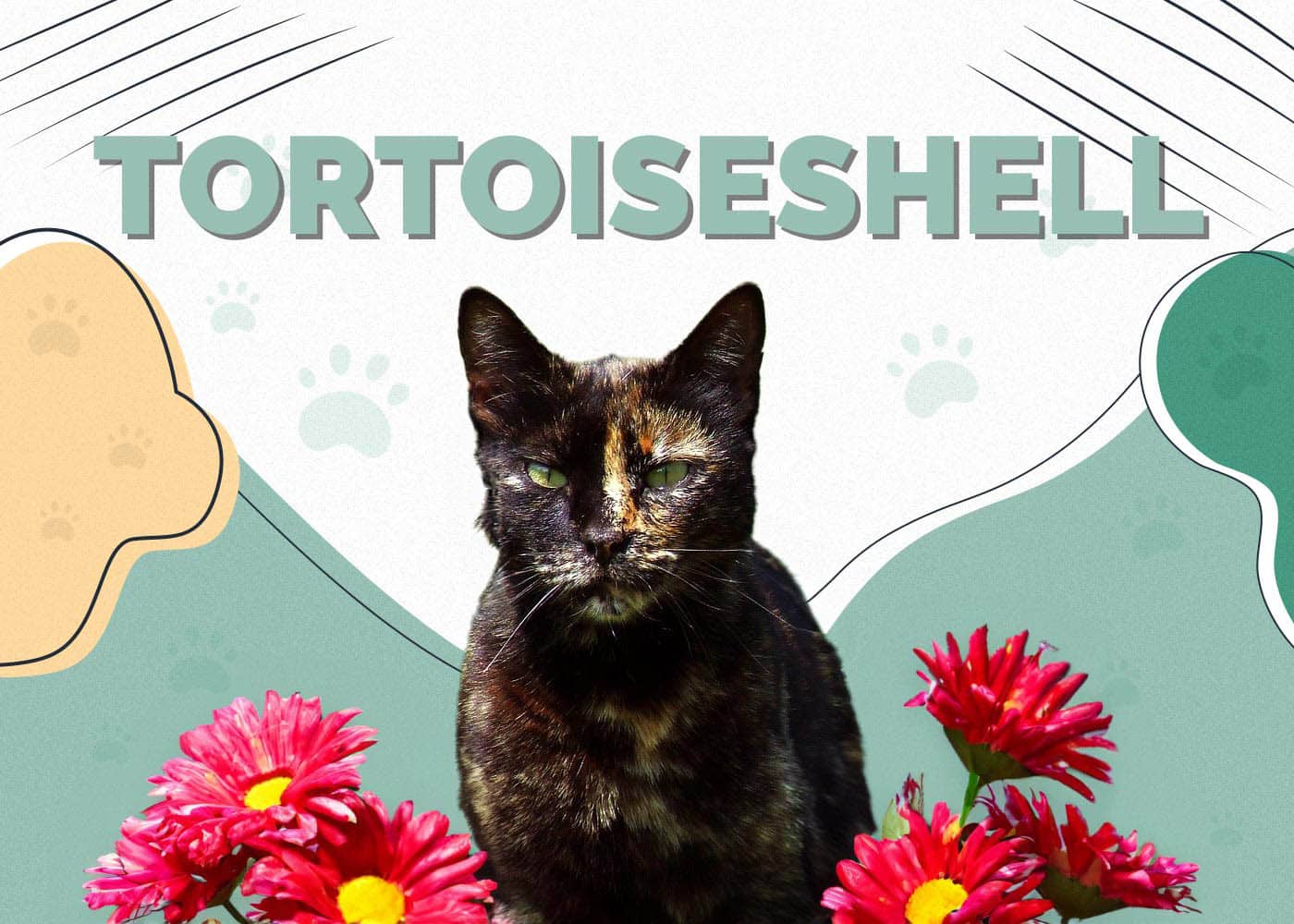
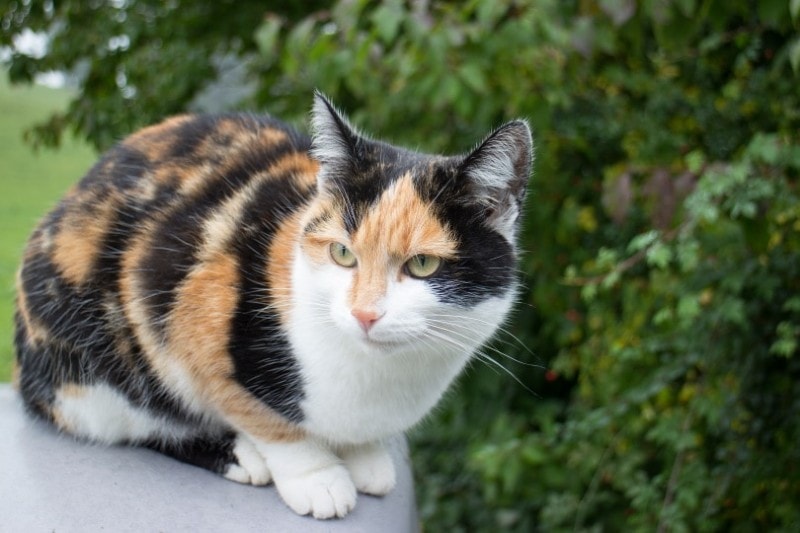
A male calico or tortoiseshell cat is nearly unheard of. They’re so rare that you would probably be quite rich if you ever found one. But what makes it so impossible for these color patterns to be male?
For the tri-color coat pattern to come through, you need X chromosomes. Two XX chromosomes will always be female, as an XY pairing is always male. There is only one exception to this rule: XXY syndrome. This occurs when a male has two X chromosomes and one Y, which is only one in every 3,000.
Let's break this down further: To get the different patch-like patterns, there needs to be more than one variation of alleles presenting the color genes. This is known as heterozygosity and is only possible in female cats.
Female cats can express one color in the group cells, where the other color allele was supercoiled and inactivated, and have another patch of skin expression of the opposite color. This is why calico cats are almost always females!
But There Is Much More
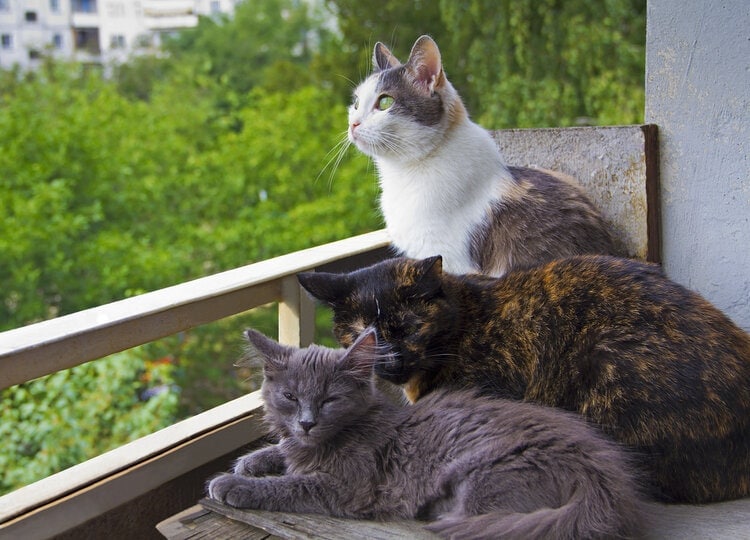
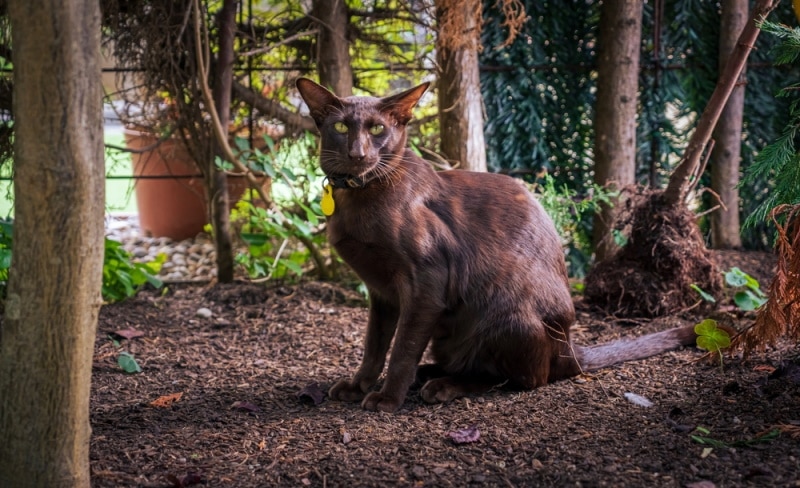
Cats can come in all sorts of colors, including chocolate and cinnamon, which are mutations of black. Gray is a dilution of black but is called blue—which can make things confusing! Diluted chocolate results in a lilac color, diluted cinnamon is known as fawn, and diluted orange is known as cream.
There are many other possibilities when it comes to cat genetics and colors. Some coats are determined by the presence of certain genes. For example, the dominant white gene encodes complete white coloration by disrupting the replication and migration of melanocytes into the skin. The KIT gene determines whether there will be any white in the coat or if the white spotting gene encodes only certain areas.
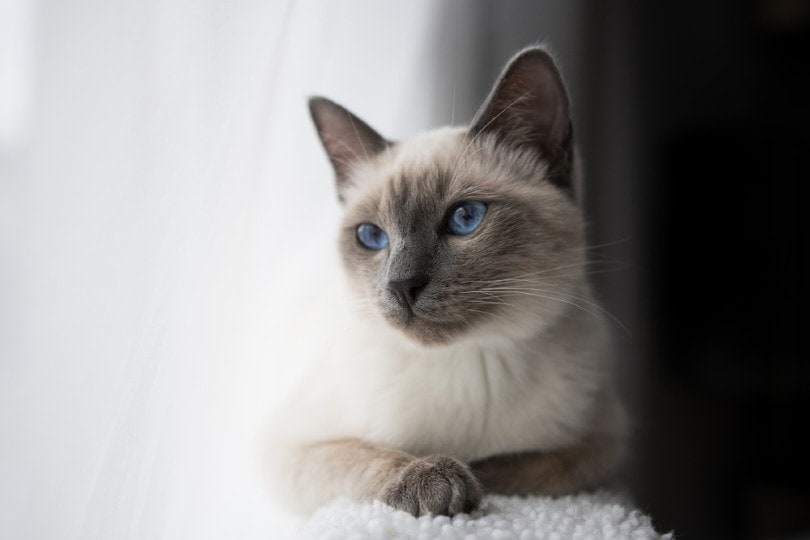
The genetic mutations responsible for colorpoints are heat-dependent for the final result, and certain characteristics are determined by the presence of specific alleles, like the gloving allele. So many factors come into play to make each kitten unique and special!
Texture and Length
A gene determines a cat's coat length called the fibroblast growth factor 5, or FGF5. One is the dominant code for short hair. The other four are mutations for long coats but are all recessive genes.
Curly coats can occur naturally, but some cats are bred to look this way, like the Devon Rex. Some coat genes are called r rex, cr Cornish Rex, and la in the LaPerm breed. Interestingly, the rex gene also shows up in other animals like rabbits and rats.
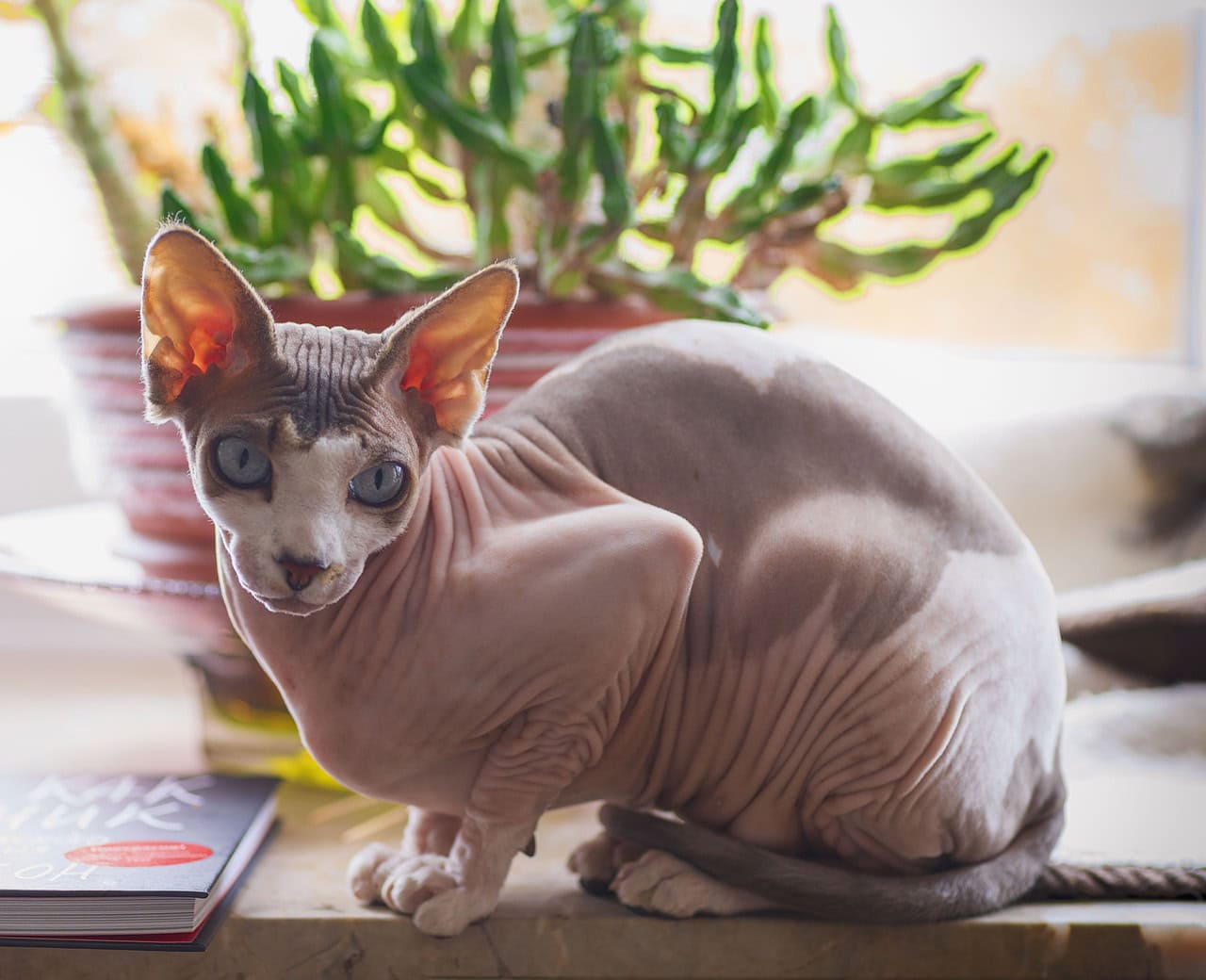
Hairlessness is a trait identified as HR. It can occur both naturally and through specialized breeding, as with Sphynx or Lykoi cats.

In Conclusion
Genetics is a complex field that is studied by scientists all the time. It's by no means a short subject. Different combinations can take a long time to master. Plus, with so many aspects playing into the overall coat appearance, it's a real challenge to retain all the details.
But we really hope that you now understand how every cat is special and unique! If you have more questions about genetics, we recommend searching for a few books on the subject.
See also:
Featured Image Credit: Yulia Grigoryeva, Shutterstock
Get Hepper In Your Inbox


Pet care tips from our vets and experts, straight to your inbox.
You may opt-out at any time. View our Privacy Policy for more information.
Ashley Bates, a freelance writer with a passion for pets, is currently studying animal therapy. She is a mother to four children and 23 pets, both furry and feathery. Ashley actively volunteers at local shelters, advocates for animal welfare, and rescues animals in distress. Her mission is to promote awareness, education, and entertainment about pets to help prevent animal homelessness. She specializes in the care and well-being of dogs and cats.
Join the conversation
Ask a question, share your story, or send private feedback.