Hepper is reader-supported. When you buy via links on our site, we may earn an affiliate commission at no cost to you. Learn more.
How Many Chromosomes Do Cats Have? Science-Based Facts & FAQ
In this article
The field of genetics is a fairly new addition to the sciences. Though we’ve known about dominant and recessive traits passed from the parents to the offspring for a long time, the most significant developments only came about within the last few centuries.
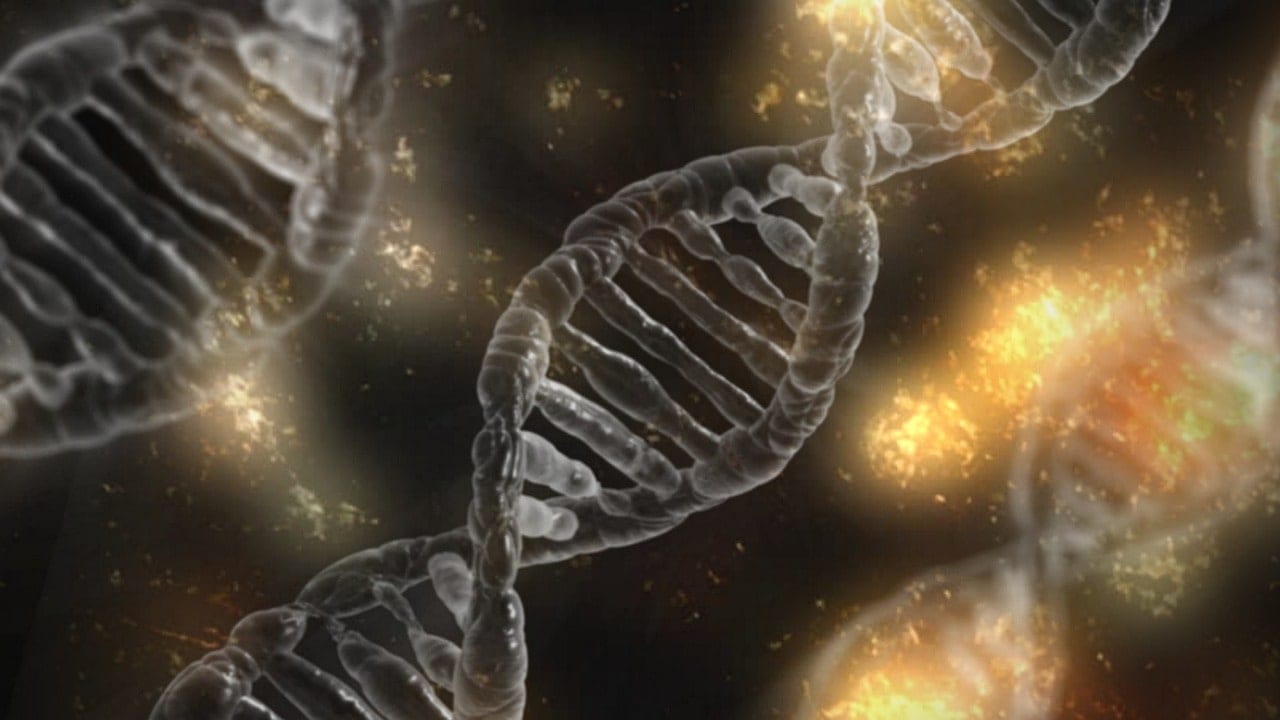
Chromosomes are a vital component of genetics. These structures are found in the cell nucleus and are composed of DNA that determines how each living creature will develop. Each plant and animal has a wildly different number of chromosomes. So, how many chromosomes do cats have? Cats have 38 chromosomes, or 19 pairs, but we’ll discuss the exception to this rule below.

How Are Chromosomes Formed?
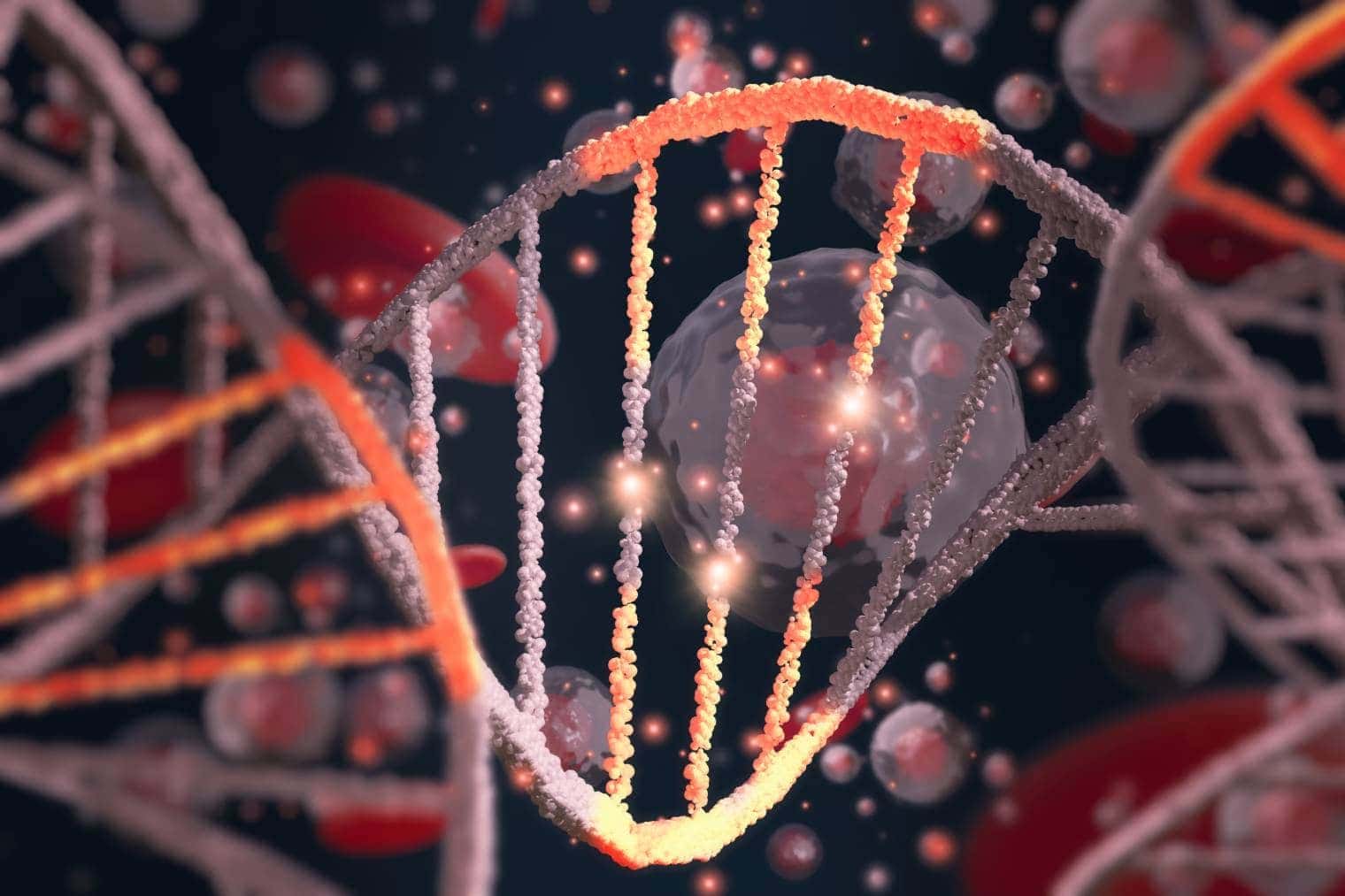
All living things are a collection of cells, all of which have a nucleus. The nucleus contains the chromosomes that make what we are and protects them. Each cell contains a nucleus with chromosomes, so there are plenty of copies throughout the body.
Chromosomes have different shapes. Some form an “X,” while others form a “V” shape or a single bar. Regardless of the shape, a chromosome is constructed of proteins surrounded by DNA.
No matter the species, DNA contains the genes that control the development of one or more traits, which are passed from the parent to the offspring. All of this information is divided among the chromosomes to form the complete genetic makeup.
If a chromosome is incomplete or damaged, it could result in a genetic disorder, such as deafness, glycogen storage diseases, or cardiomyopathy in cats.
Chromosomes typically come in pairs that include information from the mother and father, forming a complete set. Both the sperm and the egg contain half of the genetic makeup of the parent, and when they combine in a chromosome, individual genes are expressed.
The idea behind dominant and recessive genes is that one chromosome can “dominate” the accompanying gene, favoring a particular genetic trait. The recessive gene is suppressed, and that gene won’t be expressed, but it can still be passed down to offspring.
Cat Genetics
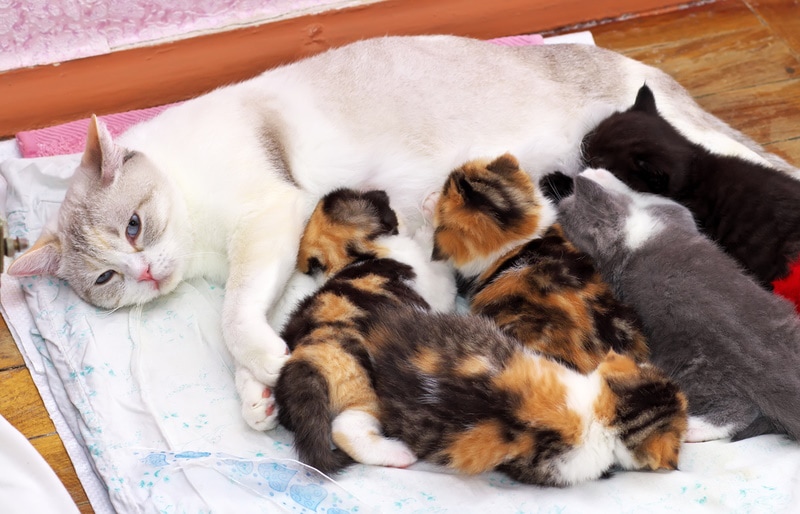
As mentioned, cats have 38 chromosomes in 19 pairs. One pair determines sex, which can be either X or Y. Females have two X chromosomes, and males have an X and a Y chromosome. The mother supplies the X chromosome while the father supplies either an X or a Y, determining the resulting offspring’s sex.
After sex, the majority of the cat’s genetic makeup is determined by the remaining chromosomes. If you’ve ever wondered why cats show little physical difference between a male and female, it’s because so little of their DNA determines sex.
All cats, a lazy house cat or a Bengal tiger, have similar chromosomes called karyotypes. Because of this similarity, cat species can be successfully crossbred. Some examples include a liger, a cross between a lion and a tiger, and a domestic Bengal, a cross between an Asian leopard cat and a domestic cat. Despite the successful offspring, the small chromosomal differences can lead to infertility among the offspring and a higher risk of birth defects.
Cats vs Humans
Humans and cats look wildly different and have different genetic makeup. Humans have 23 pairs of chromosomes compared to the cat’s 19. Humans and cats branched off from a common ancestor over 100 million years ago, each following down a unique path of evolution.
Despite this, we share 90% of our DNA with cats. We share sex chromosomes and receive an X from our mothers and an X or a Y from our fathers. Many of our chromosomes are similar or identical to cats’ chromosomes, which is a helpful tool for the medical field to understand diseases and medications.
Unique Gene Expression in Cats
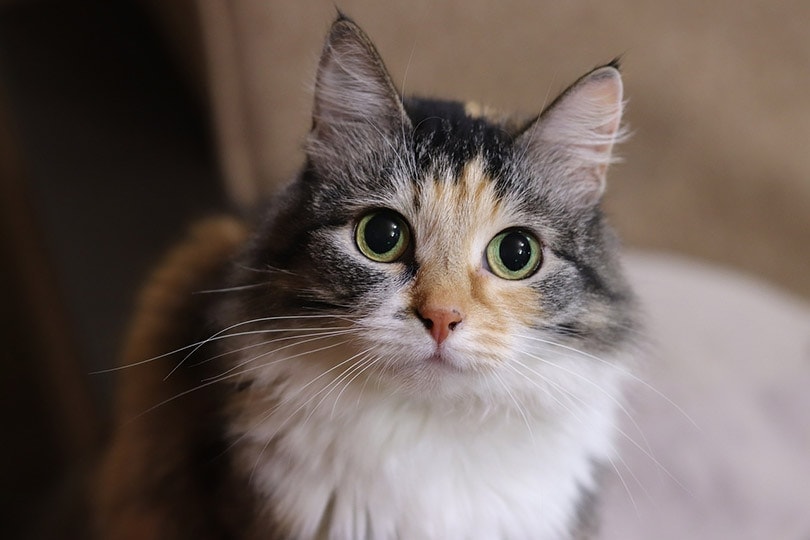
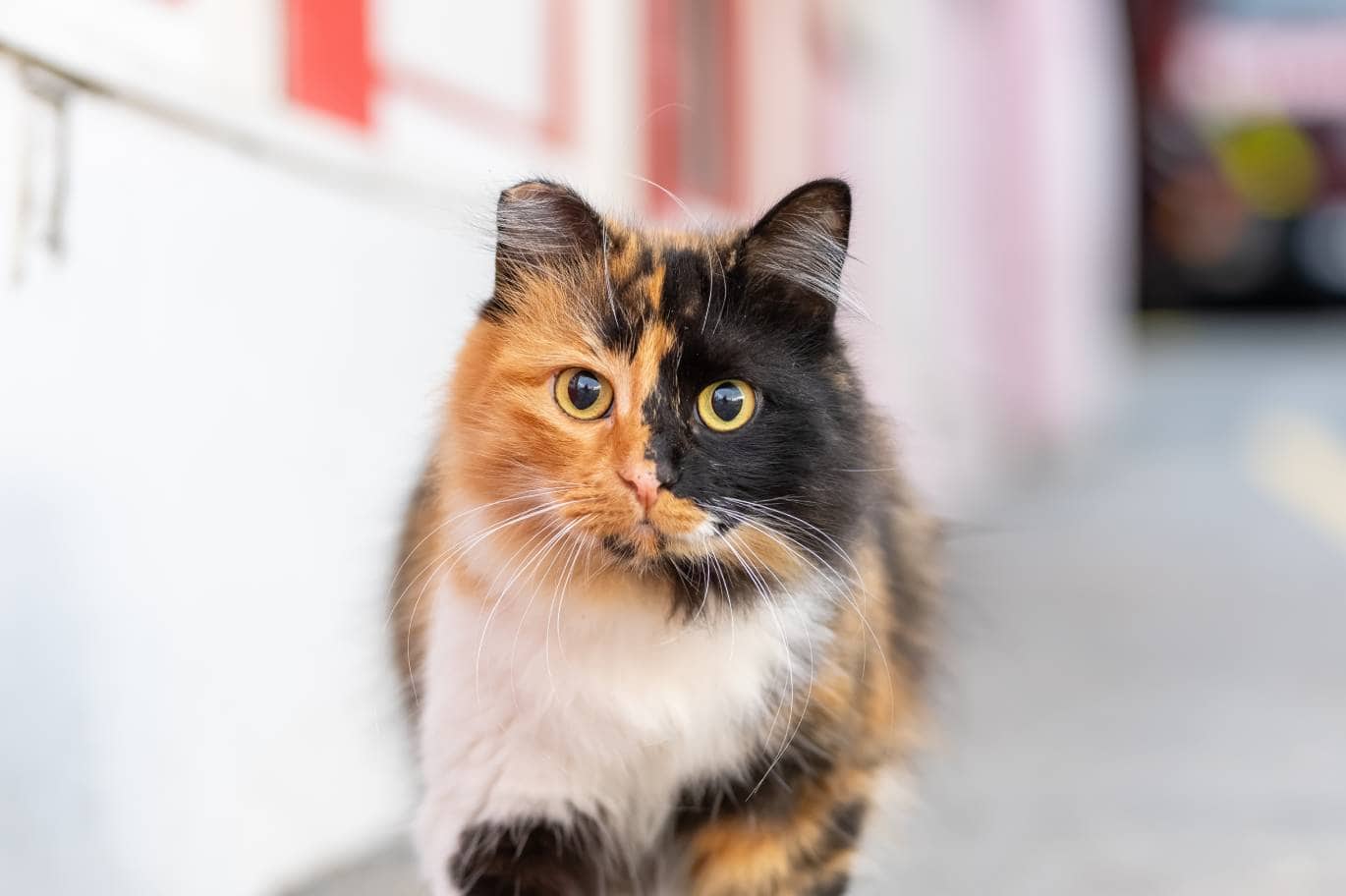
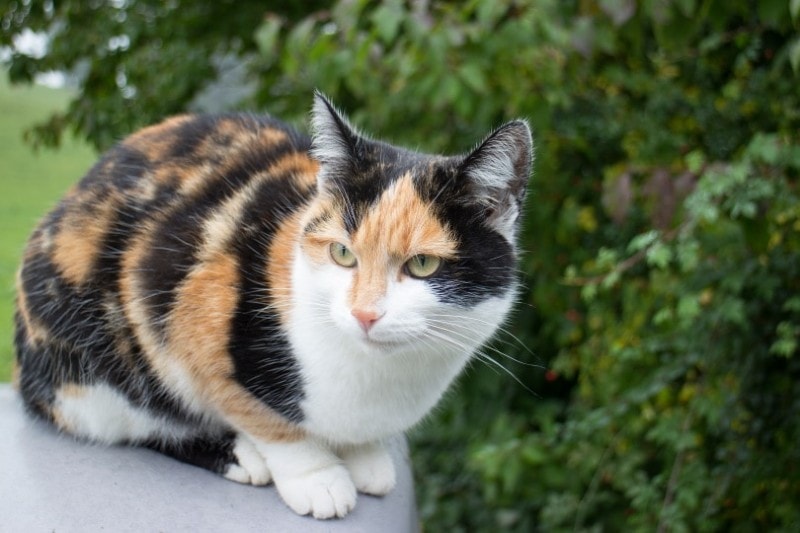
Most people know that calico cats are almost always female, and orange cats are almost always male. Cat fur color requires many genes and chromosomes, though the main color is determined by a gene on the X chromosome. The gene can be black or orange, but not both. All other cat colors and patterns form based on the original black or orange.
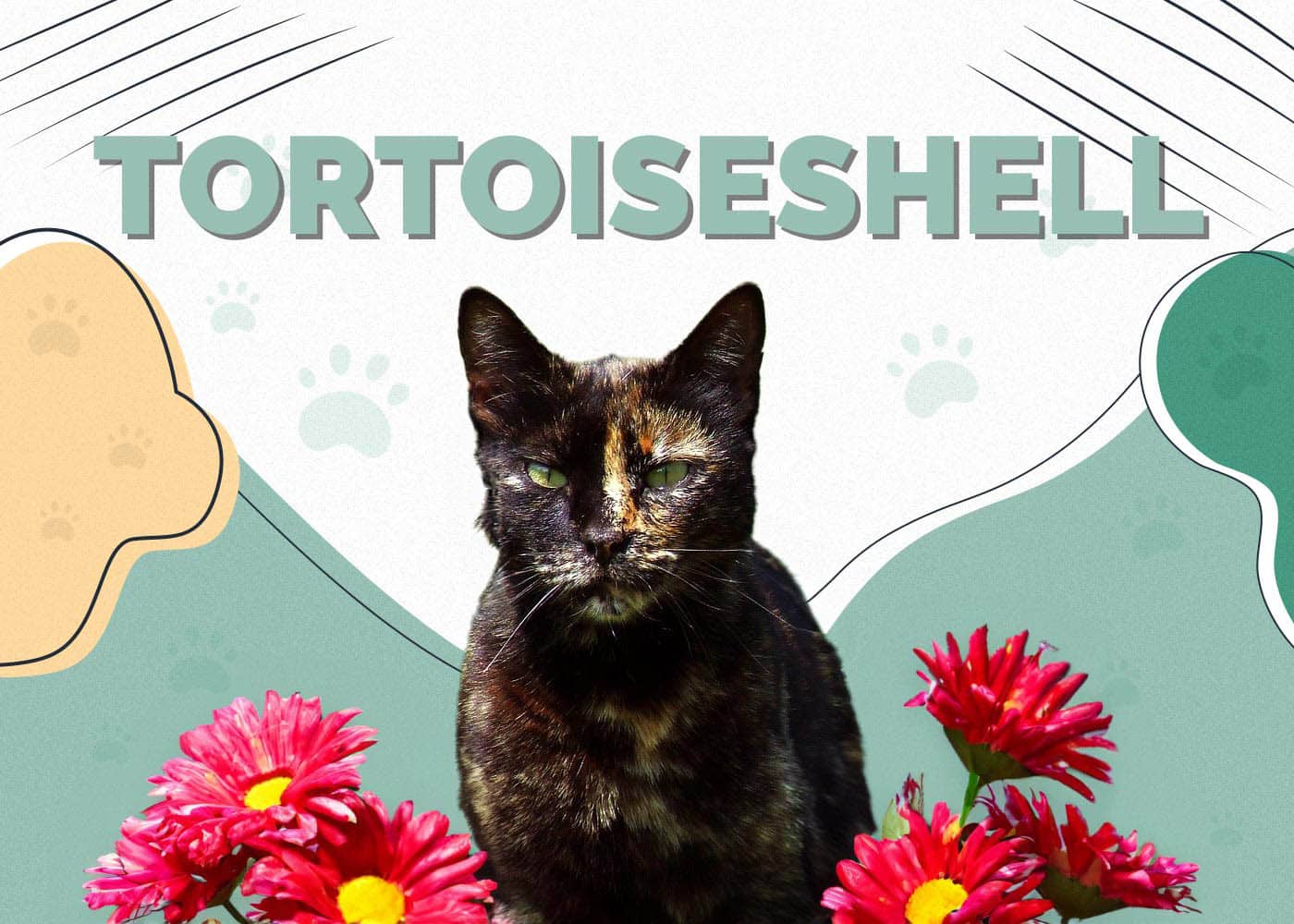
Female cats have two X chromosomes, which means that one can have the black gene while the other has the orange gene. When this occurs, both genes express and create a black and orange tortoiseshell or calico pattern.
Male cats only have one X chromosome, so their genes can’t express both black and orange simultaneously. Conversely, this gives them an advantage with vibrant orange coats, which is why most orange cats are male. Females can only be orange if both parents contribute the orange gene.
Despite all of this, male calico cats do exist. These cats are incredibly rare, however, and come from a mutation. The orange gene is a mutation of the black gene, so the gene was originally black. While in the womb, a male cat with the orange gene can suddenly go back to the black gene. Because development has begun, parts of the cat will stay the original orange, and the rest will develop black, giving it a calico pattern.
Another rarer way for a male calico to develop is chimerism. This rare condition occurs when two fertilized eggs merge, providing two sets of unique DNA in one organism. If the fertilized eggs come from a black male and an orange male, the cat can be calico. It will still have two genetically distinct DNA makeups, however.
White Cats With Blue Eyes
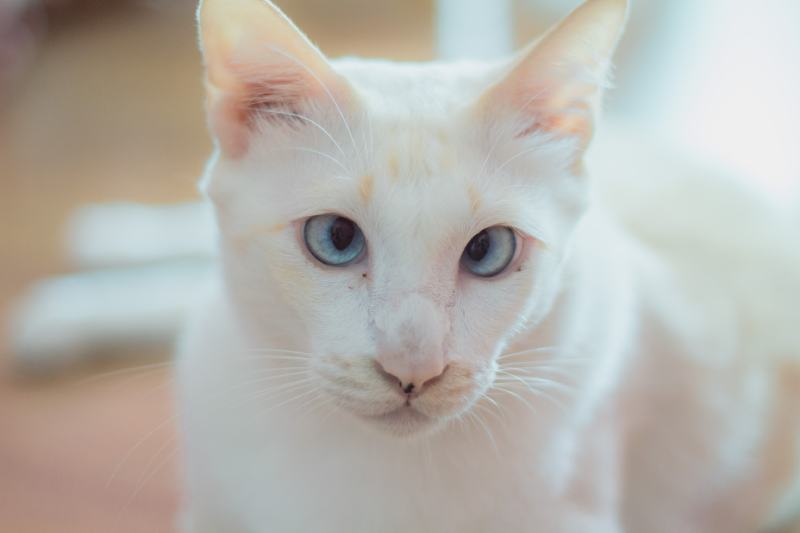
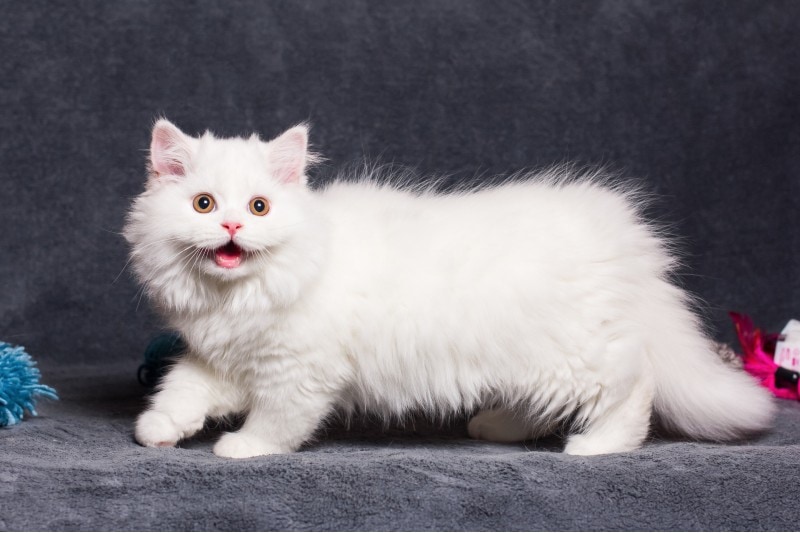
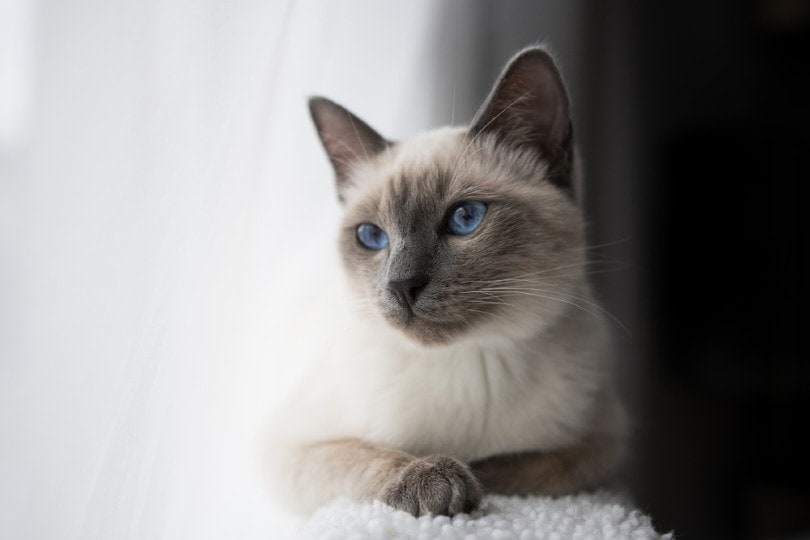
White cats with blue eyes are beautiful, but that beauty comes with a cost. According to the ASPCA Complete Guide to Cats, 17%–20% of white cats with non-blue eyes are deaf; 40% of "odd-eyed" white cats with one blue eye are deaf; 65%–85% of blue-eyed white cats are deaf."
This congenital deafness may correlate with the KIT gene, which determines how much of the fur is white. The gene can be expressed in a fully white cat, a cat with white spots, a cat with white gloves, or a cat without white. The same genetic expression that determines a fully white cat also increases the chances of having blue eyes and deafness, though the reason is unknown.
South American Ocelots
Some South American cats have only 36 chromosomes. These are all ocelot lineage and include the ocelot, oncilla, Geoffroy’s cat, pampas cat, kodkod, Andean Mountain cat, and margay.
Some of the scientific community separates members of the ocelot family from both domestic and wild cats because of this. Ocelots can also be bred with domestic cats to create large, beautiful hybrids that are more docile than a lion, tiger, or leopard would be. Unfortunately, the chromosomal discrepancy leads to difficulties in producing live births, disrupts the differing gestation periods, and the males are usually infertile.
Summary
Genetics is a fascinating topic no matter the species, but cats have some unique gene expressions. Their number of chromosomes, combined with the low percentage of chromosomes contributing to sex, leads to distinctive gene expressions like calico and tortoiseshell coloration, white fur with blue eyes, and hybrid cat species.
Related Read: 61 Types of Persian Cat Colors (With Pictures)
Featured Image Credit: Lucie K, Shutterstock
Get Hepper In Your Inbox


Pet care tips from our vets and experts, straight to your inbox.
You may opt-out at any time. View our Privacy Policy for more information.

Nicole is a lover of animals of all sizes but is especially fascinated with the feline variety. She’s the proud mom of Baby, a Burmese, and works every day so he can relax in the sunshine or by the fire. She’s always had a cat in her home and has spent countless days with others, observing behaviors and softening up even the grouchiest of the lot. Nicole wants to share her kitty expertise with you so you and your cat can live happy, healthy, and care-free.
Join the conversation
Ask a question, share your story, or send private feedback.