Hepper is reader-supported. When you buy via links on our site, we may earn an affiliate commission at no cost to you. Learn more.
Ceramic Dog Bowls vs. Stainless Steel Dog Bowls: Which to Choose?
In this article
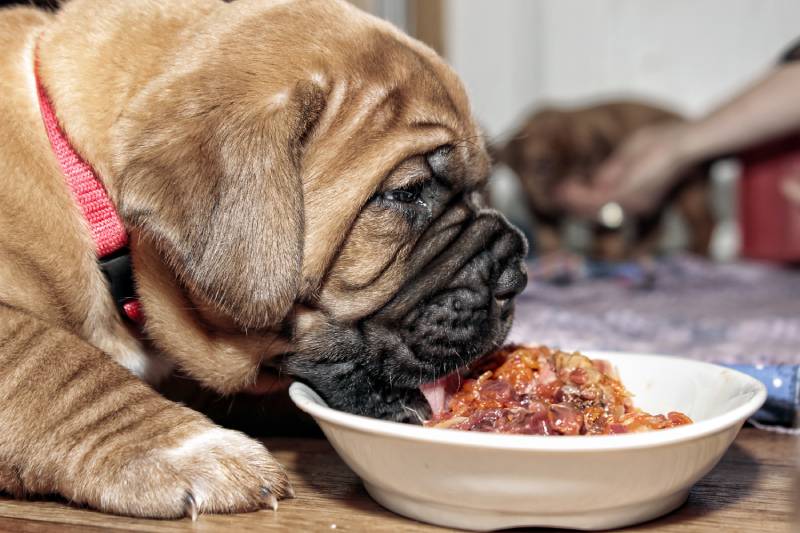
Dog bowls come in a wide variety of materials, all of which have their advantages and disadvantages. Most commonly, they come in plastic, glass, ceramic, and stainless-steel forms. Unless you have a young puppy, plastic bowls should be avoided, as dogs will chew these up in a matter of minutes and potentially ingest bits of plastic, which can cause a host of health problems, both dental and digestive. Glass can break easily due to an enthusiastic pooch and should be kept for older, calmer dogs.
That leaves two options—ceramic dog bowls and stainless steel dog bowls, as the most common and well-tested choices. But which is the right option for your dog? We put both these options to the test to find out which material really reigns supreme.

Ceramic Dog Bowls
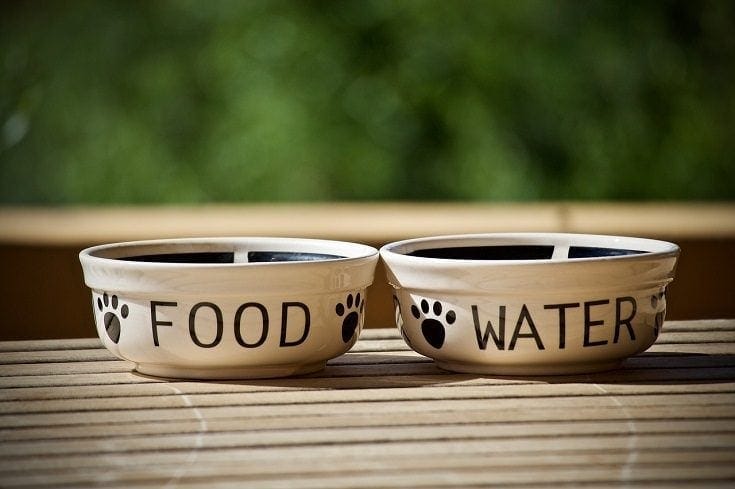
Ceramic dog bowls are widely available, come in a wide variety of sizes and styles, and are often beautifully designed and aesthetically pleasing. These bowls are usually glazed on the outside, making them easy to clean and dishwasher safe. Ceramic bowls are heavy, so are less likely to be scraped along the floor while your dog is feeding, and your pooch will likely be unable to carry them away to the far reaches of your house or yard.
Before buying a ceramic dog bowl, make sure that it is labeled as “food safe” or “lead-free,” as some of the glazes used to seal these bowls can contain lead and other potentially harmful ingredients. Ceramic bowls can easily chip or break when dropped, and these small cracks and chips can collect harmful bacteria, even after thoroughly washing them. These cracks can also create sharp edges and shards, which could hurt your pooch while feeding.
Ceramic bowls are also comparatively expensive, especially the bowls with complicated patterns and designs.
Pros
- Widely available
- Come in a wide variety of colors and styles
- Customizable
- Dishwasher safe
- Heat-resistant
- Won’t move while feeding
Cons
- Can chip and break easily
- Cracks and chips can harbor harmful bacteria
- May end up with sharp edges
- Expensive
Stainless-Steel Dog Bowls
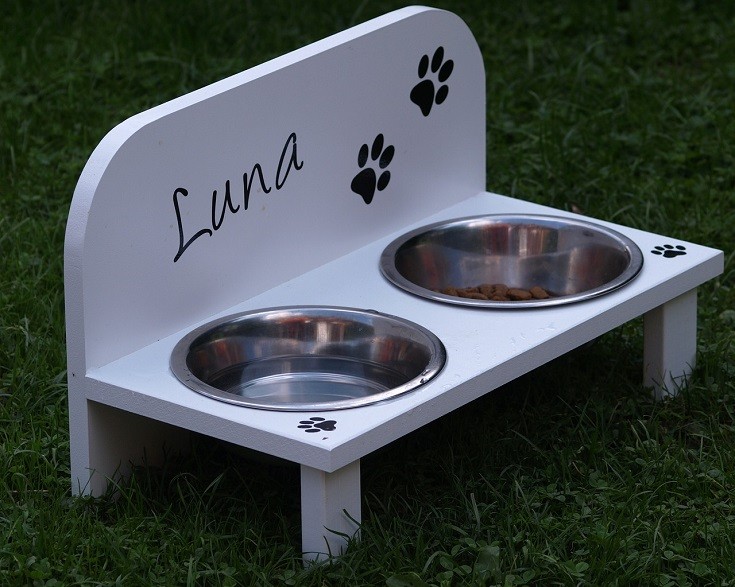
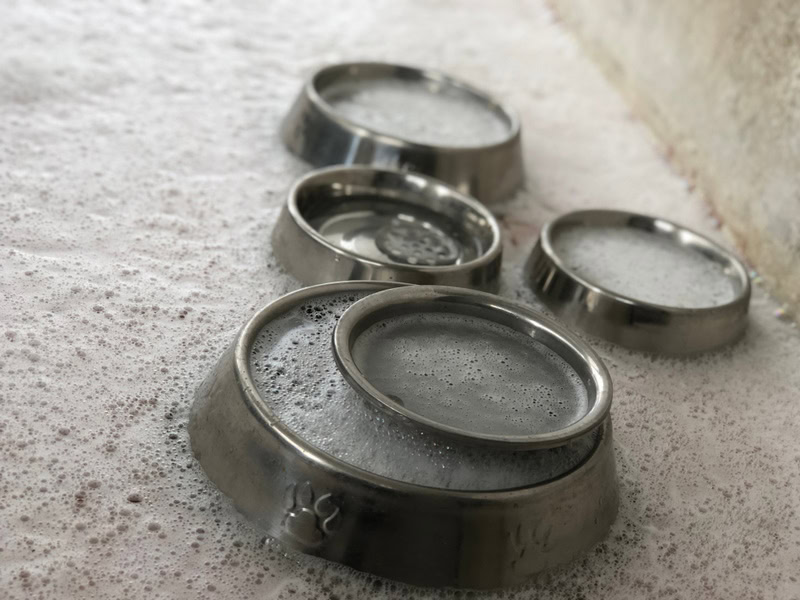
Stainless steel is the go-to choice for dog bowls. They are by far the most durable and widely available and are easy to clean and dishwasher safe. They also will not rust, won’t easily scratch or dent, and are resistant to high temperatures. Stainless-steel dog bowls will survive a fall off a countertop and are lightweight too. They are also affordable, as being so widely used drives prices down. Because stainless steel does not scratch or crack easily, it is the most hygienic option, as bacteria cannot easily survive on the surface. Thorough cleaning will remove any potentially harmful bacteria quickly and easily.
Make sure you buy a stainless-steel bowl with a non-slip rim to prevent the bowl from sliding across the floor while feeding, causing spillage! Also, be sure to buy food-grade stainless-steel bowls that are specifically made for pets. Some stainless steel bowls may contain lead or other metal toxins. While stainless-steel bowls aren’t that much to look at and don’t come in the variety of colors and designs that ceramic bowls do, they are durable and long-lasting and have stood the test of time among dog owners.
Pros
- Durable
- Won’t crack or scratch easily
- Resistant to high temperatures
- Lightweight
- Easy to clean
- Hygienic
Cons
- May slide around without a non-slip rim
- Do not come in a variety of colors or designs
Other Considerations
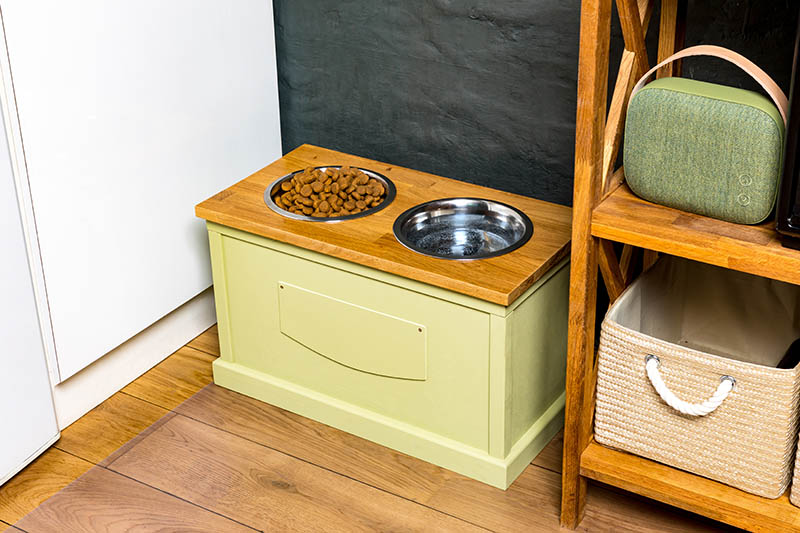
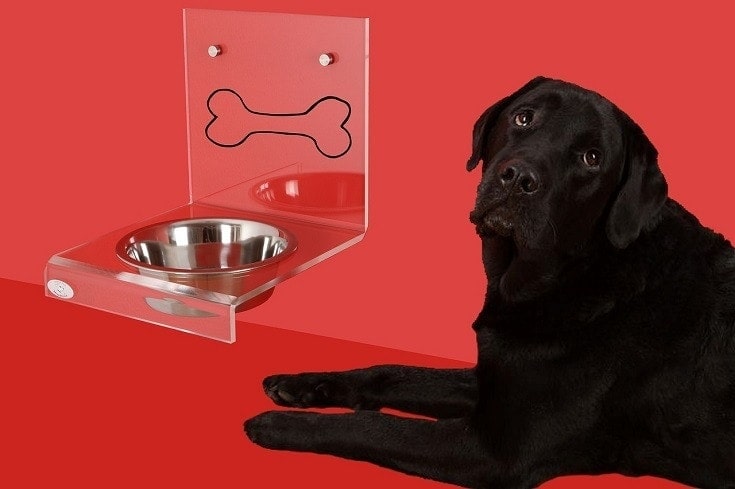
While the construction material is arguably the most important factor to take into consideration, the style of bowl that you purchase is important too. Dogs with long muzzles and ears will appreciate a deeper bowl, while dogs with flat faces like Pugs will do well with shallow bowls. Large dogs like Great Danes will benefit from raised or elevated bowls. These consist of a raised platform with a bowl embedded inside, and they are believed to help prevent gastrointestinal issues and are more comfortable for these giant breeds.
If you have a dog that tends to gobble up food in seconds, you may consider purchasing a slow-feed bowl. These bowls contain raised ridges inside the bowl to force your dog to take smaller bites of food at a time and thus eat slower.

Conclusion
In conclusion, stainless-steel dog bowls offer the best durability, are the most hygienic, and are the most cost-effective option for a bowl for your dog. They are also lightweight and won’t rust, and even the biggest dog is unlikely to break a stainless-steel bowl.
That being said if you own a small, calm, or older dog, a ceramic dog bowl still has benefits, as well as pleasing aesthetics. Lapdogs are unlikely to break these bowls, and they are perfectly fine if kept clean.
You might also want to check this out: Luno Collapsible Dog Bowl Review: An Expert’s Guide
Featured Image Credit: Jan Dix, Shutterstock
Get Hepper In Your Inbox


Pet care tips from our vets and experts, straight to your inbox.
You may opt-out at any time. View our Privacy Policy for more information.

Nicole is a lover of animals of all sizes but is especially fascinated with the feline variety. She’s the proud mom of Baby, a Burmese, and works every day so he can relax in the sunshine or by the fire. She’s always had a cat in her home and has spent countless days with others, observing behaviors and softening up even the grouchiest of the lot. Nicole wants to share her kitty expertise with you so you and your cat can live happy, healthy, and care-free.
Join the conversation
Ask a question, share your story, or send private feedback.