Hepper is reader-supported. When you buy via links on our site, we may earn an affiliate commission at no cost to you. Learn more.
Do Dogs Stress-Eat? Vet Answer & Tips



Human beings have a vast emotional spectrum, ranging from simple emotions like happiness to more complex ones like regret. It’s not uncommon for us to engage in unhealthy behaviors like stress eating when our emotions get the best of us. Eating fatty and sugary food dampens feelings of stress and subsequent responses; there’s a reason that we have the term, “comfort food.”1 But does the same apply to our canine friends?
Canines have a pretty limited emotional range, with the emotional complexity of a 2-1/2-year-old toddler at peak emotional maturity. 2 While they’re not as emotionally complex as adult humans, dogs still stress and experience emotional turmoil from time to time. But are their eating patterns affected by stress, and do they eat comfort food to ease that stress?
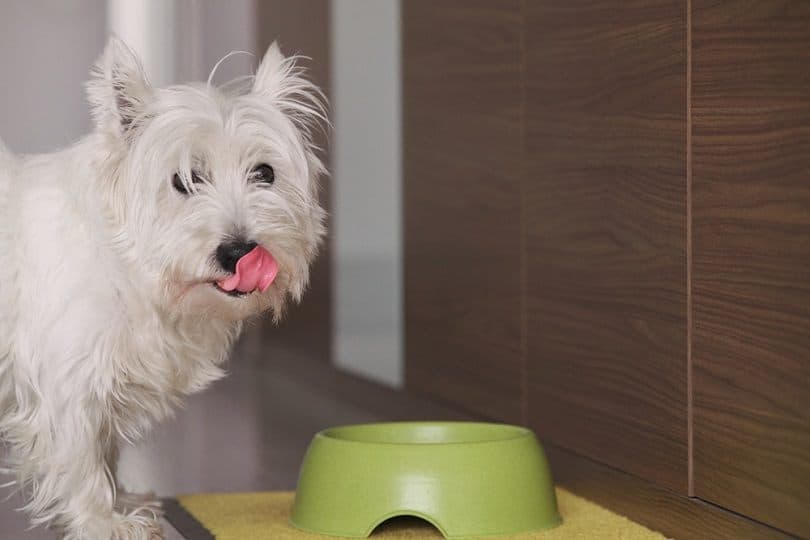
Research suggests that dogs do stress eat and indulge in comfort food to alleviate negative emotions. In fact, stress-induced comfort eating has been linked to obesity in dogs and other animals. Keep reading to learn everything you need about the relationship between your dog’s emotions and food.

What Is Stress Eating?
Stress eating, or emotional eating, describes a pattern of over-indulging in food to cope with stressful situations. In humans, it manifests in various ways, from eating a simple snack after a stressful day at work or gobbling down an entire tub of ice cream after a breakup.
Stress-induced eating can have far-reaching health and psychological implications. It’s an unhealthy coping strategy that only worsens the situation. Chronic stress eating leads to obesity, a chronic inflammatory state that increases the risk of various diseases and can lower self-esteem, making you stress eat even more. This leads to a vicious cycle that takes a lot of willpower to get out of.
Do Dogs Stress Eat?
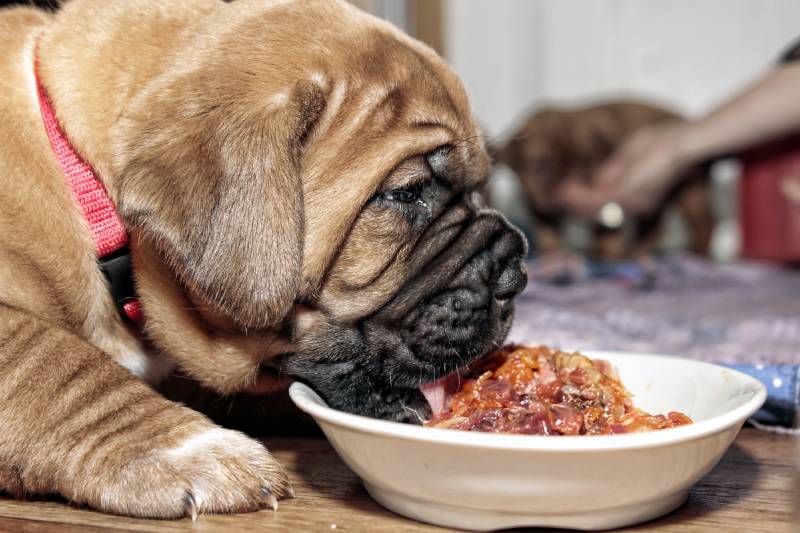
To date, no empirical studies demonstrate that dogs and other companion animals suffer from emotional eating. That said, according to owner perception surveys and demonstrated research with laboratory animals, we can reasonably suggest that they do3.
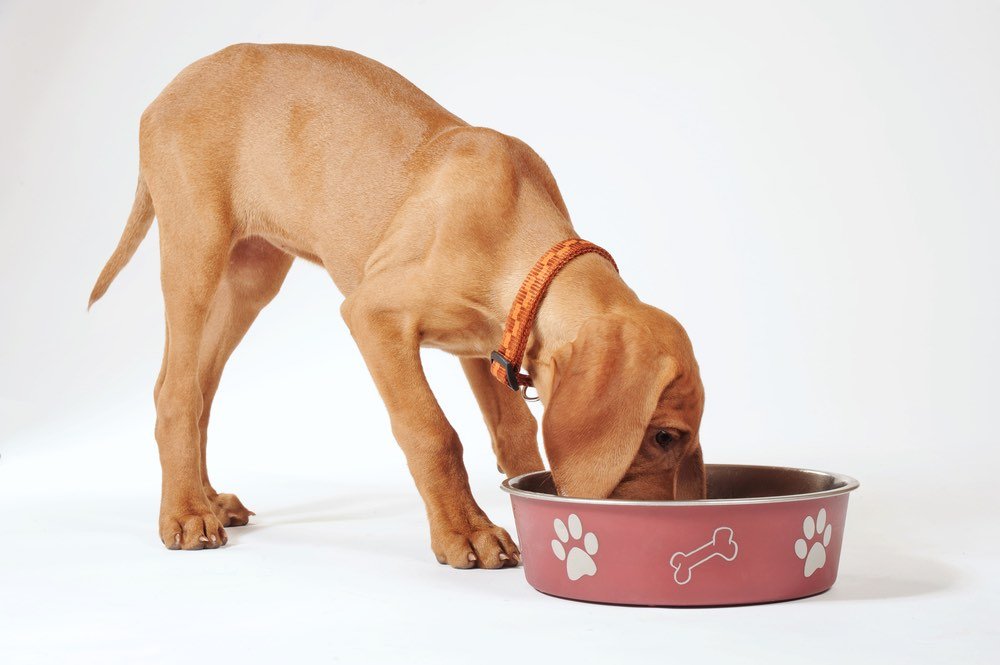
Most owners think that dogs will also stress eat when they feel under the weather4. However, unlike humans, dogs don’t have as much say as to what and when they can eat. A voracious appetite that deviates from the norm is a major sign of emotionally induced eating in dogs. In a sense, dogs that are free fed may have a higher chance of becoming emotional eaters. But if a dog eats their scheduled meals twice as fast as they usually do, they might be feeling stressed and taking it out on food
Since canines are opportunistic feeders and scavengers, you should avoid free feeding your dog, especially if you are concerned that they might stress eat. Managing your dog's diet is crucial, especially given that about 25% to 30% of dogs in the U.S. are obese. Obesity shortens your dog's lifespan and makes them more predisposed to diseases like heart disease, hypertension, and cancer. Moreover, you should figure out what is causing your dog’s stress and make a plan to mitigate or eliminate it. Chronic stress is also a precursor of disease, and not every dog will resort to food to deal with it; destructive or aberrant behaviors, anorexia, or aggression could also be unwanted stress manifestations.
What Emotions Trigger Stress Eating in Dogs?
Like humans, dogs can be prone to stress eating when overwhelmed with negative emotions. Food can become a coping mechanism to help them through these rough feelings. Emotions that could trigger emotion-induced eating in dogs include:
Dogs can feel negative emotions, but how they respond varies from dog to dog. Some respond by overeating, while others don’t eat at all. The latter is one scenario where stress eating might actually be better for the dog. That said, excessive eating due to negative emotions, combined with a lack of exercise, is risky for your dog’s health.


Is Stress Eating Bad for Dogs?
Yes, stress eating is bad for dogs, especially those with pre-existing conditions. Here are a few dangers of stress-induced eating in dogs.
Obesity
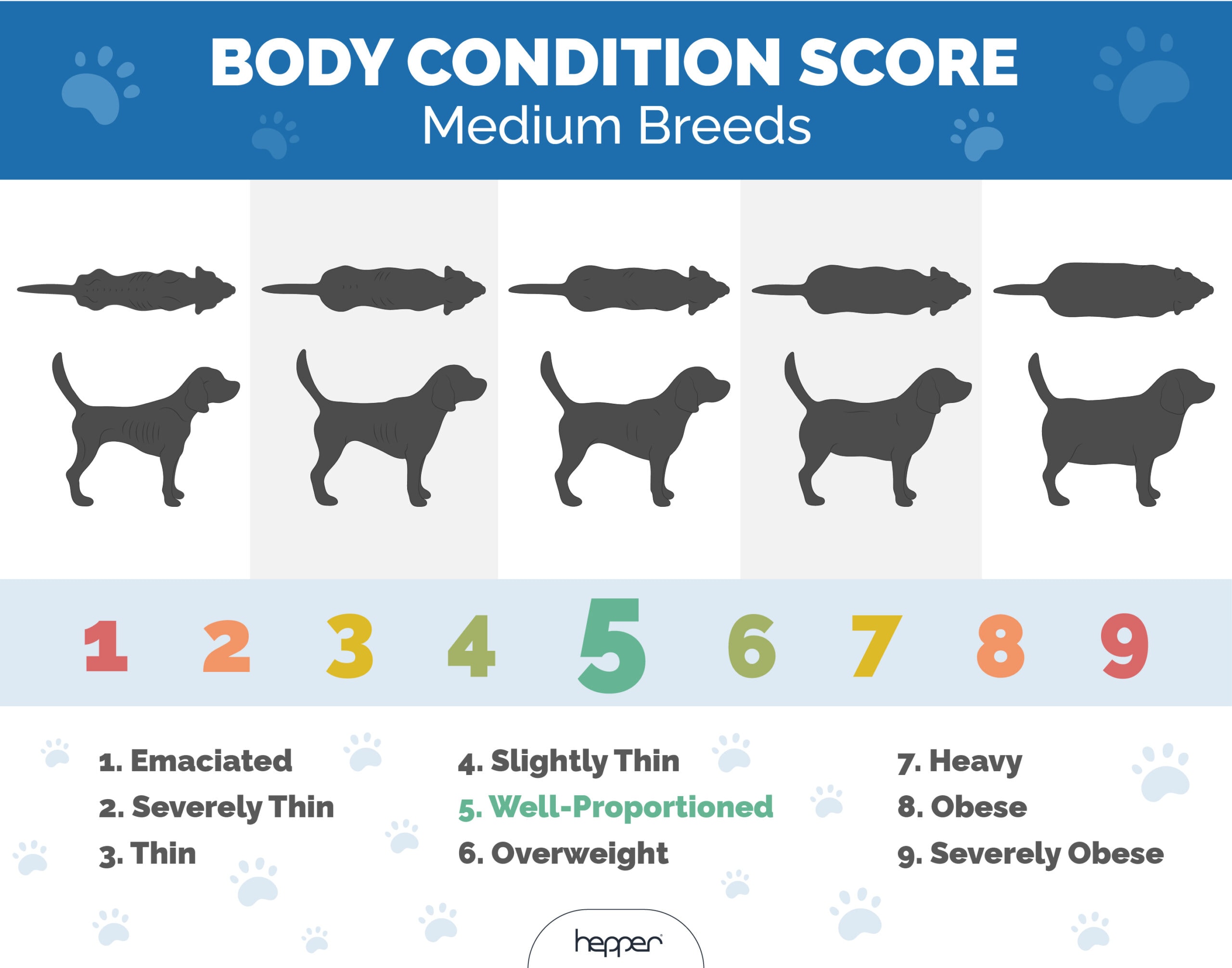
Stress eating is likely to lead to over-eating, which leads to obesity. Obesity is the excessive buildup of excess adipose tissue in your dog's body. It differs from being overweight, which is when your dog weighs more than they normally should. That’s why on a body condition score chart, you will see different descriptions of overweight and obese canines. Obesity can shorten your dog’s lifespan and make them more prone to certain diseases.
Joint Pain and Instability
If owners allow their dogs to develop the unhealthy habit of over-eating and becoming obese, over time, this excess weight will take a toll on the dog’s joints, leading to joint pain and balancing issues. It also makes them more prone to injuries and diseases like arthritis.

Bloating
Dogs get bloated when they eat their food or drink their water too quickly. Bloating is when the dog’s stomach fills up with gas and puffs up. While it’s easy to shrug off bloating in your dog, it could quickly escalate into something more serious. This is especially true for large breeds like Chinooks and Bernese Mountain Dogs, as well as deep-chested breeds.
If left untreated, bloating can quickly become a life-threatening condition. As gas fills up your dog’s stomach, it contorts and limits or stops blood from flowing into the gut. It also stops food from entering or leaving the stomach. In severe cases, the stomach’s puffing up is large enough to block crucial veins from supplying blood to the heart. This can be fatal.
Pancreatitis
Pancreatitis is the inflammation of the pancreas that causes pancreatic enzymes to leak, causing problems to nearby organs like the liver. Studies have not conclusively established the exact cause of pancreatitis in dogs, but most cases are linked to dietary indiscretions, such as ingesting excessive spicy and fatty foods.
If a dog is eating copious amounts of fatty foods to cope with unpleasant emotions, this can increase their risk of pancreatitis.

How Can You Stop Your Dog From Overeating?
Do you think that your dog is a habitual stress eater? If so, there are a couple of things you can and should do to stop them from stress eating, as it might be an animal welfare issue.
You can complement these useful tips with our calculator tool here:

Conclusion
If you suspect that your dog is stress eating due to experiencing negative or otherwise not-so-pleasant emotions, know that science indicates that this can be a real possibility for them. Also, since it might be a welfare issue, you will need to figure out what needs to change in their life. But if the deduction process gets complicated or out of hand, you might need to consult a dog behaviorist to help you figure out the cause of the stress and the best way to manage it. That way, you can take steps to remove the stressor or decide how best you can stop the stress-induced eating before it takes a toll on your dog’s health.
See also:
Does Stress Give Dogs Diarrhea? Stress Signs to Look Out For
Does Petting a Cat or Dog Reduce Stress? Here’s What Science Says
Featured Image Credit: joangonzale, Shutterstock
Get Hepper In Your Inbox


Pet care tips from our vets and experts, straight to your inbox.
You may opt-out at any time. View our Privacy Policy for more information.
Nicole is a lover of animals of all sizes but is especially fascinated with the feline variety. She’s the proud mom of Baby, a Burmese, and works every day so he can relax in the sunshine or by the fire. She’s always had a cat in her home and has spent countless days with others, observing behaviors and softening up even the grouchiest of the lot. Nicole wants to share her kitty expertise with you so you and your cat can live happy, healthy, and care-free.
Join the conversation
Ask a question, share your story, or send private feedback.