Hepper blog

Search our database of over 9,984 posts with up-to-date information from our experts and veterinarians.

Hepper is reader-supported. When you buy via links on our site, we may earn an affiliate commission at no cost to you. Learn more.

Do Frogs Have Backbones? Vet-Approved Anatomy Explanation

By Lindsey Lawson · Reviewed & fact-checked by Dr. Luqman JavedVet Approved
Dr. Luqman Javed
Reviewed & Fact-Checked byDr. Luqman JavedDVM (Veterinarian)
Dr. Luqman grew up with an extreme fondness for animals and turned a childhood dream into reality by becoming a veterinarian. His goals are now focused on helping pet owners understand their pets better in order to ensure the best quality of life for all pets globally. He is passionate about wildlife, exotic pets, pet owner education, and animal welfare. Luqman has 3 years of professional experience working with a variety of animal species. He has skills in demonstrating proper animal husbandry and training some exotic species, such as parrots. Additionally, he has decades of personal experience with keeping many exotic pets: freshwater fish, parrots, songbirds, chickens, ducks, turtles, and hamsters.View authorThe information is current and up-to-date in accordance with the latest veterinarian research. Read about our vets
Share
Ask us a question in the comments
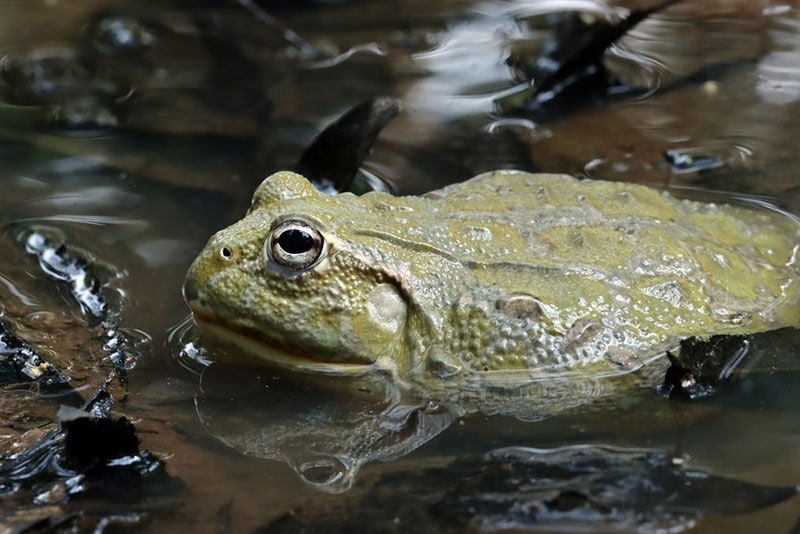
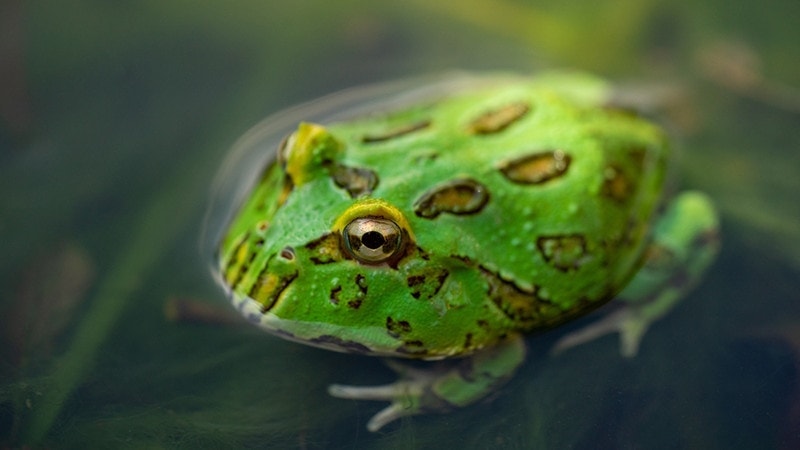
female pixie frog or african bullfrog hiding in the water

While animals fall into many different classifications, you can more broadly classify them as either vertebrates or invertebrates with vertebrates being animals with a backbone and invertebrates being animals without a backbone.

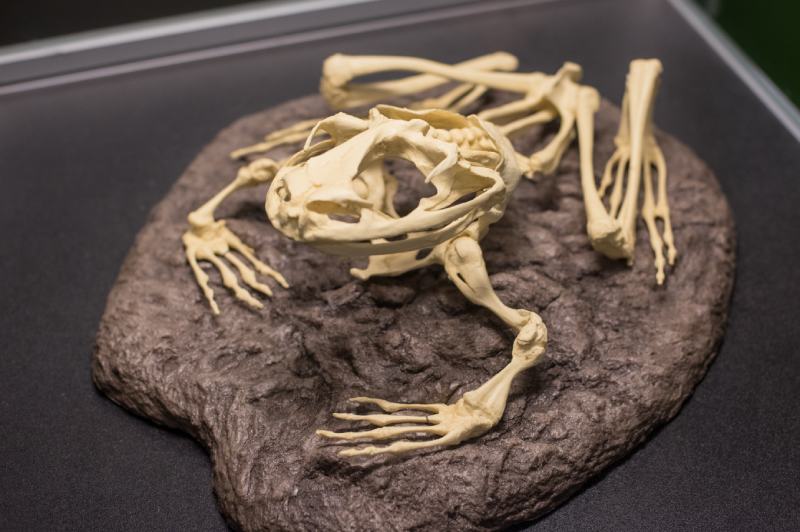
Frogs and other amphibians are vertebrates, so frogs do have backbones. But unlike other vertebrates, they have a very unique skeletal structure that forms from cartilage to bone as they go through their metamorphosis.

A Frog’s Backbone Explained

Tadpoles, or frogs in their larval stage, do not have a vertebral column (backbone) because their bodies are made primarily of cartilage. As they grow into adult frogs, they start to grow a skeleton. That means that frogs may not be born with a vertebral column (instead, they are born with what is known as a notochord), but once they develop into adults, they will have a fully formed one with 10 vertebrae or fewer, depending on the species. Unlike other vertebrates, frogs have very short backbones and large hip bones to support their muscular legs.

The topmost vertebra is the atlas, which is the only cervical vertebra in the frog’s anatomy. Following the atlas, several more vertebrae are of similar shape, called typical vertebrae. The amphicoelous vertebra follows the typical vertebrae and is concave at the anterior and posterior ends and is found in most fish and certain amphibians.

After the amphicoelous vertebra is the sacral vertebra and then the urostyle; a rod-like fusion of the sacral vertebrae that runs in parallel with the extended iliac blades of the pelvis. The urostyle allows for a strong, shock-absorbing pelvic floor that supports leaping.
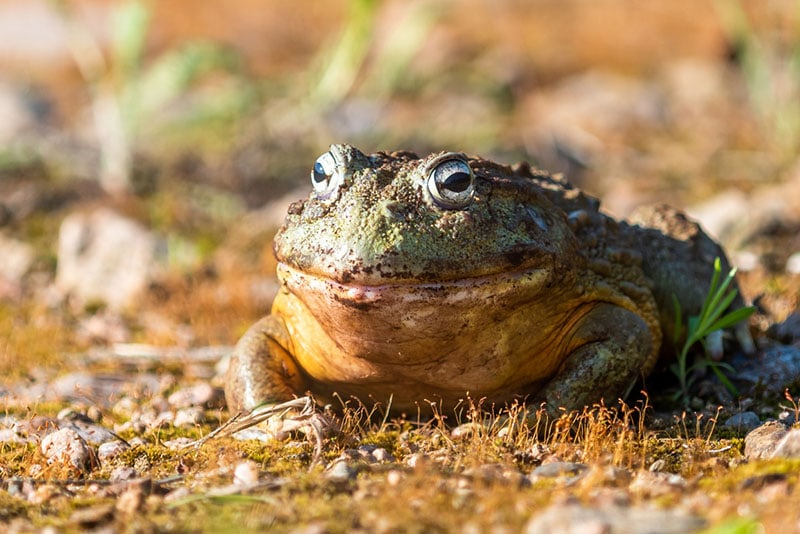
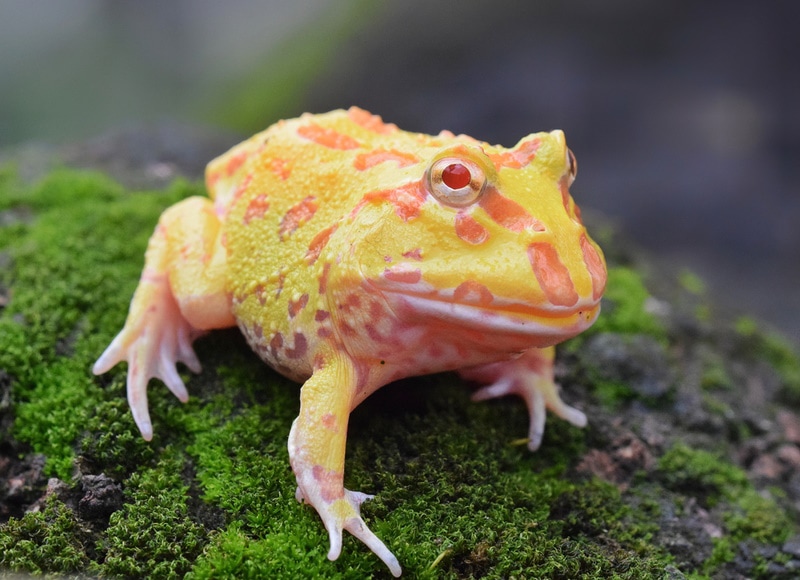
giant male african bullfrog or pixie frog sunbathing outdoor
Image Credit: Vaclav Sebek, Shutterstock

The 4 Phases of Frog Development

There are several thousand species of frog worldwide and they can be found on every continent except for Antarctica. Because of how widely distributed they are, various species are adapted to live in a wide variety of climates and habitats across planet Earth.

Though some species do not go through a tadpole stage, many of the species we are familiar with will hatch as tadpoles and transform into frogs over time. Female frogs will lay their eggs in ponds, streams, and other calm or stagnant bodies of water. They will lay large numbers of eggs at a time to increase the chance of survival for the young, as they will be vulnerable to predation through all life stages. While in the larval stage, the tadpole will develop and eventually eat the yolk of the egg and hatch into the water.

1. Tadpole
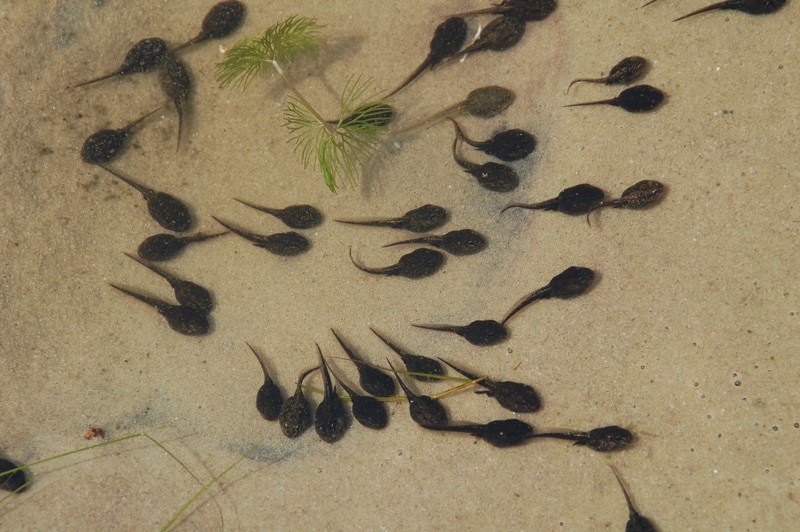
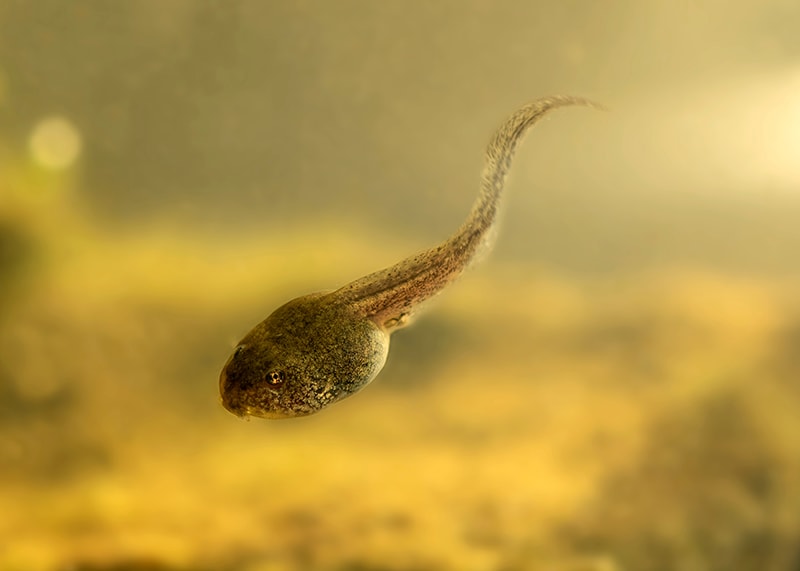
tadpoles swimming
Image Credit: Piqsels

Rather than bones, tadpoles consist of primarily cartilage and soft tissue which will transform as they grow and develop. Within the first 4 weeks of life, they will freely swim and live solely underwater feasting on algae and organic matter. Teeth will begin to develop allowing them to consume a wider variety of foods.


2. Tadpole With Legs
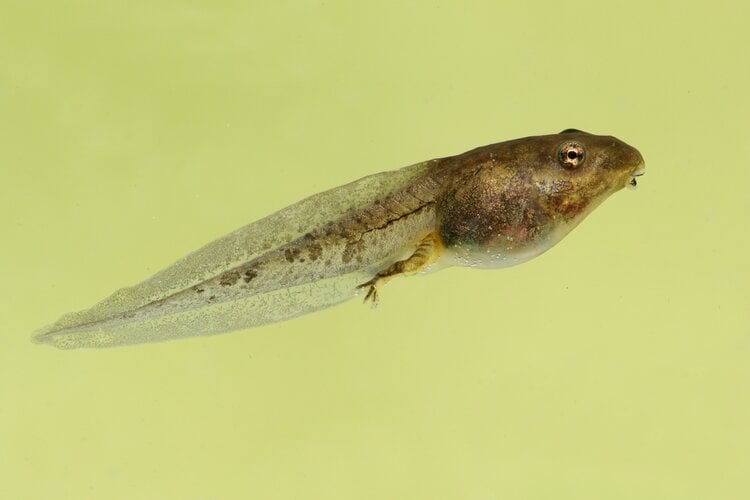
wood-frog-tadpole-with-legs
Image Credit: Steve Byland, Shutterstock

After about 5 to 9 weeks, hormones will begin the process of metamorphosis and the tadpoles will start to form legs as their bodies continue to grow and develop. The hind legs will begin to form first, followed by the front legs. During this time, the tail will begin to disappear, and the head will become more froglike. As this occurs, the cartilage begins to be replaced with bone.


3. Froglet
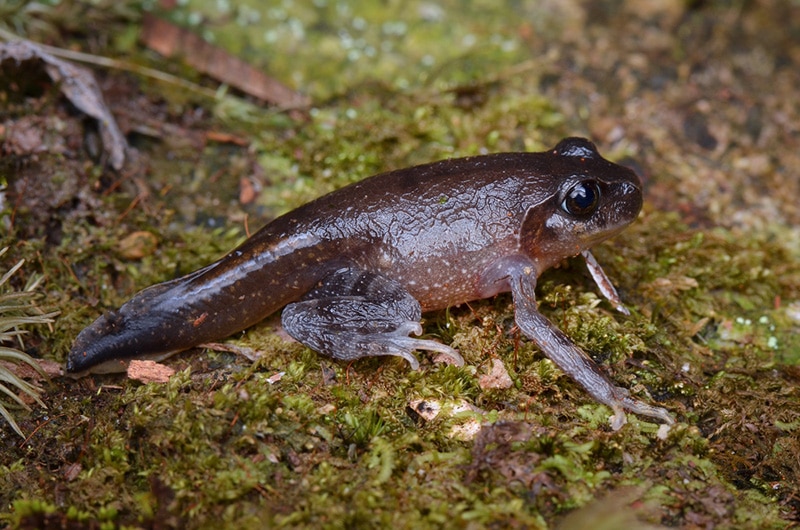
macro image of a froglet
Image Credit: SIMON SHIM, Shutterstock

When the tadpole reaches the froglet stage, it is close to being considered an adult.  At this point in development, the gills have disappeared, and the lungs have developed, allowing them to leave the water. The once prominent tail of the tadpole will only be a small stub.


4. Adult
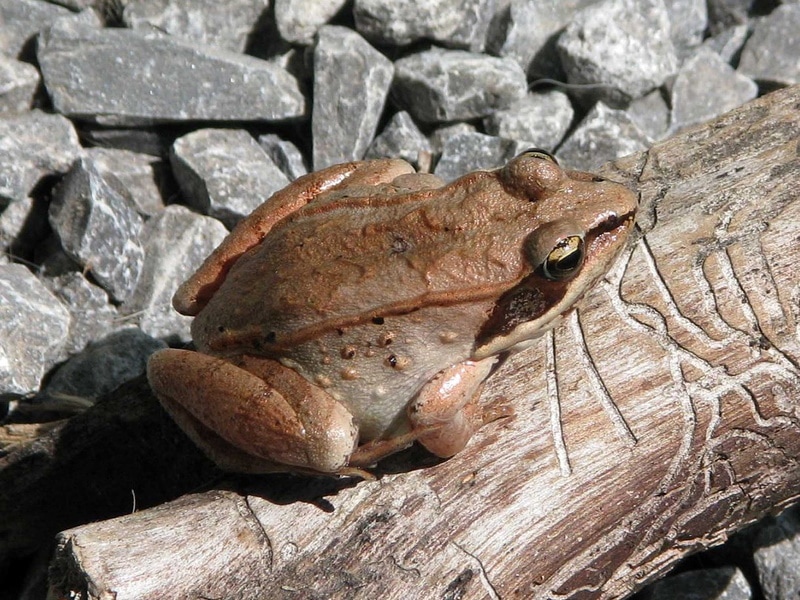
wood frog on log
Image By: Bernell MacDonald, Pixabay

Once the tail has completely disappeared, the frog has reached adulthood and will now be sexually mature and able to reproduce. The teeth they once had as a tadpole will be long gone, and their mouths and digestive system will now be fully prepared for their carnivorous diet. Their unique skeletons will have fully formed to suit their natural behaviors for the remainder of their lives.

Conclusion

All species of frogs are considered vertebrates, meaning they have a backbone. They first have to go through the process of metamorphosis for their skeleton to develop. But their backbone and the rest of their skeleton are very important, as they support their unique movements and protect vital organs.

Sources

Featured Image Credit: Kurit afshen, Shutterstock

Get Hepper In Your Inbox

Pet care tips from our vets and experts, straight to your inbox.

List

Select all that apply.

You may opt-out at any time. View our Privacy Policy for more information.

Lindsey Lawson
Authored by

Lindsey Lawson

Join the conversation

Ask a question, share your story, or send private feedback.
Rate this post
Required to post. Only our editors see your rating.
Who should see this?

A human reviews every comment before it appears. Your email is never published.

Picked to go with this article

Do Frogs Have Bones? Vet-Approved Anatomy Facts

Do Frogs Have Bones? Vet-Approved Anatomy Facts

While it may not look like it, frogs do indeed have bones. They are vertebrates, just like humans, who have an internal skeletal structure. In fact, just like…

Krysha Thayer
By Krysha Thayer ·
How Long Does It Take for Tadpoles to Turn Into Frogs? Vet-Approved Info

How Long Does It Take for Tadpoles to Turn Into Frogs? Vet-Approved Info

The transformation of a tadpole into an adult frog (called metamorphosis) is one of the most complex and stunning in the animal kingdom. During this process, a…

Beth Crane
By Beth Crane ·
Is a Frog a Mammal? Vet-Verified Facts & Explanation

Is a Frog a Mammal? Vet-Verified Facts & Explanation

In the world of vertebrates (animals with backbones), there are five main groups, which are mammals, reptiles, birds, fish, and amphibians. It can sometimes be…

Kit Copson
By Kit Copson ·
How Do Frogs Reproduce? Mating Habits Explained (Vet Answer)

How Do Frogs Reproduce? Mating Habits Explained (Vet Answer)

The frog’s reproduction process is complex and extraordinary. In general, most frogs lay eggs that hatch into tadpoles and then metamorphose into froglets whic…

Dr. Iulia Mihai
By Dr. Iulia Mihai ·

Keep reading

More stories you might like

Are Frogs Reptiles? Vet-Approved Facts & Care Tips

Many of us grew up learning about frogs’ amazing transformation from tadpoles to adults in science class. But does the unique biology and life cycle of these c…

Nicole Cosgrove
By Nicole Cosgrove ·
Are Frogs Reptiles? Vet-Approved Facts & Care Tips

Can Frogs Eat Fruit? Vet Approved Nutrition Advice

Generally, adult frogs are obligate carnivores, which means that they only eat meat. As such, adult frogs should not be given fruit as part of their diet. Howe…

Oliver Jones
By Oliver Jones ·
Can Frogs Eat Fruit? Vet Approved Nutrition Advice

Is a Toad an Amphibian? Vet-Reviewed Facts & FAQ

Toads are amazing creatures that you can find almost anywhere. They're highly adaptable and possess many unique traits. One thing that many people might wonder…

Ed Malaker
By Ed Malaker ·
Is a Toad an Amphibian? Vet-Reviewed Facts & FAQ

Do Frogs Lay Eggs? Interesting Reproductive Facts (Vet Reviewed)

Frogs are part of the class Amphibia and the order Anura, to which most of them belong. Science recognizes at least 7,622 species. You’d think there would be s…

Chris Dinesen Rogers
By Chris Dinesen Rogers ·
Do Frogs Lay Eggs? Interesting Reproductive Facts (Vet Reviewed)

Frog vs Toad: Vet-Reviewed Differences (With Pictures)

At a glance, toads and frogs seem indistinguishable from one another in terms of the sort of animal that they are. As with many types of animals, there is stun…

Eleanor Glaum
By Eleanor Glaum ·
Frog vs Toad: Vet-Reviewed Differences (With Pictures)

How Many Toes Do Frogs Have? Vet-Verified Anatomical Information

Some swear it’s four, others swear it’s five–but exactly how many toes does a frog have? Frogs have 18 toes in total: five toes on each hind leg, equaling 10 t…

Nicole Cosgrove
By Nicole Cosgrove ·
How Many Toes Do Frogs Have? Vet-Verified Anatomical Information

How Long Do Pet Frogs Live? Average Lifespan, Data & Care

A pet frog’s lifespan varies a lot. Some pet frogs can live for up to 20 years, while others live for closer to 10. Generally, pet frogs live longer than their…

Kristin Hitchcock
By Kristin Hitchcock ·
How Long Do Pet Frogs Live? Average Lifespan, Data & Care

What Is a Group of Frogs Called? Two Interesting Options & Their Vet-Verified Meanings

One would expect an ordinary term to describe a group of frogs, but Mother Nature and the English language have something slightly unexpected in store. As it t…

Nicole Cosgrove
By Nicole Cosgrove ·
What Is a Group of Frogs Called? Two Interesting Options & Their Vet-Verified Meanings