Hepper is reader-supported. When you buy via links on our site, we may earn an affiliate commission at no cost to you. Learn more.
Is a Frog a Mammal? Vet-Verified Facts & Explanation


In this article
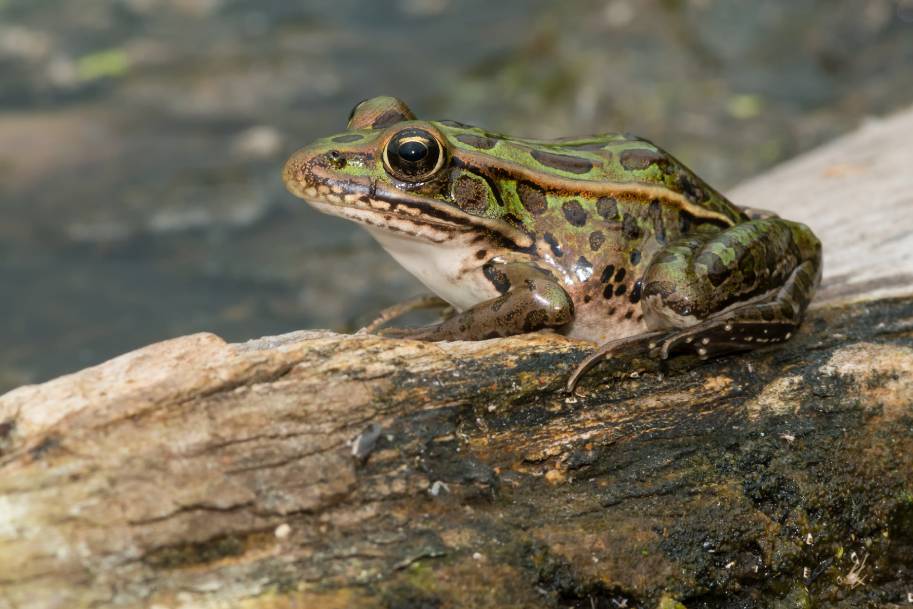
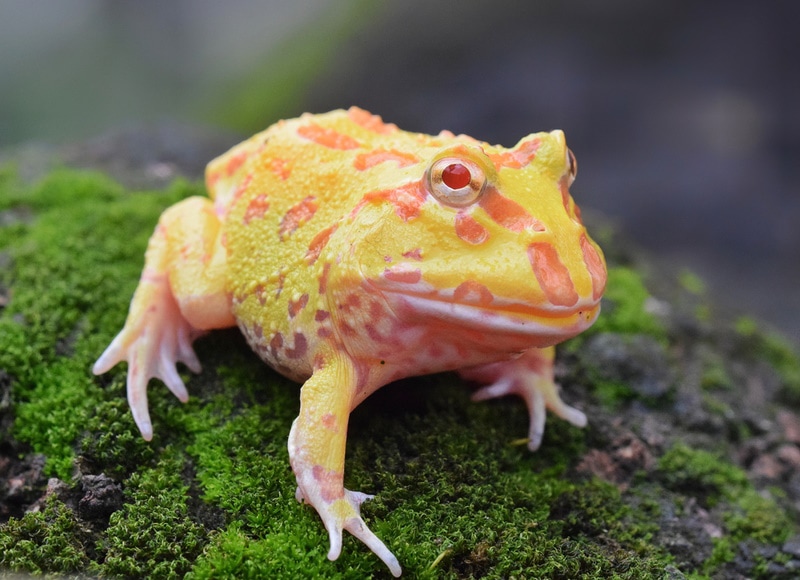
In the world of vertebrates (animals with backbones), there are five main groups, which are mammals, reptiles, birds, fish, and amphibians. It can sometimes be tricky knowing which animals fall into each group. In the case of frogs, though, they are amphibians.
In this post, we’ll explain what an amphibious animal is and share the main differences between the animal groups.

What Is an Amphibian?
The word “amphibian” is derived from the Greek word “amphibious”. There are two meanings within this one word—”amphi”, meaning “both” or “dual”, and “bios”, which means “life”.
In a nutshell, an amphibian is a cold-blooded vertebrate that typically spends the majority of their time as an adult on land (though not in every case—see below), preferring damp, moist environments. However, an amphibian’s eggs are typically laid in water, where their larval (tadpole) stage is also spent. Being cold-blooded, amphibians rely on the ambient temperature to regulate their metabolism.
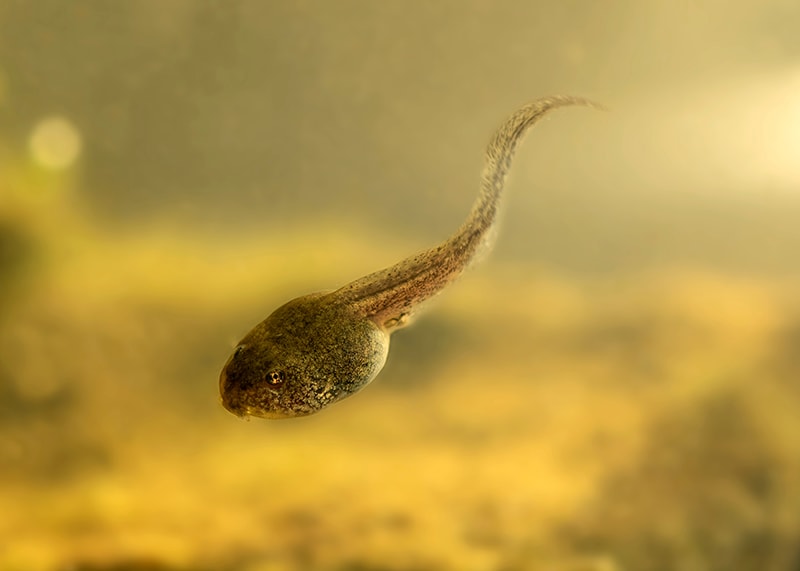
The larval stage of an amphibian’s life can last for up to 2 years in some cases, though it can be much shorter, sometimes lasting just a couple of weeks. Most, but not all, amphibians undergo a free-larval stage known as the tadpole phase. In the tadpole phase, amphibians have gills, and some aquatic amphibians keep these as adults. The lungs and legs are developed during the growth phase (metamorphosis), and the amphibian can later use these to survive on land.
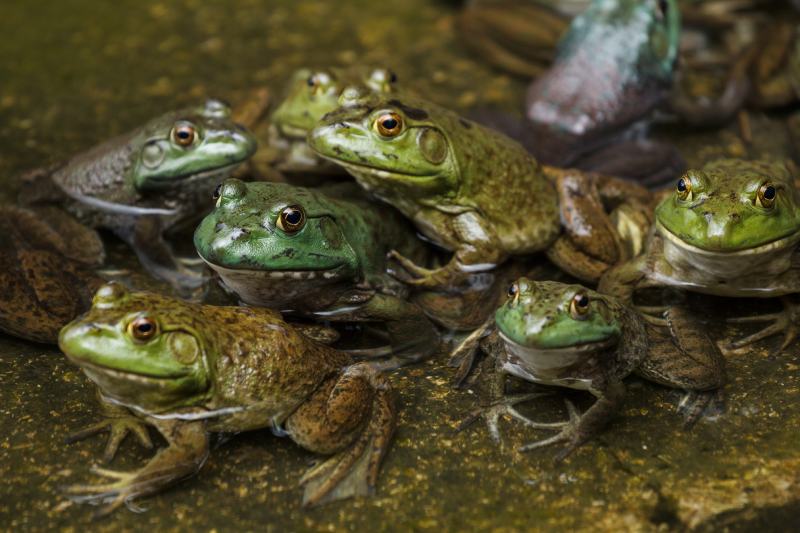
In short, many amphibians spend part of their lives in water and part of their lives on land, but some amphibians are largely aquatic for their entire lives whereas some live mostly on land—it varies. For example, bullfrogs are largely aquatic, whereas tree frogs spend most of their time on land.
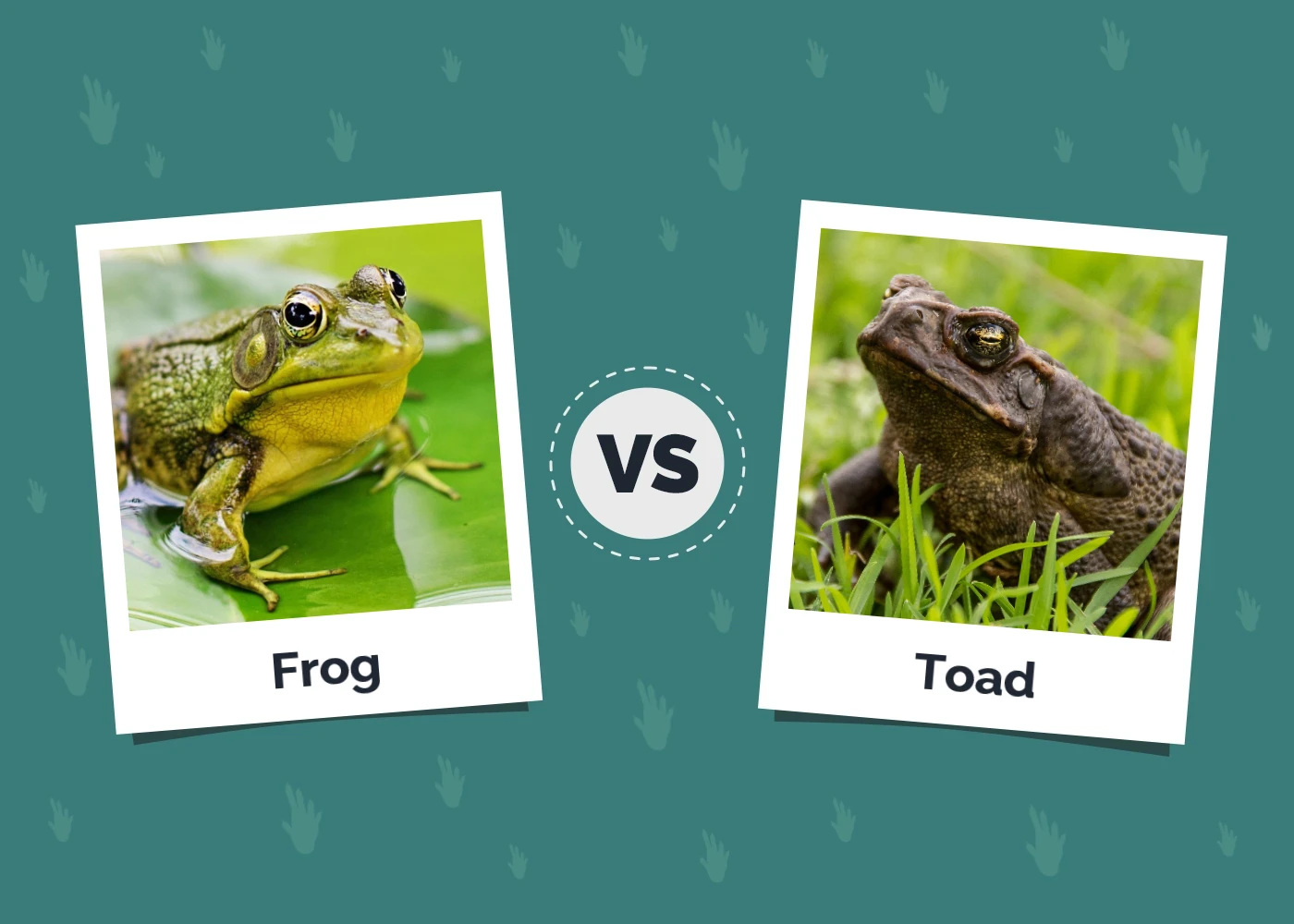
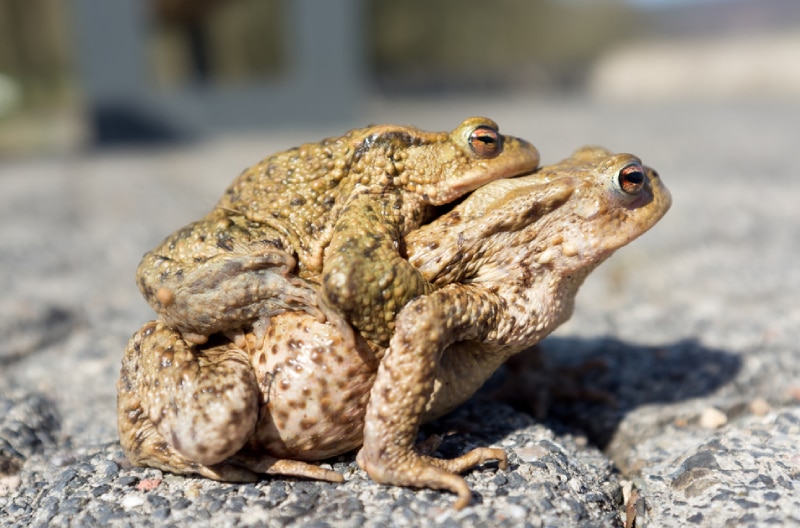
Their skin has to be kept moist to allow them to breathe through the skin, which most amphibians can do in addition to breathing through their lungs. Animals in the amphibian group are frogs, toads, newts, salamanders, axolotls, and caecilians.
Life Cycle of a Frog
What’s the Difference Between Amphibians & Mammals?
One of the main differences between amphibians and mammals is that most (but not all) amphibians are born externally (via eggs), whereas mammals give birth to their young, and female mammals feed their young with milk while amphibians do not. Some amphibians, such as the fire salamander, give birth to live offspring and do not lay eggs.
In addition, mammals are warm-blooded and amphibians are cold-blooded, and mammals have hair or fur (though some, like whales and elephants, have hair but less of it than many other mammals). By contrast, amphibians do not have hair or fur and instead have moist skin. Fully developed amphibians can breathe through both their lungs and skin, whereas mammals breathe through their lungs.
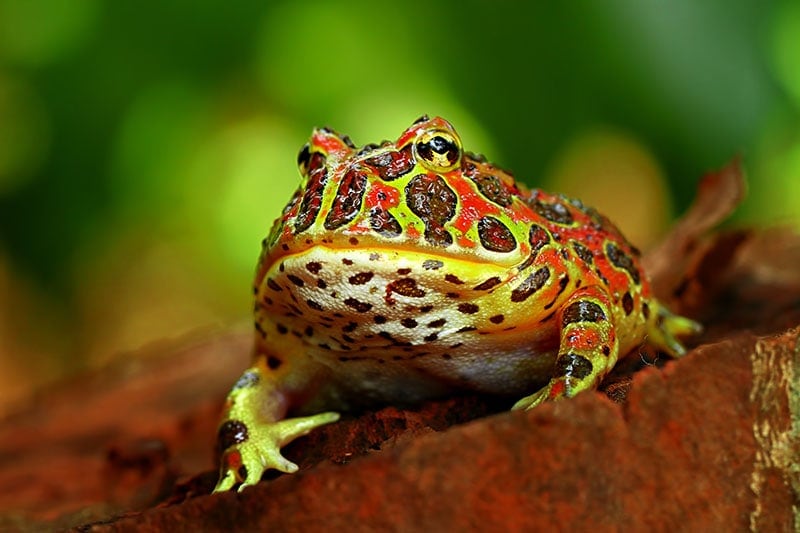
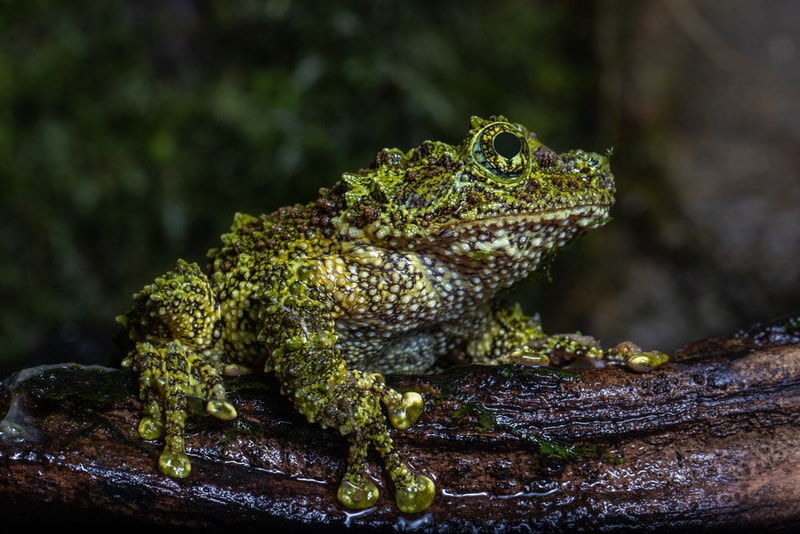
What’s the Difference Between Amphibians & Reptiles?
As with mammals, there are a few clear differences between amphibians and reptiles. For one thing, while amphibians have moist skin that shouldn’t be allowed to dry out, reptiles have dry, scaly skin adapted for life in hot, arid climates. While amphibians breathe through their skin and lungs, reptiles only breathe through their lungs.
Furthermore, though both amphibians and reptiles usually lay eggs, reptiles don’t possess gills during any life stage, whereas amphibian hatchlings usually go through a tadpole stage, typically in the water, and often possess gills during this time. For example, most frogs start out as tadpoles that gradually develop legs and lungs as they become an adult.
Final Thoughts
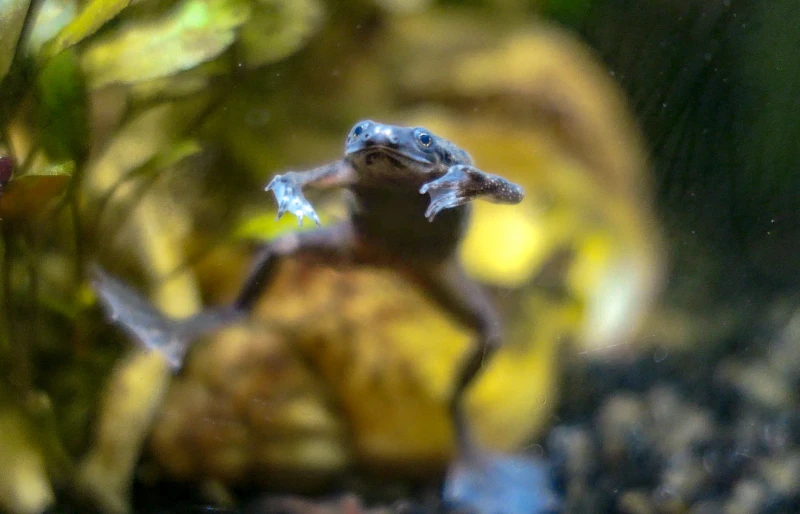
To recap, frogs are not mammals,they are amphibians, along with toads, newts, salamanders, and caecilians. They usually hatch from eggs as tadpoles that grow legs and lungs in the water to prepare them for an adult life spent mostly on land. Nevertheless, some frog species, like the African Dwarf Frog and the Titicaca Water Frog spend much of their lives in water.
See Also:
Sources
Featured Image Credit: yusuf kurnia, Shutterstock
Get Hepper In Your Inbox


Pet care tips from our vets and experts, straight to your inbox.
You may opt-out at any time. View our Privacy Policy for more information.
Kit Copson is a freelance writer and lifelong animal lover with a strong interest in animal care. She has parented various furry beings over the years and is currently a proud cat mom of two—one skittish but adorable Domestic Shorthair and very chilled (unless hungry) Siamese and a —and dog mom of one—an adopted Bichon Poodle cross. When not writing about or spending time with pets, Kit can be found doodling in her sketchpad, reading, or more often than not, drinking tea.
Join the conversation
Ask a question, share your story, or send private feedback.