Hepper is reader-supported. When you buy via links on our site, we may earn an affiliate commission at no cost to you. Learn more.
My Dog Ate a Toad! Our Vet Explains What to Do

In this article
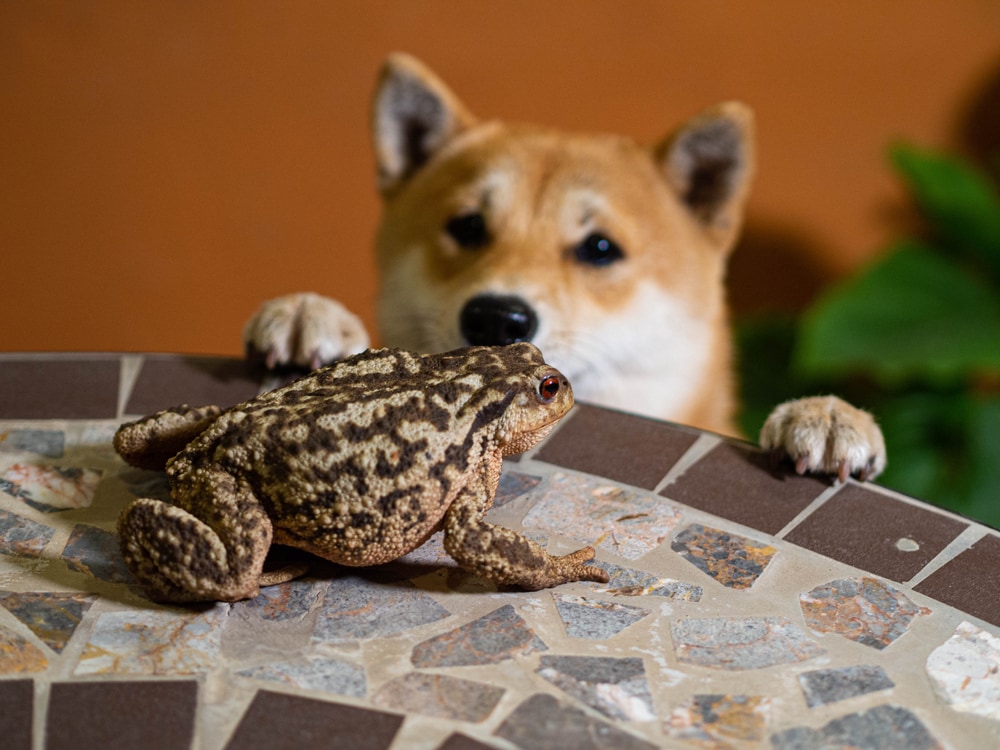
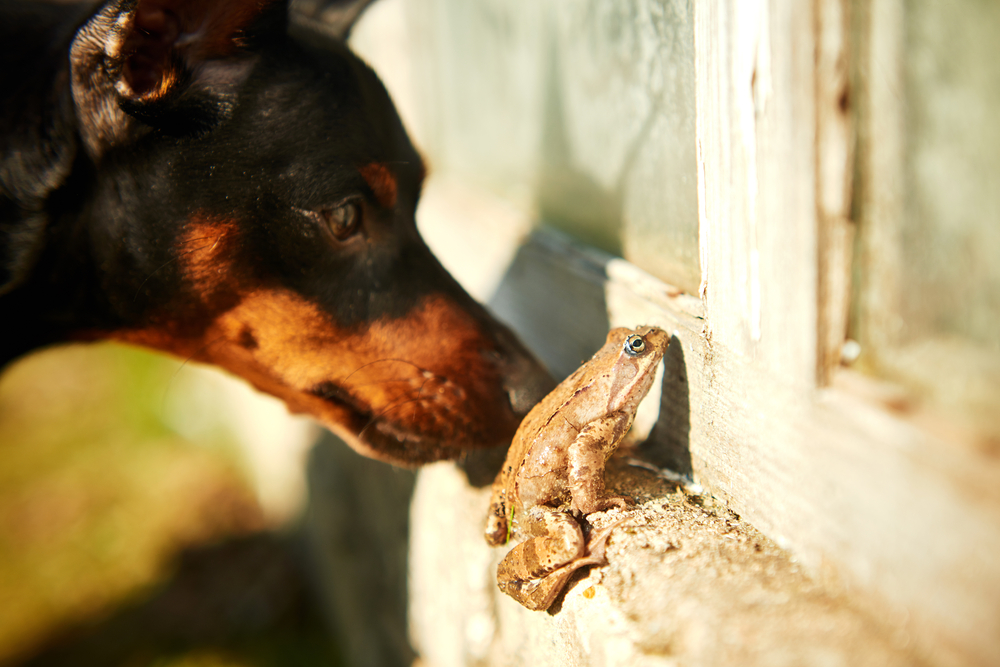
Imagine you find your dog playing with a toad. Or you’re out on a walk when your dog dashes into the bushes. Pretty standard behavior, only this time, they come out frothing at the mouth. Are toads toxic to dogs? Absolutely! When a toad feels threatened, it secretes a toxic substance onto its back. How toxic this substance is depends on the species of toad. The toxins act very quickly. So, should your dog encounter a toad, it’s important to know how to respond.
If your dog ate a toad, keep calm but try to react quickly. Rinse your dog's mouth out with water. Seek immediate veterinary help by taking your dog to a local clinic or calling a pet poison hotline. If you can do so quickly, take a picture of the toad to help your veterinarian identify the species.

Are Toads Poisonous to Dogs?
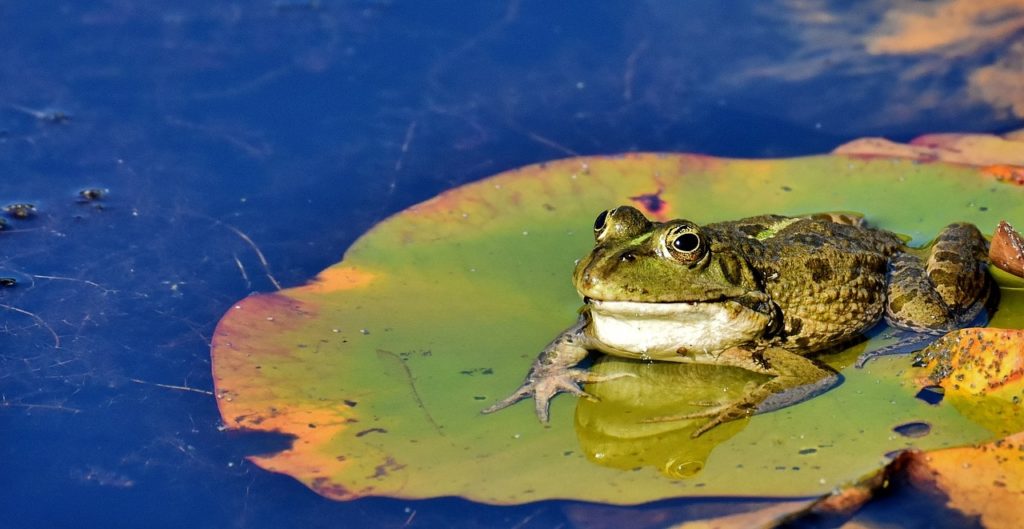
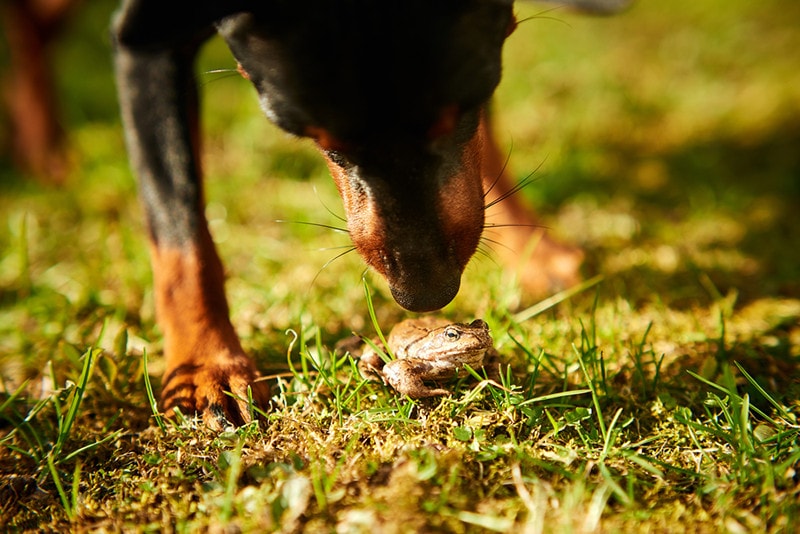
All toads secrete a toxic substance when under threat. The toxicity will depend on the species and size of toad. If your dog comes into contact with a toad, this toxic substance can be absorbed through the mouth, eyes, or via open wounds. This means if your dog plays with, licks, or eats a toad, or even drinks water that a toad has been sitting in, they can be affected. The toxins are very irritating to the skin. They then enter the bloodstream and affect the heart, blood vessels, and central nervous system.
Which Toads Are Most Toxic to Dogs?
The most toxic toad found in the United States is the giant, or marine, toad (Rhinella marina, formerly Bufo marinus). They are also known as the cane toad. Unfortunately, if your dog licked or ate a giant toad, they would not survive without treatment. The Colorado River toad (Incillius alvarius) is the next most toxic. Also known as the Sonoran Desert toad, it is found in the Southwest United States and Northern Mexico. Both of these species of toad are large, with adults reaching 8-9 inches.
Toads are most commonly encountered during the summer months. Be especially vigilant after rainfall, at dusk, at dawn, and during the night, when they are most active.
What Are the Signs of Toad Toxicity in Dogs?
After a dog has licked a toad, the toxin is absorbed across the gums and mouth. The first signs of toad poisoning in dogs usually appear within minutes. Initial signs to watch for include:
In more serious cases where a large amount of toxin has been absorbed or where the type of toad is particularly poisonous, this may rapidly progress to:
Signs can rapidly progress from mild to severe, and sadly, toad poisoning can be fatal, especially if left untreated.


What Should I Do if My Dog Ate a Toad?
The most important thing here is speed. The toxins from a toad are very fast-acting. So, don’t panic, but react as quickly as you can.
1. Rinse Out Tour Dog’s Mouth
The first thing you need to do is flush away as much toxin as possible. If you know that your dog has had an interaction with a toad (be it licking, eating, or playing with) and they are conscious, then immediately rinse their mouth out with running water for 5 minutes. Be sure to point the hose pipe or watering can from your dog’s mouth to the ground so that the water flows away from your dog. Keeping your dog’s head pointing downward at all times will help with this. This is to prevent your dog from choking and drinking or breathing in any saliva containing toad toxin. Never try to make your dog sick after eating or licking a toad.
2. Go to the Veterinary Clinic or Seek Veterinary Advice
If you know your dog has been in contact with a giant or Colorado River toad, then once you have rinsed their mouth, take them straight to your vet clinic. Call them on your way so that they can prepare for your arrival. If you live in an area where these toads aren’t found, call your vet clinic, the Pet Poison Helpline, or the Animal Poison Control Centre for advice. If you have a camera to hand, you could take a photo of the toad to help with identification. Don’t waste time on this, though, so only do it if you have a camera on you (such as your phone).
What Is the Treatment for Toad Toxicity in Dogs?
Unfortunately, there is no antidote for the toxins secreted by toads. This means treatment is based on trying to prevent any further toxin absorption (rinsing the mouth as above) and managing the signs.
There is no test that will confirm toad toxicity. Your veterinarian will make a diagnosis based on a history of contact with a toad and physical exam findings. This means that even if you are not aware of any contact, your veterinarian may suspect toad toxicity from the signs together with the findings from their examination. They may wish to carry out further tests to determine the extent of the damage and to help them make a tailored treatment plan.
Your dog will likely need to be hospitalized. Treatment could include medication to control seizures, to normalize heart rate or rhythm, and to control blood pressure. They may be put on a fluid drip to maintain hydration and possibly to give glucose. Your dog’s body temperature will also need to be monitored and controlled.
Can Toad Poison Kill a Dog?
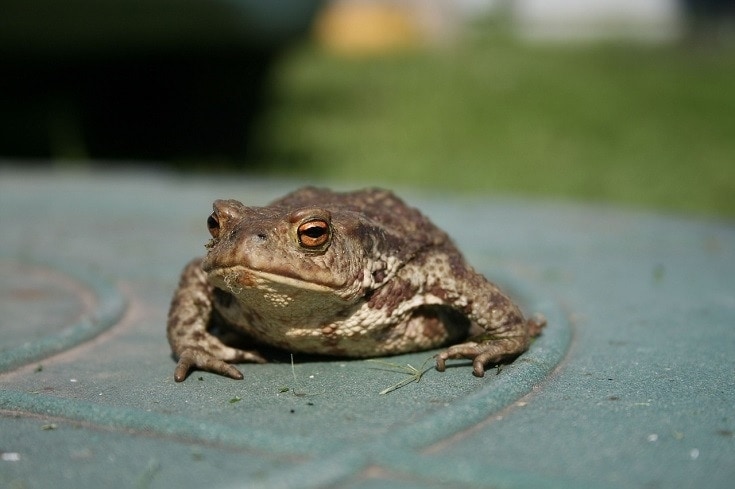
Yes. While some cases of toad toxicity are mild, it can indeed be fatal. This is especially true for the giant (marine or cane) toad and the Colorado River (Sonoran Desert) toad. In these cases, without treatment, the toxins are fatal. Sadly, even with treatment, these cases can prove fatal. Milder cases from contact with other species of toad, however, can make a full recovery. Once signs stop, there is usually no long-lasting damage.
As pet parents, it can be hard to see what your dog gets up to in the bushes. So, if your dog shows any of the signs at all, call your veterinarian right away. The toxins are very fast-acting, so prompt treatment is crucial.
How Can I Prevent Toad Poisoning in My Dog?
It is hard to prevent toad encounters, but there are some things you can do to minimize the chances. This is especially important if you live in an area where the giant toad or Colorado River toad are found. Don’t leave food or water bowls outside, as these may attract toads. Your dog can be poisoned from food or drinking water that a toad has sat in. If you have to leave them outside, keep them raised off the ground. Be careful walking your dog at dusk or dawn, and try to avoid overgrowth at these times. This is especially important in the summertime after rainfall. Prevention is better than cure!

Conclusion
Many toad species are toxic to dogs. While most are only mildly toxic, some will cause severe and often fatal illness. Knowing what to do so you can act as quickly as possible is essential, especially if you live in an area where the most poisonous toads can be found.
Related Reads:
Featured Image: Cimabue, Pixabay
Get Hepper In Your Inbox


Pet care tips from our vets and experts, straight to your inbox.
You may opt-out at any time. View our Privacy Policy for more information.
Joanna is an experienced vet working in the UK. She has written about pets and pet health for many websites, blogs, and pet magazines and loves to help owners understand their pets through her writing.
Joanna is an experienced vet working in the UK who has always loved both writing and science. So, after following her passion for science and graduating as a veterinarian, she was able to begin writing and join her two passions together.
She has written about pets and pet health for many websites, blogs, and pet magazines. She loves to help owners understand their pets better through her writing, and loves to teach and educate her clients. She owns her own freelance company to help even more clients than just the one standing in front of her in a consultation room.
Education
In 2016, Joanna graduated from the University of Nottingham, with a degree in Veterinary Science (BVMedSci) and a degree in Veterinary Medicine and Surgery (BVM BVS).
Experience
Joanna practiced as a clinical vet from 2016 - 2019 and left full-time practice after that to work as a locum/relief vet in the Channel Islands, alongside her freelance writing work.
Join the conversation
Ask a question, share your story, or send private feedback.