Hepper is reader-supported. When you buy via links on our site, we may earn an affiliate commission at no cost to you. Learn more.
My Dog Ate a Bee! Here’s What to Do (Vet Answer)

Dogs are curious animals, and if allowed they will spend a fair amount of time wandering outdoors, getting up to things that you likely have no idea about. They have a whole universe of their own to keep them occupied. Exploring the world of flying and crawling insects is one of them. Even though we do the best we can to keep our dog safe, she can certainly get herself into trouble anyway.
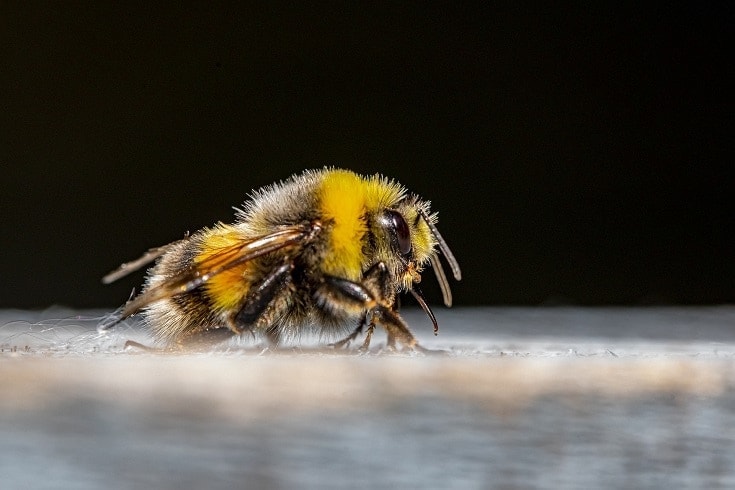
If your dog ate a bee, don't panic. Observe your dog carefully for at least an hour to watch for symptoms like swelling, drooling, or pawing at the mouth. If your dog shows any of these symptoms, has allergies, or has been stung by multiple bees, immediately contact your veterinarian, take your dog to a local clinic, or call pet poison control. Keep reading to learn more about dogs eating bees.

My Dog Ate a Bee! What Happens Now?
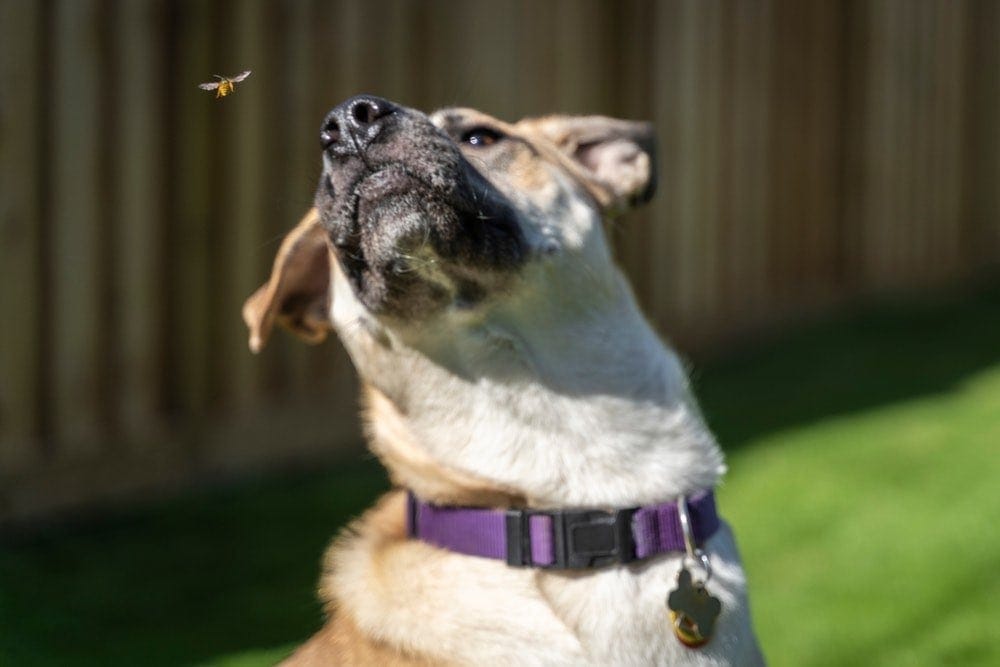
There isn’t too much to be concerned about unless she is quite allergic to bee venom, or she encounters a hive or she is stung multiple times. If you observe that she just ate a bee, you may need to observe her for the next hour or so to ensure that she is okay. Eating a bee or being stung by a lone bee is not necessarily dangerous, but you should definitely keep her under careful watch to make sure things don’t get any worse than that. If your dog chases and eats a bee, she will digest it like anything else she randomly consumes on her adventures.
Dogs with allergies will need immediate veterinary attention
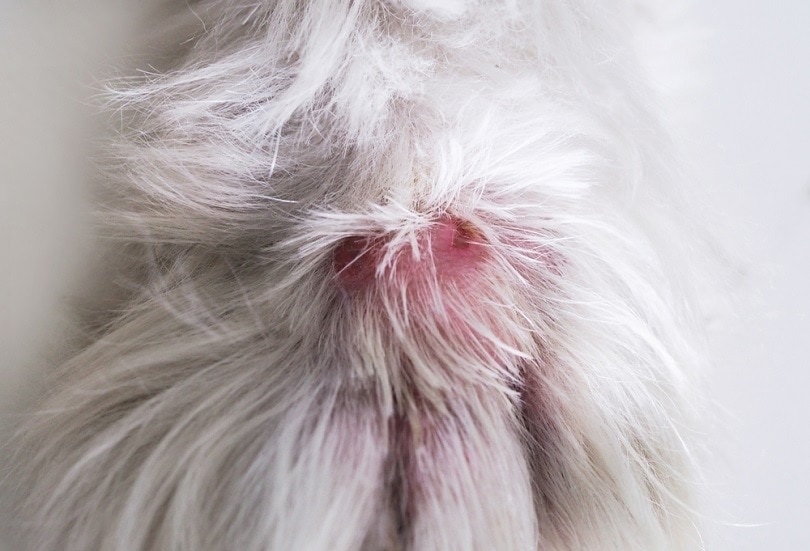
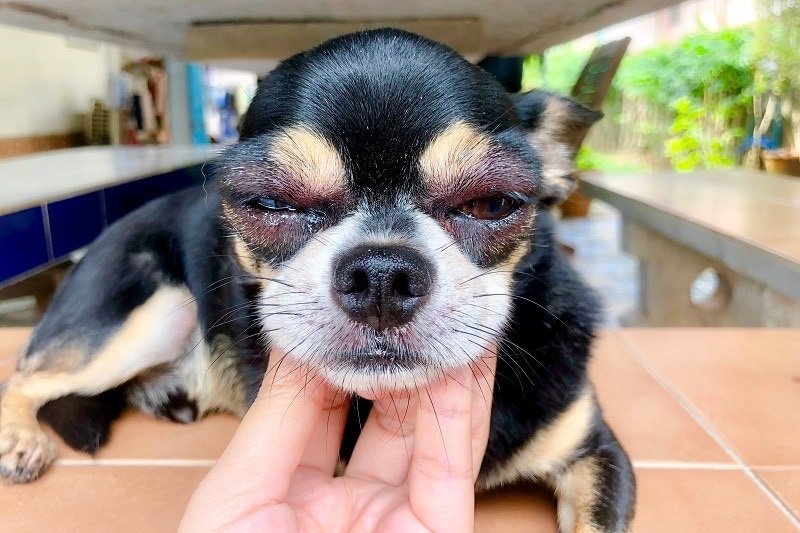
If your dog is allergic to bees or she has been stung multiple times, this requires pretty quick attention, and she needs veterinary attention ASAP. Sometimes when a dog scoops a bee in her mouth, the bee will defend itself and sting, causing local swelling of her face or lips. What can be concerning here is the risk of swelling of her upper airway, and this can be life-threatening if she is unable to breathe. If you notice her muzzle begin to swell, or she is drooling or pawing at her mouth, it’s time to contact your vet and have her treated ASAP.
How does bee venom work?
The venom from a bee sting causes a cellular reaction where certain immune cells called mast cells react to the venom and degranulate, increasing blood flow and attracting other inflammatory proteins and cells to the affected skin or tissue involved. This can become a vicious cycle that continues to build on itself, increasing localized swelling and discomfort. When this occurs, your vet will usually give an injection of an antihistamine to stop mast cells from degranulating and a short-acting steroid to quickly stop any further swelling. Usually, a few days of Benadryl (an anti-histamine) to prevent any delayed swelling will typically be prescribed as well.
What is Anaphylaxis?
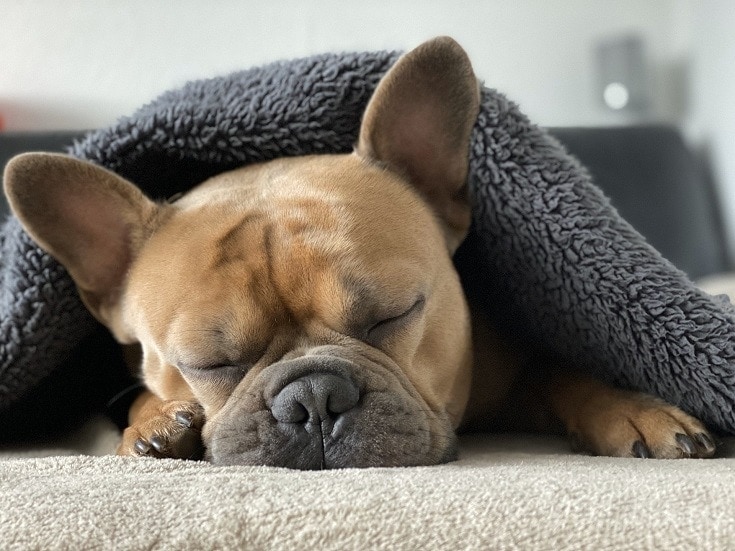
This is a more serious situation whereby a dog’s whole body is sensitized to bee venom, and this is life-threatening. It will occur within seconds to minutes. What you will typically note is weakness, drooling, vomiting, and diarrhea, followed by collapse after a bee sting. The digestive tract is loaded with abundant mast cells, and these will rapidly degranulate, causing a severe systemic collapse of blood pressure and shock. If you ever see this, please get your dog to the nearest clinic as quickly and safely as you can. These patients require intravenous stabilization to re-establish normal circulating blood volume and blood pressure.
What is Epinephrine?
Epinephrine is a fast-acting medication that increases blood pressure and decreases upper airway swelling. Cortisone and antihistamines are also used in conjunction with epinephrine to counteract hypotension and shock. If caught and recognized early, these patients do well with supportive care and there are not usually any long-term side effects.
Are there Epi-pens for pets?
To date, the veterinary industry does manufacture epi-pens for pets. Currently, they are quite expensive and would require a prescription to obtain. Some veterinarians can make temporary epinephrine injections for particular dogs who may be at high risk for a recurring episode of anaphylaxis if they encounter bees again in the future. You should always keep Benadryl on hand in case of an accidental encounter with a bee. If you see your dog ingest a bee or show signs of swelling or itching, Benadryl is a safe medication to give by mouth, and always call your vet or nearest veterinary facility.
How to Reduce the Risk of a Dog Bee Sting
While it’s impossible to prevent a sensitized dog’s exposure to bees, there are things you can do to decrease her risk while outside exploring. Scan the area for bee activity and ground cover/plants that attract pollinators and definitely avoid them if at all possible. Time of day can help as bees are more active late morning to late afternoon, and avoiding unsupervised canine roaming during this time can help. Bees and other pollinators are essential to our local and global ecosystem as a whole; learning to co-exist and give them space is important.
Long story short, keep your vet’s number handy along with Benadryl, and keep a close eye on free range pups. Bee safe out there!
Related Reads:
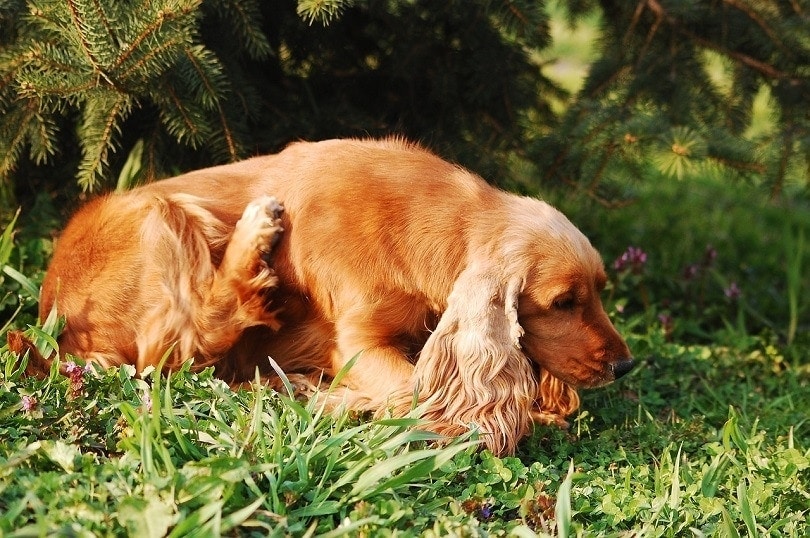
Featured Image Credit: Nennieinszweidrei, Pixabay
Get Hepper In Your Inbox


Pet care tips from our vets and experts, straight to your inbox.
You may opt-out at any time. View our Privacy Policy for more information.
Joanna is an experienced vet working in the UK. She has written about pets and pet health for many websites, blogs, and pet magazines and loves to help owners understand their pets through her writing.
Joanna is an experienced vet working in the UK who has always loved both writing and science. So, after following her passion for science and graduating as a veterinarian, she was able to begin writing and join her two passions together.
She has written about pets and pet health for many websites, blogs, and pet magazines. She loves to help owners understand their pets better through her writing, and loves to teach and educate her clients. She owns her own freelance company to help even more clients than just the one standing in front of her in a consultation room.
Education
In 2016, Joanna graduated from the University of Nottingham, with a degree in Veterinary Science (BVMedSci) and a degree in Veterinary Medicine and Surgery (BVM BVS).
Experience
Joanna practiced as a clinical vet from 2016 - 2019 and left full-time practice after that to work as a locum/relief vet in the Channel Islands, alongside her freelance writing work.
Join the conversation
Ask a question, share your story, or send private feedback.