Hepper is reader-supported. When you buy via links on our site, we may earn an affiliate commission at no cost to you. Learn more.
My Dog Licked a Toad! What to Do Next (Vet Reviewed)


In this article
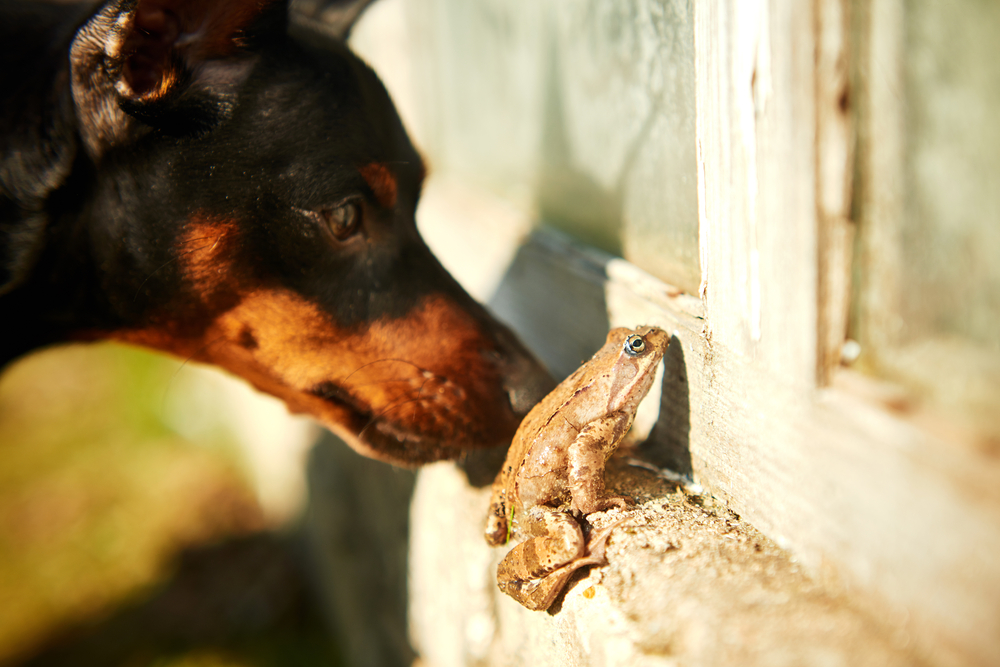
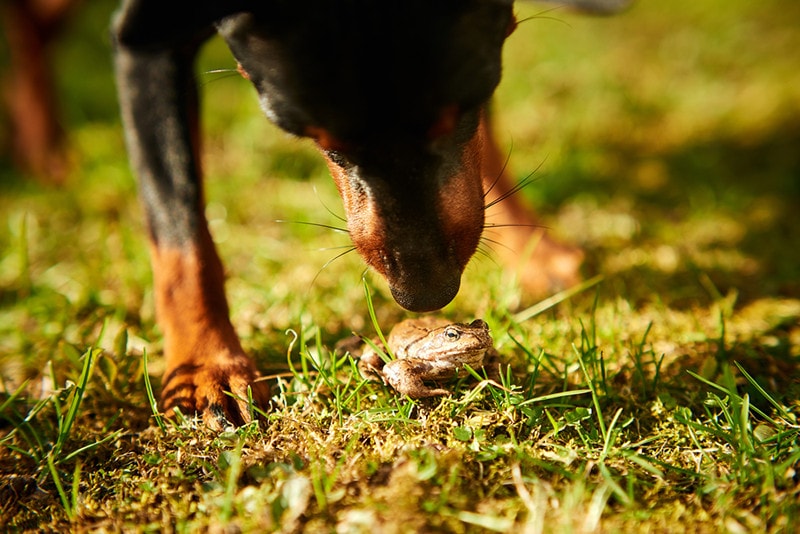
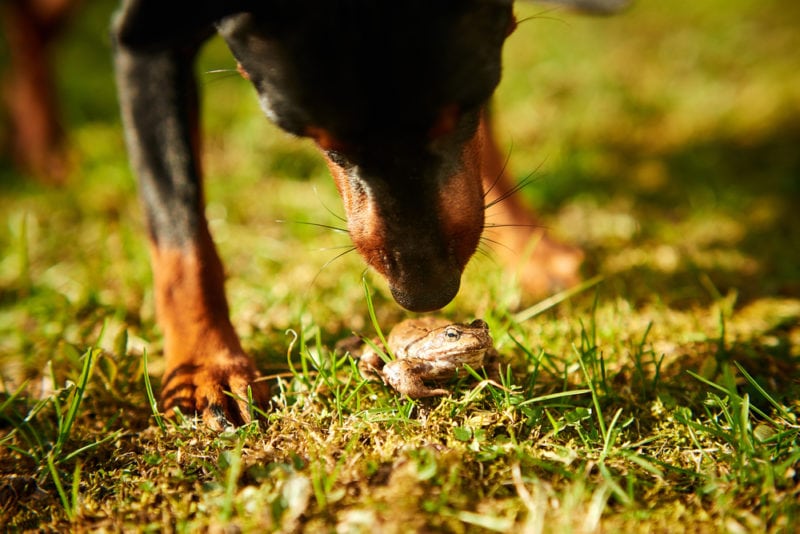
Curious to a fault, dogs have a habit of sticking their noses where they’re often not wanted. While a friendly nudge to a strange human typically won’t go awry, a similar prod to a toad can end with foaming at the mouth and retching. Fortunately, many toad poisoning cases in the U.S.A. can be handled by thoroughly rinsing your dog’s mouth with water.
However, licking certain toad species, like the cane toad and Colorado River toad, can lead to dire consequences if the toxin enters your dog’s system. These cases need to be treated by a veterinarian. This guide goes over all aspects of toad poisoning in dogs.

What Are the Signs of Toad Poisoning?
The signs of toad poisoning progress rapidly and can quickly become more severe the longer your dog goes without treatment. Mild cases will often only be drooling or frothing at the mouth, as well as having red gums, pawing at the mouth, vocalizing, and showing other signs of pain or distress. Vomiting or diarrhea can occur if the toad was ingested.
However, despite most toads in the U.S.A. being only mildly toxic, your dog can still suffer from serious side effects. If they ingest a large amount of the toxin or encounter a toad with a strong toxin and don’t receive treatment quickly, they can exhibit more serious signs, including:
All these signs mean you and your dog should visit a veterinarian. In the worst-case scenario, a severe case of toad poisoning and a lack of proper treatment can result in death. The faster that you effectively treat mild or serious toad poisoning, the better your dog’s chances will be.
How Is Toad Poisoning Treated?
How you treat your dog for toad poisoning depends on the severity of the case and the signs. Mild cases can often be treated at home, while more severe cases — especially if your dog comes in contact with a particularly dangerous toad — need to be handled at your local emergency vet.
You should contact your veterinarian for advice regarding any case of poisoning. This ensures that you treat your dog as efficiently as possible and receive professional treatment if necessary.
Remove the Toxin From Your Dog’s Mouth
If your dog is conscious, your priority is removing the toxin from your dog’s mouth to reduce the amount that gets into their system. There are two methods for this, and it’s often easiest to employ assistance from a family member or friend to help hold your dog if they struggle.
The first method involves using a garden hose or sink sprayer. Using cool water, thoroughly flush out your dog’s mouth for 5–10 minutes. You’ll need to take steps to ensure that your dog doesn’t inhale or swallow the water, such as tilting their head down and directing the water away from the back of their throat.
Second, you can use a clean, damp rag to wipe the toxin out of your dog’s mouth. This method might take longer but also reduces the risk of your dog choking on the water from a hose. It also ensures that you remove any sticky toxin, often given off by cane toads. Rinse the rag thoroughly, or use a clean one with every pass of your dog’s mouth. Remember to clean every part of their mouth.
If you need to visit a veterinarian, ask a friend to continue wiping your dog’s mouth while you’re driving to the clinic.
Visit the Vet
While most cases of toad poisoning in the U.S.A. are mild, an encounter with more toxic toad species can end badly for your dog. If possible, try to take a picture of the toad as a reference. This will help your veterinarian evaluate your dog’s situation and any possible risks.
Some dogs can also have a more severe reaction to the toxins, and you should carefully consider their signs before forgoing a visit to the emergency vet.
If your dog is suffering from seizures or is unconscious, take them to a veterinarian immediately. In either case, don’t try to rinse or wipe the toxin out of their mouth. Seizures and unconsciousness increase the risk of your dog inhaling the water and choking. You could also suffer a severe injury to your hand if you end up bitten, however accidental it may be.
For dog owners in areas known for cane toads or Colorado River toads, visit your veterinarian as soon as possible. Even if you didn’t see what species of toad your dog licked, it’s better to be safe than sorry. Serious cases of poisoning can be treated with IV fluids and medication to control the symptoms. Sometimes, endoscopy or surgery is required to remove swallowed toads.
Which Toads Are the Most Dangerous?
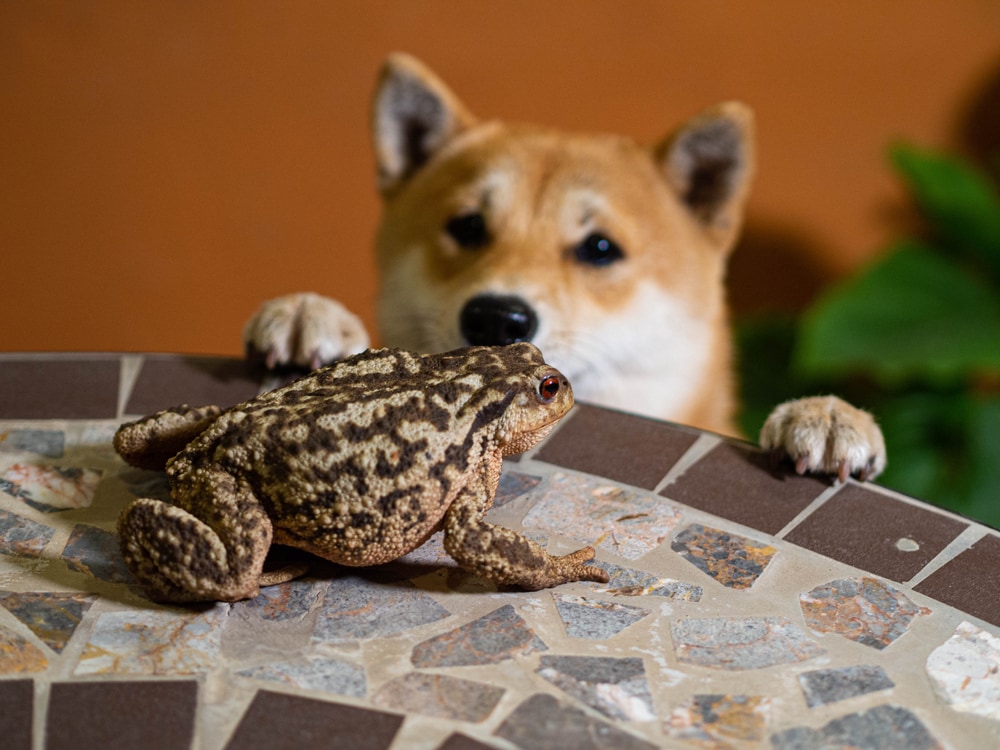
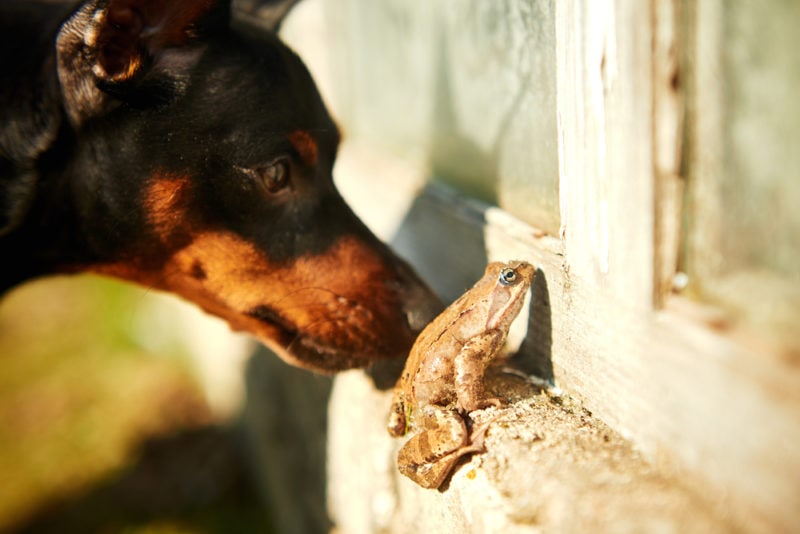
The toads that your dog comes across in your backyard are likely only to be mildly toxic. Most U.S. toad species won’t pose a fatal threat to your dog, though they can make them feel sick due to the toxic secretions. Drooling, foaming, pawing at the mouth, and vomiting are the main signs of such poisoning cases and are often easily treated.
However, two dangerous toad species in the U.S.A. pose a much more severe threat to your dog. They can even cause problems for cats and children.
Cane Toads
Found in Florida, Hawaii, and south Texas, cane toads are also called bufo toads, giant toads, or marine toads. They are an invasive species in many areas and originated in the lower Rio Grande Valley in Texas and the Amazon basin in South America. Cane toads are often considered pests due to their toxic nature to animals and children.
You can identify them by their reddish-brown or grayish-brown coloring, the lack of ridged crests on their head, and the enlarged glands behind their eyes. Cane toads are commonly mistaken for native southern toads, but they are much larger at 6–9 inches over the southern toad’s 3–4 inches.
Cane toads secrete a toxin called bufotoxin, which can be fatal to pets and other animals. The toxin is also found in eggs and tadpoles.
Colorado River Toads
The second species of dangerous toad found in the U.S.A. is the Colorado River toad, which is native to the southern areas of California, Arizona, and New Mexico. This species is also known as the Sonoran Desert toad due to its prevalence in the area. Similar to the cane toad, the Colorado River toad is one of the largest toad species in the U.S.A.
Colorado River toads are about 7 inches long, with large oval glands behind their eyes and hind legs. They secrete a potent toxin to ward off predators and can be fatal if ingested by dogs or other animals.
How to Prevent Exposure to Toads
Unfortunately, dogs don’t understand that toads aren’t good for them. Their curiosity can lead them to accidental toad poisoning. The best way to prevent it is by taking steps to minimize their contact with the toxic amphibians. While you might not be able to prevent every case of poisoning, even small steps can help reduce the risk.
Toads are most active in the early morning, at night, and after it rains. During these times, avoid letting your dog outside unsupervised. Keeping them on a leash is one of the best ways to ensure that you have control of your dog and to avoid altercations with toads.
Also, don’t leave food or water bowls outside. Either can encourage wild animals to visit your backyard, including toads. Your pets can suffer from indirect toad poisoning by eating food or drinking water that the toads have secreted their toxins into.
Conclusion
In many areas of the U.S.A., the consequence of your dog licking a toad is mild. Your dog may suffer from excessive drooling, foaming at the mouth, and vomiting, but they’re unlikely to develop a more serious reaction. Provided that you thoroughly rinse out their mouth with water or wipe away the toxin with a rag and keep an eye open for any other signs, your dog’s poisoning can often be managed at home.
However, in certain parts of the U.S.A., cane toads and Colorado River toads pose a much more serious risk. The toxins of these species can cause seizures, muscle tremors, difficulty breathing, and death if the poisoning isn’t treated promptly. Get your dog to a veterinarian as soon as possible.
Featured Image Credit: Iness_la_luz, Shutterstock
Get Hepper In Your Inbox


Pet care tips from our vets and experts, straight to your inbox.
You may opt-out at any time. View our Privacy Policy for more information.
Nicole is a lover of animals of all sizes but is especially fascinated with the feline variety. She’s the proud mom of Baby, a Burmese, and works every day so he can relax in the sunshine or by the fire. She’s always had a cat in her home and has spent countless days with others, observing behaviors and softening up even the grouchiest of the lot. Nicole wants to share her kitty expertise with you so you and your cat can live happy, healthy, and care-free.
Join the conversation
Ask a question, share your story, or send private feedback.