Hepper is reader-supported. When you buy via links on our site, we may earn an affiliate commission at no cost to you. Learn more.
My Dog Was Stung by a Bee or Wasp, What Should I Do? (Vet Answer)

In this article
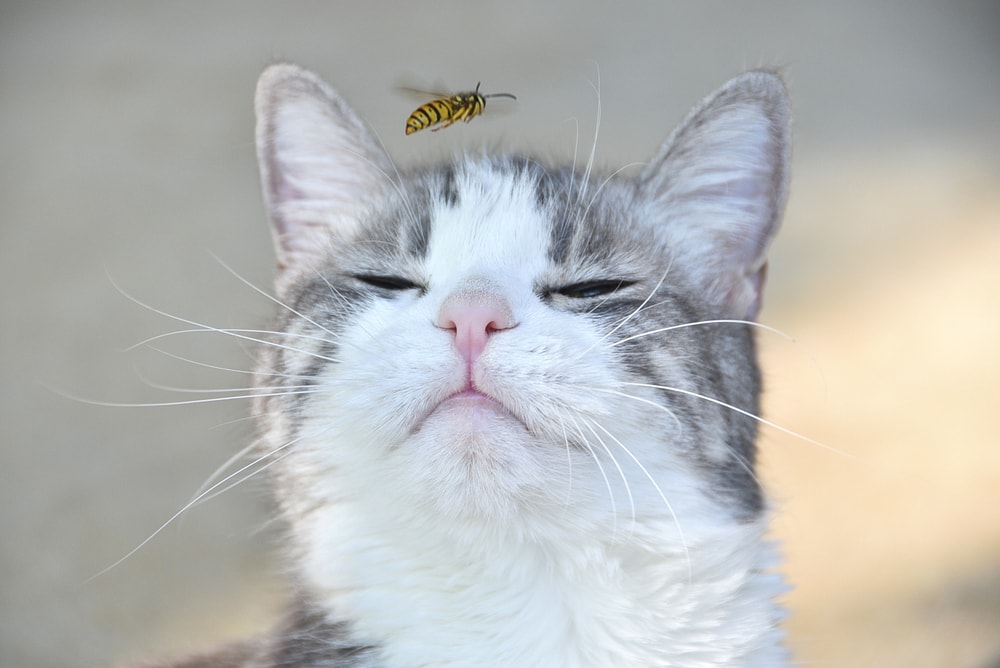
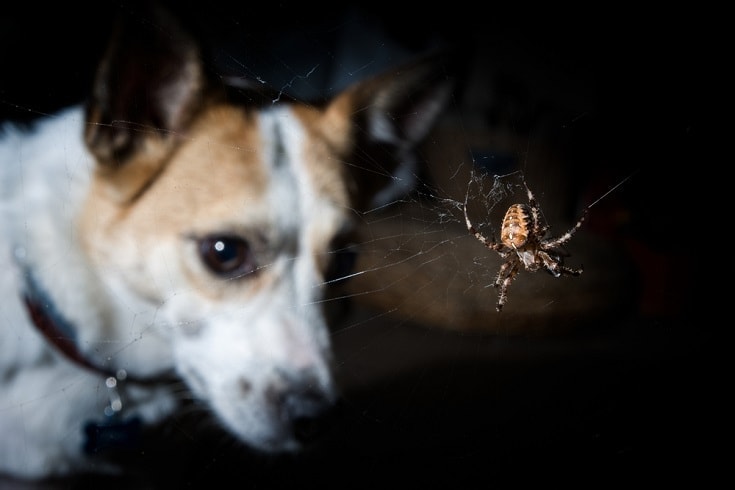
It's not unusual for dogs to come into contact with bees, yellow jackets, and wasps when running around outside or playing in the garden. Dogs are also naturally inquisitive and so are likely to try and smell (or taste!) interesting buzzing creatures! Stings are the typical defensive reaction from these insects, and as we all know, they can hurt and cause quite intense effects!
One sting is an irritation, but many stings can be dangerous as the toxic effects of the sting accumulate. In this article, we shall explore what happens when a dog is stung by a wasp and what to do.

How Do I Know if My Dog Has Been Stung by a Bee or Wasp?
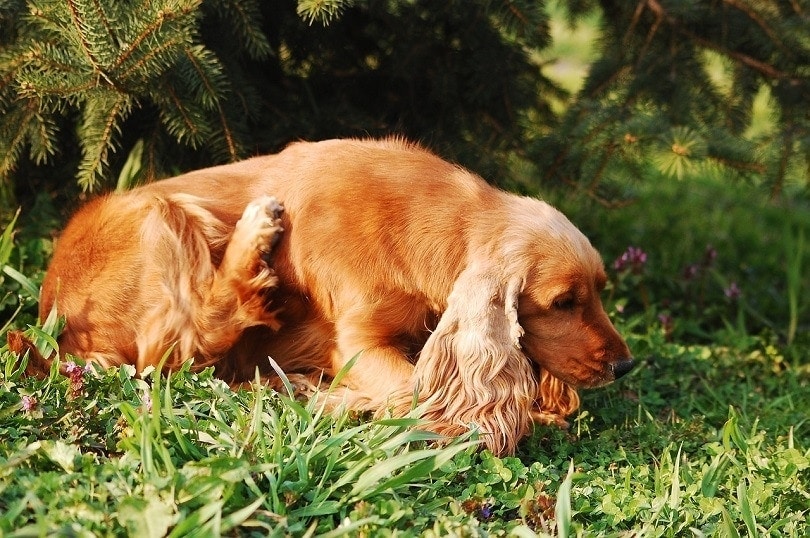
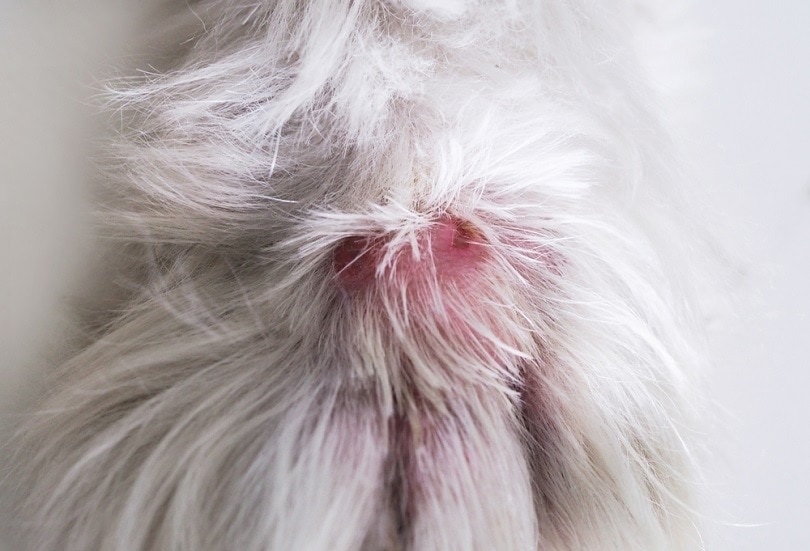
Just as in humans, a dog stung by a wasp will have symptoms—usually a sudden, painful reaction from your dog. If your dog is out in the garden or on a walk, especially in the summer, and suddenly becomes very sore and agitated, a sting is a definite possibility. Stings contain toxins that can cause pain, tissue damage, and a histamine reaction within the skin, and this will lead to sudden redness and swelling.
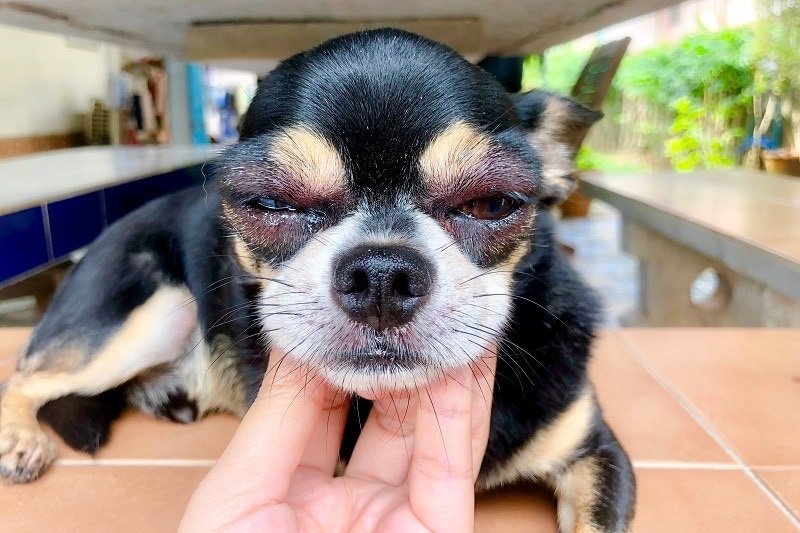
You may see a sore or swollen area where the sting happened. Your dog may be limping if your dog is stung on a paw. If the sting happens on the face or mouth, you may notice swelling of the head, which can be quite spectacular! This might also cause a bit of dribbling and salivating, especially if your dog was stung by a bee in its mouth. Dogs will often whine and rub or paw the area affected.
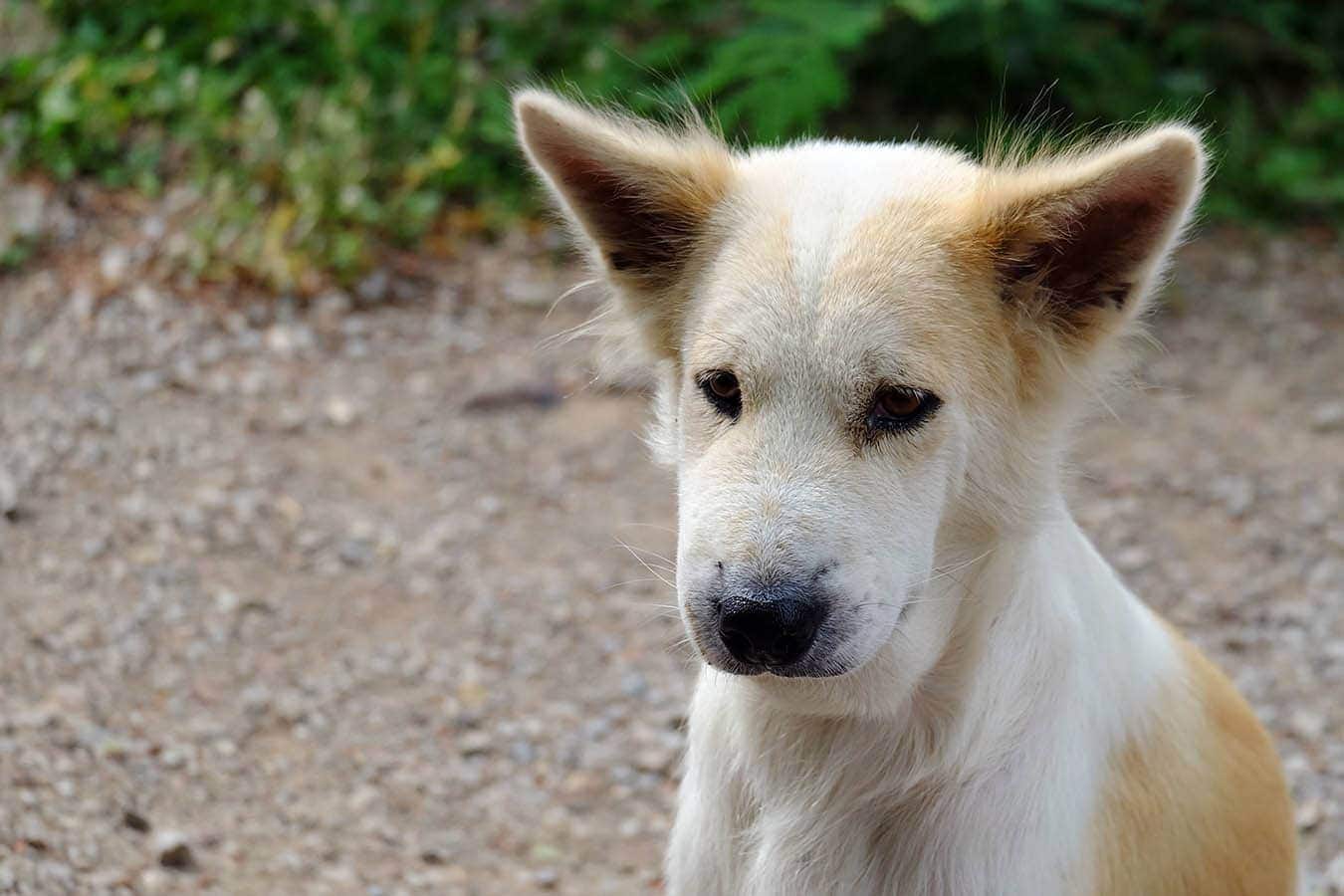
Most dogs will tolerate stings well but just like people, occasionally dogs can have intense allergic reactions to stings. Dogs having these may develop swelling and skin bumps all over (‘urticaria’), and they may show other symptoms like lethargy and vomiting. The most severe, and thankfully rarest, reactions are called anaphylactic reactions. In these cases, the swelling all over may be so severe that the dog is no longer able to breathe and will seem to choke and collapse.
The more stings a dog (or person) receives, the more likely there will be a severe reaction, so multiple stings are more dangerous. Reactions can also have a time delay, so do keep a careful eye on your dog over the 24–48 hours after the sting.
What Should I Do if My Dog Is Stung by a Yellowjacket, Bee, or Wasp?
What To Do When Your Dog's Been Stung
What Can I Use to Treat My Dog for Bee and Wasp Stings?
If the swelling and pain are persistent or more severe, your dog may need some medical treatment. You should seek professional veterinary advice from your local clinic if you are concerned or if your dog is showing any of the more intense symptoms. Veterinarians also have access to safe, strong anti-inflammatory drugs that will reduce the inflammation the sting is causing in your dog, and typically these drugs are not available at home or over the counter.
As mentioned, stings often produce a histamine reaction, and so just like in people, you can treat these with anti-histamine drugs such as Benadryl. Antihistamines typically do not work as well in dogs as they do in people, but they can help to reduce soreness. These are often worth a try at home, but you should call your veterinary clinic first to make sure these drugs are safe and appropriate for your individual dog.
If antihistamines are going to help, they will help within 20–30 minutes. That means if your dog is not improving quite quickly, do seek professional help.
Bear in mind that these drugs are human drugs, and they are not specifically licensed for dogs. As with any drug, dogs can have allergic reactions and side effects to these drugs too. All antihistamines can cause drowsiness and sleepiness in dogs, just like in people. If you plan to use these drugs you should seek advice from your local veterinary clinic first.
If antihistamines are not helping quickly, and especially if your dog is showing signs of severe pain, swelling, vomiting, lethargy, or collapse, do get in touch with your local veterinarian as an emergency. Veterinarians will typically assess dogs having severe reactions quickly and provide drugs intravenously so that they work very rapidly. Treatment options include steroid drugs (dexamethasone) which are very powerful anti-inflammatories, and potentially adrenaline if your dog is having an anaphylactic reaction.
If tissue damage is severe or the sting becomes infected, antibiotics may be needed, but this is not common.
How Long Does It Take for a Dog to Recover From a Bee or Wasp Sting?
In mild cases and single stings, most dogs will brush off the symptoms within 24–48 hours. Where there has been more severe swelling and tissue damage, it may take 3–5 days to fully settle. Even in more intense cases or where there have been multiple stings, as long as the sting is treated appropriately, most dogs will make a full recovery.
If severe symptoms are left alone without proper treatment, then stings can become life-threatening. Home care is only appropriate for mild cases. It is vital to involve your veterinarian at an early stage if you are concerned, as even nasty stings can be resolved quickly with the right interventions given at the right time.

Final Thoughts: Dog Been Stung by Bee or Wasp
Bee and wasp stings can be painful for your dog, but they are rarely serious. Most cases can be monitored at home safely, but you should know the signs of anaphylaxis and other more serious stings so that you can get your dog to the vet urgently if needed.
Has your dog been bitten by a spider? Find out what to do here!
Related Reads:
Featured Image Credit By: Madcat_Madlove, Shutterstock
Get Hepper In Your Inbox


Pet care tips from our vets and experts, straight to your inbox.
You may opt-out at any time. View our Privacy Policy for more information.
Greg graduated from the University of Cambridge over five years ago. Since then, he has been working in mixed-species practice in the UK — he enjoys working with all species, great and small! Outside of veterinary work, Greg enjoys the outdoors, gardening, and sport in all forms! He currently has just one amazing cat, called O'Malley. Greg loves writing and communicating veterinary knowledge, but still works as a vet full time, so writing is fitted around his clinical work and on days off.
Greg loves writing and communicating veterinary knowledge, but still works as a vet full-time, so he fits his writing around his clinical work and on days off. His amazing cat, O'Malley, is currently his only furry friend. Outside of veterinary work, Greg loves the outdoors, gardening, and sport in all forms!
Education
Greg is a graduate of the University of Cambridge in England.
Experience
Since graduating over six years ago, Greg has been working in mixed-species practice in the UK, though he enjoys working with all species, big and small!
Join the conversation
Ask a question, share your story, or send private feedback.