Hepper is reader-supported. When you buy via links on our site, we may earn an affiliate commission at no cost to you. Learn more.
5 Types of Glass Frogs (With Info & Pictures)
In this article
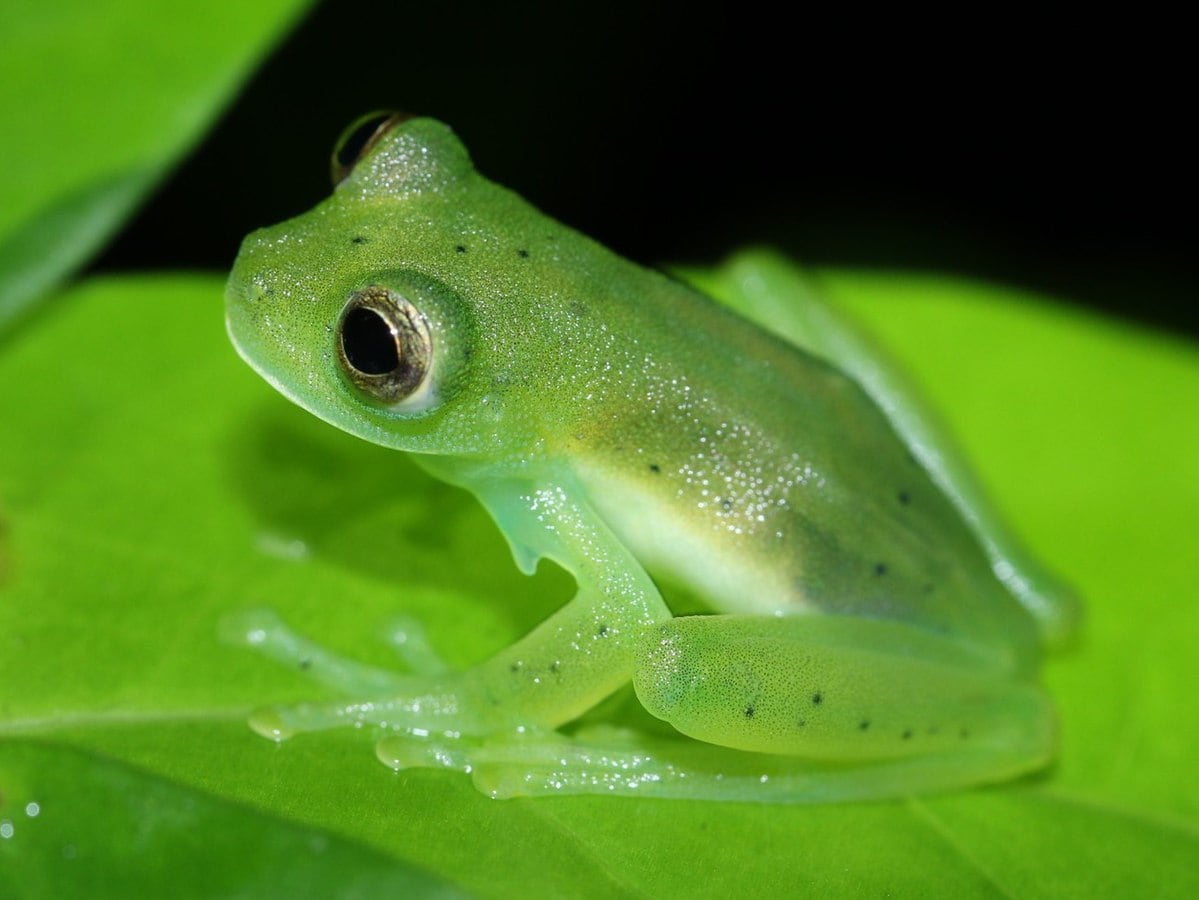
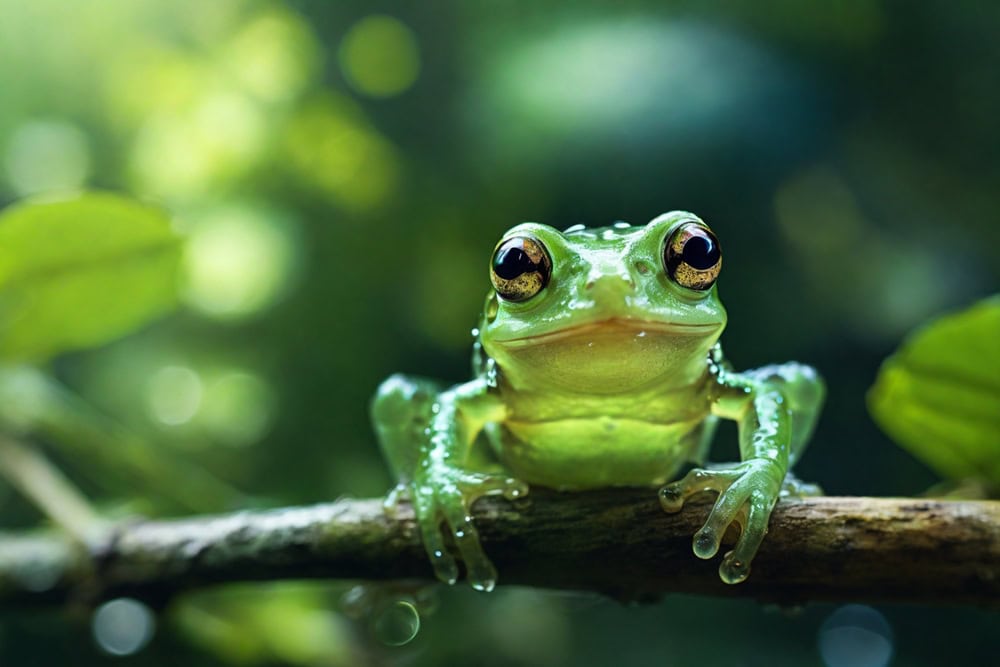
Glass frogs are a particular group of tree frogs that belong to the family Centrolenidae. They’re found in the Americas in tropical areas from Mexico to Bolivia. Typically, they live in wooded areas around lakes, streams, and other bodies of water.
They get their name from the translucent appearance of many species within this family. While not all are translucent, many have translucent skin on their bellies and chests. Therefore, you can sometimes see their internal organs.
This group of frogs also has other nifty features, such as extra digits to help them climb trees. Some even help care for their young.
In this article, we’ll explore some of the most interesting types of glass frogs.

The 5 Types of Glass Frogs
1. Cochranella Genus

Cochranella albomaculate
This species is also known as the “White-spotted Chochranella.” It’s found in Ecuador, Colombia, Peru, and Venezuela. As the name suggests, this species is a vibrant green with white spots. It also has semi-translucent skin, allowing observers to see its internal organs.
The White-spotted Cochranella typically inhabits cloud forests and montane regions, where it dwells in the vegetation near streams and water bodies. Like other glass frogs, it relies on its transparent skin as camouflage, effectively blending with the surrounding foliage during the day.
During the mating season, male Cochranella albomaculata frogs perch on leaves or branches above streams, calling out to attract potential mates. Their calls resonate through the forest, calling interested frogs to them. The transparent undersides of these male frogs allow the females below to see their vibrant organs, serving as a visual indicator of their health.
Cochranella granulosa
Known as the “Granular Cochranella,” this interesting frog species is native to Panama and Costa Rica. It has a translucent body with green patches and dark spots. They are arboreal, which means they spend much of their time in trees.
They have very sticky pads on their toes, which help them stay in the trees for long periods. They can cling to leaves and branches quite easily. Their lifestyle allows them to avoid predators largely on the ground.
However, the frogs do leave the trees for mating purposes. They typically croak to attract mates and lay eggs near streams. Their mating behavior is quite elaborate, involving males attracting females and guarding territory.
2. Centrolene Genus

Centrolene geckoideum
Despite its scientific name, this species is a frog—not a gecko. It’s most commonly known as the “Mosaic Glass Frog” and is located in Ecuador and Columbia. This species has a distinctive mosaic pattern, which is how it got its name. They’re marked with many irregular shapes and lines.
These frogs inhabit forests at high elevations and tropical rainforests. They don’t live in the trees but instead, dwell near streams and other bodies of water. They’re largely nocturnal, becoming active at night to feed on insects. Their skin is very transparent, which helps them stay hidden during the day.
The males of this species become very aggressive and territorial during mating season. They’ll position themselves over streams on leaves or branches and croak to draw in females.
Centrolene lynchi
“Lynch’s Glass Frog” is another species found in Ecuador and Peru. It primarily inhabits cloud forests. Its vibrant green coloration and red eyes make it pretty identifiable.
This species is best known for its elaborate mating rituals. Males will position themselves on leaves or branches and produce a sequence of elaborate calls to attract females. The females check the genetic quality of the males by observing the condition of their internal organs.
3. Hyalinobatrachium Genus

Hyalinobatrachium valerioi
This species is also known as “Valerio’s Glass Frog” and can be found in Costa Rica and Panama. It’s mostly green but also has yellow markings with striking red eyes. You can see through its skin, allowing you to see its internal organs.
They are largely found in lowland rainforests, where it is extremely moist. They prefer areas by streams and rivers and are largely nocturnal. They will hunt at night and spend the day hiding. They rely on their transparency for camouflage.
During mating season, the male frogs create small territories near the streams. They will attract the females with their calls, who will then judge them based on their internal organs.
Hyalinobatrachium aureogattatum
Commonly referred to as the “Yellow-spotted Glass Frog,” this species is native to Columbia. They’re green with yellow spots, like many glass frogs. However, you can see their unique blue bones through their translucent skin.
They live in both cloud forests and lowland rainforests, preferring areas near water. They spend their lives in trees and have adhesive toe pads that make this easier. They’re largely nocturnal and camouflage against free leaves during the day.
4. Nymphargus genus

Nymphargus grandisonae
Nymphargus grandisonae, commonly known as the “Grandison’s Glass Frog,” is an endemic species in Ecuador. This glass frog species is characterized by its transparent body with yellow and black markings. It also possesses distinct orange toes, allowing you to identify it from other glass frog species.
Grandison’s Glass Frog primarily inhabits montane cloud forests and moist habitats near streams and rivers. These frogs are arboreal, spending most of their time in the upper levels of the forest canopy. Their transparent skin allows them to blend seamlessly with the surrounding vegetation, making them almost invisible to predators.
Nymphargus verrucosus
This species, also called the “Warty Glass Frog,” is largely found in Colombia and Ecuador. It has a green body and warty skin, which is how it got its name. It has a very textured appearance. Like most glass frogs, the semi-translucent skin allows you to see its internal organs.
This warty frog is arboreal and can be found in many different areas as long as trees are nearby. They’re well-adapted to their tree-living lifestyle and have adhesive toe pads to make climbing easier. Their transparency also acts as a form of camouflage.
5. Espadarana genus

Espadarana prosoblepon
The “Reticulated Glass Frog” is native to Venezuela, Colombia, and Brazil. Depending on the area, they have a light green body with yellow or orange spots. Like most glass frogs, their translucent body allows you to see their skeletal structure and internal organs.
They largely inhabit lowland rainforests but like anywhere with lots of moisture. They spend their time in vegetation in the forested canopy. Their translucent skin allows them to blend seamlessly with the surrounding foliage.
Espadarana callistomma
The “Elegant Glass Frog” is found in Ecuador. This species has a bright green body with either orange or black markings. They also have translucent skin like most glass frogs which allows them to blend in with their surroundings.
You can find these frogs near many streams and moist areas, where they spend most of their time.
Final Thoughts
Glass frogs are an extremely interesting type of frog, especially with their transparent bodies and vibrantly colored internal organs. They vary from species to species, but most have transparent skin.
The main function of this skin is to help them blend in, but it also provides a way for females to judge the male’s health. They’re extremely interesting to learn about, thanks to their fascinating adaptations.
See Also:
Sources
Featured Image Credit: DCreator508, Shutterstock
Get Hepper In Your Inbox


Pet care tips from our vets and experts, straight to your inbox.
You may opt-out at any time. View our Privacy Policy for more information.

Kristin is passionate about helping pet parents create a fulfilling life with their pets by informing them on the latest scientific research and helping them choose the best products for their pets. She currently resides in Tennessee with four dogs, three cats, two fish, and a lizard, though she has dreams of owning chickens one-day!
Join the conversation
Ask a question, share your story, or send private feedback.