Hepper is reader-supported. When you buy via links on our site, we may earn an affiliate commission at no cost to you. Learn more.
How to Calm a Cat Down: 9 Possible Ways


We’ve all seen it. You’re sitting watching TV or sleeping soundly in the middle of the night when your cat suddenly seems to go insane. While cats don’t show emotions as easily as dogs, some things make them excited, scared, or even cause them to act crazy.
If you’ve ever wondered what you can do to calm your cat down when they get this way, you’re in luck. We have nine possible ways to calm your cat down below.

Top 9 Ways to Calm a Cat Down
1. Create a Cozy, Comfy, Safe Environment
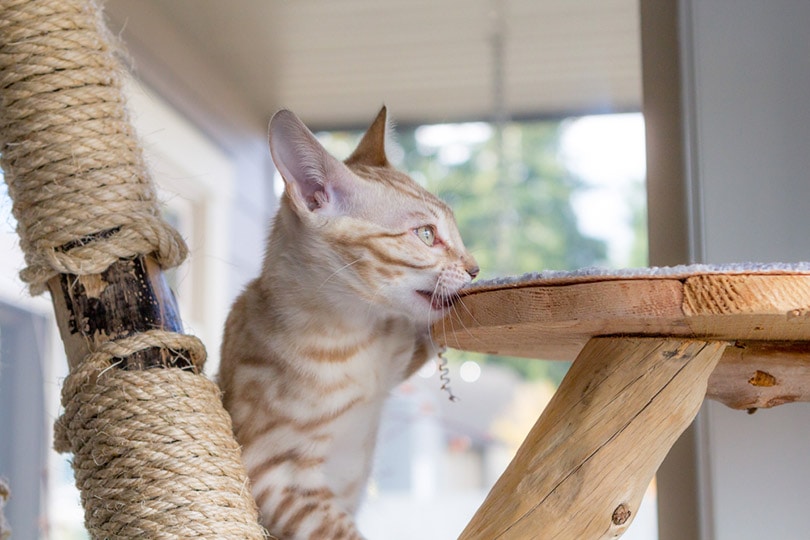
It’s essential for an overexcited cat to feel safe in its home. Creating a vertical, cozy environment for your cat to retreat to to feel safe is essential. Create a comfortable bed for your cat, and provide cat towers and other areas where it can go to destress if needed.
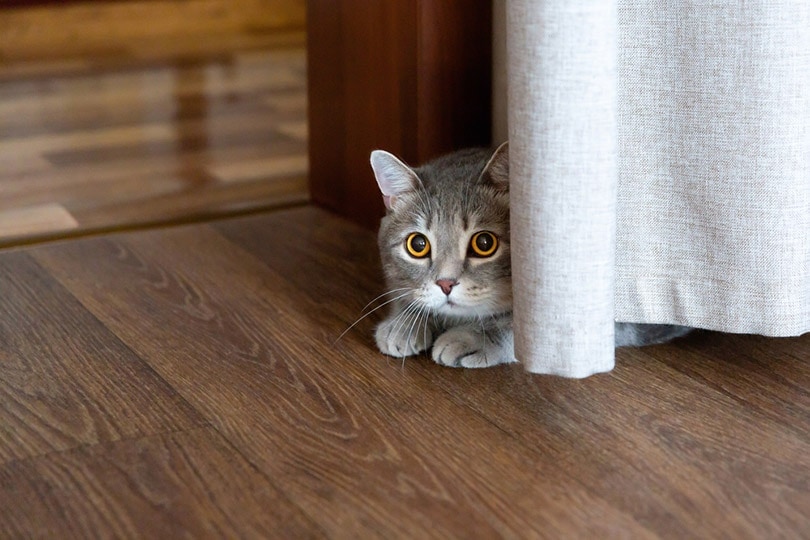
Some cats prefer to hide under things when they are stressed, while others take comfort in being on something high. It’s recommended that you provide both spaces. For example, have a cat tower in one part of the house and an elevated bed such that your pet can get under it if he or she so chooses.
2. Take It Slowly/Don’t Smother
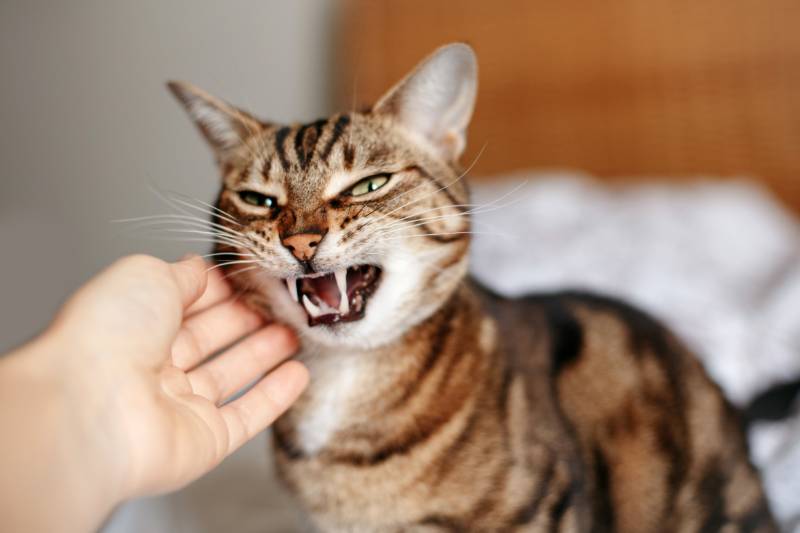
While holding your cat close and trying to calm it might be tempting, it’s best to take things slowly by not smothering your cat. Cats are independent, solitary creatures by nature, and if you try to hold your cat close, it may serve to worsen the situation.
Rushing up and trying to pick up or snuggle with your cat when they are overexcited or agitated isn’t going to help. Instead, give the cat its space, and eventually, it’ll calm down on its own. If it feels it needs to be comforted by you, the cat will let you know.
3. Keep Essentials Easy to Reach
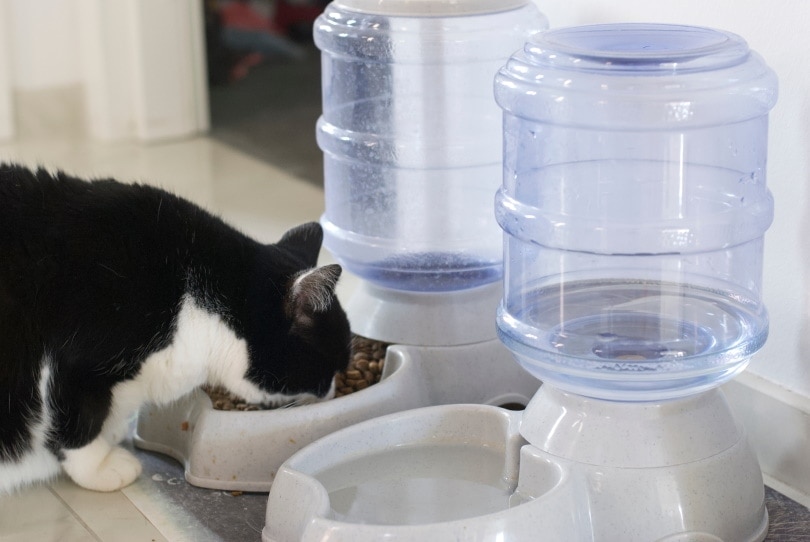
Nothing agitates a cat more than being unable to find or reach its food, litter box, and other things it considers essential. Place the food, water, and litter box in accessible areas to keep your pet content.
4. Let Them Spread Their Scent
If you’ve ever noticed your cat rubbing its face against your leg, on the couch, or on the table, it may be because he is scent-marking. It’s important to let your cat spread their pheromones in the places they seem to care about most, which may include you! Scratching posts and cat towers are perfect locations for this. Ensure that your cat has access to those locations when it’s agitated, overexcited, and stressed.
5. Soft Music/White Noise
Soothing music or white noise can help to keep a cat calm also. Just like scents, noises can stress your cat, scare it, and cause it to become overexcited, possibly prompting bouts of cystitis and urinating in inappropriate places in your home. Loud noises such as a baby cries, construction, or traffic outside can be stressors for your cat.
Classical music or soft music playing in the background may help. Try using white noise, such as a fan, if the music doesn’t work. Though using music and white noise to mask the loud noises and calm a cat may not always work, many a pet parent has used this tip to their benefit!
6. Anti-Anxiety Treats, Medications, Supplements
Some anti-anxiety treats can also be used to calm an overexcited cat. There are herbal remedies and supplements also, but it’s best to contact your vet before making a purchase.
If your cat doesn’t respond to any of the above methods, then it’s time to take it to the vet for diagnosis, and medication, if the vet approves and thinks medical intervention is needed.
7. Regular Play
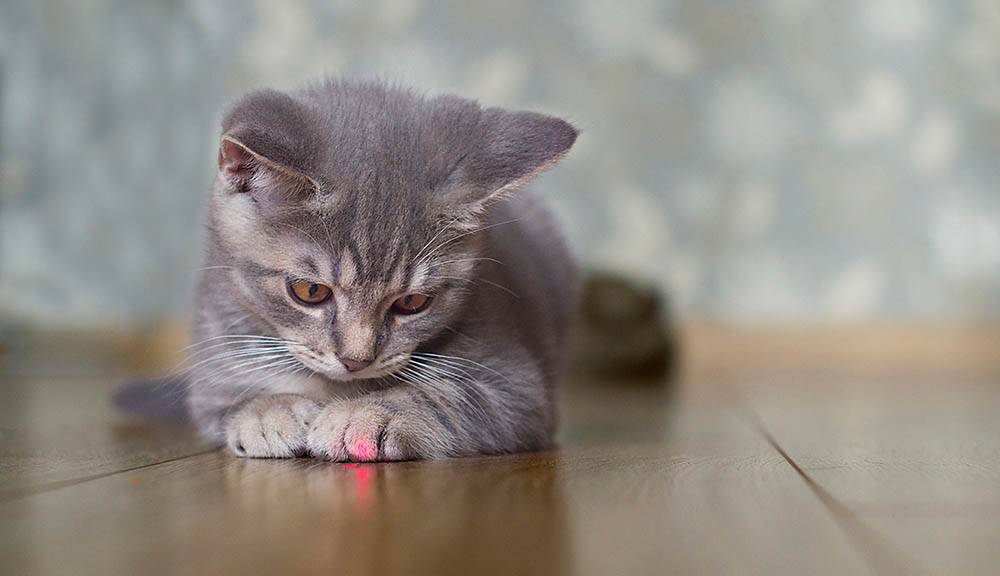
Whether it’s a laser pointer, a ball, or a string toy, playing with your cat will make him more comfortable and less likely to become stressed in the first place.
8. Address Any Health Issues
Sometimes, a cat is stressed or overexcited all the time because of an underlying health issue, such as hyperthyroidism. If your cat doesn’t calm down with the usual methods, it’s best to contact your vet to rule out a medical cause.
Your vet can do an exam and let you know the best course of action to keep your cat healthy, happy, and calm.
9. Patience, Love, Understanding
The main thing you can do to help your cat calm down when they are overexcited, agitated, or stressed is to give them patience, love, and understanding. Remember, yelling at or physically punishing your cat is never an option, and it’s only going to add fuel to the stress you are trying to reduce.
When your cat gets to where it’s stressed and agitated, give it some space, try the methods above, and be patient for the best results.
What Causes Cats to Become Overexcited?
Now that we’ve given you a few ways to calm your overexcited cat, you might be wondering why they get overexcited, agitated, and stressed, to begin with. What causes these behaviors?
Sound
A cat’s hearing is extremely sensitive, and they pick up on sounds that we do not. For example, a cat’s hearing is four times more sensitive than ours, which means normal everyday sounds can be interpreted as threatening to our cats. Sounds such as cars, new people, other animals, and even loud explosions on the TV sound much louder than they do to us and can often cause an agitated reaction.
Smells
Cats also have a stronger sense of smell. When placed in a new environment, the cat won’t recognize any smells from home, which is why they mark their houses with face rubs. A new environment can trigger an overexcited response in your cat.
Feline Hyperactivity (“The Zoomies”)
Cat zoomies are a real occurrence that seem to occur for no apparent reason. If you have ever seen a cat dart back and forth repeatedly, possibly jumping from couch to floor to countertop (often in the middle of the night), then you have seen this first hand! The zoomies can result from lack of sleep, bathroom issues, wanting to play, or boredom.
These are just a few of the causes of overexcitement, agitation, and stress in cats. If you can determine what is causing your cat to become overexcited, you’ve won half the battle.

Conclusion
We hope our tips help you calm down your animated pet. Remember, cats get scared, anxious, and bored just as their owners do. If the calming methods above don’t work to soothe your overexcited cat, it’s best to make an appointment with your vet for diagnosis and possible treatment.
See also:
Featured Image Credit: lshman000, Pixabay
Get Hepper In Your Inbox


Pet care tips from our vets and experts, straight to your inbox.
You may opt-out at any time. View our Privacy Policy for more information.
Patricia is a pet and coffee writer and a published author under the pen name Skylar McKinzie. When she isn’t writing, Patricia enjoys spending time with her two cats and dog. Since she was a young child, she has been a pet lover and enjoys nothing more than cuddling with her pets, Mystery, and her two cats, Binx and Link. Mystery has been with her family since the day she was born, as has Link. Binx was found under the house as a kitten, taken inside, and has been a part of the family ever since. Patricia loves sharing her knowledge of animals and finds joy in helping out at the local rescue shelter whenever she can.
Join the conversation
Ask a question, share your story, or send private feedback.