Hepper is reader-supported. When you buy via links on our site, we may earn an affiliate commission at no cost to you. Learn more.
How Big Do Pugs Get? Average Size & Growth Chart


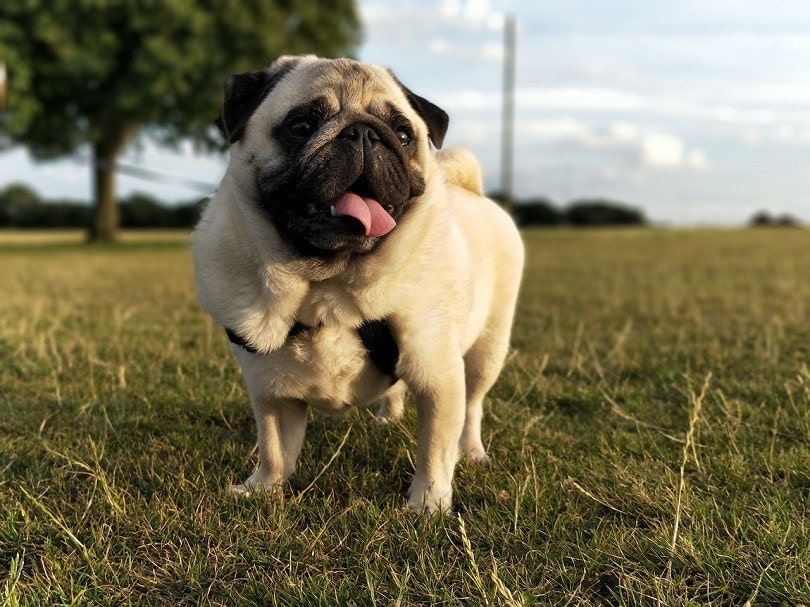
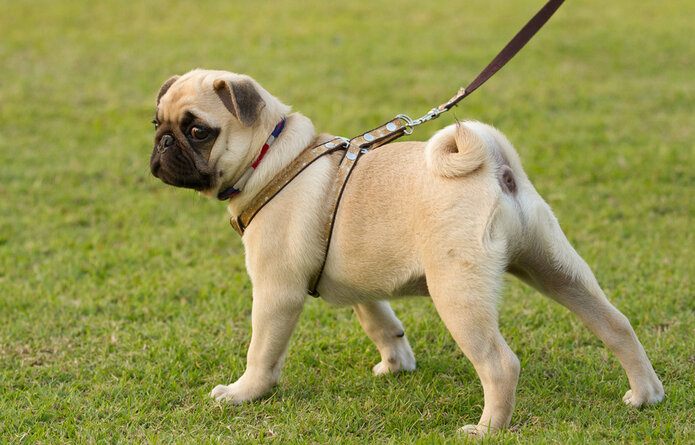
While Pugs always stay small, did you know that some of these lovable pups can get up to 18 pounds? But how long does it take for them to reach that size, and how do you know how big your Pug will get?
It’s a lot of information to go through, and there are plenty more interesting facts to learn about these dogs. So, keep reading and we’ll highlight everything you need to know about these adorable pups.

Facts About Pugs
Pugs are cute and adorable dogs, and there’s no shortage of fun facts to pick from. We’ve highlighted some of our favorites for you here, but there are plenty more out there for you to discover!
First, did you know that the first known owners of the Pug were Tibetan monks?1 These monks kept the small dogs inside their monasteries, and it wasn’t until Portuguese traders acquired some of these pups in the 16th century that they made their way to Europe.
No matter their origins, these dogs were always lap dogs. Unlike many dogs that have a working dog history, that’s not the case with the Pug. These dogs are lovable lap dogs and always have been.
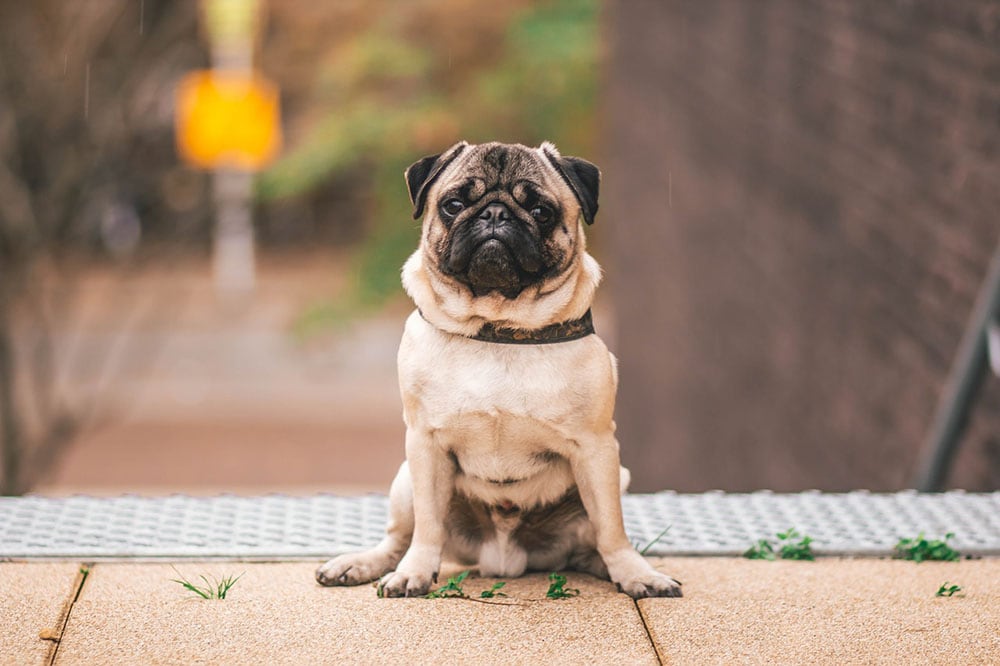
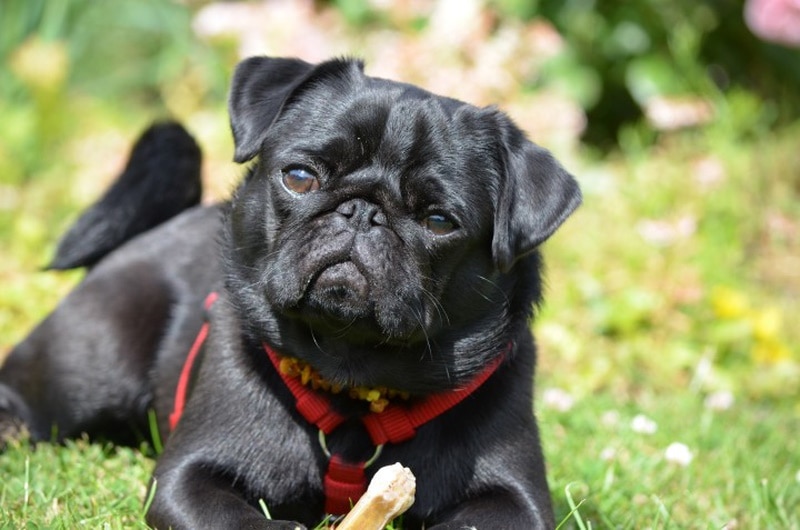
Another interesting fact about the Pug is that while the “classic” brown appearance is the most well-known Pug color, they come in a wide array of color options. However, AKC-acceptable colors for Pugs are just two: fawn and black.
Finally, did you know three or more Pugs together form a grumble? With all those grumpy faces in one place, it’s no surprise!

Pug Size and Growth Chart
Genetics play a strong role in how big and fast your Pug will grow, but typically, they’ll stay somewhere in the range of the chart below.
Keep in mind that just because your Pug is on the smaller or larger side of the weight range at one point that doesn’t mean they’re always going to stay a small or large pup. You never know how big your Pug is going to get until they stop growing!
| Age | Weight Range |
| 1 month | 1 to 2 pounds (0.4-0.9 kg) |
| 2 months | 2 to 4 pounds (0.9-1.8 kg) |
| 3 months | 4 to 8 pounds (1.8-3.6 kg) |
| 4 months | 5 to 9 pounds (2.2-4 kg) |
| 5 months | 7 to 10 pounds (3.1-4.5 kg) |
| 6 months | 8 to 12 pounds (3.6-5.4 kg) |
| 7 months | 9 to 12 pounds (4-5.4 kg) |
| 8 months | 11 to 14 pounds (5-6.3 kg) |
| 9 months | 14 to 18 pounds (6.3-8.1 kg) |
| 10 months | 14 to 18 pounds (6.3-8.1 kg) |
| 11 months | 14 to 18 pounds (6.3-8.1 kg) |
| 1 year | 14 to 18 pounds (6.3-8.1 kg) |
When Does a Pug Stop Growing?
Typically, a Pug will stop growing somewhere around the 1-year mark. At this point, they have reached their maximum height and weight, although many Pugs will reach their maximum height and weight around the 9-month mark.
Sometimes a Pug will grow after this point, but even for these dogs, there’s only a nominal increase in height or weight. Once they hit the 1-year mark, they’re not going to get much bigger.

Factors Affecting the Size of Pugs
While some breeds have a ton of different factors that can affect their size, with the Pug, it often comes down to genetics. If they have larger parents, they’re more likely to be bigger, and if the parents are smaller, you’re more likely to get a smaller Pug.
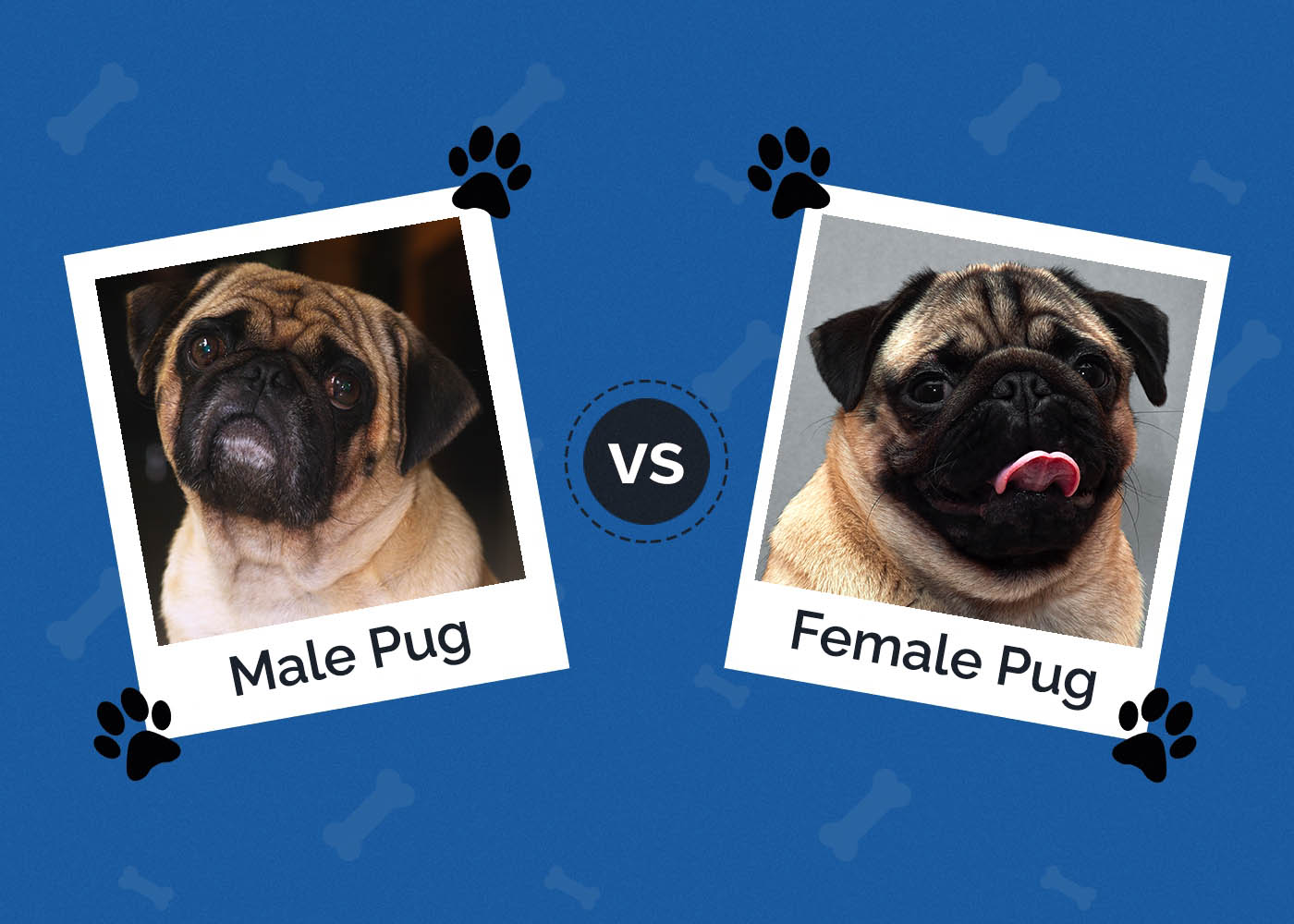
The Pug is one of the few breeds where gender doesn’t play a role in their final size either. Both males and females stand between 10 and 13 inches tall and weigh between 14 and 18 pounds.
Ideal Diet for Maintaining a Healthy Weight
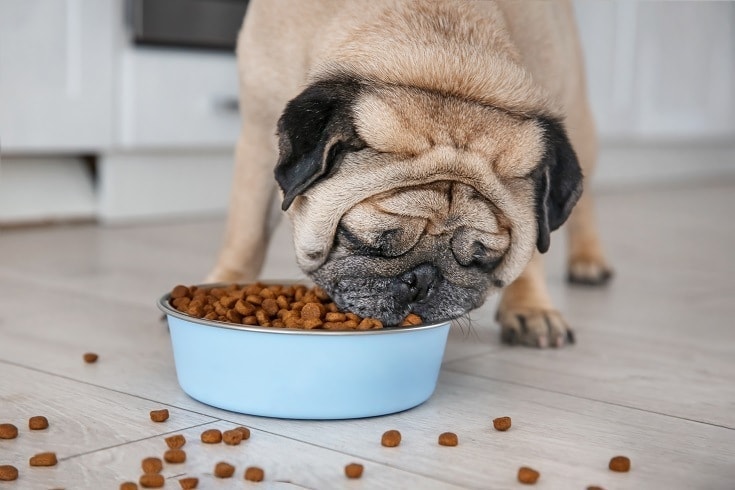
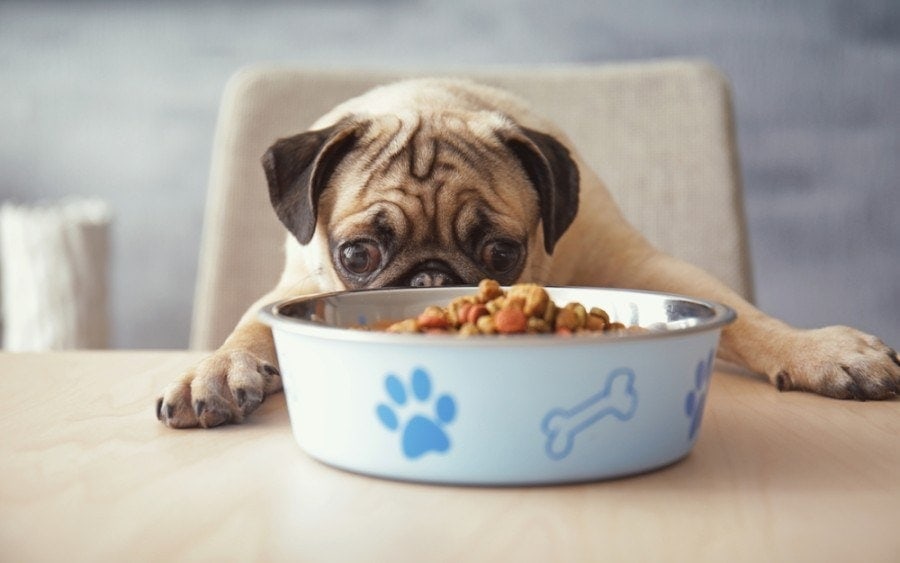
Pugs do well on a high-quality dog food, whether commercially manufactured or home-prepared with the supervision and approval of a canine nutritionist or your veterinarian. Any diet should be appropriate to your dog's age (puppy, adult, or senior). Pugs are prone to obesity and treats should only be offered sparingly. It is recommended to consult with your vet for doubts about your Pug's weight and diet.
How to Measure Your Pug
If you’re trying to figure out how tall your Pug is, you need to measure them from the bottom of their feet to the top of their back. Don’t include their head measurements in their overall height.
Getting their weight is a lot simpler, but if you can’t get them to stand on the scale by themselves, weigh yourself first then weigh yourself while you’re holding them. Subtract the two weights from each other, and you have the weight of your Pug!
Conclusion
While your Pug is never going to turn into a really big dog, it’s still impressive watching just how fast they can grow. They go from just a pound or two to close to 20 pounds in just 1 year.
Enjoy the puppy years while they last, because once they grow into full-sized Pugs, there’s no going back to the smaller dog days!
Related Read: Fawn Pug: Pictures, Facts, Origin & History
Sources
Featured Image Credit: SneakyElbow, Pixabay
Get Hepper In Your Inbox


Pet care tips from our vets and experts, straight to your inbox.
You may opt-out at any time. View our Privacy Policy for more information.
Adam, a dedicated freelance writer and animal advocate, has a long history of rescuing animals and creating compelling written content. For over ten years, he has worked as a freelance writer, and his passion for rescuing animals extends even further back. Adam is also a proud father of three, always ready for a challenge and eager to embark on new adventures.
Join the conversation
Ask a question, share your story, or send private feedback.