Hepper is reader-supported. When you buy via links on our site, we may earn an affiliate commission at no cost to you. Learn more.
How Rabbits Drink Water: Bowl vs Bottle (Vet Reviewed Differences)


In this article
Rabbits, like all animals, need water to live. Rabbits should always have a constant supply of fresh, clean water offered from their vessel of choice, usually either a gravity-fed bottle or a bowl. Apart from being essential for the same reasons that it’s important to all animals (keeping cells alive and a major component of blood), rabbits need water to help them flush excess calcium from their systems, and being well hydrated helps your rabbit’s digestive tract run smoothly. There are differences in how rabbits drink water from either bowls or bottles; many rabbits have a preference, but there are advantages and disadvantages for both. We’ll explore these in this article, looking at how rabbits drink from each and any differences between them.

At A Glance
Overview of Water Bowls:
Water bowls are the preferred method of drinking for most rabbits, and they're typically easier to drink from. Rabbits get some hydration from their food, but they'd find pools, streams, or dew to lick in their natural habitats. It's important to make sure your rabbit has fresh water available at all times, no matter what you put the water in, which is one of the reasons why water bowls are preferred by some owners.
How Rabbits Drink From Water Bowls
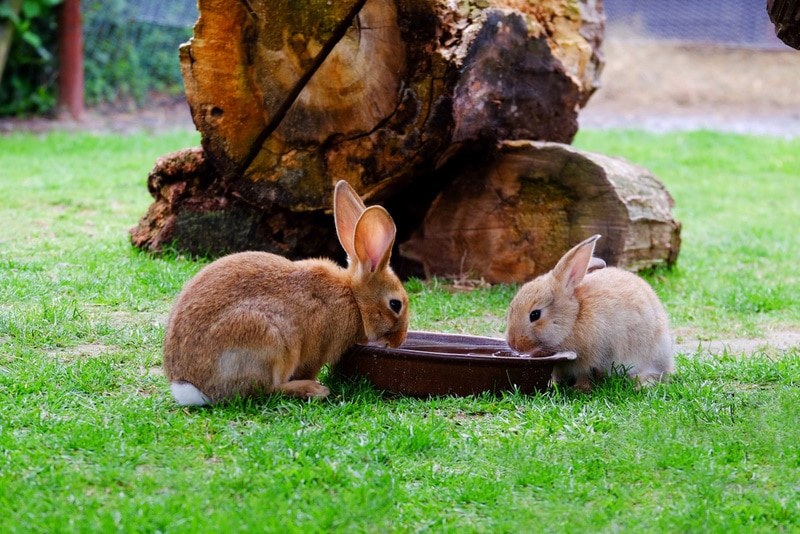
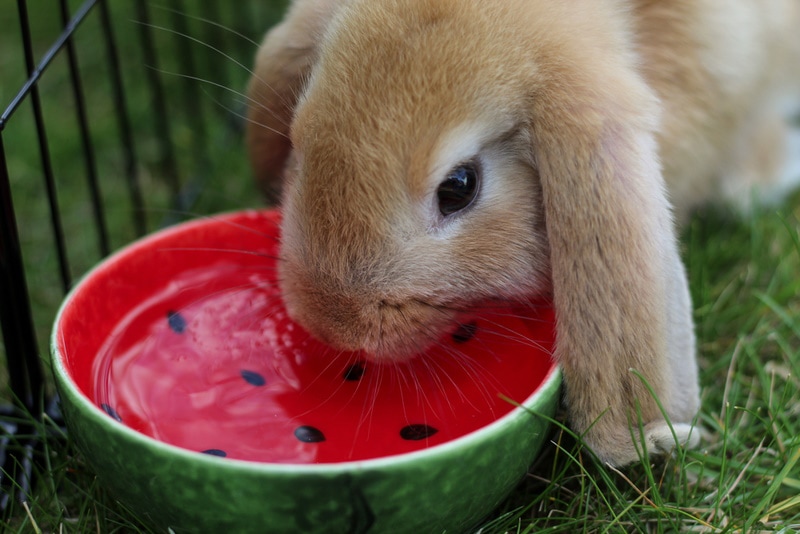
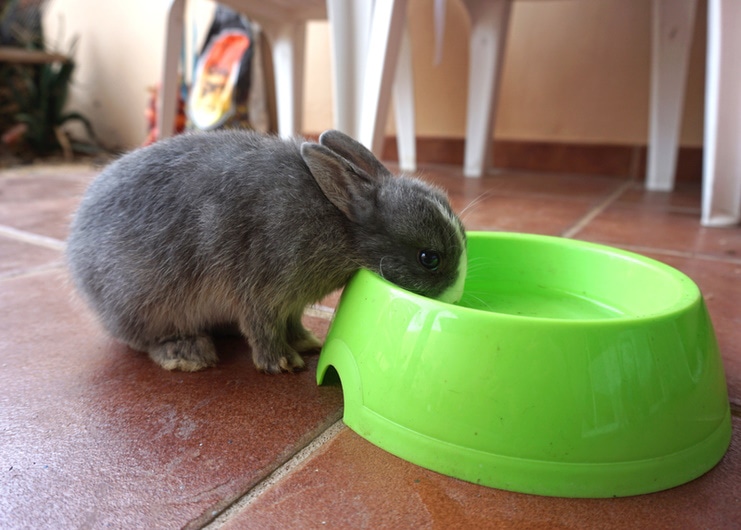
Rabbits drink from water bowls using the same lowered-head stance as they do in the wild. They crouch and bend their heads to lap up the water from the bowl, but we have seen rabbit owners commenting that their rabbits slurp up the water too! This is a natural drinking position for the rabbit, which keeps them comfortable and means their teeth don't get in the way (something which can happen with bottles).
Types of Water Bowls
There are several types of water bowls you can purchase for your rabbit, which all have their pros and cons, but the best and safest is a heavy ceramic water bowl. Plastic and metal bowls are also available but are not as safe or easy to maintain as ceramic bowls. Plastic water bowls are light, easily tipped, and not chew-resistant, so you'll have to replace them often and be wary of ingested plastic.
Metal bowls are also light, but they're chew resistant. However, metal conducts heat and can heat up the water on a warm day, leading to heat stroke. Ceramic helps to keep water cool, is not easily knocked over, and is completely chew-proof; it is by far the best choice.
What Are the Benefits of Using a Water Bowl?
Water bowls are much easier for rabbits since they allow a more natural drinking position. Rabbits can take in water more efficiently, spending less time drinking and getting more hydrated. Bottles only allow a small amount of water to drip out at a time since the ball bearing stops too much from coming out. Water bowls are also easier to clean and maintain than water bottles.
What Are the Drawbacks of Using a Water Bowl?
Water bowls can be tipped over (rabbits love to throw their stuff around!), which can be frustrating if you have given them new bedding! They can also become frozen in the wintertime and prevent your rabbit from getting any water. Soiling and contamination with feces and bacteria can also occur much easier with a water bowl, so frequent cleanings and water changes are needed.
Pros
- Easily cleaned
- More natural drinking position
- Less effort to get water
Cons
- Can easily be tipped over
- Can freeze in the winter
- Can get contaminated
Overview of Water Bottles:
Water bottles are the most common source of water for most pet rabbits, and they often come with hutches or cages as an accessory. Water bottles are convenient and attach to the side of the hutch, which makes refilling easy from the outside. Water bottles require rabbits to sit up to reach them, which isn't a natural drinking position. Most water bottles are gravity fed, meaning a small vacuum is created to stop water flowing out when not in use. Ball bearings are inserted into the end of the nozzle, which the rabbit will displace to get water out, usually by licking!
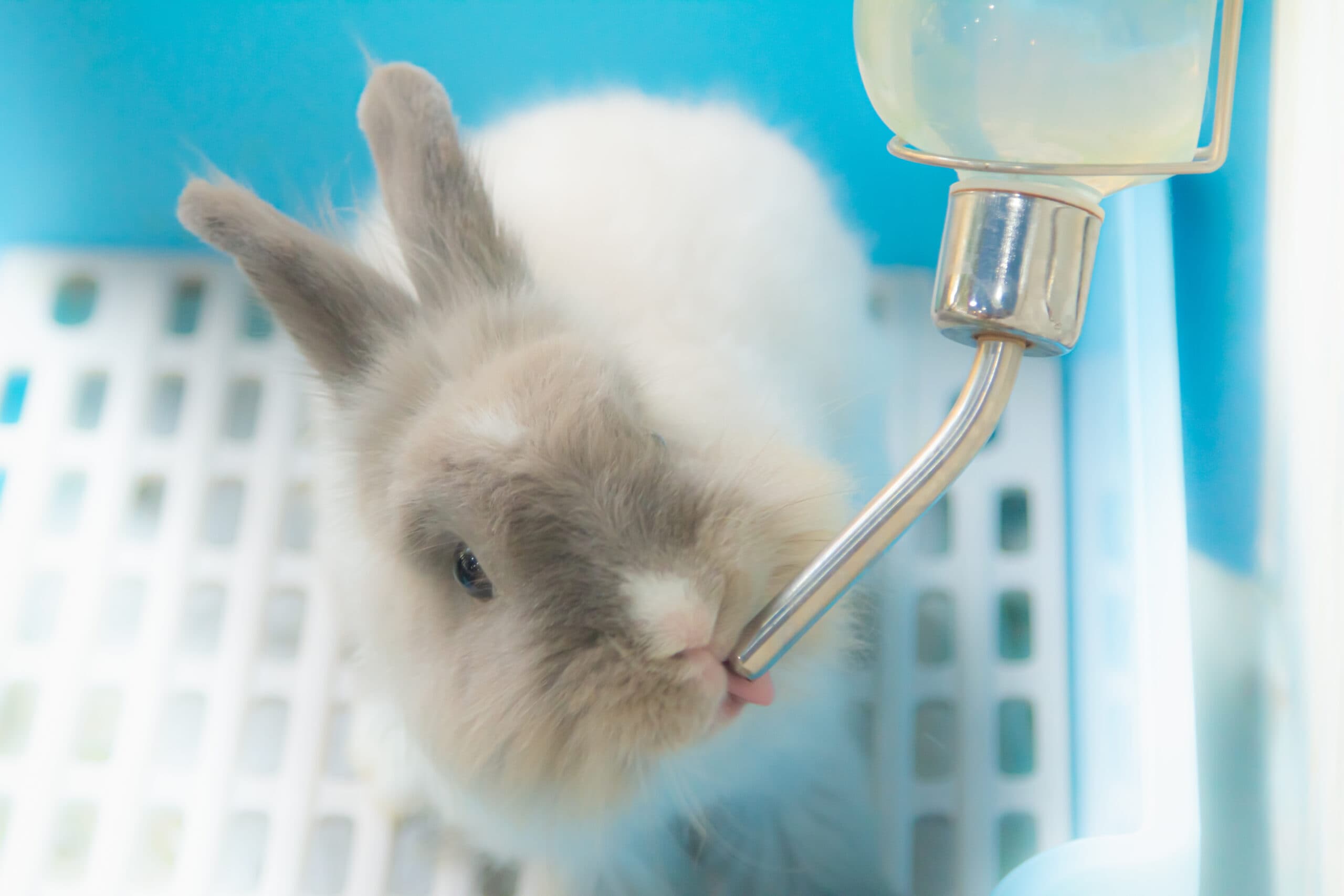
How Rabbits Drink From Water Bottles
Rabbits will sit back on their hind legs and reach up to drink from a water bottle (usually), extending their necks in an unnatural drinking position. They'll then use their tongues to move the small ball bearing in the tip of the nozzle to allow water to flow, typically only a few drops at a time. They'll also have to avoid getting their teeth in the way, so they turn their heads to stop the water from falling out of their mouths.
Types of Water Bottles
Plastic and glass bottles are available, with glass usually being more expensive and plastic being the most common. Glass bottles are dangerous since they can break and cut the rabbits. Dripless varieties also use double ball bearings or a small vacuum part to help reduce the amount of water lost when the rabbit isn't drinking. They come in different sizes, and the biggest holds up to a liter! Differing bottle shapes and colors exist, but they all function the same.
What Are the Benefits of Using a Water Bottle
Water bottles for rabbits are very to find and usually inexpensive, with a wide variety of designs and colors available to suit all tastes. They freeze much less often in the winter and can be fitted with bottle warmers to prevent freezing entirely. They're stable and can't get knocked over (or picked up) by your bunny, so they can't get wet from their water source. Many water bottles are large and can hold a larger amount of water than bowls can.
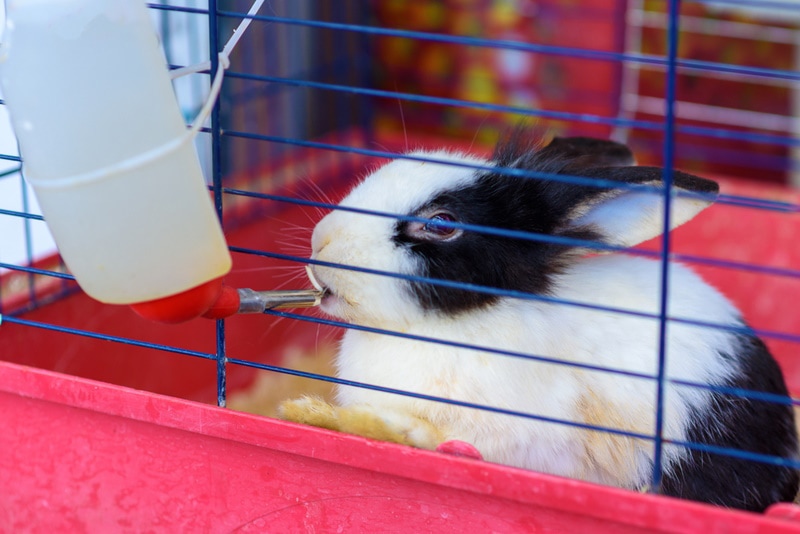
What Are the Drawbacks of Using a Water Bottle
Water bottles are much harder for a rabbits to drink from, and they spend much more time trying to get water out and don't drink as much as they do from bowls. Water bottles can also get clogged, which requires a quick repair since your rabbit won't have access to water. Some water bottles can drip, leading to wet patches in the cage that can sometimes go unnoticed and begin to cause damage (mainly to wooden hutches), and they are much harder to clean efficiently than bowls.
Pros
- Widely available and inexpensive
- Freeze less often
- Can't get knocked over
- Hold lots of water
Cons
- Can get easily clogged
- Some can drip
- Harder to drink from
- Harder to clean
Is a Bottle or a Bowl Better For My Rabbit?
Whether a bowl or bottle is better for your rabbits really comes down to three things: how your rabbit behaves, where they live, and what they prefer. If your rabbit is constantly showing you where their cage furniture should be and loves to throw their food bowl, chances are they'll empty their water bowl as soon as it’s full! A rabbit who is prone to flipping their bowls would be better off with a bottle, as there’s no way for them to get to it. However, if you notice your rabbit seems to be drinking less or is dehydrated, a bowl is the way to go, as they’re much easier to drink from.
Rabbits in cages or hutches can have either a bottle or a bowl, but outdoor rabbits may fare better with a bottle as they can be protected from freezing with a bottle jacket. Water in an outdoor hutch also presents a cleanliness problem more than an inside cage would, so a bottle would be better. Keep checking the water flow from a bottle if you use one, as they can get blocked easily. Most rabbits will have a preference for a bottle or bowl (usually a bowl), so it’s important to give them a choice if you can. Using a bottle and a bowl covers all your bases, meaning your rabbit can decide which one they prefer and they have a backup.
Conclusion
Rabbits need water to survive, so supplying them with a constant water source is essential. Providing your rabbits with either a bottle or bowl is down to individual preferences, but bowls offer a more natural way for your rabbit to drink, and they are often preferred over bottles. Bottles can be very useful for rabbits who like to throw their stuff around, however, and they can hold a much larger amount of water in some cases. Both a bottle and a bowl can be used and offer your bunnies a choice, as long as both water sources are constantly topped up and maintained!
Featured Image Credit By: Elena, Krivorotova, Shutterstock
Get Hepper In Your Inbox


Pet care tips from our vets and experts, straight to your inbox.
You may opt-out at any time. View our Privacy Policy for more information.
Beth is a mom to two babies: one with four legs, and one with two. Beth has years of practical experience as a veterinary care assistant, working in both the operating room and in consult, expanding her knowledge to gain certification in her favorite subject: feline behavior and well-being! When she's not writing about her favorite topics (cats, dogs, and creature comforts), she's looking after her two-year-old daughter and her energetic eight-year-old Nebelung, Kiba. When she gets a moment's respite, Beth loves to read fiction books. Horror is her number one genre, with fantasy and rich history being her second option.
Join the conversation
Ask a question, share your story, or send private feedback.