Hepper is reader-supported. When you buy via links on our site, we may earn an affiliate commission at no cost to you. Learn more.
How Far Can Cats Hear? Fascinating Feline Facts
In this article
Cats have an exceptional sense of hearing that's more refined than that of humans and dogs! While cat ears are small and delicate, their anatomy is complicated. Since cats hear so well, they can be sensitive to certain sounds. They may also not hear things the same way that humans do.
Cats have such an evolved and precise sense of hearing to help them avoid predators and locate prey. In addition to hearing, cats use their ears to help them stay balanced. Cats can hear about 4-5 times farther away than humans can.
Let’s look more at how cats hear and their range of hearing.

Hearing Range of Cats
Cats have a broad range of hearing and can detect high- and low-frequency sounds. Frequency, sometimes called pitch, is the number of times per second that a sound wave repeats itself. High-frequency sounds produce more repetitions, and low-frequency sounds produce fewer repetitions. These units of frequency are known as hertz (Hz).
Humans with normal hearing can hear between 64 Hz and 26,000 Hz. Cats can hear between 48 Hz and 85,000 Hz, one of the broadest hearing ranges of all mammals. While humans and cats are close in range on the low end, cats can hear 1.6 octaves above the high range of human hearing.
While no exact maximum distance has been determined, based on this evidence, we can conclude that cats can hear four to five times farther away than humans.
How Do Cats Hear?
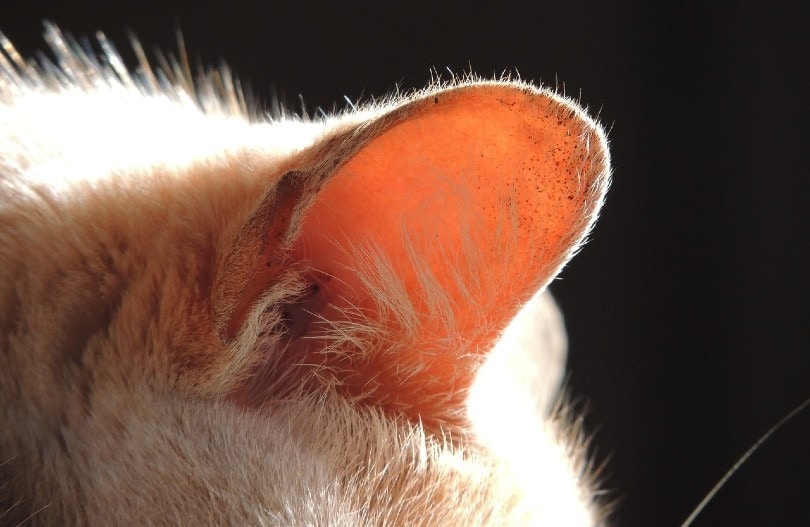
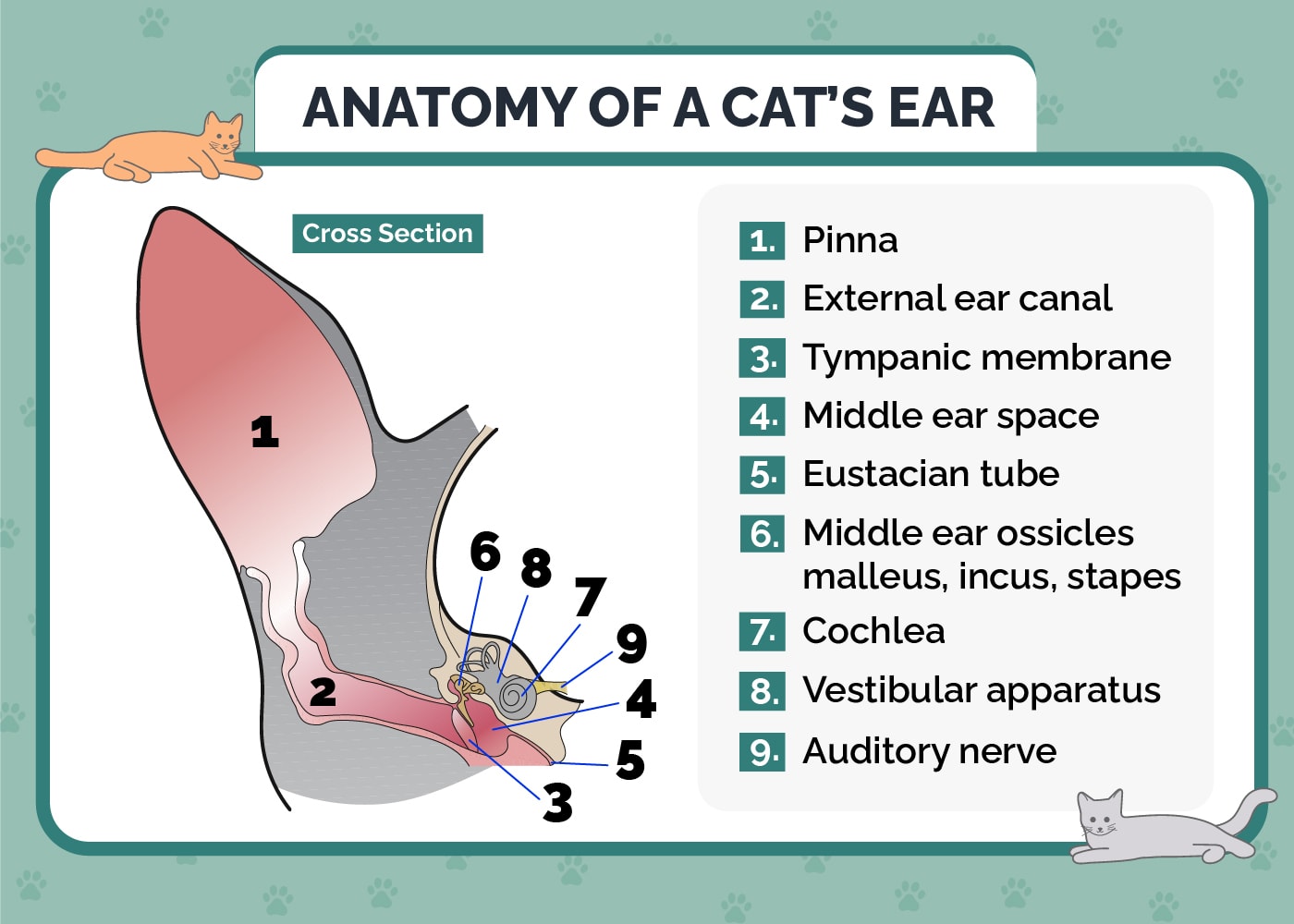
The triangular-shaped outer ear is called the pinna or pinnae in the plural form. It captures sound waves and pushes them down the ear canal. The eardrum and small bones called ossicles are in the middle ear. In response to the funneled sound waves, the ossicles vibrate. The vibrations move to the inner ear, which then sends electrical signals to the brain to be identified.
The inner ear is also responsible for the cat’s balance. It contains the vestibular system that enables cats to orient themselves. Therefore, an ear infection can cause them to become off-balance and affect their hearing.
A cat’s pinnae can move independently of one another. When cats hear sounds, they can rotate their pinnae toward the source of the sound and increase their hearing by up to 20%. Each ear can rotate up to 180 degrees to pinpoint even the quietest sound.
Using Hearing for Hunting
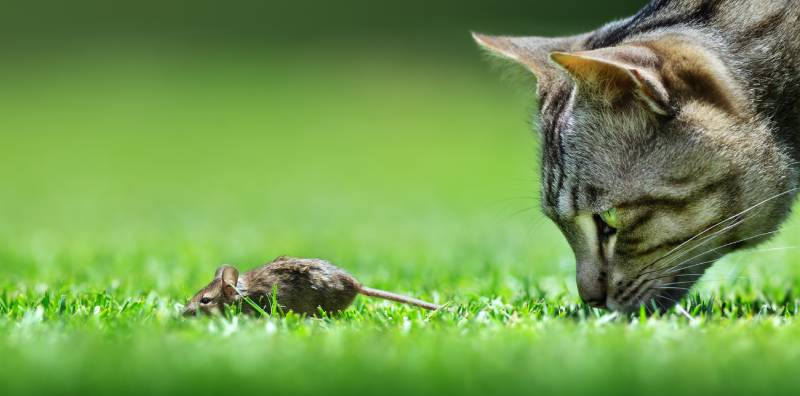
Cats rely on their superpower hearing to help them hunt and survive in the wild. Even if cats can’t see the prey moving, they can hear it. Their acute hearing enables them to predict movements and know precisely when to pounce on and capture their target.
Cats can locate a sound from up to 3 feet away and pinpoint the location of the sound within 3 inches. It’s no wonder that cats are excellent hunters!
Using Hearing for Protection
Cats stay safe and avoid predators because they can hear the slightest movements that alert them to danger. This is crucial to their survival in the wild. It’s also why cats have evolved to have such a sensitive sense of hearing.
If kittens are in distress, mother cats can hear their high-pitched cries. This also helps kittens stay safe by alerting the mother that something is wrong.
Protecting Your Cat’s Ears
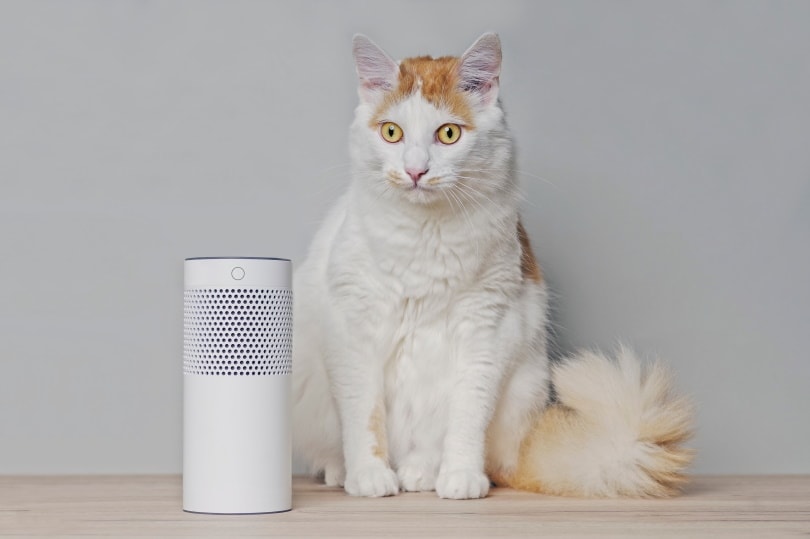
It’s best to be cognizant of your cat’s hearing abilities and know that even though you may like your music and television played at loud volumes, it can stress out your cat.
If you notice your cat reacting negatively to the sounds in your home, pay attention to the signs and lower the volume. Loud noises, especially when your cat doesn’t know where they are coming from, can scare them. Cats don’t hear music or television the same way that humans do. It's vital to recognize when it may be too much for your cat.
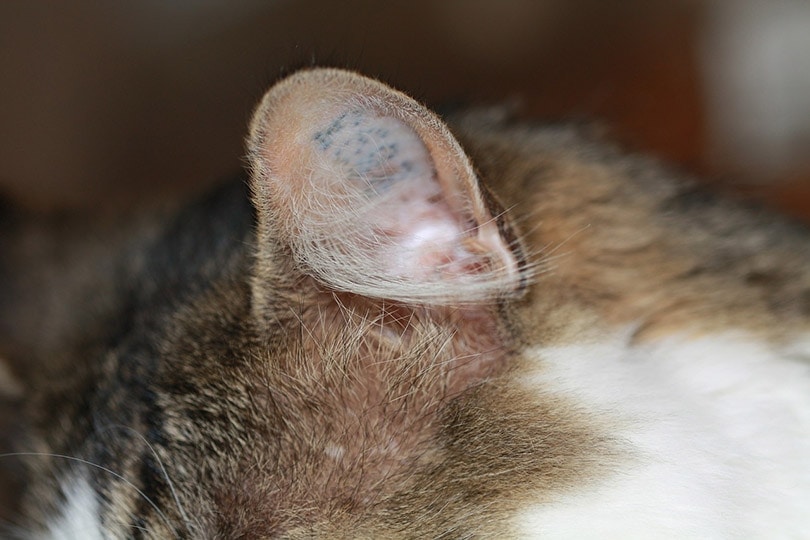
While cats don’t need much help keeping their ears clean, you should check them periodically for signs of infection. Ear infections can be painful and impact your cat’s ability to hear and stay balanced.
Signs of infection include:
Fortunately, ear infections are usually easy to diagnose and treat. If you notice these signs, have your cat examined by a veterinarian. A thorough examination will be necessary to determine the bacteria present and the course of action to treat it.

Deafness in Cats
Cats can lose their hearing as they get older. In some cases, they are born deaf due to a genetic defect known as congenital deafness. Deaf cats can still live happy, healthy lives. They are just more visually aware of their surroundings. Deaf cats should never be unsupervised outdoors because they cannot hear traffic or other dangers.
Life with deaf cats can be just as rewarding as with hearing cats, but they require a little more communication and protection. Deaf cats can be taught hand signals so they will know when you’re communicating with them.
A deaf cat will observe other healthy cats for cues about their environment. If you welcome a deaf cat into your home with other cats, they can form strong bonds, playing and interacting with each other.
Final Thoughts
Cats have an exceptional sense of hearing that makes them excellent hunters. They can pinpoint the location of a sound before they see where it’s coming from and can hear sounds four to five times farther away than humans!
Since cats have such heightened hearing, loud noises can overwhelm them. If your cat is showing signs of being stressed from noise, reduce the volume if you can, or put them in a quiet area of the house where they can relax. Protecting your cat’s ears will help them stay healthy for years to come.
Related Reads:
Featured Image By: TRAPHITHO, Pixabay
Get Hepper In Your Inbox


Pet care tips from our vets and experts, straight to your inbox.
You may opt-out at any time. View our Privacy Policy for more information.

Nicole is a lover of animals of all sizes but is especially fascinated with the feline variety. She’s the proud mom of Baby, a Burmese, and works every day so he can relax in the sunshine or by the fire. She’s always had a cat in her home and has spent countless days with others, observing behaviors and softening up even the grouchiest of the lot. Nicole wants to share her kitty expertise with you so you and your cat can live happy, healthy, and care-free.
Join the conversation
Ask a question, share your story, or send private feedback.