Hepper is reader-supported. When you buy via links on our site, we may earn an affiliate commission at no cost to you. Learn more.
Can Cats Hear Better Than Dogs? Vet-Approved Facts & FAQs



In this article
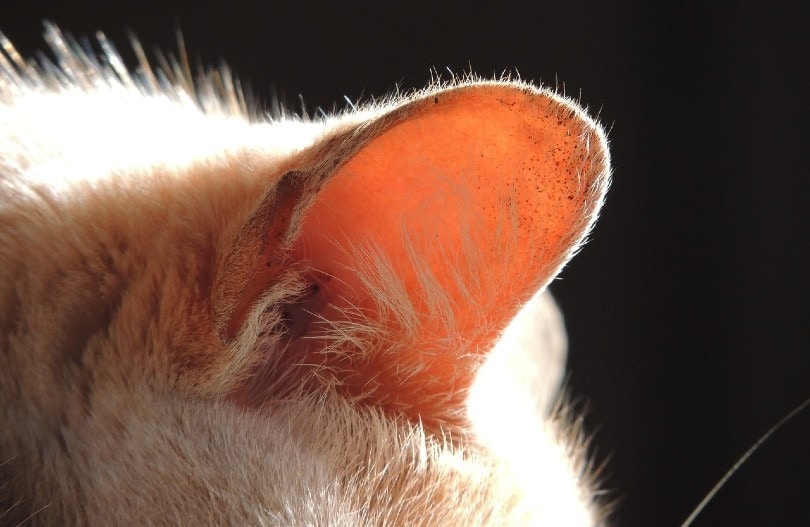
Everyone knows that cats and dogs have physical abilities that put ours to complete shame. Dogs can detect cancer and conditions such as hypoglycemia, and cats have amazing agility and flexibility, alongside a toolkit that makes them incredible predators. And anyone who's ever watched a dog start barking well before anyone rings the doorbell understands how well dogs can hear. But what about cats and hearing? Are they able to hear as well as our canine companions? Believe it or not, cats can hear sounds in a far wider frequency range than dogs, giving our feline friends the edge regarding their hearing.

How Well Can Cats and Dogs Hear?
Cats have some of the best hearing in the animal world, but dogs aren't far behind! Cats can hear sounds in frequencies from 45 to 64,000 Hz, though different studies may yield other results. For example, at 70 dB SPL (decibel sound pressure levels), cats were found to have a hearing frequency from 48 to 85,000 Hz.
Dogs' hearing range rests between 67 and 45,000 Hz, though certain dog breeds can hear sounds slightly higher or lower than these values. Humans can listen to a far narrower range of frequencies, from 20 to 20,000 Hz. Infants can hear ranges slightly higher than 20,000 Hz. However, the upper limit of our hearing ability gradually declines as we age; most adults can only hear frequencies up to 15,000-17,000 Hz.
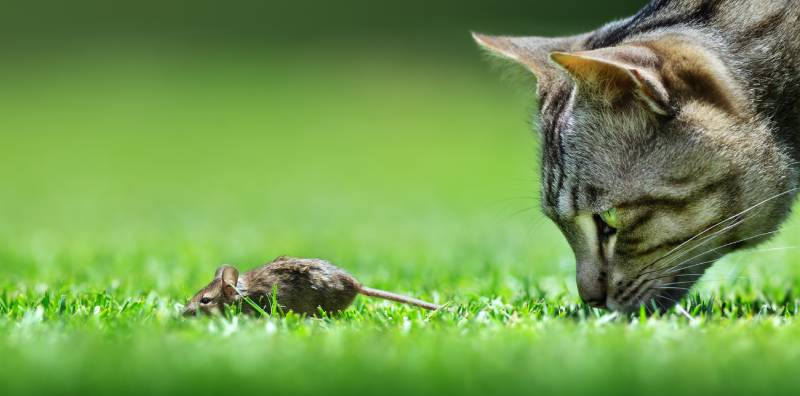
Cats' hearing range extends below and above that of dogs and humans. Dogs can hear sounds resonating at frequencies almost three times higher than people can pick up. Cats can hear sounds four times farther away than humans can discern. They can even locate sounds within inches while perched feet away from the source. In addition, cats can hear the sounds of certain animals they hunt as prey, including mice and rats. These animals make sounds that humans can't hear.

Why Do Cats Have Such Fantastic Hearing?
Experimental analysis of a cat's audiogram shows that throughout evolution, cats have increased their high-frequency hearing without compromising their low-frequency hearing. The need to increase high-frequency hearing is owed to the evolutionary requirement to localize where a sound is coming from, as most of their prey produce high-frequency sounds.
However, cats have also retained their low-frequency hearing, possibly because they evolved alongside animals that frequently communicate with lower frequencies, and they needed to be aware of the presence of these sounds to survive.
How Do Cats and Dogs Use Their Hearing?
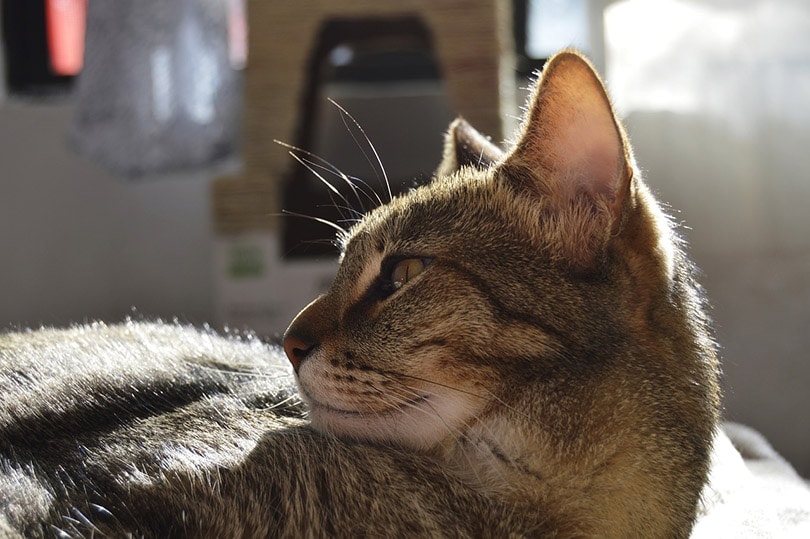
Cats in the wild primarily use their hearing to find prey and avoid predators. They can hear rodents' high-pitched squeaks and rustling noises from relatively far away. They also rely on their ears to detect approaching dangers such as dogs and cars.
Cats also use their hearing to recognize people. Because they don't have the best up-close vision, most rely on their noses and ears to identify their favorite family members and loved ones. Chances are your cat recognizes you by smell and the sound of your voice, not your face!
In addition to their incredible noses, dogs also rely on hearing to hunt, track, and recognize people. But they do not necessarily need scent and vision to identify loved ones due to their super-sharp ears—studies show dogs recognize voices belonging to people they know.

What’s the Deal With White Cats and Hearing?
White cats are often born deaf or with hearing difficulties, particularly those with blue eyes. Research indicates that around 20 percent of white cats who don’t have blue eyes are born deaf, but that number increases to around 40 percent in those with one blue eye. Cats are usually either deaf or hard of hearing on the side with the blue eye. About 65 to 85 percent of white cats with two blue eyes are born unable to hear.
Cats born without hearing in one ear often fool all but the most observant of humans, as they typically get around just fine and respond appropriately to environmental stimuli. Cats that are completely deaf from birth usually don’t have trouble as long as they stay indoors and away from dangerous situations where being unable to pick up on auditory cues can be hazardous (like when crossing busy streets). Hereditary deafness is usually permanent and untreatable.
What About Albino Cats?
Can Cats Lose Their Hearing
Yes. Several conditions can contribute to hearing loss in cats, including cancer and various tumors. It can also be caused by certain medications and household chemicals. The most common causes of acquired deafness in cats include noise trauma from their environment, certain viral infections, or blunt trauma (injury) to the structures responsible for detecting sounds. Hearing loss may be found in older cats (typically when they are about 11-15 years old) as part of the natural aging process, however, this is usually gradual and most cats easily adapt to their limited auditory capabilities as they age.
Conclusion
Cats come out on top in the head-to-head between feline and canine hearing. Cats can hear in a far wider frequency than dogs or people and have a truly exceptional sense of hearing in the mammalian world. But dog lovers don't despair! While cats get the nod when it comes to hearing, dogs are more likely to respond to their names without bribery!
See Also:
Why Cats Are Better Than Dogs According to Some – 11 Reasons
Why Are Dogs Better Than Cats? 20 Reasons (According to Dog People)
Sources
Featured Image Credit: Erik Jan Leusink, Unsplash
Get Hepper In Your Inbox


Pet care tips from our vets and experts, straight to your inbox.
You may opt-out at any time. View our Privacy Policy for more information.
Lorre Luther a reformed lawyer from the United States, she moved to the Netherlands to follow her dream and become a writer. Currently living in Rotterdam, Lorre enjoys traveling and reveling in the astonishing beauty of our planet. As an animal lover, Lorre is convinced that cats are smarter than humans.
Join the conversation
Ask a question, share your story, or send private feedback.