Hepper is reader-supported. When you buy via links on our site, we may earn an affiliate commission at no cost to you. Learn more.
How to Slow Down a Dog’s Eating Speed: 7 Vet-Approved Methods


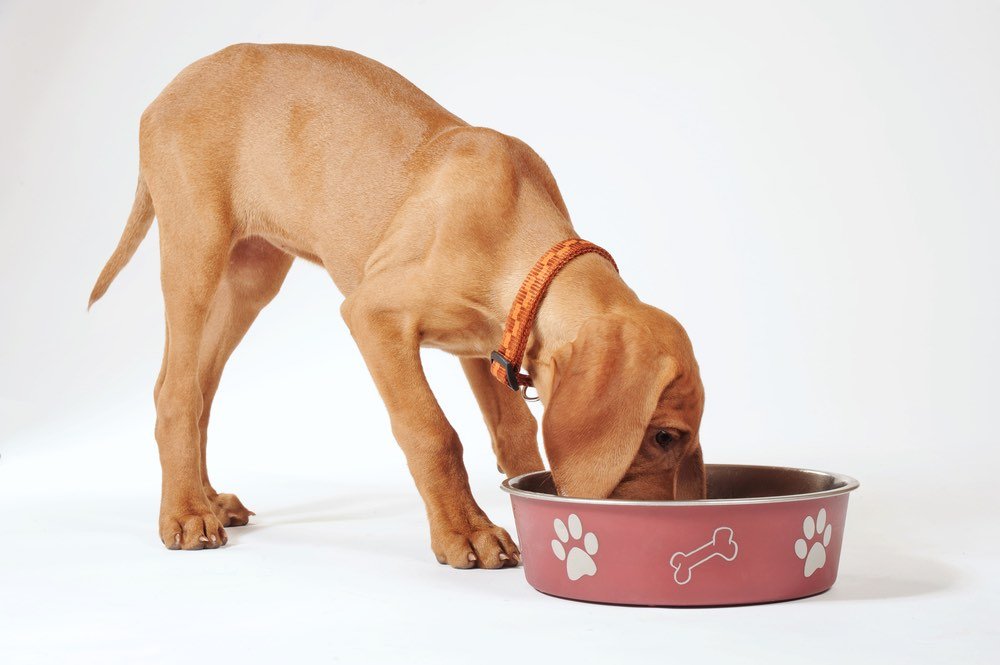
As dog owners, we must face facts: Most dogs love food! Unfortunately, some dogs like food so much that they end up gulping it down faster than you can say, “dinner time.” Eating quickly does not affect all dogs in the same way. Some dogs don’t seem to have any problems scarfing down their food, but other dogs can develop serious gastrointestinal problems after eating too quickly.
Eating fast can be a choking hazard to dogs and can even cause bloat (or gastric dilated volvulus), which is extremely dangerous and many times, deadly. Therefore, it is in the best interest of your dog for you to make sure they eat slowly and don’t gulp their food down like it’s the last time that they will ever see food again.
Fortunately, there are several things that you can do to keep your dog from eating too quickly during any given meal. Here are seven effective options to consider.

The 7 Vet-Approved Tips to Slow Down a Dog’s Eating
1. Buy a Slow-Feeder Bowl
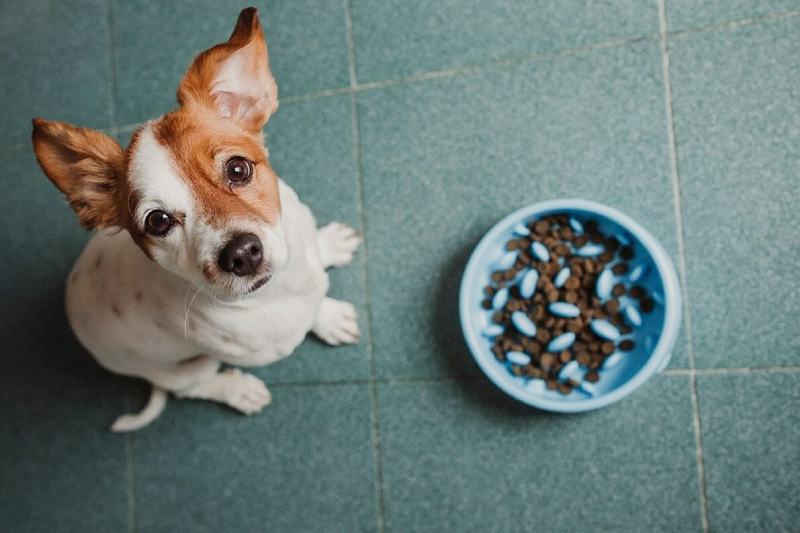
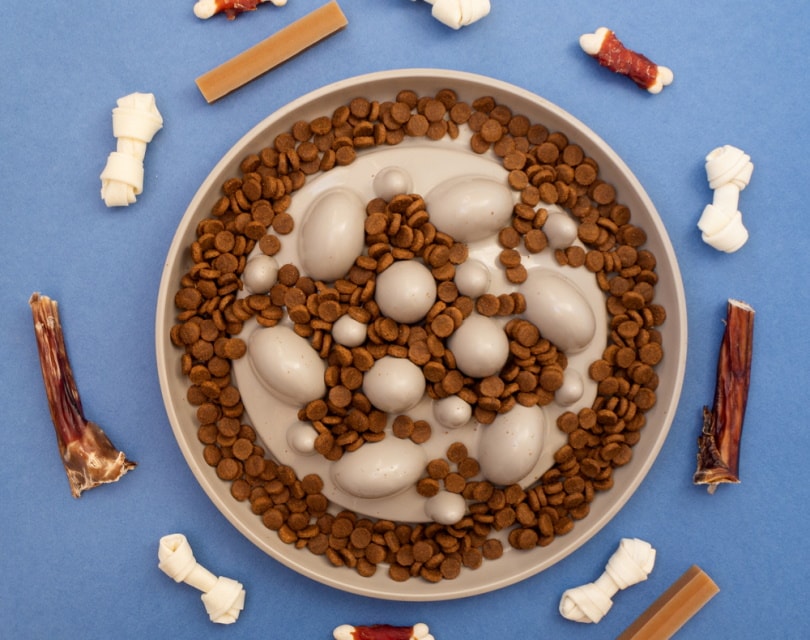
A slow-feeder bowl is specially designed to reduce a dog’s eating speed. There are typically ridges or other obstacles built into the bowl, and the food sits around those obstacles. A dog must work to get the food out, which considerably slows their eating in the process.
There are a variety of different slow feeder bowls to choose from. Small bowls with little bumps built in are perfect for little dogs like Chihuahuas, while large bowls with tall ridges are great for breeds like Golden Retrievers.
2. Invest in a Puzzle Feeder
Like slow-feeder bowls, puzzle feeders are designed to help slow a dog while they eat. As a bonus, they provide brain stimulation and problem-solving practice, which all dogs can benefit from, no matter their breed and lifestyle. Puzzle feeders come in various designs that offer different levels of difficulty.
Some feeders have spinning layers that must be manipulated to make food appear. Others release small amounts of food at a time when the dog spins the container to the correct position.
3. Make Use of a Muffin Pan
You can use a muffin pan as a makeshift slow-feeder bowl if you want to try the concept before buying one or if you want to avoid buying one altogether. Put a small amount of food in each muffin cup, and let your dog try scooping out the food with their tongue. Just keep in mind that you may have to refill the muffin pan once or twice to provide your dog with the right amount of food that they need in a meal, which is less convenient than using a slow-feeder bowl. Also please consider the size of your dog. The standard-size muffin tray might not be suitable for all dogs, but luckily, different sizes are available. For toy breeds, you might be able to substitute an ice tray instead!
4. Portion Out the Food
Another way that you can slow your dog’s eating is to portion their food into smaller meals throughout the day. If you currently feed your dog once a day, try splitting their food into two meals. If you already feed them twice a day, try splitting their meals into three or four sessions. The idea is that they will gulp down less food at one time, which will reduce the risk of choking, the amount of air ingested, and the risk of bloat.
5. Offer Food by Hand
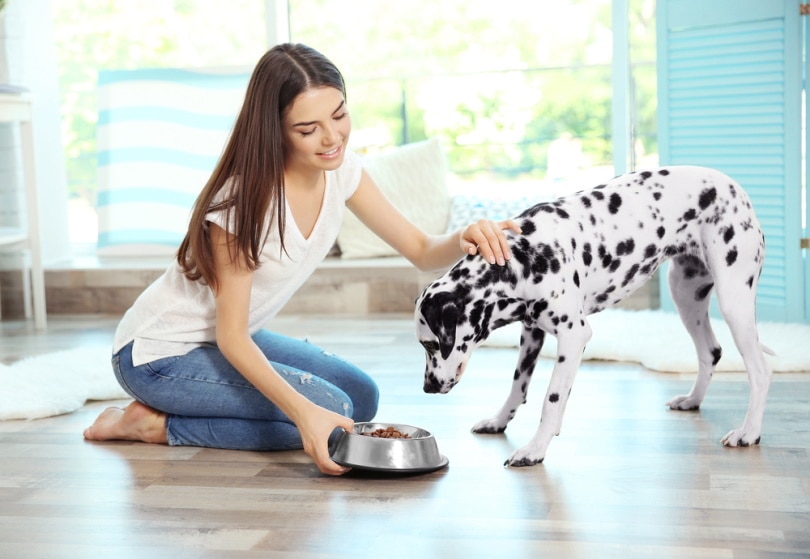
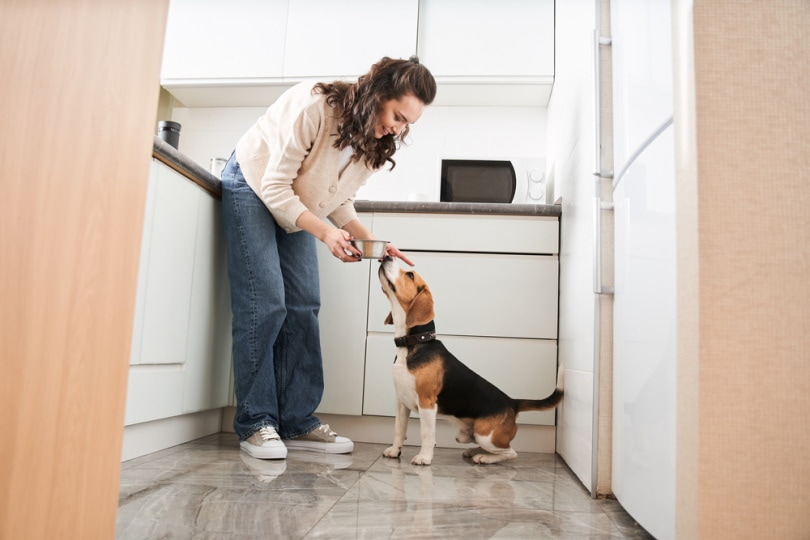
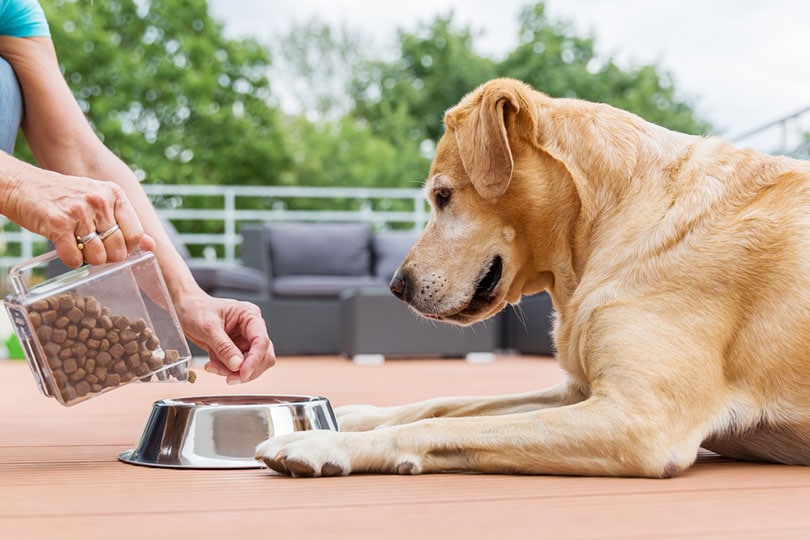
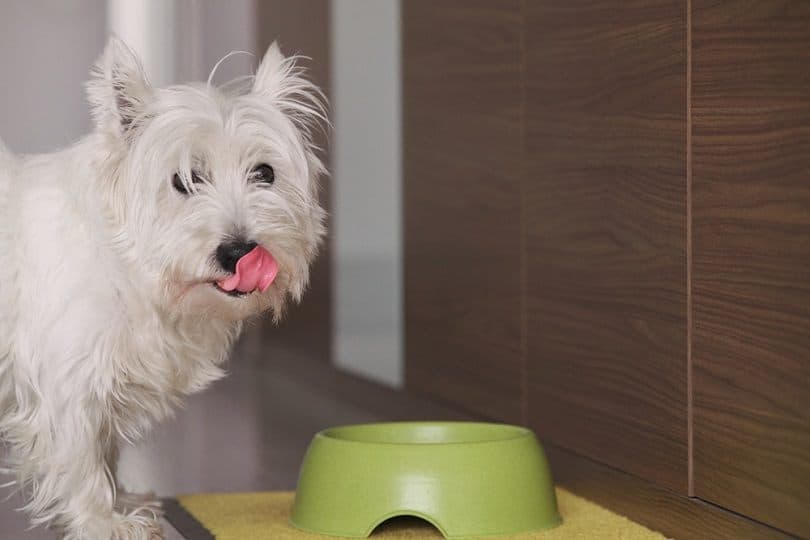
This option is not a practical one for everyday feeding, but if you manage to engage your dog enough, you can even use food as a training reinforcement. After some positive small progress, you can feed them by hand so they're only eating a couple of pieces of kibble at a time until their meal is finished. Spending this time feeding your dog will strengthen your bond. Just keep in mind that this option works best with dry food unless you’re okay with a little mess. With a careful approach, you could also use a spoon!
6. Take Steps to Reduce Food Insecurity
If you live with multiple dogs and one or more of them chow down their food like it’s a competition, chances are that’s exactly what they think it is. Some dogs feel insecure about keeping their food when other dogs are nearby, as they fear that others might come to take it from them. So, they will eat the food as fast as they possibly can to avoid having any left.
You can reduce your dog's food insecurity by feeding them at a different time or location than your other dogs. It is important to work with both the submissive and the dominant dogs. If you have a second person helping, encourage the dominant dog to allow the other dog to eat in peace by offering a high-value treat at the end of the group feeding session. One of the trainers should then work on having the submissive dog gradually slow down. By doing so, they will hopefully learn that their food is their right and not at risk of being taken, so they can take their time enjoying their meals.
This is a general idea that will hopefully help your dogs. Remember each scenario can have unique characteristics and challenges. You can always consult a dog behaviorist or trainer to help you deal with this problem.
7. Schedule a Visit With Your Veterinarian
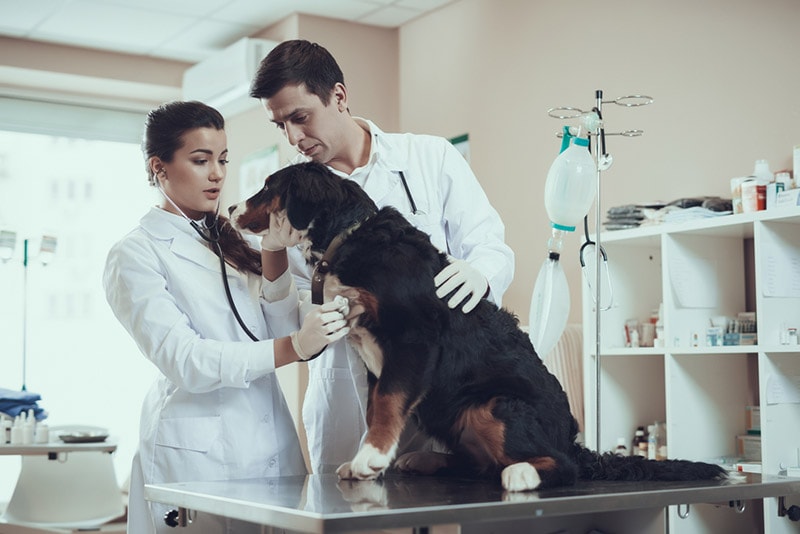
If you have tried several techniques to slow your dog’s eating habits and nothing seems to work, it might be a good idea to schedule a checkup with your veterinarian, just to make sure there are no health problems that could be causing the problem. Some dogs simply like to eat fast, so there might be nothing wrong with your doggy at all. However, it’s always better to be safe than sorry.

Conclusion
With the help of these tips and tricks, you do not have to feel helpless or all alone in your quest to slow your dog’s eating at mealtimes. Maintain patience and a positive frame of mind while working toward slower eating rituals until you realize success—it will happen!
Featured Image By: Eva Blanco, Shutterstock
Get Hepper In Your Inbox


Pet care tips from our vets and experts, straight to your inbox.
You may opt-out at any time. View our Privacy Policy for more information.
Rachael has been a freelance writer since 2000, in which time she has had an opportunity to research and write about many different topics while working to master the art of fusing high-quality content with effective content marketing strategies. She lives off the grid in Hawaii with her husband, her garden, and her rescue animals including 5 dogs, a cat, a goat, and dozens of chickens. She is an artist at heart and loves to read, paint, and make jewelry in her spare time. As a vegan, Rachael is obsessed with helping animals in need both in her community and anywhere in the world where she feels she can make a difference. Animals also happen to be her favorite topic to write about!
Join the conversation
Ask a question, share your story, or send private feedback.