Hepper blog

Search our database of over 9,984 posts with up-to-date information from our experts and veterinarians.

Hepper is reader-supported. When you buy via links on our site, we may earn an affiliate commission at no cost to you. Learn more.

Can Cats Be Genetically Modified? Glow in the Dark Felines & More Unveiled

By Kit Copson · Reviewed & fact-checked by Dr. Paola CuevasVet Approved
Dr. Paola Cuevas
Reviewed & Fact-Checked byDr. Paola CuevasMVZ (Veterinarian)
Paola Cuevas is a veterinarian and animal behaviorist, with over 18 years of experience working with a variety of species. Her passion is animal welfare and focuses on the importance of preventive medicine. Paola has skills in the fields of nutrition, microscopy, clinical pathology, diagnostic imaging, and endoscopy as well as extensive experience in animal training through positive reinforcement. As our in-house veterinarian, Paola is very happy to share her knowledge and experience with our readers and hopes to be helpful with any issue presented by your non-human family members.View authorThe information is current and up-to-date in accordance with the latest veterinarian research. Read about our vets
Share
Ask us a question in the comments
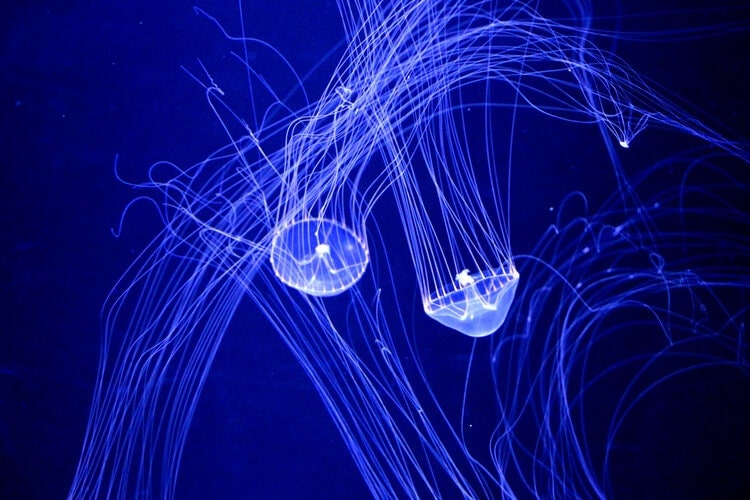
Bioluminiscence Jellyfish Aequorea Victoria

Some cats bring a whole new meaning to the term “glow up” because they quite literally do. It’s 100% true that scientists are able to genetically engineer cats to glow in the dark. They do this by inserting a gene containing the code that carries the green fluorescent protein (GFP). This specific gene comes from jellyfish and is what causes the cats to glow.

While cute jack-o-lantern kitties might be some cat parents’ dream, there’s actually an important reason for such an experiment. In this post, we aim to answer some of your burning questions about genetically-modified, glow-in-the-dark cats.

Why Genetically Modify Cats to Glow in the Dark?

Scientists make genetically modify cats to glow in the dark as part of ongoing research into the Feline Immunodeficiency Virus (FIV) and the Human Immunodeficiency Virus (HIV).

FIV is the virus that causes feline AIDS. It is a slow-acting virus that attacks the immune system and causes symptoms like fever, lethargy, weight loss, and enlarged lymph nodes. At present, FIV cannot be cured but it can be treated. Though more prone to other diseases as a result of a weakened immune system, treatment means that it’s possible for cats with FIV to live long, normal lives.

While humans cannot catch FIV and cats cannot catch HIV, the two diseases are similar on a biochemical level.

How Does It Work?

When scientists insert the gene that produces the green fluorescent protein into unfertilized egg cells, they also insert an antiviral gene. The egg cells are then transferred to a female cat. In one study, the antiviral gene used came from a rhesus macaque, which is a primate. The gene was selected because it blocks viruses like FIV that cause AIDS in cats.

The reason for inserting the green fluorescent protein gene alongside the antiviral gene is simple—to make sure the experiment has worked. When the cats glow, it is used as a marker to show that they have the anti-FIV gene.

Ultimately, scientists hope that this research into FIV will also give them insights into how to protect humans from AIDS.

Does Genetically Modifying Cats to Glow Harm Them?

Betsy Dresser, Director of Audubon Center for Research of Endangered Species said that there was nothing cruel about the process of creating glow-in-the-dark cats. She also mentioned that the cats are unaware that they glow in the dark. She was speaking of Mr. Green Genes, the first fluorescent cat in the U.S.

Dr. Eric Poeschler said that the five glowing kittens born after a Mayo Clinic experiment were “completely normal—frisky, happy, healthy, and interactive.” He also said that the glowing did not seem to affect them at all.

It would appear that as long as the cats undergoing the transplantation procedure are well-treated and kept in a cruelty-free environment, there isn’t anything cruel about the procedure in itself.

Which Animals Have Been Genetically Modified to Glow?

Cats are not the only animals to have been genetically engineered to glow in the dark. Other animals that have been used in similar research include:

  • Sheep
  • Pigs
  • Mice
  • Rabbits
  • Fish
  • Monkeys
  • Dogs
  • Chickens
  • Rats

Final Thoughts

Genetic modification is a sometimes controversial topic in terms of ethics. It appears, however, that there may be a lot of positive things about this kind of genetic modification. It’s a procedure done for a very good cause and according to experts, doesn’t cause suffering to the feline subjects.

If it sheds some light on how to protect cats and humans from AIDS in the future and doesn’t harm the cats involved, surely it can only be a good thing.

You might also be interested in:


Featured Image Credit: THAIFINN, Shutterstock

Get Hepper In Your Inbox

Pet care tips from our vets and experts, straight to your inbox.

List

Select all that apply.

You may opt-out at any time. View our Privacy Policy for more information.

Kit Copson
Authored by

Kit Copson

Join the conversation

Ask a question, share your story, or send private feedback.
Rate this post
Required to post. Only our editors see your rating.
Who should see this?

A human reviews every comment before it appears. Your email is never published.

Picked to go with this article

Why Do Cats’ Eyes Glow in the Dark? Science-Based Facts & FAQ

Why Do Cats’ Eyes Glow in the Dark? Science-Based Facts & FAQ

Cats’ eyes seem to glow in the dark because they have a distinct shine when viewed at the right angle or when you accidentally blast your cat in the face with…

Luxifa Le
By Luxifa Le ·
How Do Cat DNA Tests Work? Purpose & Accuracy Explained

How Do Cat DNA Tests Work? Purpose & Accuracy Explained

Cats are regal, curious creatures that often march to the beat of their drums. Unlike dogs, most domestic cats have an ancestry roughly 200 years old, making i…

Rachel Giordano
By Rachel Giordano ·
Can Cats See in the Dark? Vet-Verified Feline Night Vision Facts

Can Cats See in the Dark? Vet-Verified Feline Night Vision Facts

Cats can see better than humans in some situations, but not all. However, the answer to how well cats can see in the dark is a bit more complicated than most p…

Kristin Hitchcock
By Kristin Hitchcock ·
Is Cloning a Cat Possible? Feasibility & Ethical Considerations

Is Cloning a Cat Possible? Feasibility & Ethical Considerations

Cloning a cat is possible, but while the idea of cloning a beloved pet after they’ve passed away sounds like a dream come true for grieving pet parents, it’s n…

Chelsie Fraser
By Chelsie Fraser ·

Keep reading

More stories you might like

How Much DNA Do Humans Share With Cats? The Fascinating Science

We each have our unique qualities such as looks, personality traits, and even fingerprints. Individuality is something that cannot be argued, even when it come…

Lindsey Lawson
By Lindsey Lawson ·
How Much DNA Do Humans Share With Cats? The Fascinating Science

Cat Coat Genetics 101: Explaining the Essentials (Vet Reviewed)

Cat genetics are combined in all sorts of wild ways to create lovely coat colors of various shades and patterns. Breeders closely analyze hereditary trends to…

Ashley Bates
By Ashley Bates ·
Cat Coat Genetics 101: Explaining the Essentials (Vet Reviewed)

Do Cats Like the Dark? What Their Vision Tells Us

Pop culture tells us that felines can see in the dark, but this simply isn’t true. Cats are crepuscular creatures, which means they’re most alert at sunrise an…

Chelsie Fraser
By Chelsie Fraser ·
Do Cats Like the Dark? What Their Vision Tells Us

10 Interesting Black Cat Facts: Myths Explained

Black cats are friendly and intelligent creatures, but they’ve been vilified throughout history because of irrational fears. However, black cats are incredibly…

Nicole Cosgrove
By Nicole Cosgrove ·
10 Interesting Black Cat Facts: Myths Explained

What Is the Cost to Clone a Cat? 2026 Price Overview & FAQ

Our cats are precious to us, and it's heartbreaking to think that we will have to say goodbye one day. But with advancements in modern technology, there are no…

Ashley Bates
By Ashley Bates ·
What Is the Cost to Clone a Cat? 2026 Price Overview & FAQ

How Many Chromosomes Do Cats Have? Science-Based Facts & FAQ

The field of genetics is a fairly new addition to the sciences. Though we’ve known about dominant and recessive traits passed from the parents to the offspring…

Nicole Cosgrove
By Nicole Cosgrove ·
How Many Chromosomes Do Cats Have? Science-Based Facts & FAQ

Chimera Cat: Pictures, Facts, Origin & History

If you’ve ever seen one, it’s hard to forget what a Chimera cat looks like. The reason why is as simple as it is fascinating; Chimera cats often have a face th…

Nicole Cosgrove
By Nicole Cosgrove ·
Chimera Cat: Pictures, Facts, Origin & History

National Cat DNA Day 2026: When It Is & How to Celebrate

When you welcome a new cat into your home, they become a part of your family tree forever. But have you ever wondered what breeds exist in your cat’s family tr…

Chantelle Fowler
By Chantelle Fowler ·
National Cat DNA Day 2026: When It Is & How to Celebrate