Hepper is reader-supported. When you buy via links on our site, we may earn an affiliate commission at no cost to you. Learn more.
How to Remove a Splinter from a Dog Paw: 8 Expert Tips & Infographic


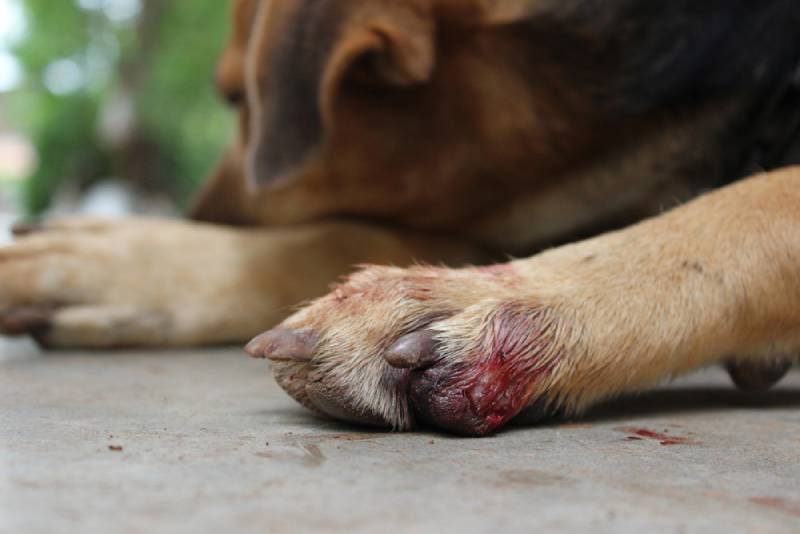
Dogs spend a lot of time outside, and many times, they run through grass or wooded areas. This outdoor activity can sometimes lead to splinters ending up in the paws of your pup. Like people, dogs can experience pain and discomfort when they end up with a splinter in a sensitive area. Sometimes splinters will come out on their own and cause your dog no lingering discomfort. But other times, the splinter will stubbornly stay put and cause a lasting issue. The good news is that many standard splinters can be removed at home by the dog owner if the splinter is sticking out from the skin and they have the right materials on hand.
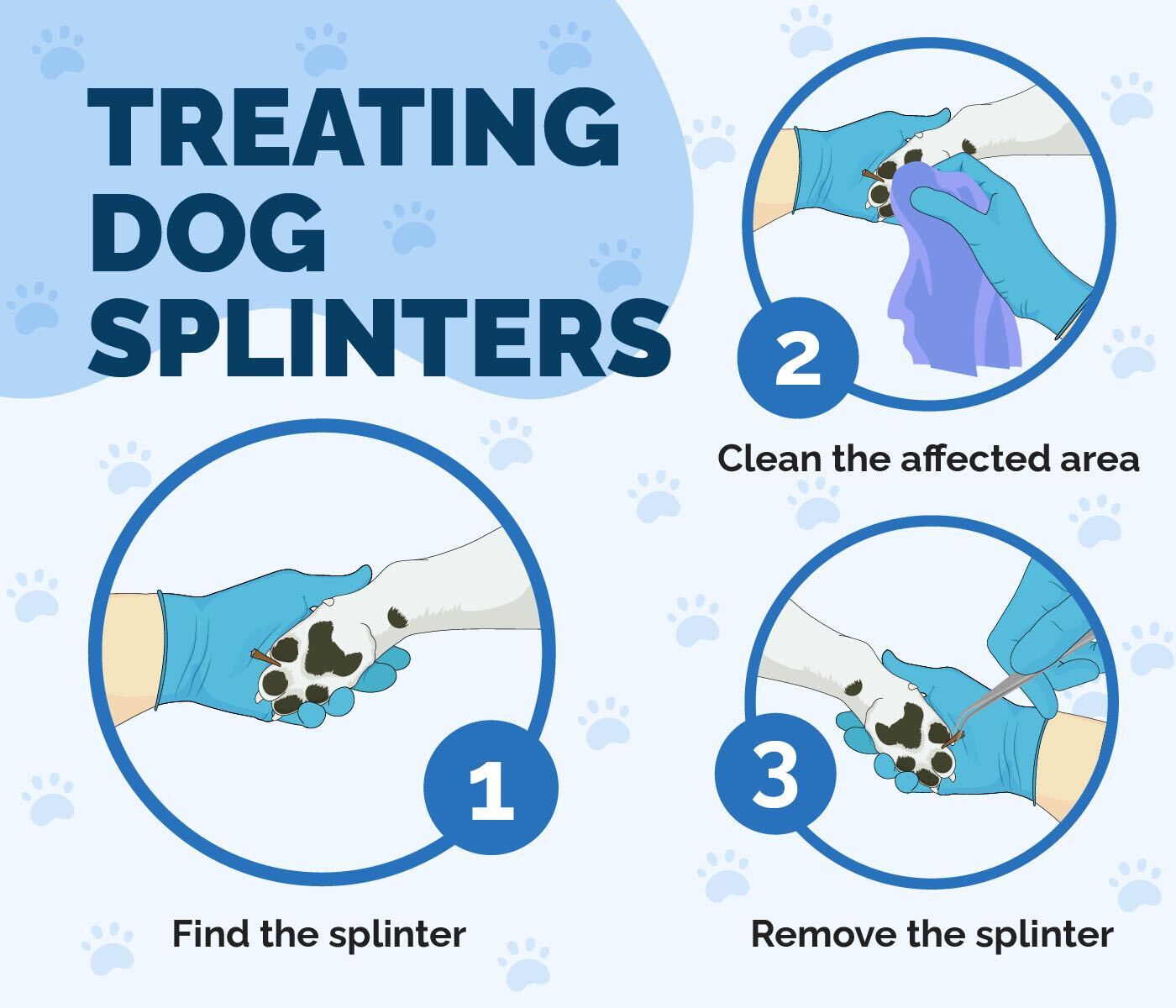
Here is how you can remove a splinter from your dog’s paw in eight easy steps provided by experts.

Preparation
Before attempting to remove a splinter from your dog's paw, you should take a moment to gather the necessary supplies. If you do not have these things readily available around the house, you might need to take your dog in to get looked at. Here is what you need and what to expect before removing a splinter from your dog’s paw.
What You Will Need:
| Time: | 10–45 minutes |
| Complexity: | Basic–Intermediate |
How to Remove a Splinter from a Dog Paw
1. Examine the Area
The first thing you should do is examine the area. There are some questions you need to answer before proceeding.
Where is the splinter?
Is the splinter visible?
How large is the splinter?
Is the area bloody or obstructed by fur?
If the splinter is not visible or if the splinter is somewhere other than the paw, such as the mouth or face, you might need to consult a veterinarian rather than attempting to remove it yourself.
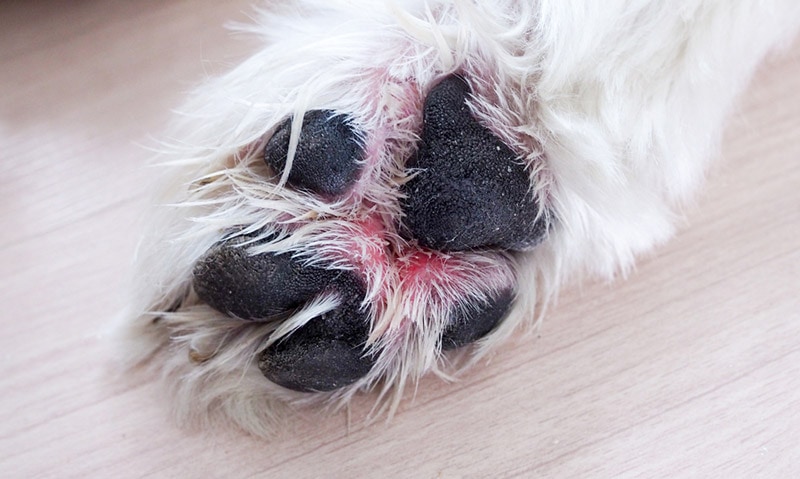
You should only try to remove a splinter if your dog is cooperating and if the splinter is clearly visible, sticking out, and easily accessible with tweezers.
2. Consider Using a Cone
If your dog is trying to chew at the area with the splinter or is acting like it might bite due to the pain, you should consider putting a cone or a protective collar on them. You can put the cone on the dog before you start removing the splinter. This will help protect you from a potential nip, and it will prevent the dog from messing with your hand as you remove the splinter. A cone won’t stop a dog from running away or desperately writhing around, so if they are completely out of control, a cone won’t help. However, it can help calmer dogs be less focused on their paw as you attempt to remove the splinter. If your dog is distressed or in pain, it is best to consult your veterinarian for advice.

3. Shave the Area
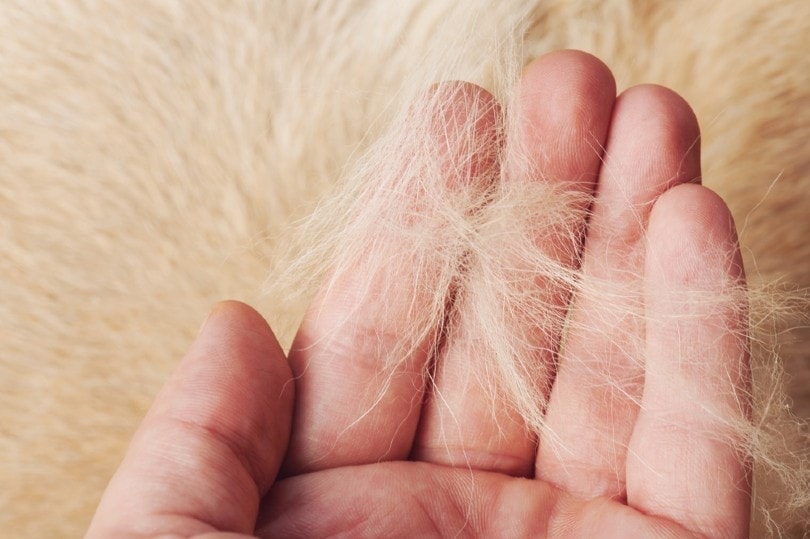
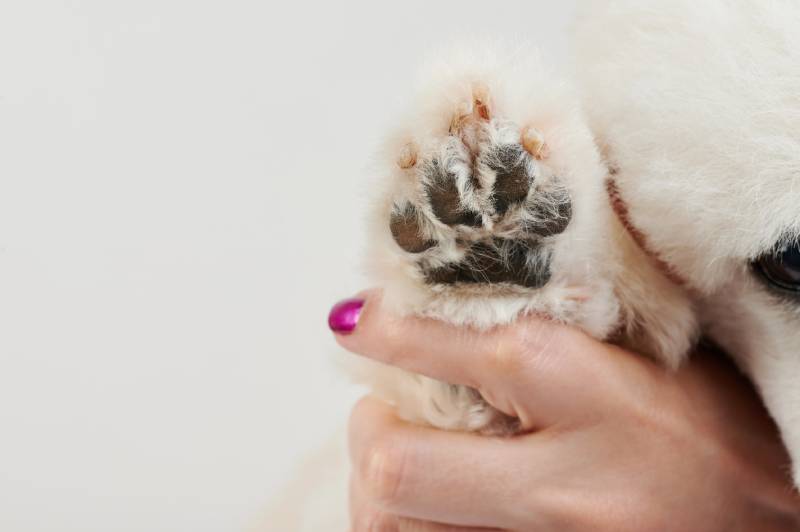
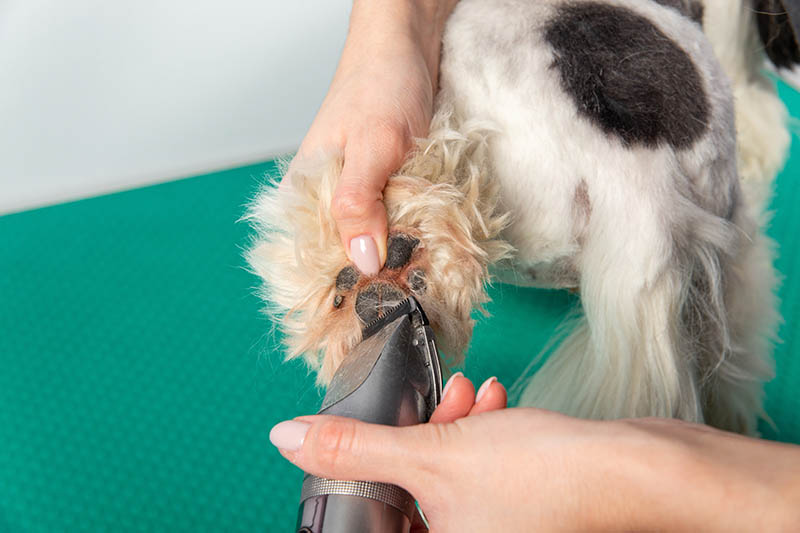
It might be necessary to shave the area around the splinter. If the splinter is being hidden or obscured by fur or hair, you should trim the area so you can easily reach the splinter without wondering where it is. In some cases, you can use a simple pair of round-tipped scissors to snip some long hair. If your dog has fuzzy paws, you might need to use a pair of clippers to remove the fur from the area. Be extra careful not to hit the splinter while you are trimming.
4. Wash the Area
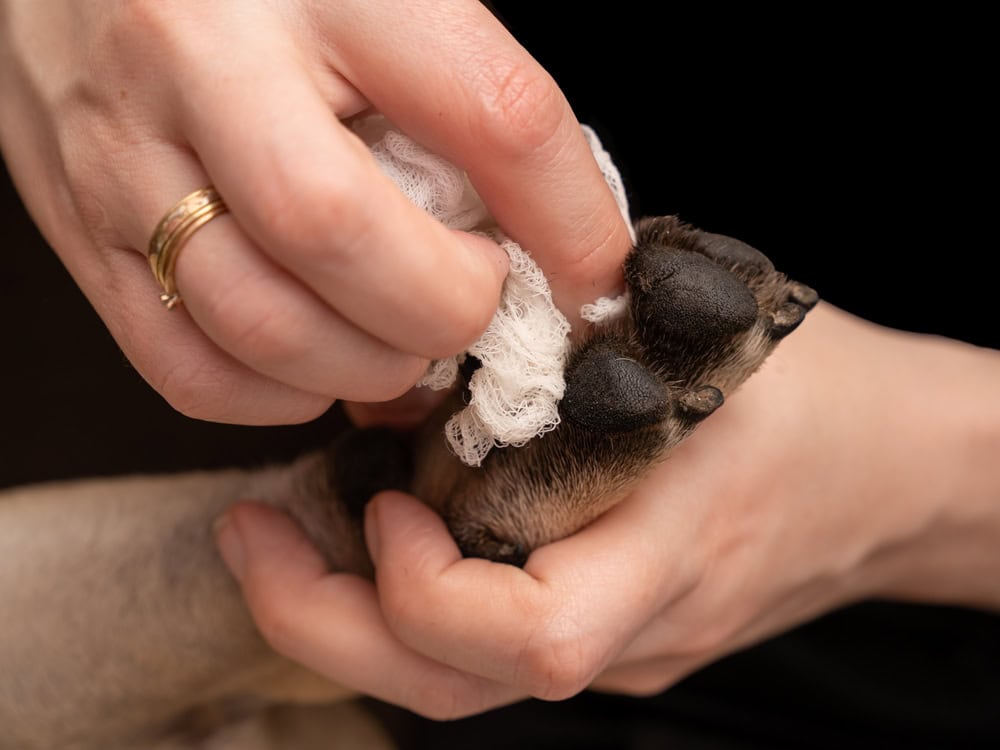
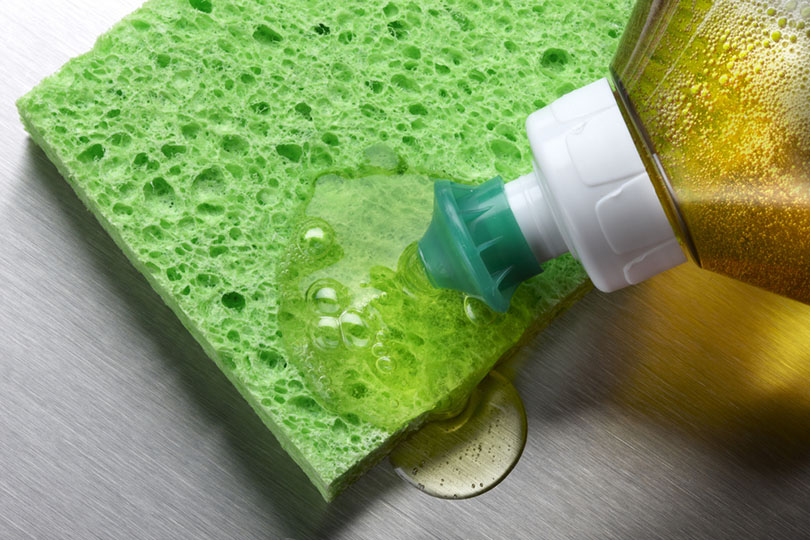
After shaving or trimming the area around the splinter, you should wash the area wearing a pair of gloves. Using antiseptic soap and warm water, dab around the splinter and wash away any dirt, blood, or loose fur that might be present. You can fill a bowl with warm water and use antiseptic soap with a cloth or sponge to clean the area.
5. Soak the Area
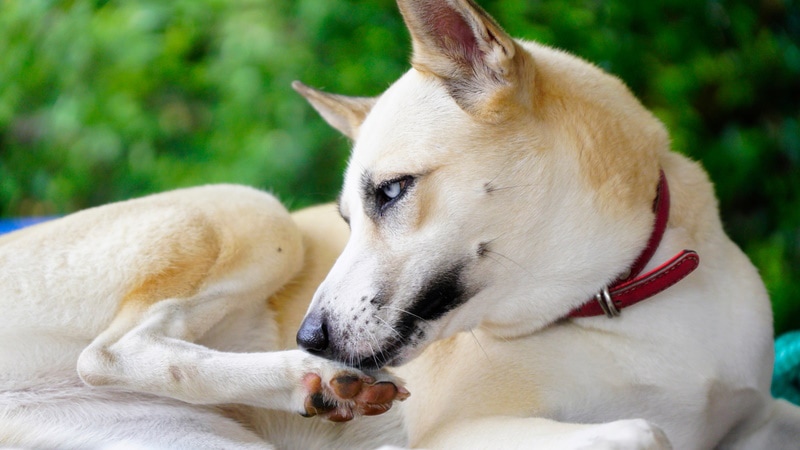
If the splinter is particularly large, deep, or hidden right below the skin, you should soak your dog’s paw to help you remove it. Soaking the paw will loosen the skin around the splinter, help the splinter move to the surface, and soften the splinter if it is made of wood. All of these things help make the final removal of the splinter easier.
The best thing to do is to soak your dog’s paw in a bowl of warm water with a tablespoon of Epsom salt. Try to keep your dog’s paw soaking for 3 to 5 minutes for the best results.
6. Grasp Splinter With Tweezers
Now it is time to remove the splinter. Take your tweezers and firmly grasp the end of the visible splinter. If you cannot find the splinter or if the splinter is not large enough to grab with a pair of standard tweezers, you might need to stop and reevaluate. You should only attempt to remove a splinter that you can get a firm grasp on with a pair of tweezers.

7. Carefully Pull Splinter Out
Now, you want to pull the splinter out slowly and smoothly to avoid breaking off any pieces. Make sure you move in the direction of the splinter. If the splinter is at an angle, pull it straight outward at the same angle. Do not yank or pull upward, or you might accidentally cause the splinter to break, and that can cause further problems. Breaking the splinter or yanking violently can cause your dog to bleed and lead to a wound.
If you followed all of the previous steps up until this point, the splinter should easily slide out of your dog’s paw. After the splinter is out, check for blood or pus. If you notice a thick or creamy whitish-to-yellowish discharge, you should contact your vet for advice since an infection is forming.
8. Bandage Paw If Necessary
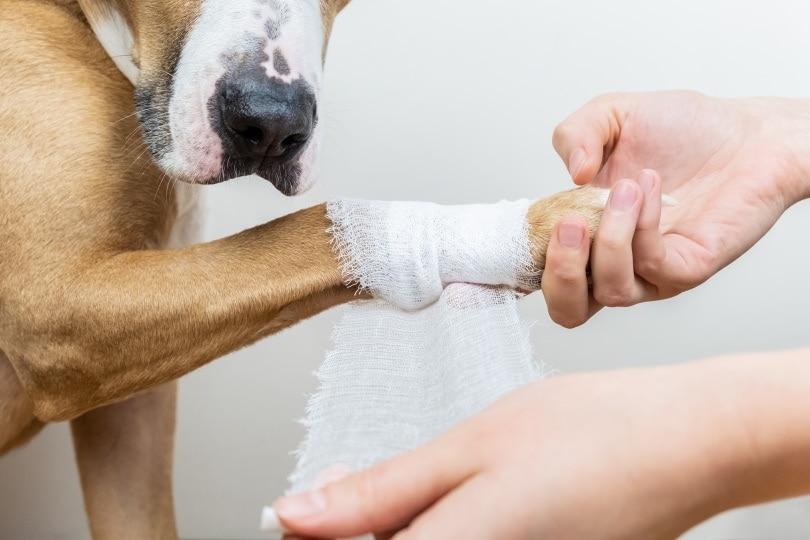
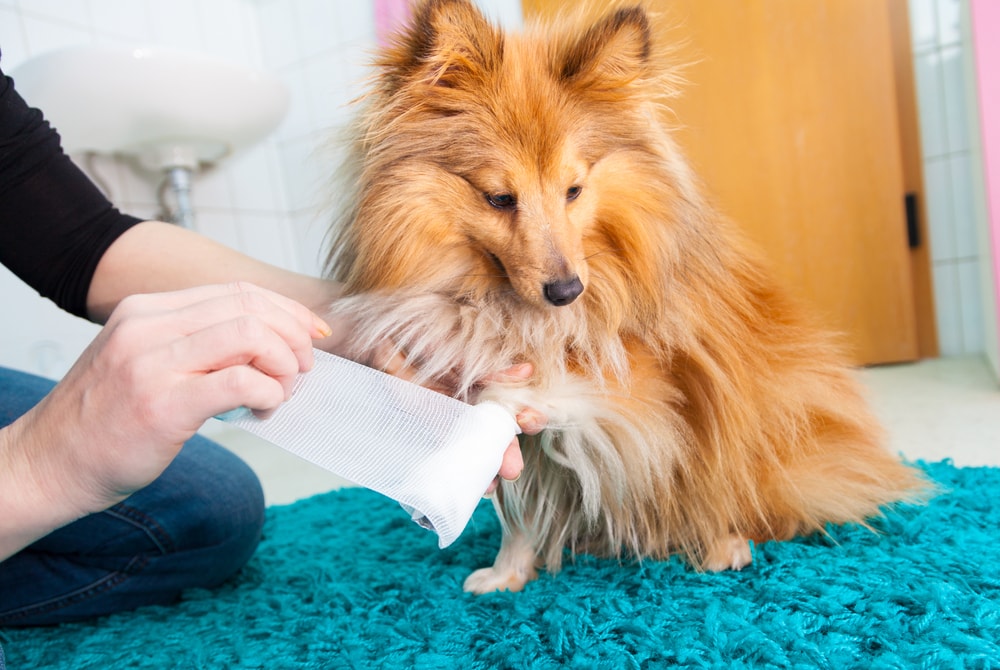
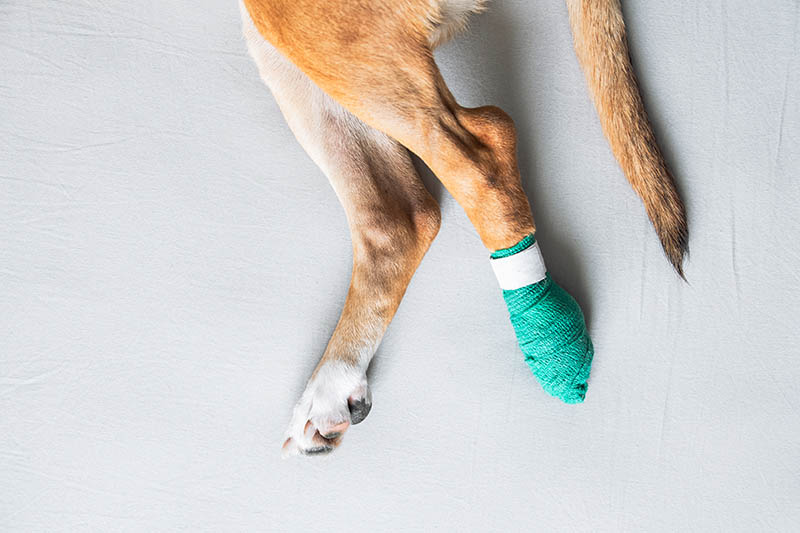
If your dog starts bleeding and the bleeding doesn’t stop after a few seconds, you need to head to your vet immediately. Use some basic gauze or bandage to tightly wrap your dog’s paw. You should check the paw after 10 to 15 minutes to see if the bleeding has stopped. In most cases, splinters won’t bleed, but depending on the size of the splinter, some dogs can end up bleeding after the removal. If your dog has a bleeding disorder or is prone to infections, don't risk it and get your veterinarian to remove the splinter.

When to Contact Your Veterinarian
While many splinters are not a problem, there are some situations in which you need to contact your veterinarian. Splinters can linger, cause a lot of pain, and even get infected. Here are the situations in which you should take your dog in for an examination:
The splinter is in the mouth or around the mouth or face.
The splinter broke while you were trying to remove it, and the majority now lies under the skin.
If your dog is acting painful, aggressive, or agitated to the point where you cannot safely remove the splinter on your own.
The area around the splinter is red, swollen, hot, puffy, or emitting a discharge like pus.
Your dog is limping or trying to lick the area after the splinter has been removed.
If you experience any of these problems, it is best to see if you can get your dog in for a quick checkup. The vet will be able to diagnose the problem, remove the splinter, and disinfect the area in a matter of minutes. Even if the splinter is deep or out of sight, a vet and their team should be able to handle the problem easily.
Not Everyone Will Be Able to Remove a Splinter Without Help
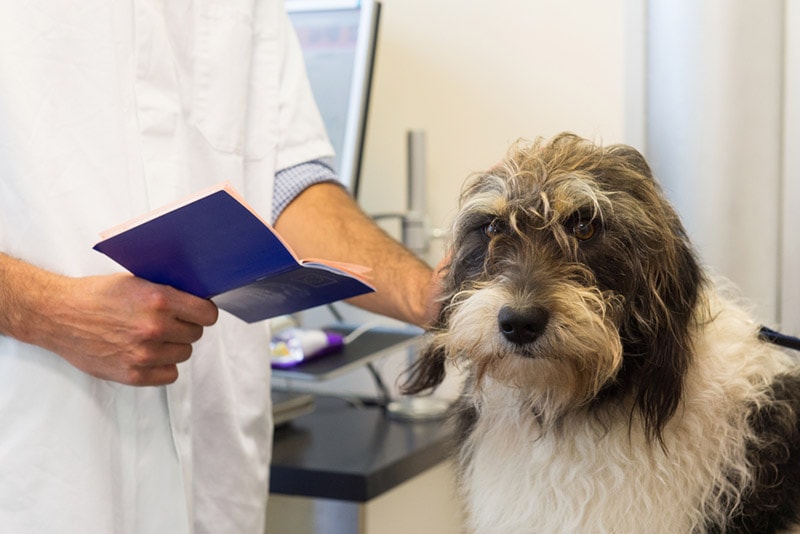
It is important to note that not everyone will be able to remove a splinter from their dog’s paw without help. Even splinters that appear to be easy to grab might be too difficult for a single owner to manage. Dogs that are in pain can be hard to deal with. They might bite or roll or try to run away. If that is the case, it is best to stop, reassure your dog, and contact your vet for advice. It can be hard to wrangle your dog on your own if they are scared or in pain. That is okay.
Safety for you and your dog should be your top priority. If you are struggling to remove the splinter or if your dog is acting aggressively, you should stop what you are doing and consider consulting your veterinarian.

Conclusion
Removing a splinter from a dog is not that different from removing a splinter from a person. However, dogs don’t know what is going on, so they can be harder to deal with. Most splinters that are clearly visible should be able to be grabbed and removed, but that is not always the case. Some dogs don’t let their owners mess with their paws, especially when they are in pain. If you cannot remove a splinter on your own, you should contact your veterinarian for a checkup so that the splinter can be professionally removed.
Sources
Featured Image Credit By: Filmbildfabrik, Shutterstock
Get Hepper In Your Inbox


Pet care tips from our vets and experts, straight to your inbox.
You may opt-out at any time. View our Privacy Policy for more information.
Grant is a freelance writer with years of experience writing about a diverse range of topics. His days are spent writing and caring for eight animals (two horses, two donkeys, two goats, and two dogs). In his free time he enjoys slowly carving out a quaint hobby farm from the Southern scrub. He currently lives in his native Florida with his wife and son.
Join the conversation
Ask a question, share your story, or send private feedback.