Hepper is reader-supported. When you buy via links on our site, we may earn an affiliate commission at no cost to you. Learn more.
5 Home Remedies to Stop a Cat from Licking a Wound (Vet Approved)


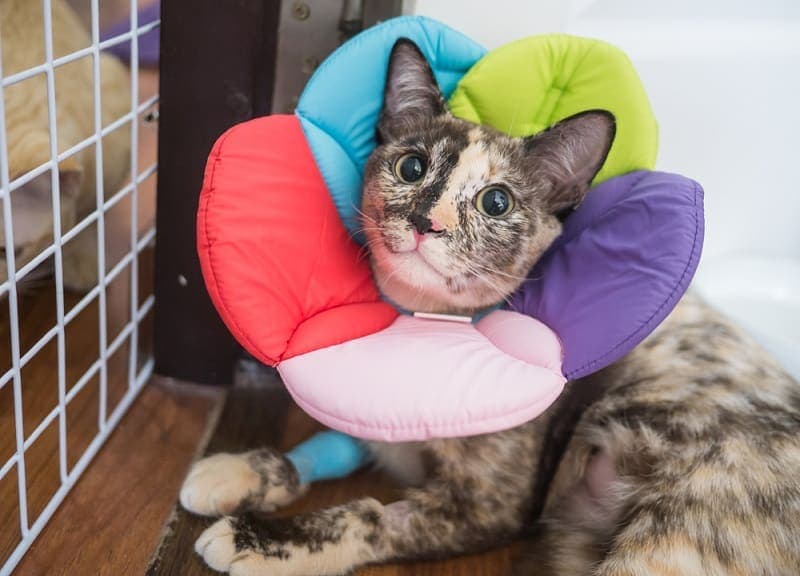
Cats, like dogs, are instinctively inclined to lick their wounds. Indeed, following surgery or an injury, a cat often tries to lick itself. This is because the regrowth of the scabs and hair makes the area itchy and uncomfortable. Unfortunately, and contrary to popular belief, it does not help with healing.
Indeed, a local inflammatory reaction may occur, which will exacerbate the lesion. Therefore, it is crucial to prevent your feline from licking his wound. Fortunately, there are various home remedies to help you and your cat deal with this situation.

Before You Start
If your cat has a fresh wound, a veterinary exam may be needed to ensure the wound is not becoming infected or needs stitches. Yes, small scrapes may need a simple cleaning, but deep cuts may require more thorough cleaning and a few stitches to keep them closed. Besides, deep wounds can cause significant damage to the skin. Therefore, your vet will need to clean, rinse, and thoroughly treat the wound.
Your veterinarian will also be able to help you assess the exact treatment your cat needs for his wound to heal properly. He or she may also decide to administer analgesics and antibiotics, depending on the severity of the lesion.
Now, here are five ways to get a cat to stop licking a wound:

The Top 5 Home Remedies to Stop a Cat from Licking a Wound
1. Wrap Your Cat in An Old Sock

If your kitty has just been spayed, you can use a simple sock to keep her from licking the wound and pulling on her stitches. It may seem like an incongruous idea, but it works wonders on tiny cats!
Simply cut off the end of your largest sock for your cat's head and cut four small openings for the legs. You can also take the sock to your vet before the surgery and let them put your cat in the sock. Alternatively, adapt a baby-grow for your cat.
Please note: Not all vets will agree to do this, so check with yours first.
2. Spray the Wound with an Antiseptic Agent
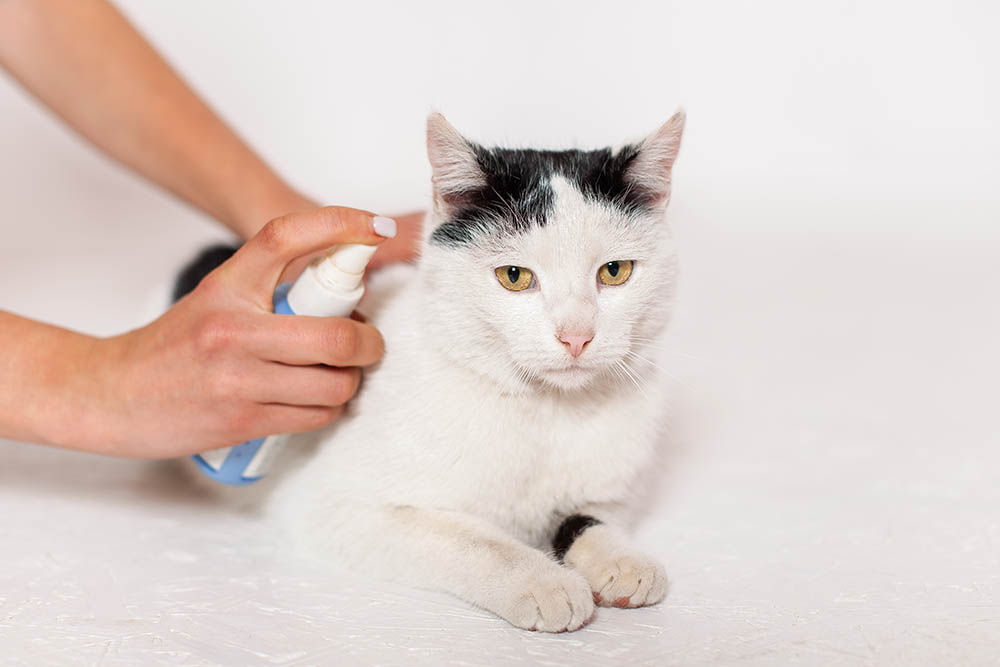
Alternatively, you can also spray an antiseptic and bitter agent directly on the wound. This will prevent your cat from licking while allowing for quick healing. However, do not use these products on a wound around the eyes, and read the instructions carefully before any application.
We also recommend a quick call to your vet to confirm that the product you’ve chosen is safe for your feline’s wound.
3. Dress the Wound
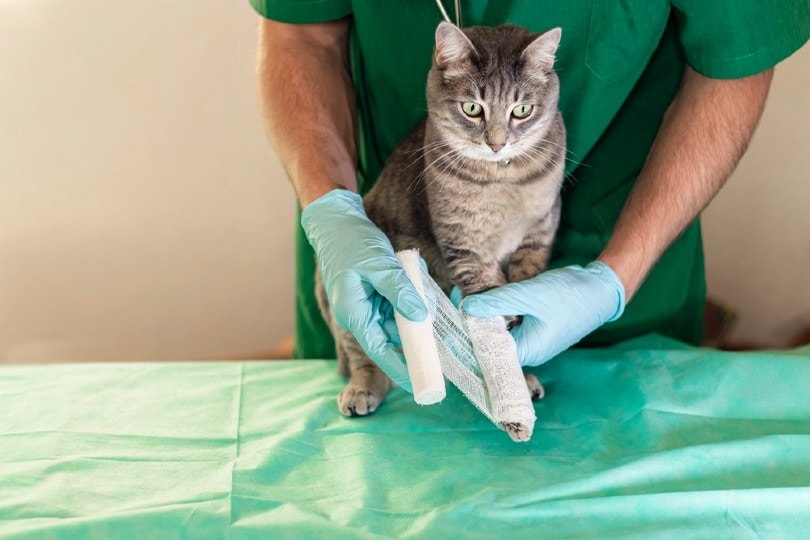
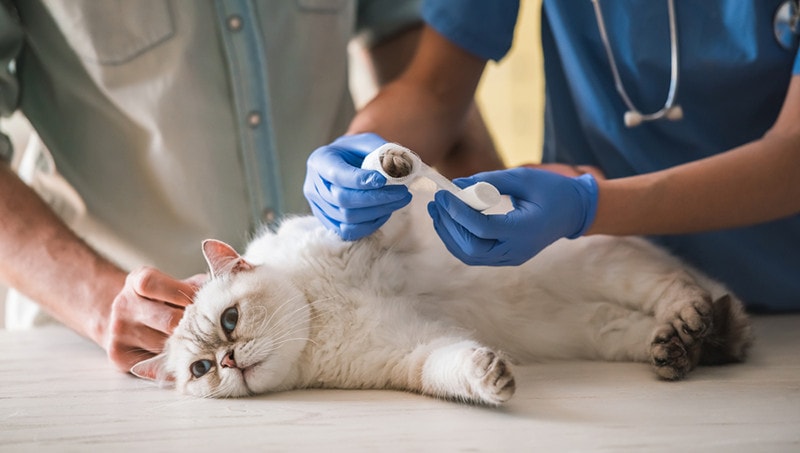
This solution may seem simple, budget-friendly, and effective. You probably already have all the necessary equipment in your first aid kit: scissors, sterile gauze pads, and adhesive tape. However, skill is needed with a wound dressing to ensure you don’t make matters worse rather than better. Make sure to change the dressing daily to keep it clean and dry and check it regularly for comfort and swelling.
Ask your veterinarian for advice on how to properly bandage the wound or if it's in a more problematic area, such as around the ears or eyes.
4. Distract Your Cat
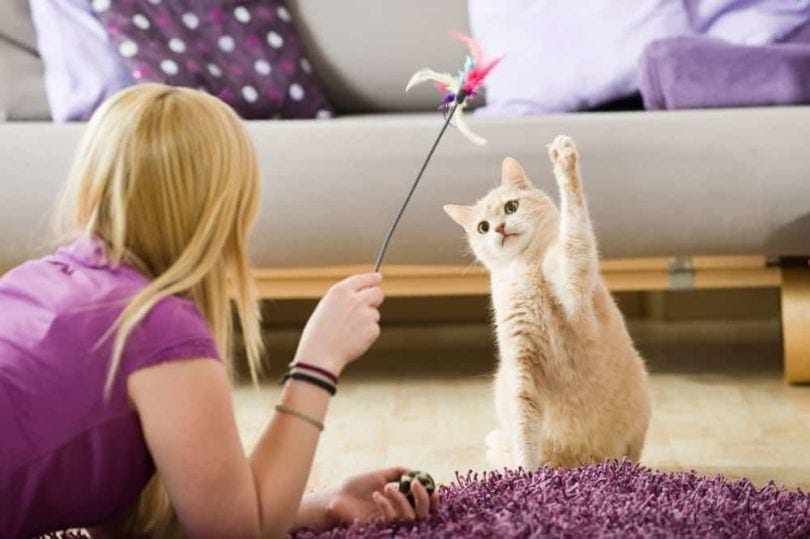
This technique is a little more time-consuming than the others because you will have to be on the lookout for your cat's actions. So, as soon as you see him trying to lick his wound, offer him a distraction, whether it's a treat, a toy, or extra cuddles. Kindly tell him no if he licks his wound, and reward him in return. Your cat should quickly associate that licking himself is less satisfying than his reward!
The downside is that you can’t stay awake 24 hours a day making sure your cat doesn’t lick the wound.

- Premium Materials - Hepper's cardboard scratcher is made with dense, B-flute cardboard, and a metal core. Encased in a 1/2" plywood frame with gloss coating. Stable and beautiful, use after use
- High, Low and Lower - A single cat scratch pad won't keep your cat engaged. 3 unique positions keeps them coming back, and back, and back again. Finally, something to get them away from the couch!
- Activates Muscles - The Hi Lo isn't just a cat nail file to stop the chief cat couch scratcher. The deep cat scratcher wave encourages maximum musculoskeletal activation for a healthier workout
A cat scratcher can provide hours of fun daily for any cat, especially our Hepper Hi-Lo Cat Scratcher. It's a cardboard scratcher built to last and amuse (all while looking stylish in any room). It can be adjusted to three different positions – high, low, and lower – and is guaranteed to keep your feline companion engaged and entertained, away from getting into
mischief or scratching things they shouldn't. You can click here to learn more about this piece of modern cat furniture and kitty play haven.
5. Make a Homemade Collar
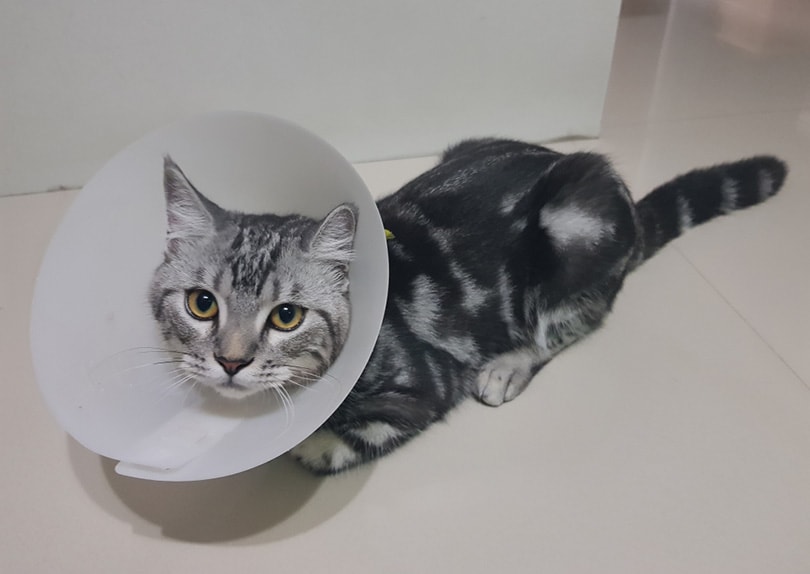
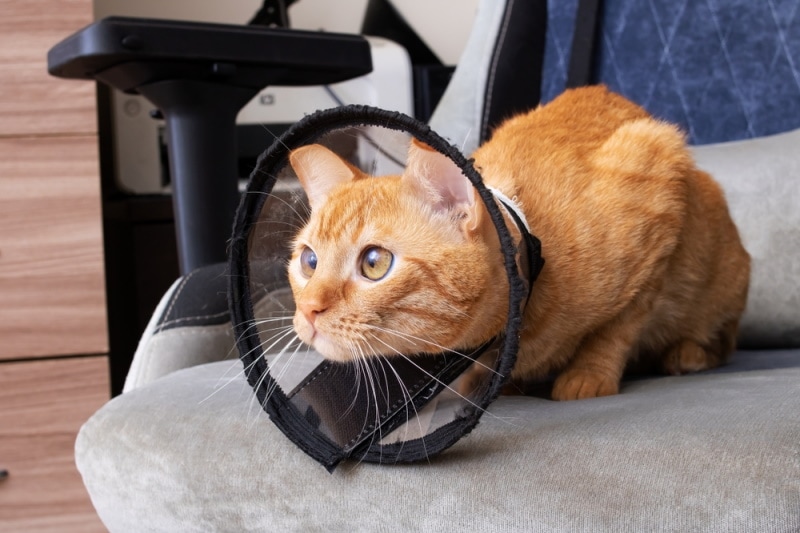
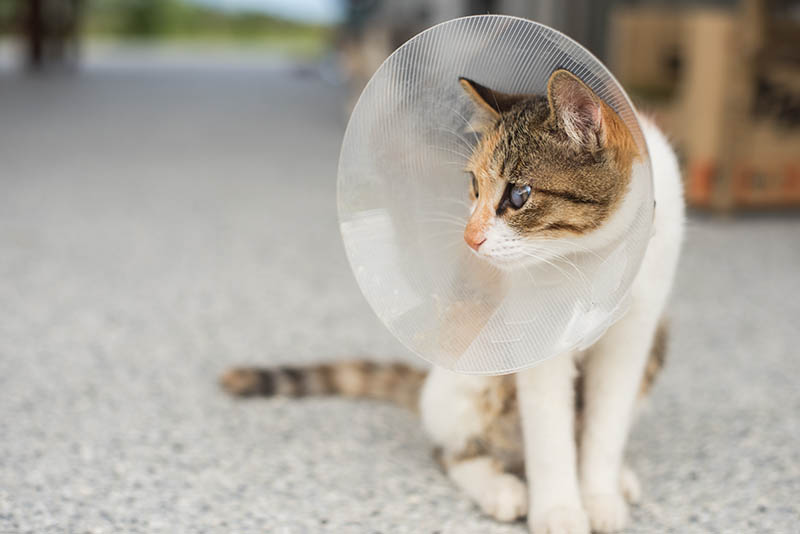
If you can’t get into the pet shop or vet and you need a homemade option there are plenty of inventive ways to make a homemade cone or neck collar. Make sure that you strike a balance between the cat not being able to get the cone straight off and being able to breathe freely.
Usually, 2 fingers between the material and your cat's neck are sufficient.

What Does Cat Saliva Contain?
Cat saliva does not contain any miraculous properties that help in the healing of wounds. There are many bacteria in cat's mouths, especially those with dental disease and these can be inoculated into a wound by licking. However, saliva does contain certain antimicrobial compounds that can relieve pain and prevent the proliferation of bacteria to a degree, as suggested by this study published in the prestigious journal The Lancet.
Continued licking of a wound will cause more harm than good and this is especially true for surgical wounds.
Conclusion
A cat licking its wound is not necessarily bad in itself. A cat's saliva contains several antibacterial compounds that may help to temporarily decrease pain. However, kitty saliva also contains a significant amount of bacteria that can get deeper into the wound and cause infection. They also have very rough tongues and the mechanical abrasion causes further damage to the wound.
Thus, excessive licking can only aggravate the wound. That's why it's best to do everything possible to prevent your cat from licking his wound and to call a veterinarian if home treatments fail.
See also:
Featured Image Credit: Chomphuphucar, Shutterstock
Get Hepper In Your Inbox


Pet care tips from our vets and experts, straight to your inbox.
You may opt-out at any time. View our Privacy Policy for more information.
Genevieve, a biologist and science writer, who harbors a profound affection for capuchin monkeys, pumas, and kangaroos. This passion has led her to travel extensively, volunteering and working at wildlife rehabilitation centers in Bolivia, Guatemala, Canada, and Australia. Now residing in Argentina as a Canadian expat, Genevieve enjoys the view of horses and cows greeting her from the vast plains outside her home office window. She proudly cares for three rescued dogs—Lemmy, Nala, and Pochi—and a playful kitten named Furiosa. Sharing her extensive knowledge and love for animals brings her immense joy and fulfillment.
Join the conversation
Ask a question, share your story, or send private feedback.