Hepper is reader-supported. When you buy via links on our site, we may earn an affiliate commission at no cost to you. Learn more.
How to Teach a Dog “No” in 5 Simple Steps
In this article
Teaching your dog “no” may be one of the less exciting commands, but it’s one of the most important. Saying no is not about control but about keeping your dog safe.
For example, having a strong “no” command can prevent your dog from eating something that can be dangerous, running out into a busy street, or approaching a strange dog or person. It’s also helpful for curbing behavior that you don’t want.
Here’s how you can teach your dog “no” in just a few steps.
Supplies Needed:

How to Teach a Dog “No” in 5 Simple Steps
1. Consider How You’ll Say “No”

We understand “no” as humans, but some dog trainers find it too negative to simply yell “no” at dogs all the time. Dogs learn through rewards and reinforcement—rewarding good behavior and ignoring bad behavior.
So, instead of saying “no” aloud, use a signal. For example, you can say “leave” to get your dog to stop doing whatever it’s doing and redirect its attention to something else.
2. Start with Basic Commands
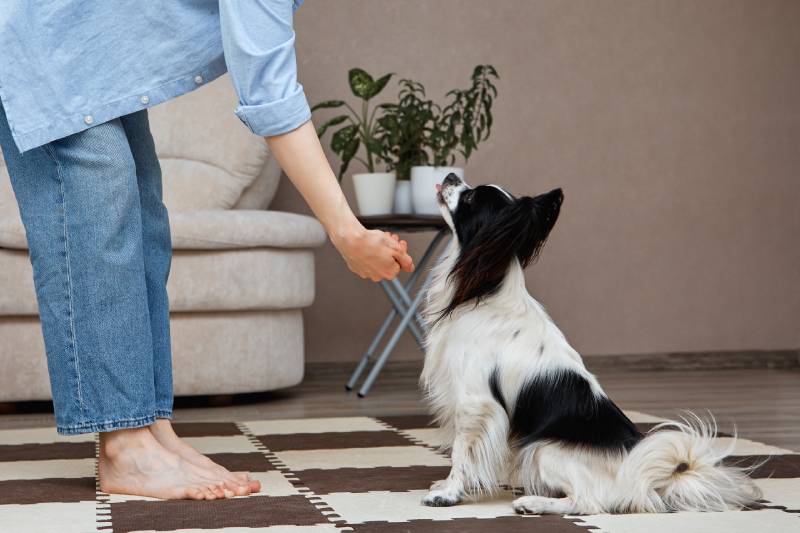
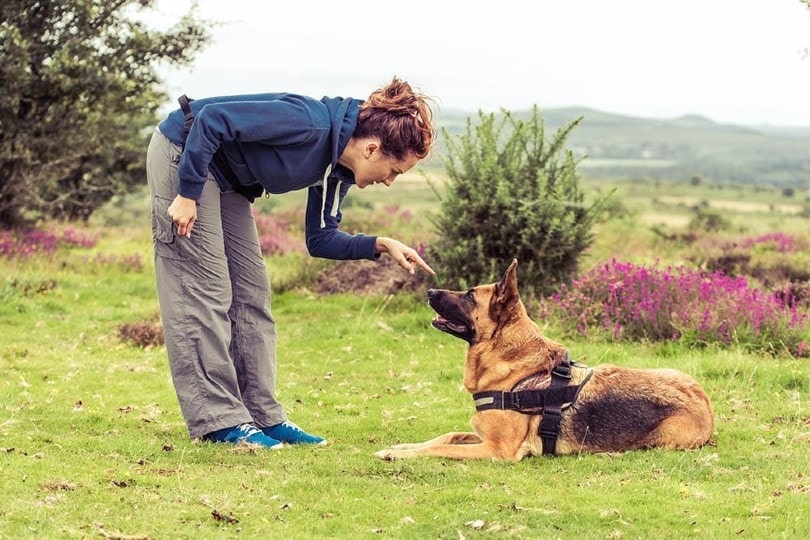
Get your dog’s attention by going through basic commands like “sit” or “lie down.” Think of it as a warmup to get your dog mentally and physically prepared for learning.
If you need help with training your dog, we suggest speaking with a vet online.
3. Create a Diversion

You have to have something interesting to your dog to distract it and entice it to do something undesirable. You could try putting some food on the floor that your dog will want to eat.
4. Show Your Dog the Food
Lead your dog to the food (or your chosen distraction). As your dog moves toward it, use your “leave” command. When your dog turns toward you, offer a treat for redirecting its attention.
5. Practice
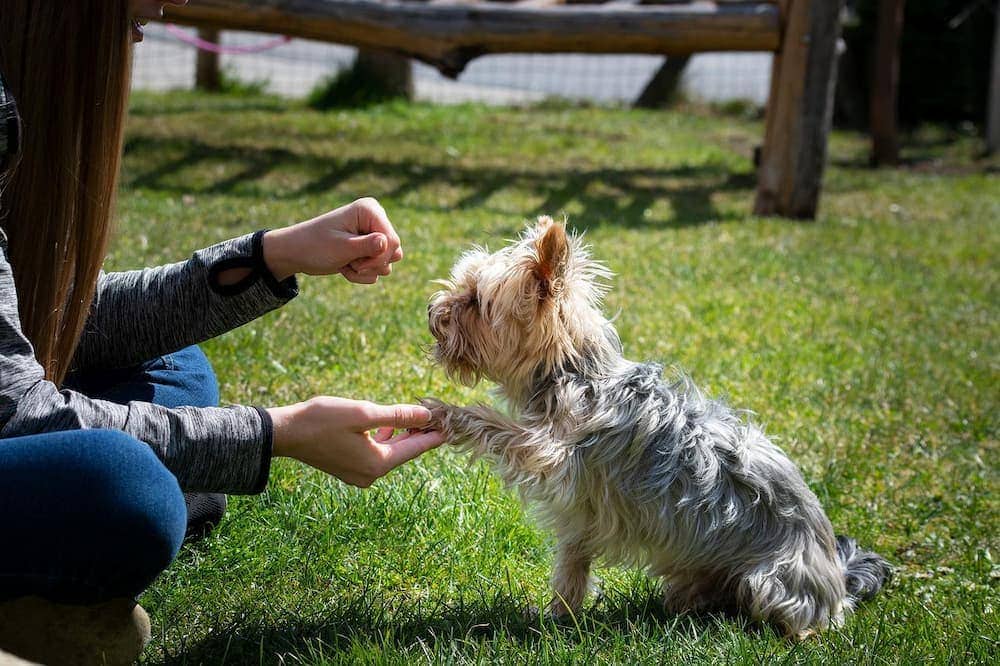
The “leave” command can be challenging since your dog will likely want to enjoy other activities like eating food scraps or getting into mischief. You need to practice your training consistently until it becomes rote.
Once you have the command down, you can up the ante with more and more distractions and different locations that will test your dog’s willpower.
Why Is It Important to Teach My Dog “No?”
Dogs don’t always know what’s good or bad for them. Here are some scenarios in which having a strong “leave” command is beneficial:
Getting your dog to focus on you instead of strange people or dogs out in public. Otherwise, this could create conflict and a potentially dangerous scenario.
Teaching dogs to leave hazardous things alone, such as toxic foods that have fallen on the kitchen floor.
Assert your authority to prevent your dog from aberrant behaviors like resource guarding or food guarding.

Conclusion
Teaching your dog “no” or “leave it” is one of the more difficult tasks, but it’s no less important than “sit” or “stay.” This skill not only keeps your dog mannerly, but it can prevent a dangerous situation from arising in your home or on a walk. Practice makes perfect, so test your dog’s skills with this command in different environments to keep the skills sharp!
See also:
Sources
Featured Image Credit: Motortion Films, Shutterstock
Get Hepper In Your Inbox


Pet care tips from our vets and experts, straight to your inbox.
You may opt-out at any time. View our Privacy Policy for more information.

Nicole is a lover of animals of all sizes but is especially fascinated with the feline variety. She’s the proud mom of Baby, a Burmese, and works every day so he can relax in the sunshine or by the fire. She’s always had a cat in her home and has spent countless days with others, observing behaviors and softening up even the grouchiest of the lot. Nicole wants to share her kitty expertise with you so you and your cat can live happy, healthy, and care-free.
Join the conversation
Ask a question, share your story, or send private feedback.