Hepper is reader-supported. When you buy via links on our site, we may earn an affiliate commission at no cost to you. Learn more.
How to Teach a Dog to Shake in 8 Simple Steps


In this article
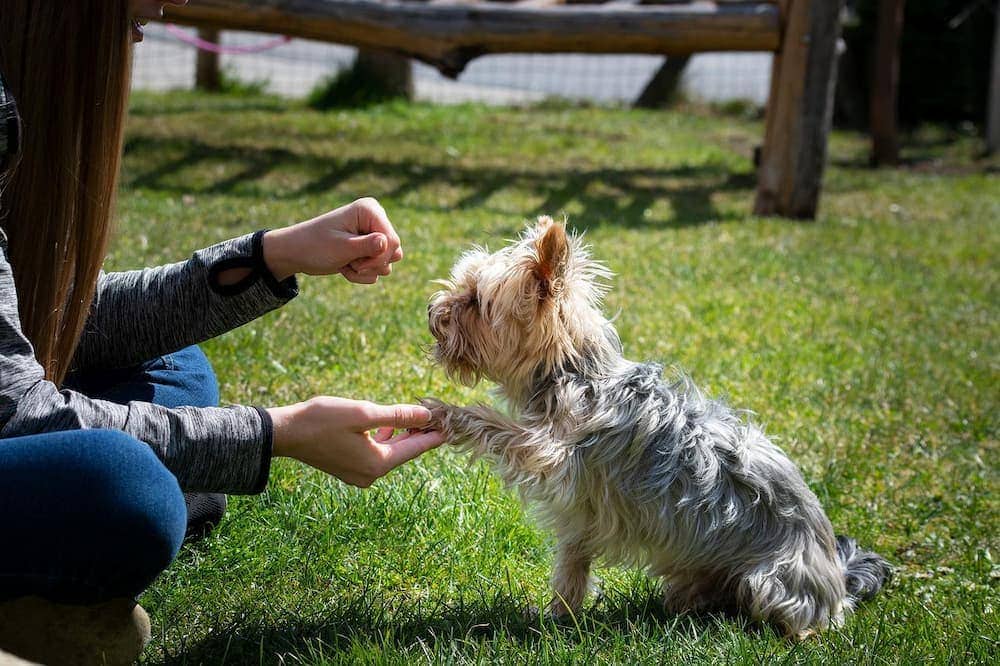
Typically, shake is an easy enough trick for most dogs to learn. Plus, it doesn’t require very many steps or previous commands. Therefore, it is often a great trick to teach your dog early—after you’ve covered the more practical commands.
However, shake isn’t the most practical of commands. You likely won’t ever need your dog to shake in the same way that you may need them to sit or stay. Still, it can be an interesting trick that most dogs can master after only a few sessions.
Here are a few simple steps to take when teaching your dog to shake:

The 8 Simple Steps to Teach a Dog to Shake
1. Teach Your Dog to Sit
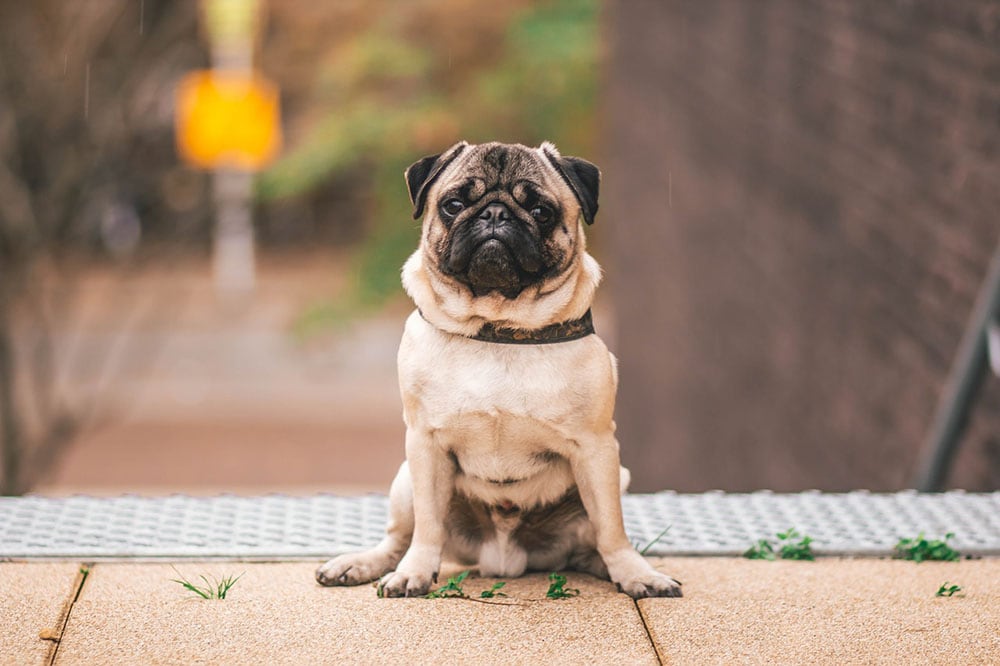
Before you teach your dog to shake, you may want to teach them to sit. While this isn’t absolutely required, it is much easier for your dog to shake if they are already sitting first. However, this isn’t necessarily required.
Teaching your dog to sit is often easy and on most dog owners’ to-do lists, anyway. If you plan on teaching your dog to sit, you may want to teach them to shake after they sit.
2. Show Them the Treat
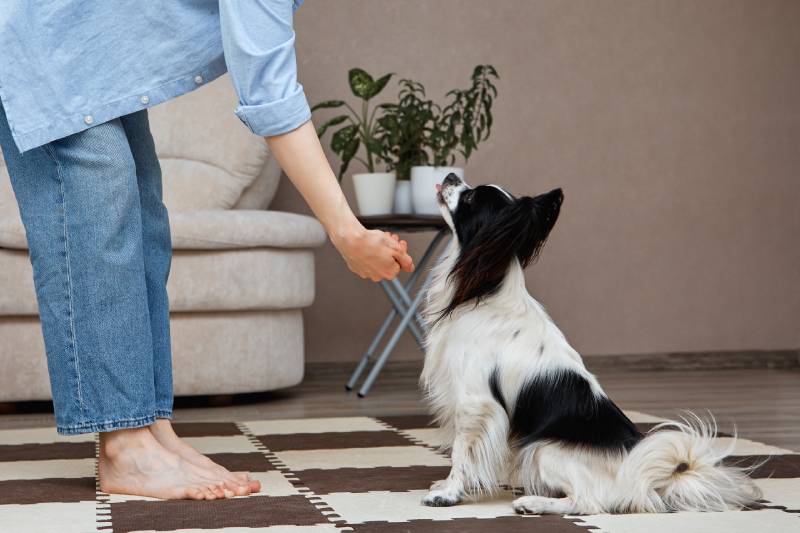
Now, find a treat that your dog will like and show it to them. You may want to give them one of the treats first to get their attention and get them to concentrate on the training session.
3. Wait for them to Touch Your Hand
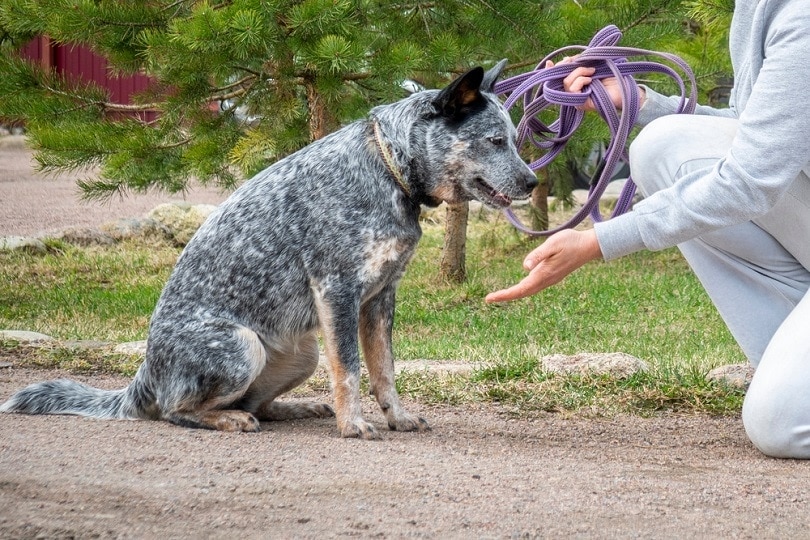
After the dog knows you have a treat, close your hand into a fist with the treat inside it. Touch your dog’s paw with your hand and give him the treat. Repeat this step several times. Next, hold your hand slightly away from your dog’s paw. As soon as your dog moves its paw to touch your hand, give them the treat. In the beginning, it is fine to reinforce the intention, so give the treat at the slightest movement of the dog’s paw. Eventually, you want them to paw your hand for the treat, but aim to do this in baby steps.
Once the dog understands that it needs to move its paw, you can raise your criteria to reinforce only physical contact of its paw with your hand. Repeat this step as many times as it takes for your dog to begin doing it automatically. Once your dog knows it has to touch your hand, you can begin slowly increasing the distance between its paw and your hand. At this point, the dog will naturally make an effort to reach your hand.
4. Increase the Challenge
As your dog figures out the trick, slowly make it harder. For instance, after they start touching your hand consistently, make them rest their paw there for a few minutes before rewarding them. You can start with only a short delay.
However, you want to slowly work the delay up so that their paw sits on your hand for a while. This is how you’ll get your dog to “shake” without quickly removing its paw. Some dogs take to this very easily and figure out the delay after only a session, while others take much longer.
Reward your dog a lot and well. You want to slowly work up the amount of delay between the paw touch and the treat, but you don’t want to set your dog up to fail, either.
5. Implement the Shake Command
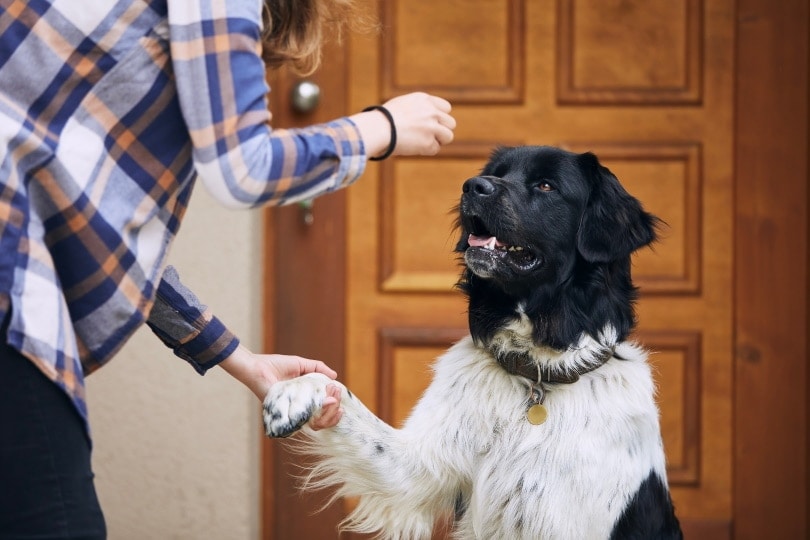
Once your dog starts holding their paw on your hand for at least a moment or two, you can start telling them “shake” when they touch your hand. This step helps them associate the word with the action. Don’t introduce the word too early, though. You want your dog to know that “shake” means leaving their paw in your hand—not just tapping you with it.
Furthermore, you slowly want to implement a slow shaking motion, not a rough hit with their paw. Work on making the shake command what you want it to be while also associating it with the verbal command.
6. Switch Hands
Next, you’ll want to hold your treat in your other hand and treat your dog to shake at the empty hand. Once you teach the verbal command, this typically isn’t too difficult. It works best when you hide the treat in your other hand and don’t necessarily show your dog where the treat is. Knowing where the treat is may confuse them.
After they start shaking the correct hand, open it. Some dogs find this step confusing, though they should be able to figure it out since you’ve introduced the verbal command.
7. Eliminate the Treat
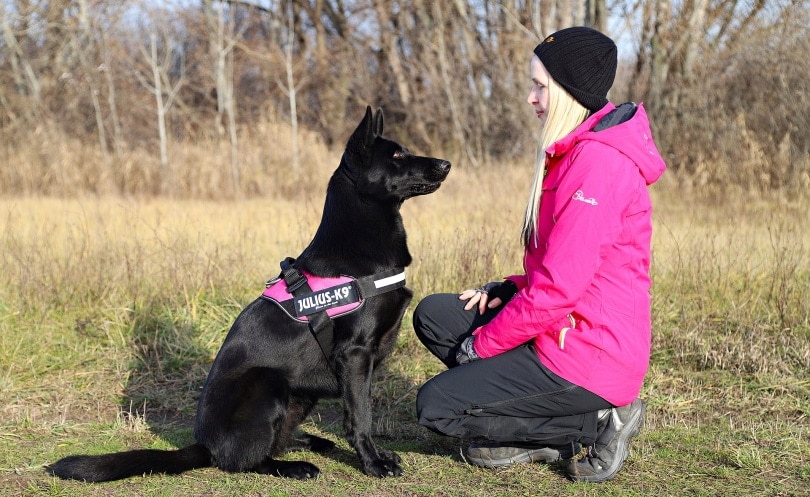
You don’t want your dog expecting a treat every time they do the command. Therefore, you’ll want to slowly wean your dog off of the treats. Eventually, you want them to expect no treats at all. At first, give them a treat after every other command. Then, elongate the time to every three commands.
Eventually, you want your dog to perform the trick without getting any treats. Be sure to offer plenty of praise between commands, as well. No treats doesn’t necessarily mean no praise. However, sporadically giving a treat for this behavior will ensure it remains reinforcing for the dog to perform.
8. Practice!
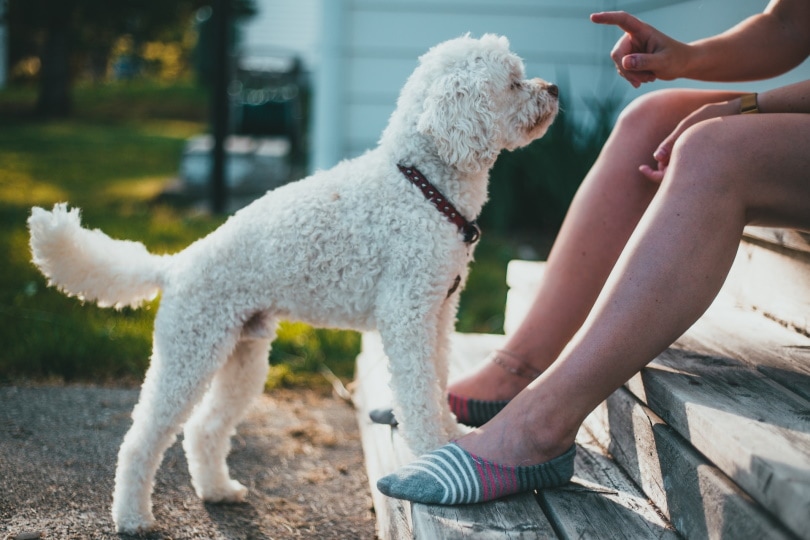
At this point, your dog will likely be extremely proficient in this command. However, you should still ask them to shake regularly to ensure that they stay on their game. Otherwise, your dog may become rusty.
Luckily, this isn’t too much of a problem for most dogs. Simply be sure that you work practicing into your daily routine so that your dog stays practiced.

What Age Should You Teach a Dog to Shake?
Typically, we recommend teaching your dog to shake after they’ve learned to sit. Sitting isn’t required before shaking, but it is preferable. Teaching your dog to shake from a sitting position is typically easier.
With that said, teaching your dog to sit should be one of the first things you do. A puppy that is old enough to go home with a new owner is old enough to start training at home. For this reason, you should be able to start teaching your dog to shake pretty early. Very young puppies can learn this trick.

Conclusion
Teaching a dog to shake isn’t terribly difficult. With only a few steps, you can easily teach your dog to shake. Many dogs will paw at hands for treats, anyway. You can use this behavior to teach them to shake pretty easily. Thankfully, this innate behavior makes this process pretty easy.
Shake isn’t necessarily a needed command. Your dog could live well and never learn this command. However, this trick is easy to treat and can be useful in some situations, such as trimming your dog’s nails. Either way, this method is straightforward enough to make this command one of the first that you teach your dogs.
See also:
Sources
Featured Image Credit: Pezibear, Pixabay
Get Hepper In Your Inbox


Pet care tips from our vets and experts, straight to your inbox.
You may opt-out at any time. View our Privacy Policy for more information.
Kristin is passionate about helping pet parents create a fulfilling life with their pets by informing them on the latest scientific research and helping them choose the best products for their pets. She currently resides in Tennessee with four dogs, three cats, two fish, and a lizard, though she has dreams of owning chickens one-day!
Join the conversation
Ask a question, share your story, or send private feedback.