Hepper is reader-supported. When you buy via links on our site, we may earn an affiliate commission at no cost to you. Learn more.
How to Use Cat Nail Clippers: 8 Vet-Approved Tips & Tricks


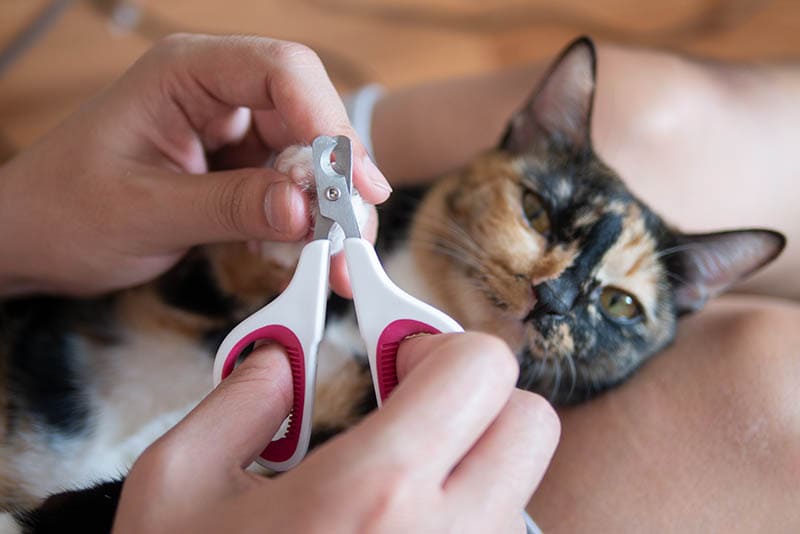
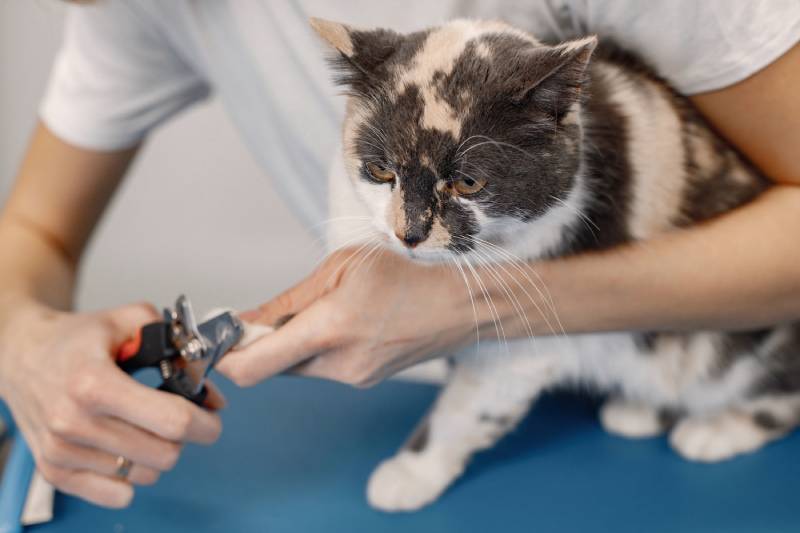
Although nail clippers may look like a simple piece of grooming apparatus, actually using them on a cat—especially when said cat is uncooperative—is something many cat parents dread. Nevertheless, there are some things to bear in mind and steps to take that could make the procedure less of an ordeal for you and your cat.
Read on for eight vet-approved tips and tricks.

Nail Clipping: What You’ll Need
We'll go into more detail on these items and what they're used for below, but for now, here is a checklist of everything you’ll need:
- Cat nail clippers
- Styptic powder, flour, or cornstarch
- A towel (optional)
- Cat treats
- A human assistant (optional)
Choosing the Clippers
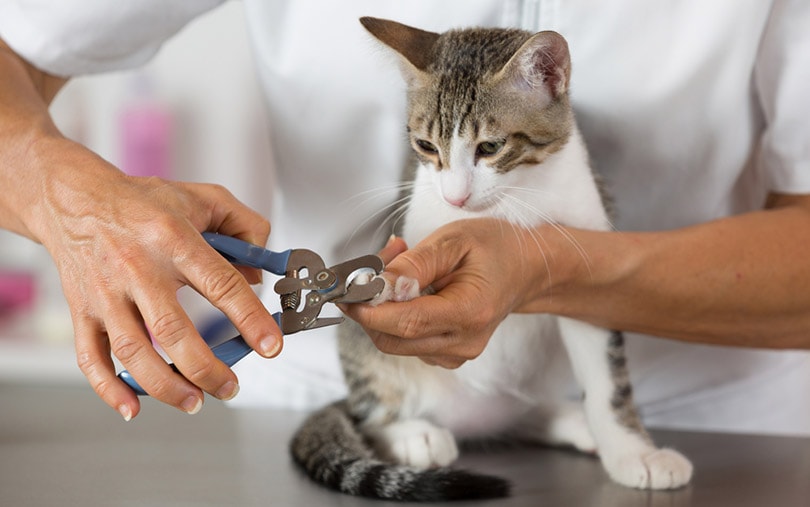
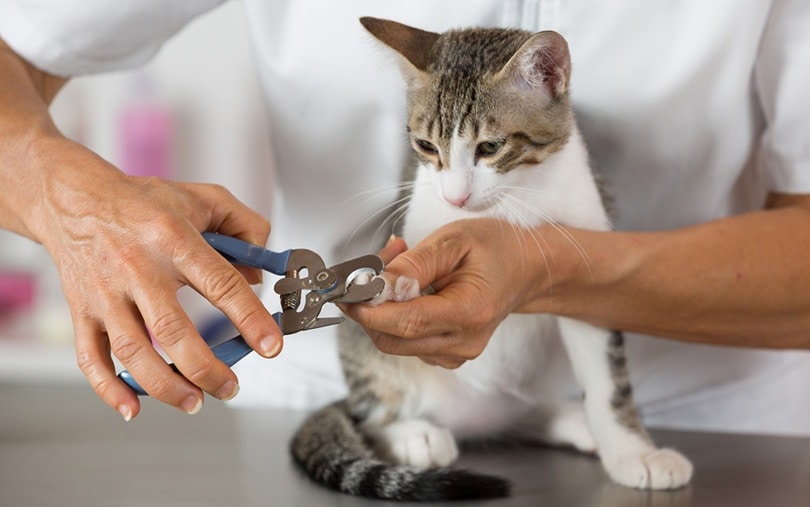
One way to make nail trimming a bit less stressful is to pick the kind of clippers that you feel most comfortable using. Some prefer plier-type clippers, which are good for thick nails, while others opt for scissor-style clippers.
Scissor-style clippers may have a more familiar feel, so they are a good choice for beginners. Other clipper types include guillotine-style clippers and nail grinders, but these are not as easy to use as plier-style and scissor-style clippers.
The most important thing is to make sure the clippers are sharp, as dull clippers can cause the nail to split and can be painful for your cat.
Trimming your cat's nails isn't the easiest task in the world, but a well-designed set of clippers can make all the difference. Our Hepper Cat Nail Clipper Set features two sizes of clippers with easy-to-clean stainless steel blades and a built-in safety guard to prevent accidental cuts. These clippers are comfortable to hold, nicely designed to work at tricky angles, and even include a bonus hidden nail file and a convenient pouch!

- Complete Set - These cat nail clippers include both a large and small pair, meaning it works well as a kitten claw trimmer when they're a small kitty, and then before you know it, as a cat nail cutter
- Razor Sharp Stainless Steel - The most comfortable cat nail clippers for indoor cats provide a fast and clean cut. And for rough residuals remaining, the free cat nail file included can smooth it all.
- Safety First - With a safety nail guard and locking spring, you can make sure every grooming cut is stress free for you, and pain free for your purry pal
The 8 Tips & Tricks on How to Use Cat Nail Clippers
1. Let the Cat Get Used to the Clippers
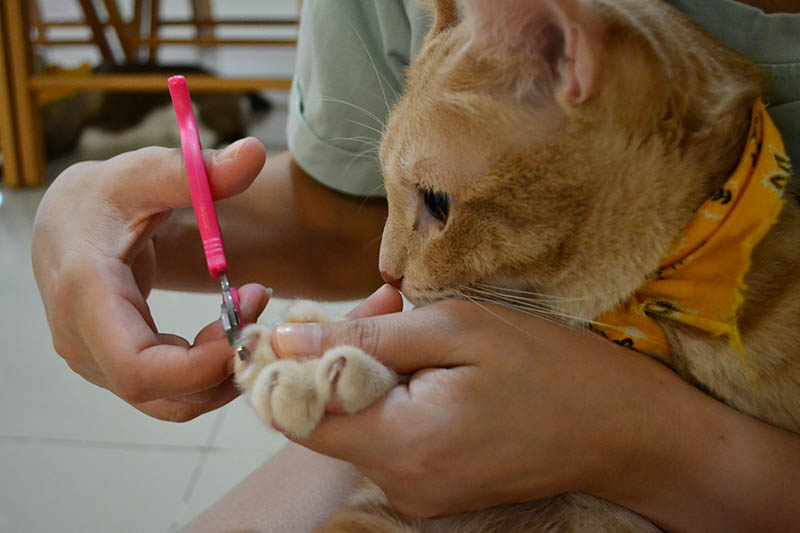
If your cat has never encountered nail clippers before, they will likely be anxious if you put them anywhere near their paws. Give your cat some time to become accustomed to the clipper’s presence by letting them sniff and investigate. You can start doing this in advance of the actual clipping process to help your cat feel more at ease. You can even let your cat get used to the sound of the clipper by cutting dry pieces of spaghetti. If your cat tolerates the sound, reward them with a treat.
2. Choose the Best Time & Place
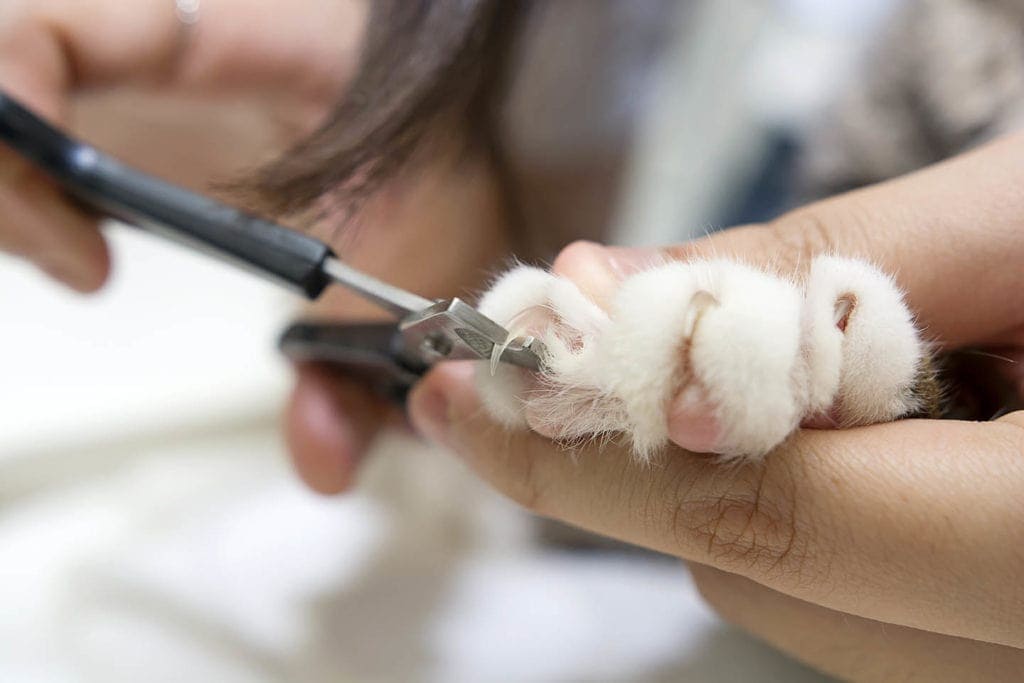
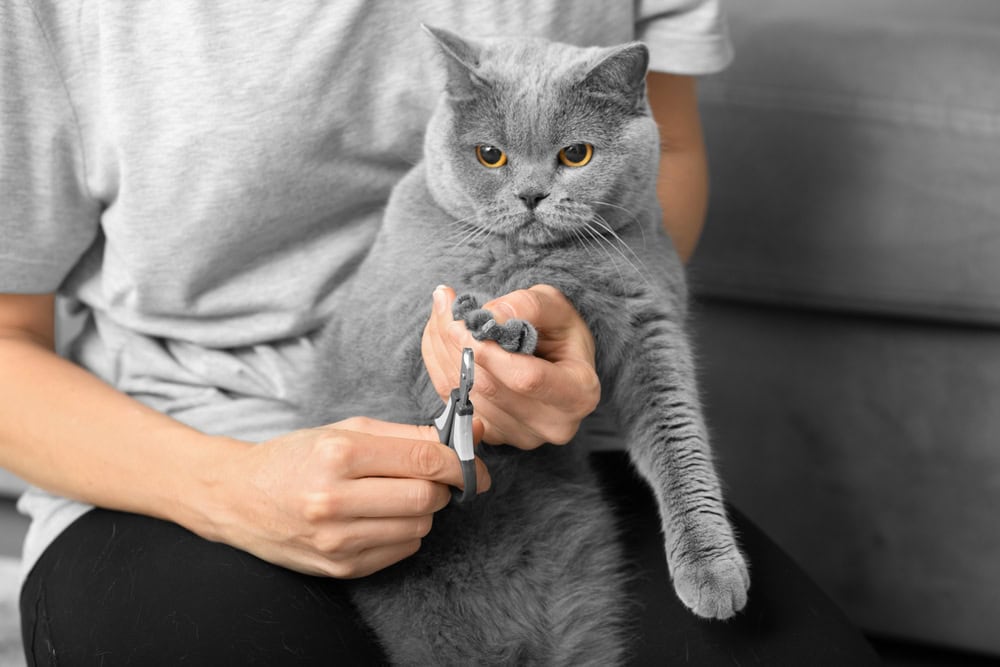
Regarding nail clipping, the timing and location can make a big difference. Pick a time when your cat is relaxed, and position them in a way that is non-threatening to them and comfortable for you.
If they're lying down on the couch, for example, you could try simply leaving them in that position while you trim. Otherwise, you could try laying them on your lap or your chest while you’re sitting back.
3. Wrap Your Cat in a Towel (Optional)
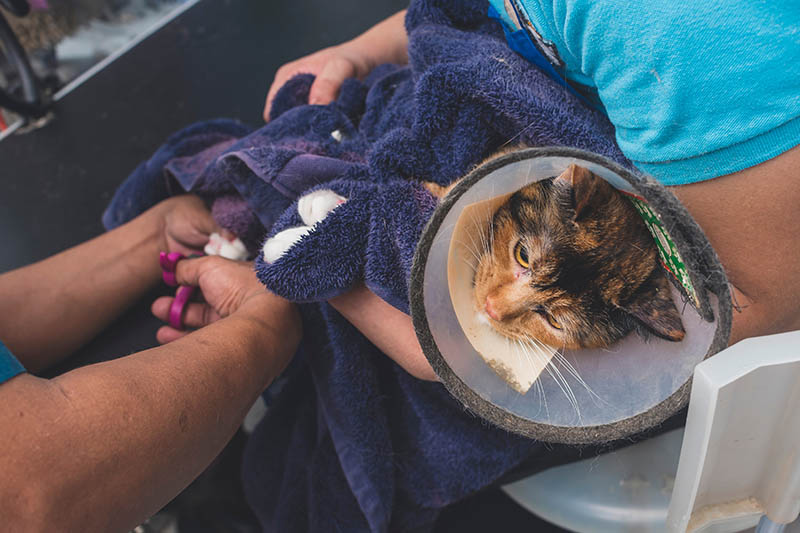
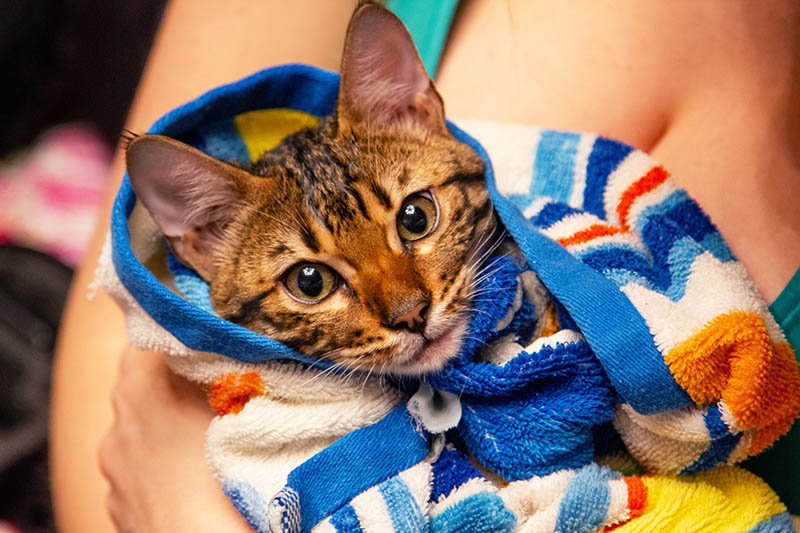
Okay, so this one is very subjective because every cat reacts differently to it. Wrapping a cat in a towel like a burrito (or in this case, “furrito”) with one paw out at a time may be helpful for those with cats that squirm and try to escape.
Someone else can securely but gently hold the “furrito” while you do the trimming to make things easier. You can also try covering the cat’s eyes with the towel to prevent them from freaking out at the sight of the clipper.
You know your cat best, so the decision as to whether or not to wrap them is up to you. It can help some cats feel more secure, but some cats get seriously stressed out at being restrained. Another option is to have someone else stroke and reassure your cat while you clip.
4. Gently Squeeze the Paw Pad
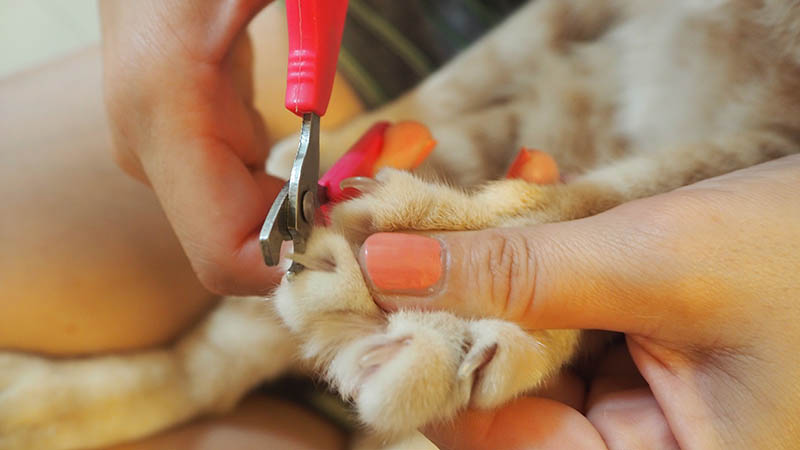
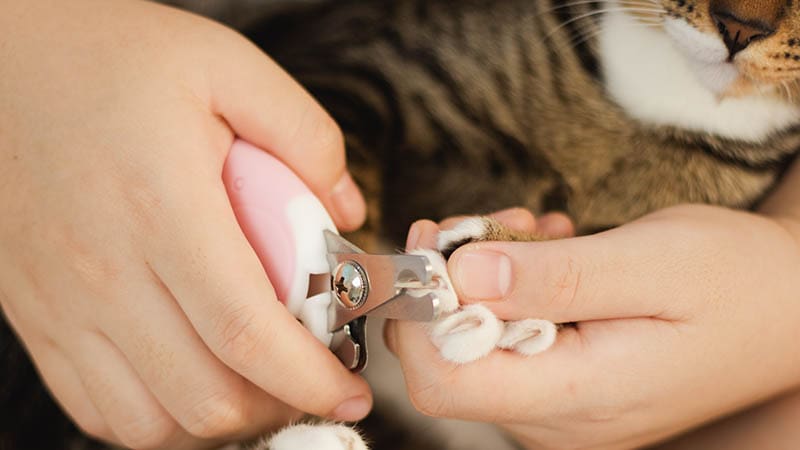
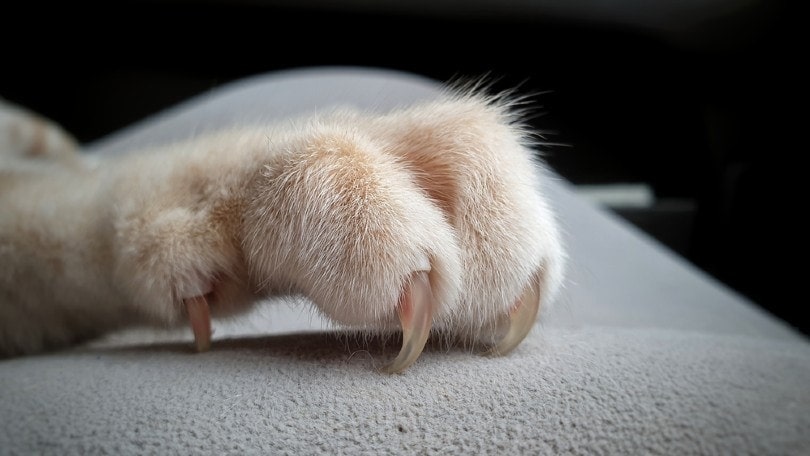
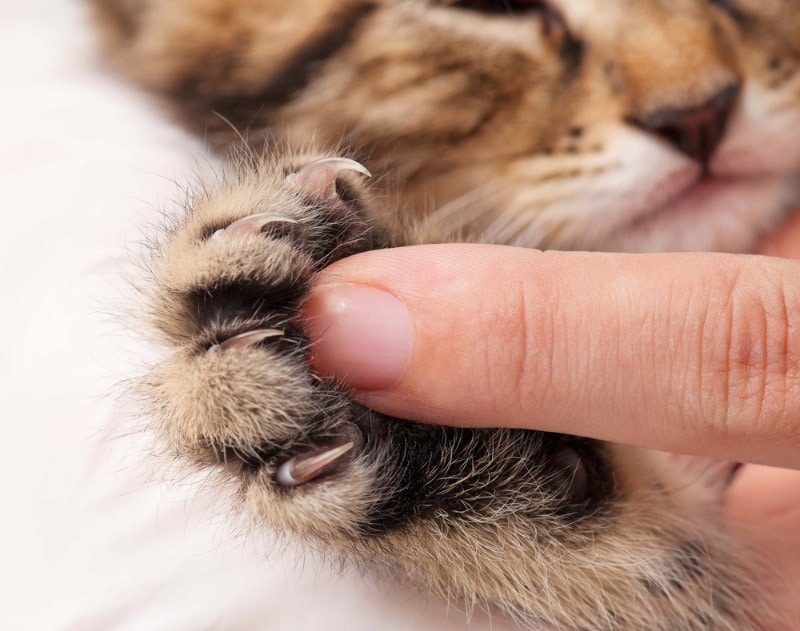
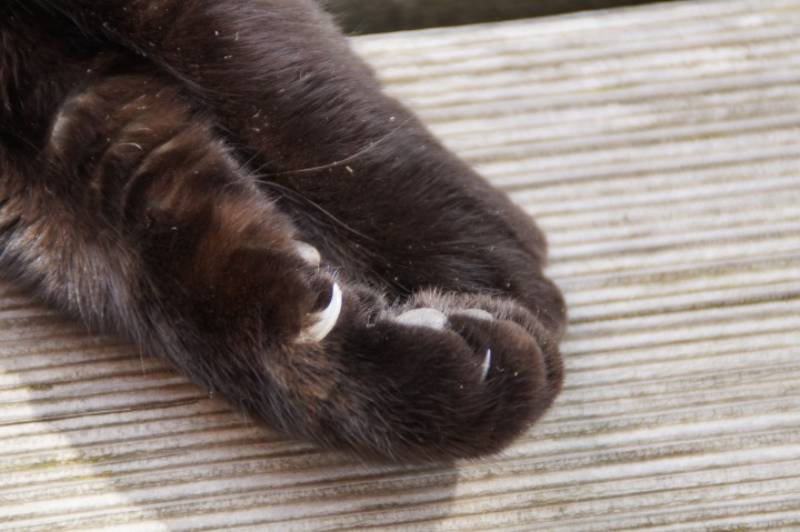
Hold a paw in your non-dominant hand and gently squeeze the paw pad with your forefinger and thumb. The nail will extend, and you will be able to see where the quick is. The quick is the pink part of the nail (or black, if your cat has dark nails), and you should avoid cutting this as it will be painful for your cat and cause bleeding.
Only cut the clear/white part at the end of the nail, and don’t forget to clear any hair out of the way if your cat is longhaired. You can practice several days or even weeks in advance by gently squeezing the paw pad now and then while your cat is relaxed without actually trimming the nails to get your cat used to the feeling.
5. Trim at an Angle
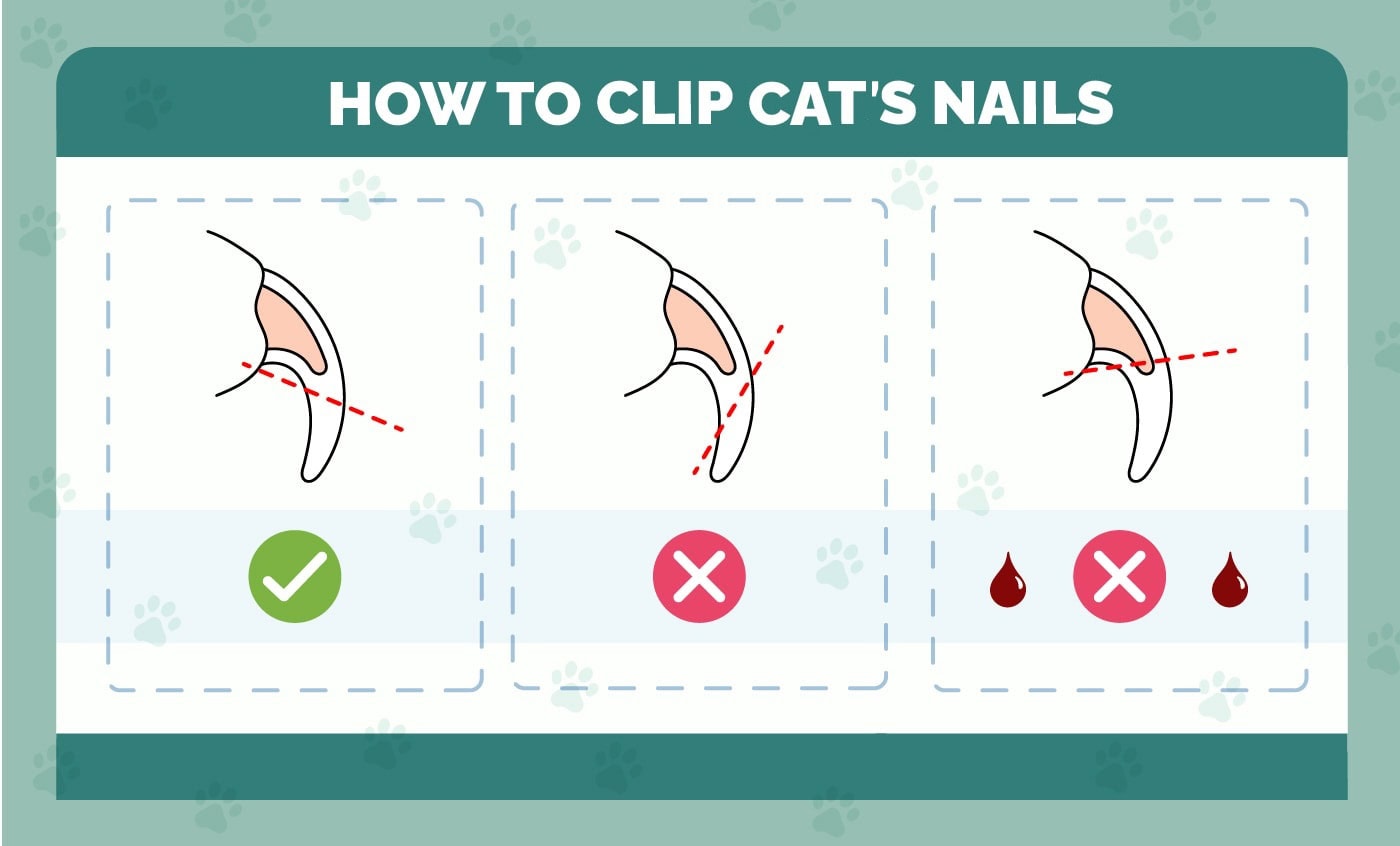
Staying well away from the quick (the pink part of the nail), trim the tip of the nail at a 45-degree angle. This angle is more comfortable for your cat in terms of how the nail touches the ground. Use firm pressure when you trim—going at it too slowly might damage the nail and stress your cat out. Give your cat a treat and some praise just after you’ve trimmed the first nail.
If your cat gets very stressed out when you trim for the first time, try doing another one later, perhaps when they are in a relaxed state again. You don’t want to create negative associations by forcing them into a situation that’s new and scary for them. It may take a while for all the nails to be done, but that’s okay!
6. Take Your Time
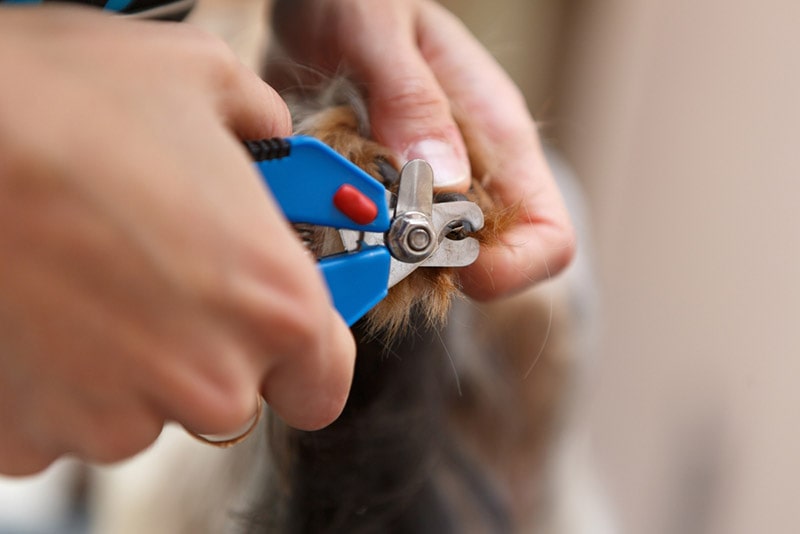
Start small by trimming off a little bit at a time. This will help you feel more confident as you get a clearer picture of where exactly the quick is and how to avoid cutting it. Again, it doesn’t matter if it takes you a while to finish all the nails—the more you practice, the easier the process should become.
Moreover, even cats that tolerate nail trimming can get fed up after you’ve trimmed just a couple of nails. If they walk away, let them go and finish the job later.
7. Use Styptic Powder for Accidents
If you do accidentally hit the quick, you can put some styptic powder on the tip of the nail while applying just a little pressure to the area. This helps stop bleeding and offers pain relief. If you don’t have any styptic powder, you can use flour or cornstarch as an alternative, but these don’t offer pain relief, so styptic powder is recommended.
It is normal to feel bad if you do accidentally hit the quick, but go easy on yourself—it happens, especially if the cat is less than cooperative. If it does happen, it may be best to wait a few days before trying again.
8. Reward Your Cat
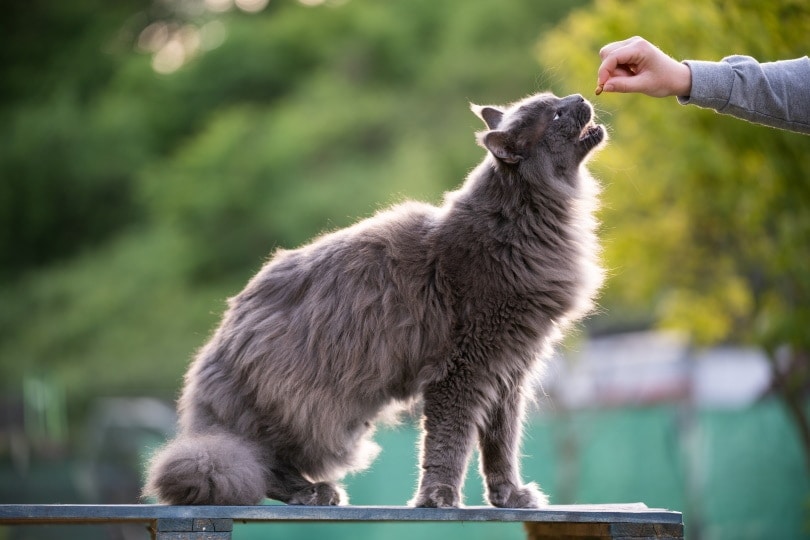
You’ll want to make nail trimming as positive an experience as possible for your cat, especially while they are learning. Make sure you reinforce your cat to remain calm and allow you to cut their nails. If you can't get to all their nails in one go, that’s okay. It is better to have a short positive session than a long negative one. Remember, if the cat is calm, make a big fuss over them by offering them their favorite treats, plenty of praise, a play session, or whatever it is your cat enjoys most.
Extra Tips
Throughout the nail-trimming process, it's best if you remain as calm and patient as you possibly can. Panicking or getting frustrated will make the experience more stressful for both you and your cat. Remember that the clipper is a strange new tool for your cat—create positive associations and try to approach the process with confidence, as this will be more reassuring for your cat.
Conclusion
If you’re gearing up for your first nail-trimming session, we have all been there and know how stressful it can be. However, if you approach things with a calm demeanor, lots of patience, and avoid being too hard on yourself, with time, things will get easier. If you’re experiencing too many challenges getting your cat to accept nail trimming, you might want to reach out to a professional groomer.
Sources
Featured Image Credit: LukyToky, Shutterstock
Get Hepper In Your Inbox


Pet care tips from our vets and experts, straight to your inbox.
You may opt-out at any time. View our Privacy Policy for more information.
Kit Copson is a freelance writer and lifelong animal lover with a strong interest in animal care. She has parented various furry beings over the years and is currently a proud cat mom of two—one skittish but adorable Domestic Shorthair and very chilled (unless hungry) Siamese and a —and dog mom of one—an adopted Bichon Poodle cross. When not writing about or spending time with pets, Kit can be found doodling in her sketchpad, reading, or more often than not, drinking tea.
Join the conversation
Ask a question, share your story, or send private feedback.