Hepper blog

Search our database of over 9,984 posts with up-to-date information from our experts and veterinarians.

Hepper is reader-supported. When you buy via links on our site, we may earn an affiliate commission at no cost to you. Learn more.

Is Food Coloring Safe for Dogs? Vet Approved Safety Facts

By Nicole Cosgrove · Reviewed & fact-checked by Dr. Lorna WhittemoreVet Approved
Dr. Lorna Whittemore
Reviewed & Fact-Checked byDr. Lorna WhittemoreVeterinarian
Lorna is a Scottish vet who has lived, studied, and worked on three continents and has a love of travel. With 20 years of experience in small animal medicine andsurgery, both in the charity and private sector. Gaining a further qualification in feline medicine has given her a continued sense of amazement at the fabulous animals. Currently living in Cape Town, South Africa, with her family and expanding number of pets allows her to spend time in and around nature where she is at her happiest. With a love for learning, Lorna is enjoying researching, editing, and fact-checking for Hepper veterinary editorial team and truly feels that she has the best job in the world!View authorThe information is current and up-to-date in accordance with the latest veterinarian research. Read about our vets
Share
Ask us a question in the comments
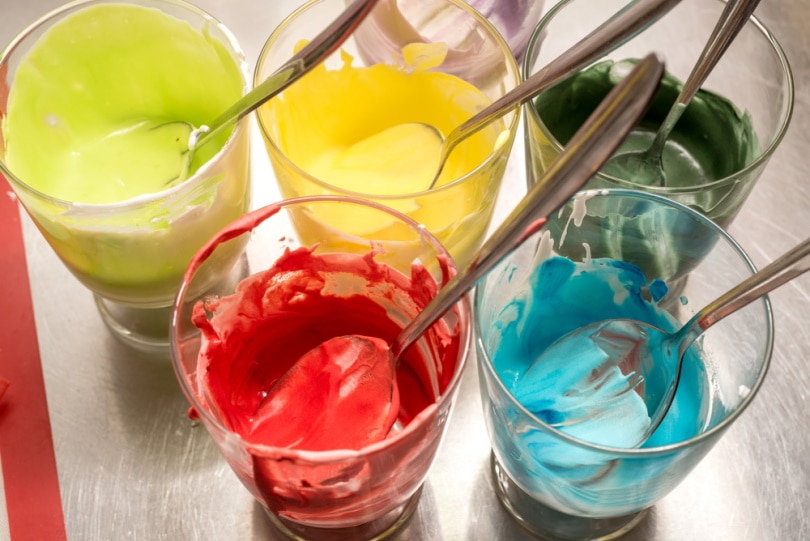
different food coloring in glass

Most food is processed for humans and dogs. Processing alters the natural state of food, removes bacteria, improves its shelf life, and makes it visually appealing. It changes the color of the product, and most of what we eat would be gray (and unappetizing!) without food coloring.

But is food coloring safe for dogs? What’s in it? The colors are added for our benefit and don't provide nutritional benefits for dogs.

Although food coloring is generally safe for dogs to eat, you may prefer to avoid it.

What’s in Food Coloring?

Artificial food colorings were initially made from coal tar. Now, synthetic food dyes are derived from petroleum1 or crude oil. The final products are tested to ensure they contain no traces of petroleum.

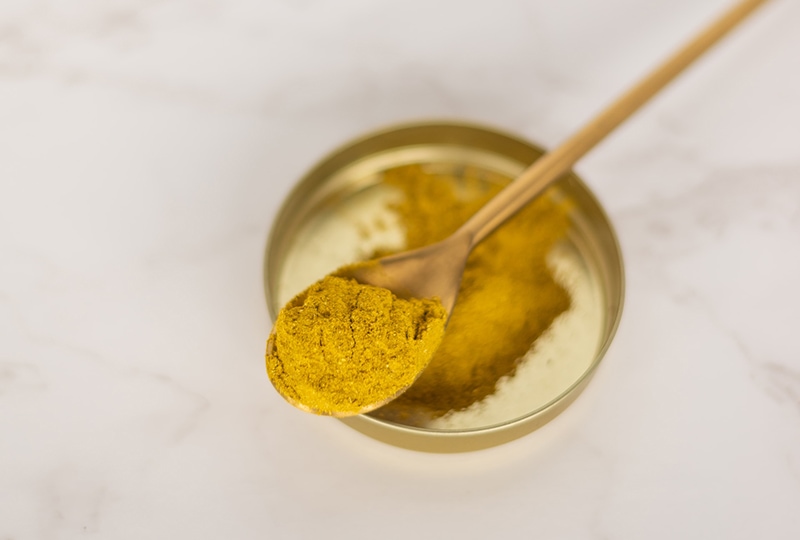
Some food coloring is made from plant-based materials, such as Blue No. 2, the same indigo dye used to color denim. Other natural sources of pigment include turmeric, a plant that grows in India, and cochineal, an extract from an insect that creates a red color.
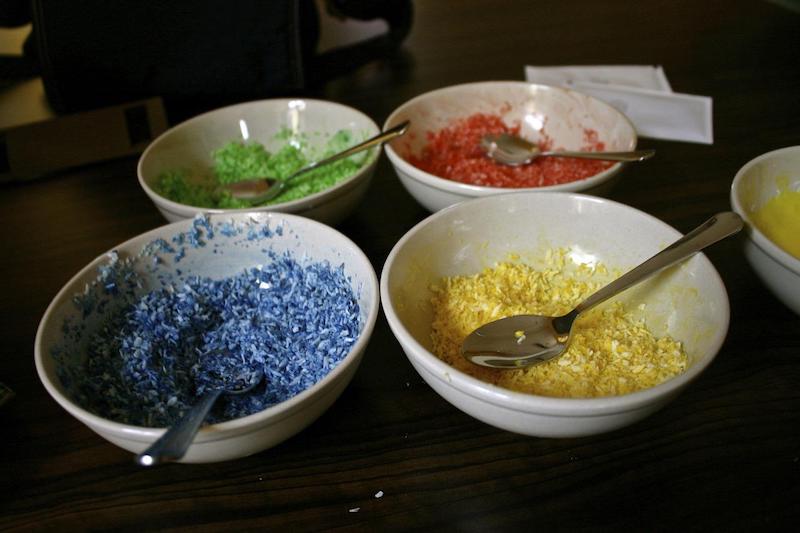
food coloring in bowls with spoons
Image credit: Tabeajaichhalt, Pixabay

Is Food Coloring Safe?

Food coloring has a sordid history in our food industry. Companies weren’t always honest and transparent and used food coloring to hide spoilage or discoloration in older food. Some of the colors also contained hazardous materials like lead and arsenic, compounding the issue.

Then, the Food and Drugs Act of 1906 banned toxic food coloring. The approved food coloring came from coal tar dye. In the 1950s, it was also banned, leading to the Color Additives Amendments of 1960, which enacted strict oversight for color additives in human and animal foods.

Now, the Food and Drug Administration (FDA) strictly regulates all color additives used in food. The certified colors include fewer than 10 approved colors, and colors derived from natural pigments in plants, minerals, and animals are allowed. The FDA also regulates the amount of food coloring allowed and its disclosure on the packaging.

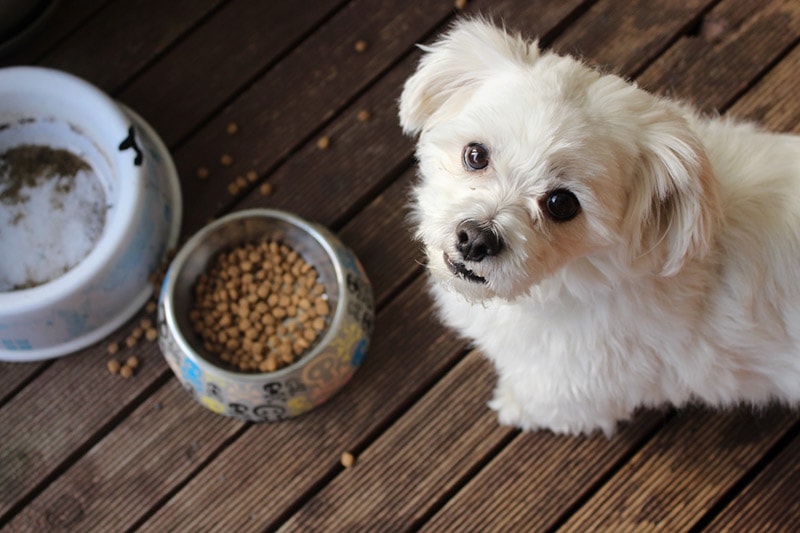
dog eating food from a dog bowl
Image Credit: Mat Coulton, Pixabay

Are Food Colorings in Dog Food? Are They Safe?

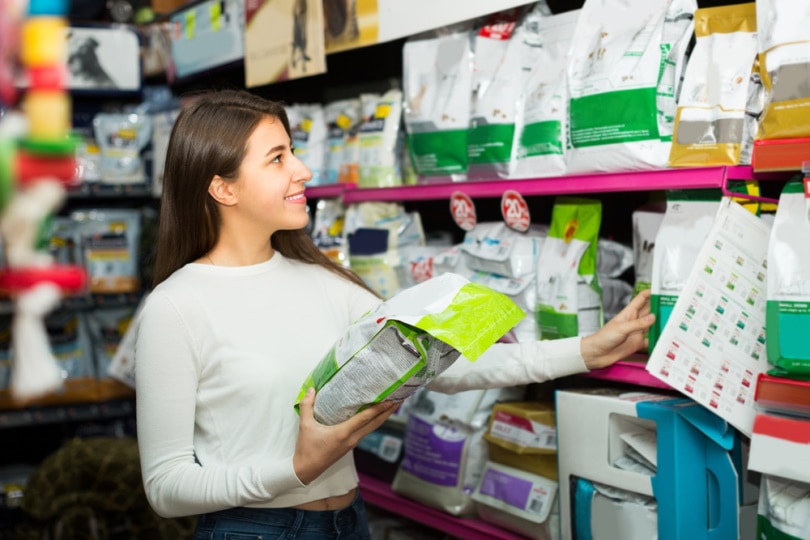
According to the FDA, approved colors are safe when used as directed in human and pet foods. Some food colorings are hazardous in large quantities but don’t include FDA-approved colors and must be used in much higher quantities.

The Association of American Feed Control Officials (AAFCO) allows color additives in pet food as defined in the Federal Food, Drug, and Cosmetic Act:

  • Any dye, pigment, or substance that, when added or applied to a food, drug, or cosmetic, or to the human body, is capable of imparting color
  • Includes substances that, when fed to animals, impart color to meat, milk, or eggs
  • Includes chemical and food-like substances

All certified color additives for pet food are “artificial” by definition and are FDA-approved colors. Colors exempt from certification are derived from natural sources, such as plants, minerals, algae, or animals. The colors must also be labeled and listed.

In short, according to the FDA and AAFCO, color additives are safe for dog food. The limited research in this area finds that dogs are more likely to have allergies to protein, not food coloring. Still, it is not an area that’s been extensively researched.

Can I Dye My Dog with Food Coloring?

Some owners may want to know if they can dye their dog’s hair. Human food coloring is generally safe, but human dyes, such as hair dye or colored hairspray, should be avoided. Dyeing their hair is unnecessary and can cause skin irritation, so it is not recommended.

If you decide to dye your dog's fur, avoid putting food coloring on any areas with open wounds or sores, and keep the food coloring away from sensitive areas like the eyes, nose, or inside the ears.

Another thing to keep in mind is that food coloring stains easily. Even if you can “set” the food coloring with a hairdryer, it could still rub off on your furniture or clothing.
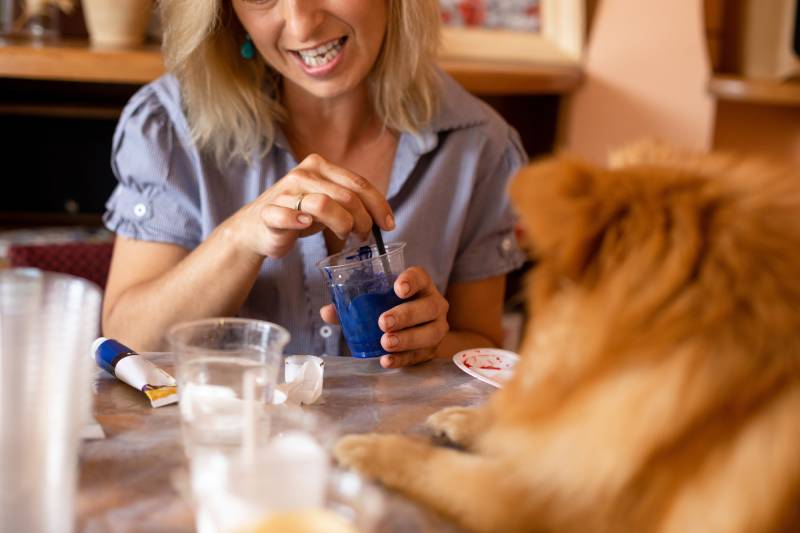
Artist who mixes blue paint in cup has an attentive assistant dog
Image By: tativophotos, Shutterstock

Final Thoughts

Overall, food coloring is safe for dogs in food and topically. Many dog foods contain both FDA-approved artificial and natural color additives, and the limited research in this area presumes they are safe for human and pet consumption. Ultimately, the choice to use food coloring for your dogs is yours.

You also like:

Sources

Featured Image By: Yakov Oskanov, Shutterstock

Get Hepper In Your Inbox

Pet care tips from our vets and experts, straight to your inbox.

List

Select all that apply.

You may opt-out at any time. View our Privacy Policy for more information.

Nicole Cosgrove
Authored by

Nicole Cosgrove

Join the conversation

Ask a question, share your story, or send private feedback.

Rate this post
Required to post. Only our editors see your rating.
Who should see this?

A human reviews every comment before it appears. Your email is never published.

Picked to go with this article

10 Ingredients to Avoid in Dog Food: Vet-Approved Facts & FAQ

10 Ingredients to Avoid in Dog Food: Vet-Approved Facts & FAQ

Many pet owners tend to not read the ingredient labels on their pets' food. But more people are starting to become more aware of what should and shouldn’t be i…

Kathryn Copeland
By Kathryn Copeland ·
Can Dogs Eat Icing? Vet Reviewed Nutrition Advice

Can Dogs Eat Icing? Vet Reviewed Nutrition Advice

In general, dogs shouldn’t eat icing. Icing mainly consists of sugar, which isn’t healthy for dogs. It also has other ingredients that can make dogs sick, like…

Jessica Kim
By Jessica Kim ·
Is Turmeric Good for Dogs? Vet-Approved Benefits & How to Use

Is Turmeric Good for Dogs? Vet-Approved Benefits & How to Use

Turmeric may have several benefits for dogs. It is a traditional medicine that has been used for years (and it makes some pretty tasty food, too). Its bright y…

Kristin Hitchcock
By Kristin Hitchcock ·
Are Dogs Colorblind? Vet-Approved Facts

Are Dogs Colorblind? Vet-Approved Facts

The fact that dogs are color blind is one of those bits of trivia that everyone knows, but did you ever stop to wonder if it was really true? As it turns out,…

Quincy Miller
By Quincy Miller ·

Keep reading

More stories you might like

What Are BHA and BHT in Dog Food? Vet-Reviewed Preservatives & Canine Safety

Have you ever looked at the ingredients in your dog’s food? There are items like chicken, by-product meal, and so on. We may know what some of the ingredients…

Nicole Cosgrove
By Nicole Cosgrove ·
What Are BHA and BHT in Dog Food? Vet-Reviewed Preservatives & Canine Safety

Can Dogs Eat Pudding? What The Science Says

Pudding is a tasty dessert that comes in a variety of flavors and is a common staple in lunchboxes and pantries across the country. Many dog owners may have a…

Lindsey Lawson
By Lindsey Lawson ·
Can Dogs Eat Pudding? What The Science Says

Can Dogs See Color? Vet-Reviewed Canine Eye Perception Facts

Some people have heard the myth that dogs see the world in black and white. While it's true that dogs don't see the same spectrum of color as humans, it's not…

Luxifa Le
By Luxifa Le ·
Can Dogs See Color? Vet-Reviewed Canine Eye Perception Facts

Can Dogs Eat Protein Powder? Vet-Approved Facts & Risks

All responsible dog parents strive to provide their dogs with the best possible life, which also includes providing them with high-quality nutrition. As humans…

Visnja Radosavljevic
By Visnja Radosavljevic ·
Can Dogs Eat Protein Powder? Vet-Approved Facts & Risks

TBHQ In Dog Food: Vet-Reviewed Safety & Controversy Facts

If you have ever read food labels, you may have encountered some things you do not recognize, or even pronounce! One of them could be tertiary butylhydroquinon…

Hanh Duong
By Hanh Duong ·
TBHQ In Dog Food: Vet-Reviewed Safety & Controversy Facts

Can Dogs Eat Spicy Food? Vet Approved Facts & Safety Guide

If you like spicy cuisine, you might be curious whether your dog would like a taste of your preferred meal and whether they will actually enjoy it—or if it’s a…

Hanh Duong
By Hanh Duong ·
Can Dogs Eat Spicy Food? Vet Approved Facts & Safety Guide

Can Dogs Eat Vanilla? Vet-Approved Facts & FAQs

Vanilla is commonly used to sweeten and add flavor to some of our favorite desserts, but is it okay for dogs to indulge in it? While a simple vanilla pod isn’t…

Kit Copson
By Kit Copson ·
Can Dogs Eat Vanilla? Vet-Approved Facts & FAQs

Can Dogs Eat Turmeric? Vet-Reviewed Nutrition Facts & FAQ

If you are a dog owner who prefers to use natural remedies to keep your dog healthy, you might already be familiar with turmeric. The herb is commonly used in…

Elizabeth Gray
By Elizabeth Gray ·
Can Dogs Eat Turmeric? Vet-Reviewed Nutrition Facts & FAQ