Hepper is reader-supported. When you buy via links on our site, we may earn an affiliate commission at no cost to you. Learn more.
Is Food Coloring Safe for Cats? Facts & FAQ
In this article
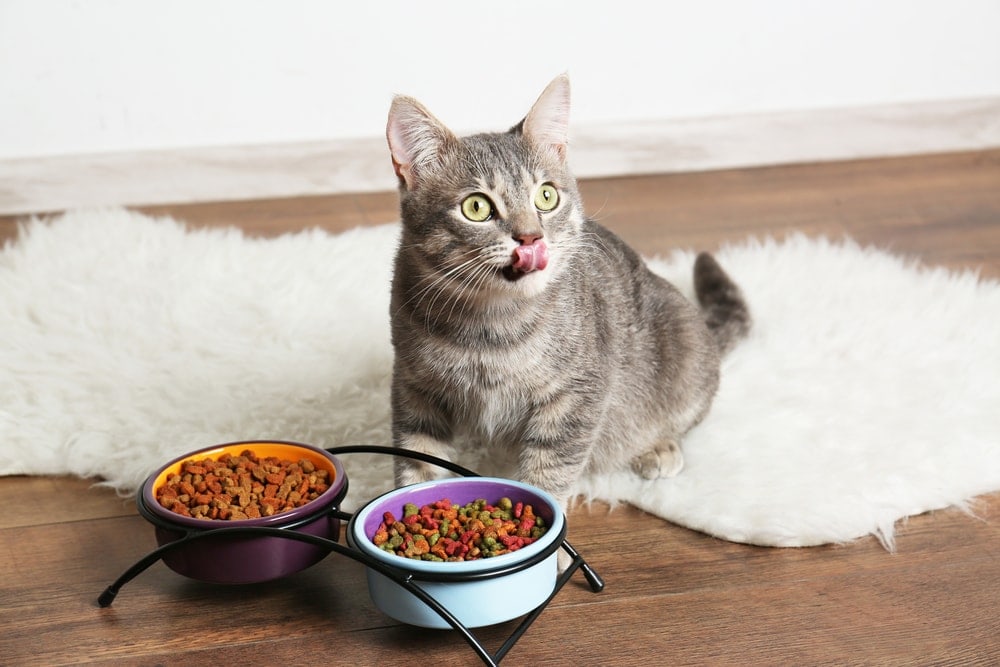
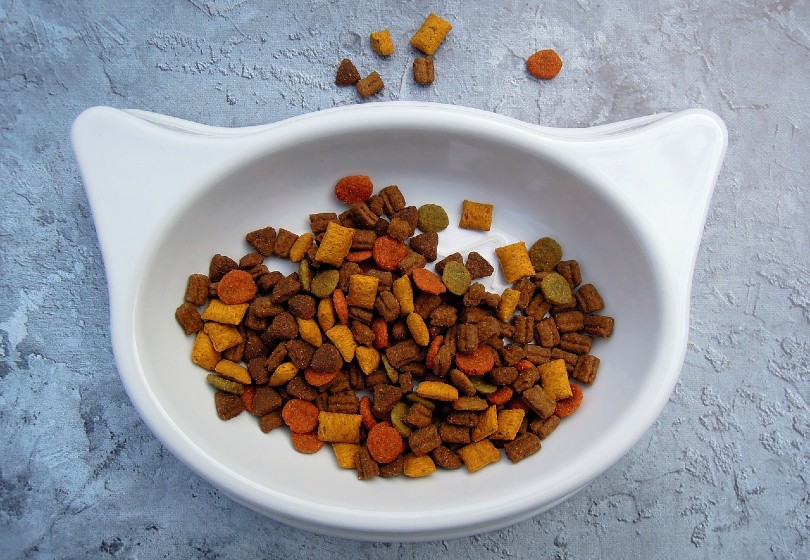
Food coloring can be found in many things, including cat food. Pet food manufacturers commonly use food coloring to make it more visually appealing. But do our cats really care that their kibble has several different colored bits? Is it safe for cats?
For the most part, food coloring in cat food is considered safe. What is currently used in manufacturing cat food is FDA-approved. However, if you are considering dyeing your cat with food coloring, while it might not physically hurt your cat, it’s highly advisable that you don’t dye your cat.
Here, we investigate food coloring in your cat’s food. Hopefully, we can help answer any questions that you might have.

Is There Natural Food Coloring?
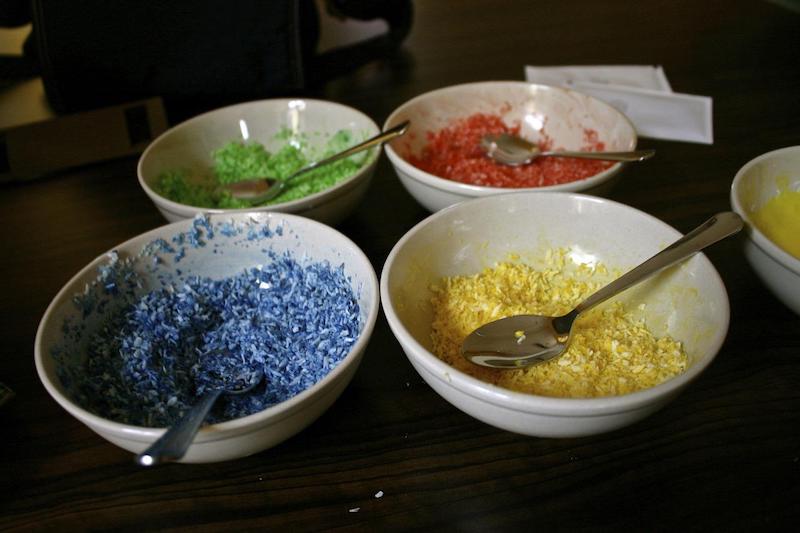
According to the American Chemical Society, food coloring is kind of like cosmetics for food. For example, hotdogs would be gray without food coloring!
Certain food coloring does come from natural sources:
- Carotenoids: The most common carotenoid is beta-carotene. This is what gives carrots, pumpkins, and sweet potatoes their color. It’s responsible for deep-red, orange, and yellow colors and is commonly used to color cheese and margarine.
- Chlorophyll: This is found in green plants and is made through the process of photosynthesis. Lime and mint-flavored candies and ice creams commonly use chlorophyll for their green coloring.
- Anthocyanin: This is the source of blue and deep purple coloring and is found in cranberries, blueberries, and certain varieties of grapes. It is dissolvable in water, so it’s used in brightly colored soft drinks, jellies, and blue corn chips.
- Turmeric: This is a spice that comes from a plant in India and is a deep yellow color. It’s typically used to color mustard.
- Carminic acid: The cochineal beetle has been used to color food a deep-red color for centuries. Crushing about 70,000 of these insects gives you 1 pound of deep-red carminic acid color. It’s perfectly safe to digest if not that appealing sounding. If a food ingredient list contains carminic acid, carmine, cochineal, or natural red 4, it likely contains cochineal beetles.
There are other natural sources of color, such as paprika, saffron, certain fruit and vegetable juices, caramel, and beets.
Artificial Food Coloring
Artificial coloring is popular for use in food manufacturing because it’s much easier and cheaper to produce. It has a much longer shelf life and is longer lasting than natural colors. It’s also much easier to find the perfect color for food through artificial means.
Artificial food coloring was originally made from coat tar, but today, most artificial food dyes are derived from petroleum, as are various antioxidants.
The FDA is quite rigorous in ensuring that synthetic food colorings are safe for consumption and puts all food colorings through a certification process. This ensures that there is absolutely no trace of petroleum left.
The FDA has approved seven artificial colorings, which are:
- Blue No. 1 (blue)
- Blue No. 2 (indigo)
- Green No. 3 (turquoise)
- Red No. 3 (pink)
- Red No. 40 (red)
- Yellow No. 5 (yellow)
- Yellow No. 6 (orange)
The most popular food dyes used are red 40, yellow 5, and yellow 6, which make up about 90% of all food dyes used in the States.


What About Cats and Food Coloring?
Unfortunately, there have been next to no studies investigating the effects of food coloring on our pets.
The FDA has approved the use of food coloring in cat food, so it is considered safe. It’s also relatively rare for cats to have allergies to food coloring. In fact, cats are more likely to have food allergies to protein, most commonly chicken, beef, fish, and dairy. However, see your vet if you believe that your cat might be allergic to food coloring. They might also have issues with other substances.
Food Allergy Symptoms
The common signs of food allergies in cats are constant itching and skin inflammation, primarily on the legs, paws, armpits, genitals, belly, ears, face, and armpits. They might be itchy enough to cause hair loss and wounds from over-scratching and over-grooming.
Some cats might also suffer from gastrointestinal upset, including vomiting and diarrhea, and might even start scooting due to itching on their rectum.
You should see your vet if you notice your cat exhibiting any of these signs. You will likely need to put your cat through a novel protein diet, which helps pinpoint what is causing the allergies.
Conclusion
While there’s no harm in putting food coloring in cat food, it doesn’t benefit them either. It’s actually for us as cat owners. Cats don’t care what color their food is. The most important ingredients that you should look for in your cat’s food are quality proteins in high percentages.
See also:
Featured Image Credit: Tabeajaichhalt, Pixabay
Get Hepper In Your Inbox


Pet care tips from our vets and experts, straight to your inbox.
You may opt-out at any time. View our Privacy Policy for more information.

Kathryn was a librarian in a previous lifetime and is currently a writer about all things animals. When she was a child, she hoped to work in zoos or with wildlife in some way, thanks to her strong love for animals. Unfortunately, she's not strong in the sciences, so she fills her days with researching and writing about all kinds of animals and spends time playing with her adorable but terribly mischievous tabby cat, Bella. Kathryn is hoping to add to her family in the near future – maybe another cat and a dog.
Join the conversation
Ask a question, share your story, or send private feedback.