Hepper is reader-supported. When you buy via links on our site, we may earn an affiliate commission at no cost to you. Learn more.
Leopard Tortoise: Pictures, Facts, Diet, & Care Guide
In this article
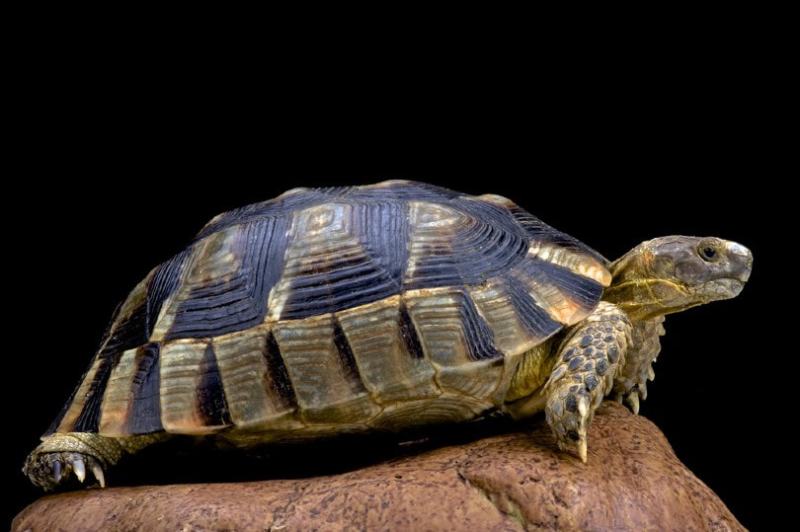
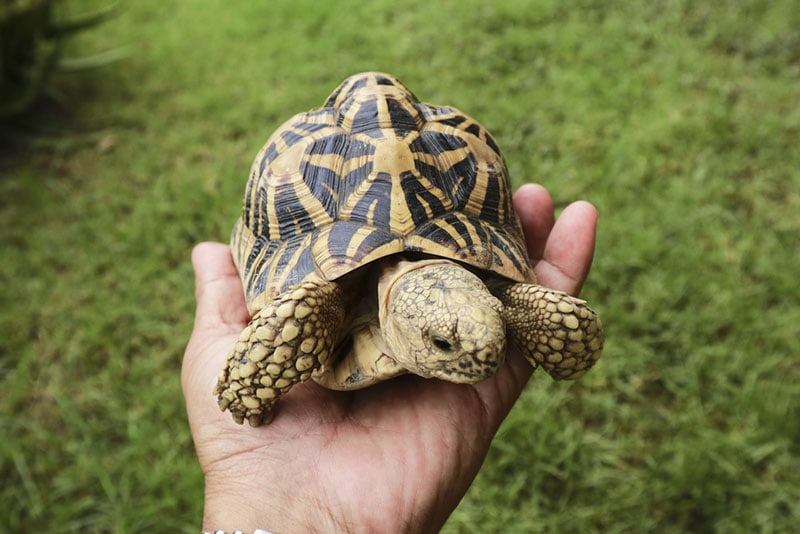
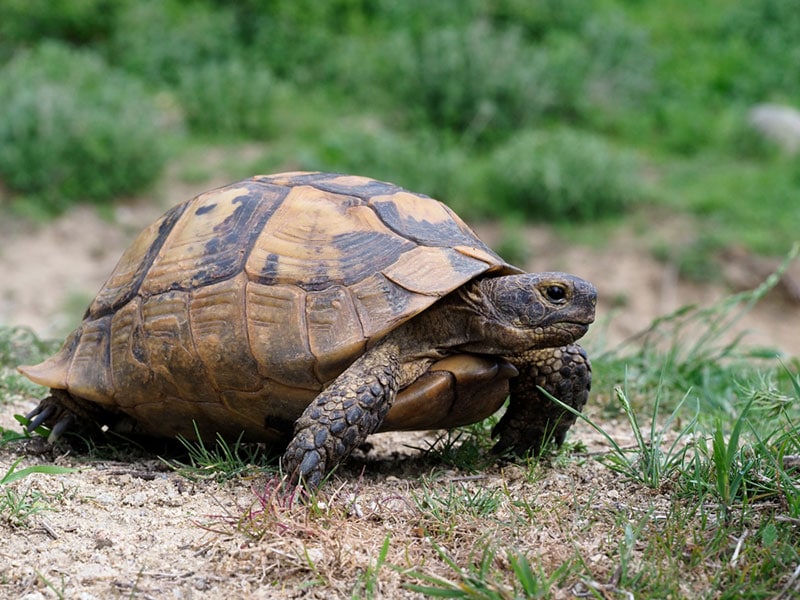
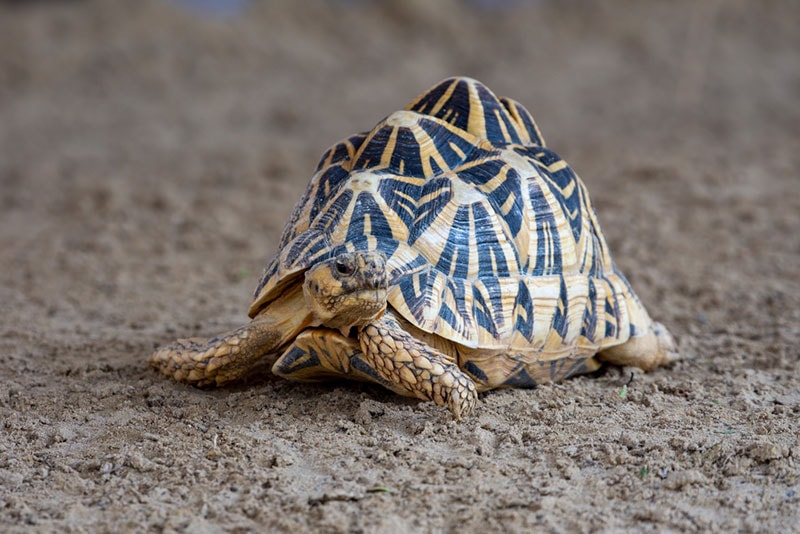
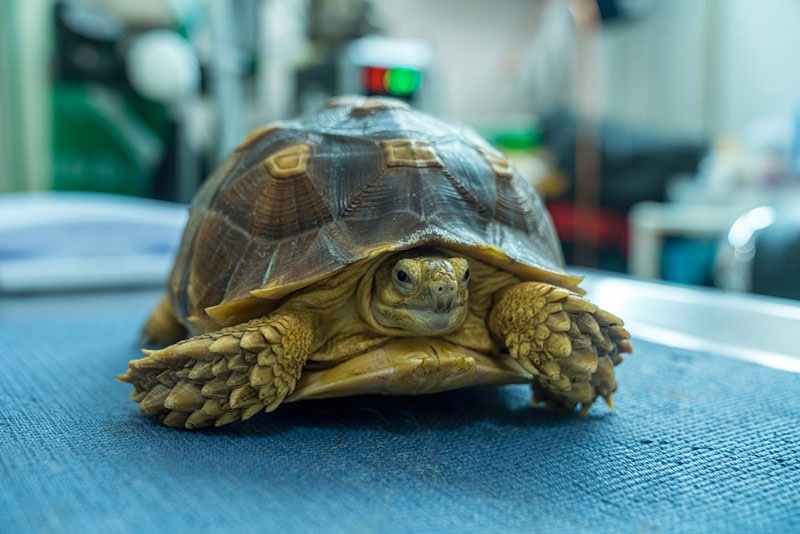
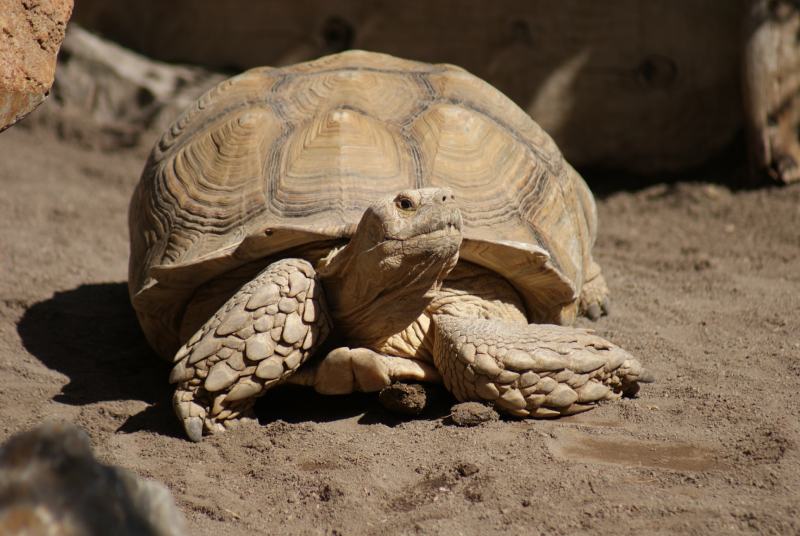
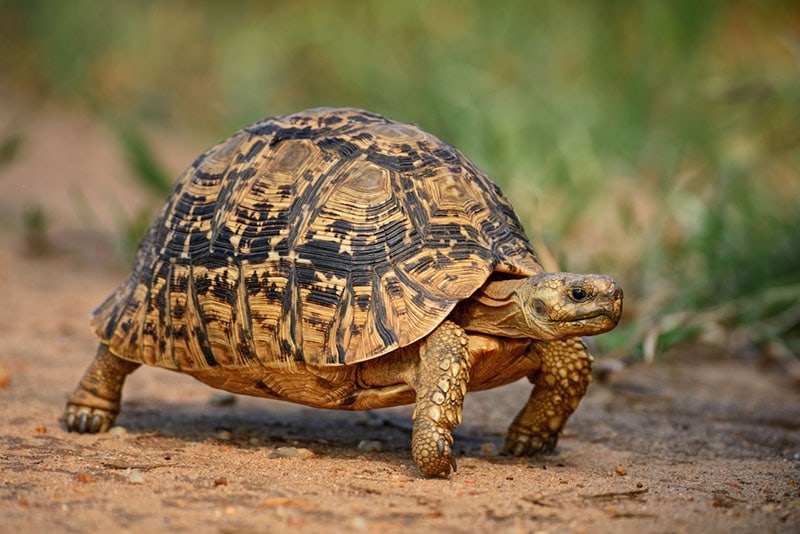
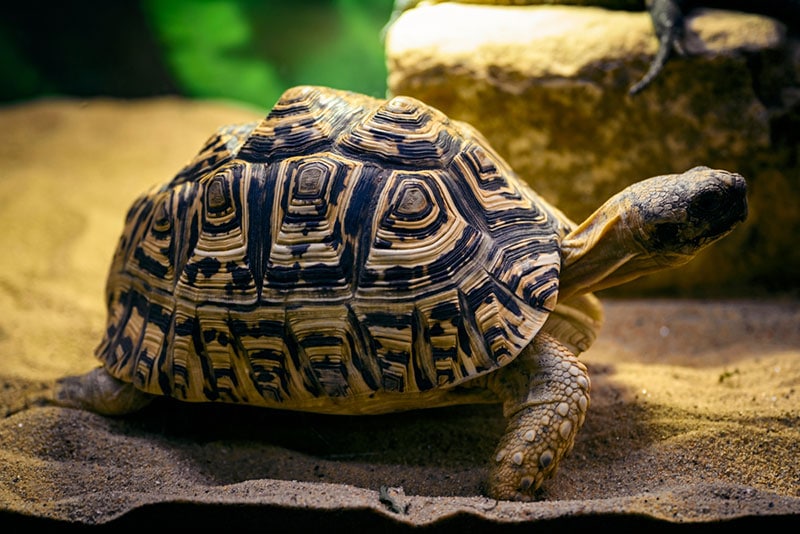
The Leopard Tortoise is considered one of the most beautiful tortoises around. They get extremely large, weighing up to 118 pounds. Their shells are attractively marked, which makes them one of the more popular pet species, too. The markings on their shell resemble Leopard print, which is how they got their name.
| Size: | Large |
| Weight: | 33–118 pounds |
| Lifespan: | 80–100 years |
| Suitable for: | Experienced tortoise keepers with a large outdoor enclosure and a warm climate |
| Temperament: | Docile and quiet |
While this tortoise is very beautiful, that doesn’t mean that they’re suitable for everyone. Because they get so big, they require a lot of work and space. They’re best suited for outdoor enclosures in warmer climates. Keeping them inside is nearly impossible.
Plus, they can live up to 100 years with ease. That’s longer than most people, so you’ll need to consider who will take care of the tortoise after you’re gone, too. This animal is a multi-generational commitment.
Leopard Tortoise Characteristics

How Much Do These Tortoises Cost?
The cost of a Leopard Tortoise typically ranges from $350 to $7,000. The breeder, age, and quality of the tortoise all factor into the price. The subspecies also matter, with rarer variants being more expensive.
You should only purchase from a reputable breeder, as the careful breeding of these tortoises is important for their overall well-being.
Leopard Tortoise Behavior
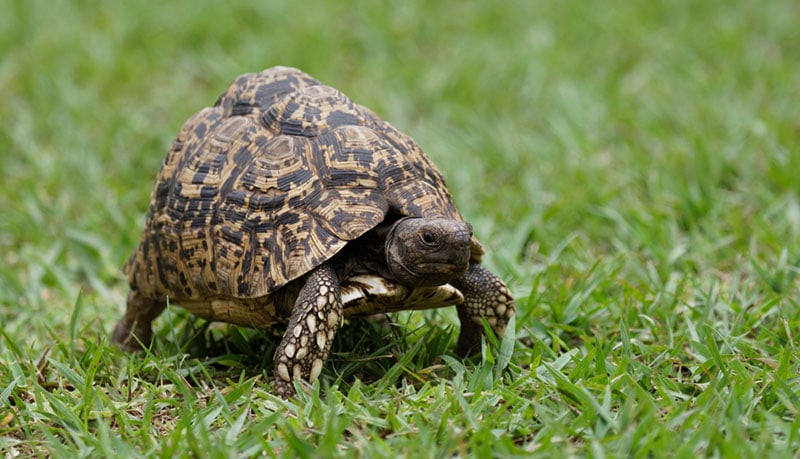
These tortoises are slow, quiet, and unaggressive. They are good-natured animals that never mean any harm. Therefore, they are generally docile pets, though they aren’t the most exciting. They don’t like much handling and will retreat into their shells if overstimulated. They’re a pet that much prefers being watched.
These tortoises are active during the day, especially in the morning before it gets too hot. While they do best in warmer climates, they don’t necessarily like very hot weather. Instead, they seek shelter during the hottest parts of the day and go to sleep early to avoid the cold of the night.
For the most part, these tortoises spend their time eating. They’re a grazing species that eat a range of different grasses. They don’t make nests, but they will live in the abandoned holes made by other mammals. They only dig holes to lay their eggs, not to live in.
Do These Tortoises Make Good Pets?
As docile, laidback animals, Leopard Tortoises can make decent pets. However, there are many things you should consider before adopting one.
Firstly, they’re very large and long-lived animals. Therefore, they need a lot of space and care. Furthermore, they’re best kept outside and need warmer temperatures and they do best when housed in warmer climates.
These tortoises also don’t like frequent handling. Therefore, they aren’t best for those looking for a very hands-on pet. They cannot be housed together, either, unless it’s during mating season.
Leopard Tortoise Enclosure Mates
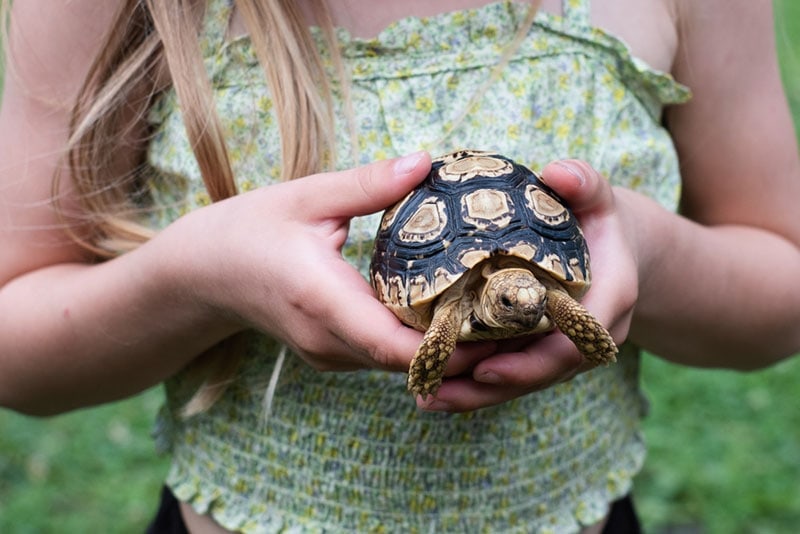
These tortoises should be kept alone without any other animals. They can be territorial against other tortoises, so they do best as the only pet in their enclosure. Furthermore, they need a lot of room. So, if you started adding other animals, you’d need to expand the enclosure even more.
Care Sheet & Habitat Setup
Light Requirements
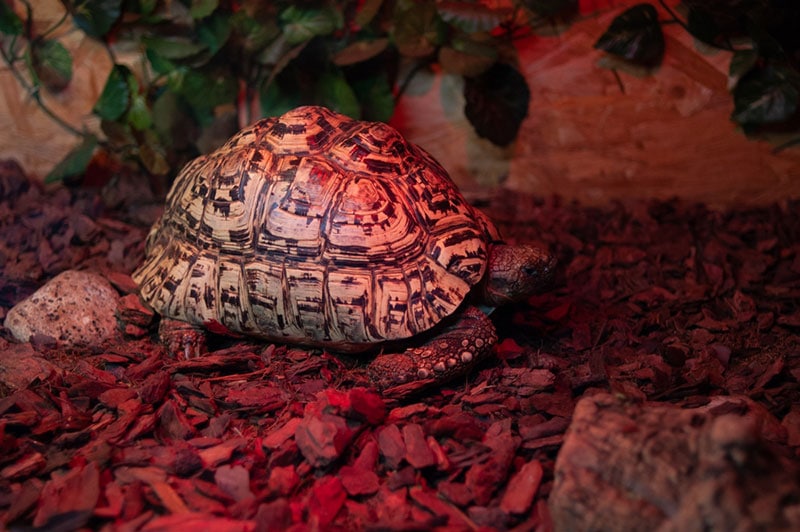
These tortoises need to be kept outside as much as possible. It works best if they are exposed to UV light from the sun, which is essential for their health and shell development. You can also use mercury vapor lamps, which provide heat. They should get at least 12 hours of sunlight, though they should also be given a period of darkness.
Be sure to provide the tortoise with a basking spot, as they need one to regulate their body temperature.
Enclosure
Leopard Tortoises need to be kept outside or inside in a large enclosure. They cannot be kept in a tank, as they are simply too large. Their enclosure should have solid sides and be fenced in to prevent predation. Larger is better, as the tortoise should preferably have enough room to graze too.
You’ll need an area of several square feet to house these tortoises properly. As the animal grows, it will need more room.
Plants
As a grazing species, these tortoises need a diet of grass, weeds, and flowers to thrive. They will naturally graze on the plants inside their enclosure, so they should be safe for them to consume. Alfalfa, clover, dandelion, and hibiscus are all common.
Consider taller plants too, as these tortoises also like resting in the shade.
Substrate
You can use whatever substrate can grow plants. A mixture of sand and peat moss or potting soil can be used. Often, dirt from outside is suitable if you’re keeping your tortoise outside. There is no need to add another substrate.
Encourage grass growth, which provides shelter and food for the tortoise. Wood chips and other substrates that can cause impaction should never be used.
Things to Know When Owning a Leopard Tortoise
Food & Diet Requirements
Leopard Tortoises are herbivores that need a high-fiber diet with little protein. They should eat mostly grasses, hay, and weeds. You can give them fruits and veggies as occasional treats, but these can add too much sugar to their diet. Avoid foods that are high in phosphorus, oxalates, and citric acid.
They usually need calcium and vitamin supplements to prevent shell deformities and other health issues. You can give them cuttlebone, eggshells, or powered supplements to increase their food intake. You should give them vitamin D3, too, which can be received through a supplement or UVB light.
You should provide them access to fresh water at all times. They should have a shallow dish to drink out of and soak in, but do not fill it up so much that they may drown.
Size & Growth Chart
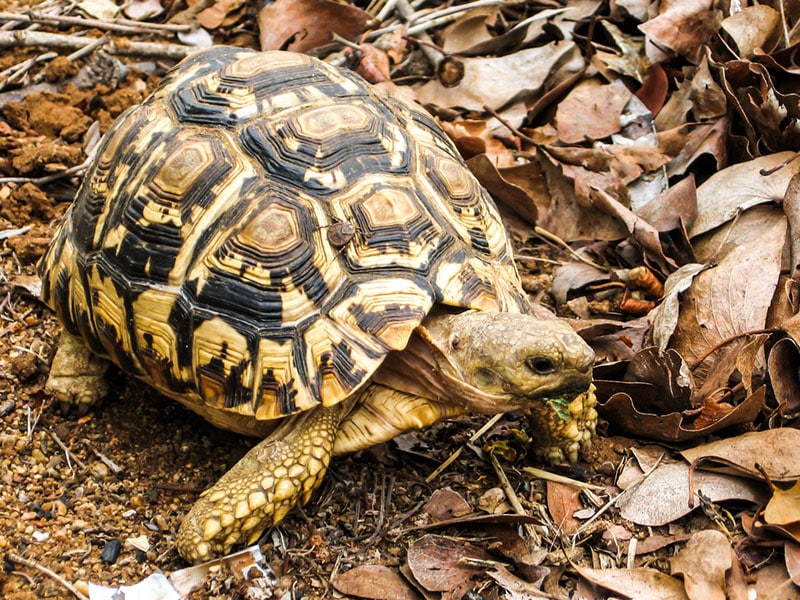
The average full-grown Leopard Tortoise is 16 inches measured from head to tail. However, they can become as large as 28 inches, especially in captivity when properly cared for. They can be around 40 pounds when fully grown, but some can get as big as 88 or even over 100 pounds.
Tortoises have a moderate growth rate and will reach their full adult size in 15 years or so. Their growth will be fastest when they are younger. Then, it will start to slow down a bit.
Lifespan and Health Conditions
These tortoises can live for up to 100 years in captivity, though some only live closer to 50 years. In the wild, their lifespan is often shorter due to environmental factors and predation.
Generally, Leopard Tortoises are hardy and resilient animals. However, they can suffer from some health conditions. Metabolic bone disease is a common problem for pet tortoises and occurs when the tortoise doesn’t get enough calcium or vitamin D. Supplementation is recommended, and the tortoise needs a balanced diet.
Respiratory infections that affect the lungs and airways can also occur. These can result from bacteria, viruses, and parasites. Often, they’re caused indirectly by a wet or dirty enclosure. Adequate ventilation and temperature are required to prevent these infections.
Shell rot can occur if the tortoise isn’t provided with the proper enclosure. This disease can be extremely serious and causes a turtle’s shell to soften, discolor, and crack.
3 Little-Known Facts About Leopard Tortoises
1. They can swim!
While they can’t swim very well, Leopard Tortoises can float well due to the sizable lung space in their large, domed shell. They can also stay underwater for about 10 minutes.
2. They have unusually shaped legs and toes.
Their legs are club-shaped and they have pigeon toes and nails. These features help them move quickly and maneuver over rocky terrain. They can also climb and even sprint when scared.
3. They live in abandoned holes.
While they will dig holes to lay their eggs, they don’t dig their own burrows. Instead, they use the abandoned holes of other animals.
Final Thoughts
This interesting tortoise is growing more and more popular as a pet. However, you should carefully consider their long lifespan and huge size before adopting one. They need a large area to live in, which typically requires a fenced-in area outside. You need to live in a place that’s warm enough to accommodate these tortoises, too.
Plus, they need lots of care over a very long period. Some may live for over 100 years!
Sources
Featured Image Credit: David Havel, Shutterstock
Get Hepper In Your Inbox


Pet care tips from our vets and experts, straight to your inbox.
You may opt-out at any time. View our Privacy Policy for more information.

Kristin is passionate about helping pet parents create a fulfilling life with their pets by informing them on the latest scientific research and helping them choose the best products for their pets. She currently resides in Tennessee with four dogs, three cats, two fish, and a lizard, though she has dreams of owning chickens one-day!
Join the conversation
Ask a question, share your story, or send private feedback.