Hepper is reader-supported. When you buy via links on our site, we may earn an affiliate commission at no cost to you. Learn more.
Lymphoma in Cats – Causes, Signs, & Treatments (Vet Answer)

In this article
Lymphoma is one of the most common forms of cancer in cats. It is a cancer of lymphocytes, which are cells of the immune system. However, not all lymphomas are the same. There are high and low grades of lymphoma; digestive tract, kidney, nasal and lymph-node forms of lymphoma; spontaneous lymphoma, and viral-induced lymphomas.
So, what does it all mean, and how should you care for your cat if he or she has been diagnosed with this condition? This article explains lymphoma in cats—what it is, what to watch for, and where to go next.

What is Lymphoma in Cats?
Lymphoma is a malignant cancer of the lymphatic system. The lymphatic system is a complex and crucial network within the body—there is lymphatic tissue in just about every part of the body, and it is responsible for fluid balance and immune function (protecting against infections). Lymphoma occurs when lymphocytes, which make up lymphatic tissue, replicate in an uncontrolled fashion, form tumors, and spread throughout the body.
Lymphoma in cats can occur in different organ systems:
- Digestive tract. This is the most common form of lymphoma in cats. The digestive tract comprises the stomach, intestines, liver, and associated lymph nodes.
- Mediastinal. This refers to a group of lymph nodes in the chest.
- Kidney. The kidneys are responsible for filtering blood and making urine. One or both kidneys can be affected.
- Nasal. This refers to lymphoma of the nasal cavity (nose) and sinuses.
- External/peripheral. The peripheral lymph nodes lie closer to (but underneath) the skin.
- Other. Occasionally, lymphoma is seen in the nervous system and skin.
Lymphoma is generally categorized, based on appropriate diagnostic testing, as “low grade” or “high grade”:
- Low-grade lymphoma. This is easier to treat, with a more favorable prognosis.
- High-grade lymphoma. This is nastier, or more malignant. A more rigorous treatment protocol is required.
What Are the Signs of Lymphoma in Cats?
The signs of lymphoma are directly related to the site of the cancer, and the organ system affected. Common signs for each location are outlined below:
- Digestive tract (most common): Vomiting, diarrhea, weight loss, lethargy
- Mediastinal: Labored breathing
- Kidney: Changes in thirst/urination; vomiting and weight loss can also occur
- Nasal: Sneezing, discharge from the nose (snot or blood), and loss of appetite
- External/peripheral: Enlargement of lymph nodes under the chin, on the shoulders, and behind the knees.
What Are the Causes of Lymphoma in Cats?
The cause of lymphoma in cats remains largely unknown. As with most cancers, changes to genes that develop with age allow “mutations” to occur, resulting in abnormal, malignant cells. Though more common in older cats, lymphoma can be seen at any age. Male and female cats seem to be affected equally.
A small population of cats with lymphoma also have viral disease. Cats infected with viral diseases—either Feline Leukemia Virus (FeLV) or Feline Immunodeficiency Virus (feline AIDS)—are much more likely to develop lymphoma than non-infected cats.
How Do I Care for a Cat with Lymphoma?
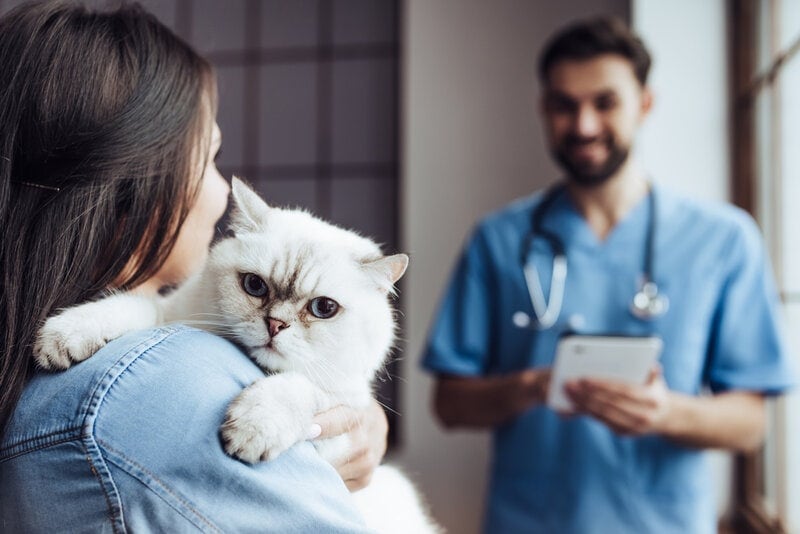
First things first: caring for a cat with lymphoma requires close collaboration with your veterinarian. They will be able to guide you as to the best approach for your cat, and your family. The cornerstone of treatment for cats with lymphoma is chemotherapy. Thankfully, cats tolerate chemotherapy very well, meaning side effects are usually manageable and don’t drastically affect their quality of life. Further, the majority of cats (approximately 75%) treated with appropriate chemotherapy go into remission, meaning the signs of cancer have been reduced or eliminated.
Generally, treatment for low-grade lymphoma requires prednisolone and chlorambucil, two medications used to suppress the immune system and destroy cancer cells. High-grade lymphoma requires a more complex and rigorous treatment plan, often devised by a veterinary oncologist (cancer specialist). Occasionally, surgery is required to remove a mass of lymphoma, and radiation therapy can also be used.
FAQs on Lymphoma in Cats
How is Lymphoma Diagnosed?
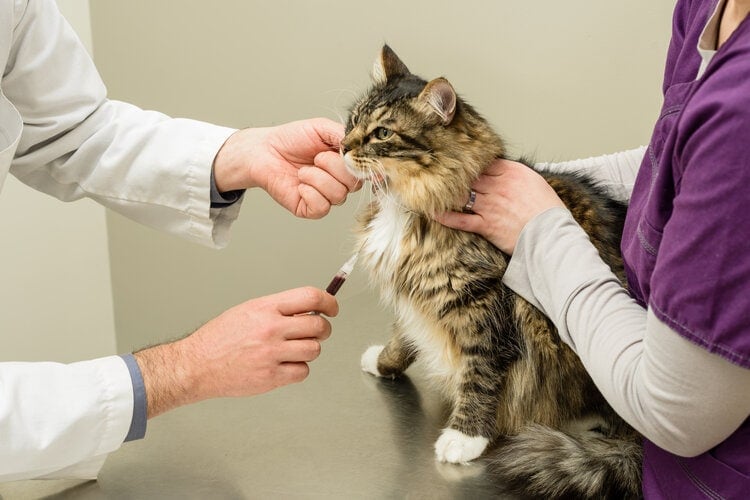
Diagnosing lymphoma requires the identification of cancerous lymphocytes under a microscope. Blood tests and ultrasounds are common tests performed early on to establish a baseline for your cat. Ultrasound can also be used to aspirate an internal lesion that may resemble lymphoma. This involves “sucking up” some cells into a needle and examining them under a microscope. The best way to differentiate low-grade from high-grade lymphoma is via biopsy. This involves cutting out a small piece of suspect tissue, either surgically or using an endoscope, and sending the sample to the laboratory to be analyzed by a pathologist.
What Is the Prognosis for Cats Diagnosed with Lymphoma?
It is difficult to predict how different cats will respond to treatment for lymphoma. The prognosis depends on a few factors:
- Location of infection (e.g. digestive tract vs kidney)
- Grade of the cancer (i.e. high-grade vs low-grade)
- Treatment undertaken (e.g. rigorous chemotherapy or palliative care)
- Severity of signs (Cats who are already very sick at the time of diagnosis have a poorer outlook than cats who appear relatively healthy
Some statistics for the prognosis of different types of lymphoma have been listed below:
- Low-grade digestive tract lymphoma: 2–3 years
- High-grade digestive tract lymphoma: 3–9 months
- Mediastinal lymphoma: 9–12 months
- Kidney lymphoma: 3–6 months
Are There Any Other Options?
If pursuing chemotherapy isn’t the best option for you and your cat, there aren’t many other options available. Palliative care can be undertaken, and, in some cases, this may be the best approach. Palliative care involves treatment with prednisolone, which is relatively affordable and easy to administer, as well as a high-quality diet and supportive care at home.
Alternative medicines and naturopathic options may be considered, but at present there is little evidence to suggest that they improve the outcome. Generally, cats treated with prednisolone improve for 1 or 2 months, before the cancer becomes advanced and the cat’s condition deteriorates.
Conclusion
Lymphoma is a common cancer in cats, and it takes many different forms. For these reasons, the signs of disease are variable, as is the prognosis. There are effective treatment protocols for cats with lymphoma, and, with appropriate chemotherapy, many cats experience remission or alleviation of the signs of lymphoma. We recommend working closely with your veterinarian to achieve the best outcome for your cat.
Sources
Featured Image Credit: Elpisterra, Shutterstock
Get Hepper In Your Inbox


Pet care tips from our vets and experts, straight to your inbox.
You may opt-out at any time. View our Privacy Policy for more information.
Joe is a veterinarian from Sydney, Australia and has two beautiful Golden Retrievers who love the ocean as much as he does. Joe completed his Bachelor of Veterinary Biology and Doctor of Veterinary Medicine at the University of Sydney in 2020, and his areas of particular interest include internal medicine, wound management and oncology. His passion for veterinary medicine comes not only from helping pets, but also from helping their owners and working with wonderful teams of people. When he's not working, you can find Joe exercising, cooking, and exploring Australia’s wilderness. He has worked for 2 years at a busy mixed practice on New South Wales’ mid-north coast, treating animals of all sizes.
Joe is a veterinarian from Sydney, Australia. He has two beautiful Golden Retrievers who love the ocean as much as he does. When he's not working, he can be found exercising, cooking, and exploring Australia’s wilderness.
Education
Joe received a Bachelor of Veterinary Biology and Doctor of Veterinary Medicine from the University of Sydney in 2020.
Experience and Interests
Joe has worked for 2 years at a busy mixed practice on New South Wales’ mid-north coast, treating animals of all sizes. The areas of particular interest to Joe include internal medicine, wound management, and oncology. His love for the profession comes not only from helping pets but also from helping their owners and working with wonderful teams of people.
Join the conversation
Ask a question, share your story, or send private feedback.