Hepper is reader-supported. When you buy via links on our site, we may earn an affiliate commission at no cost to you. Learn more.
Male vs Female Great Pyrenees: The Differences (With Pictures)
In this article
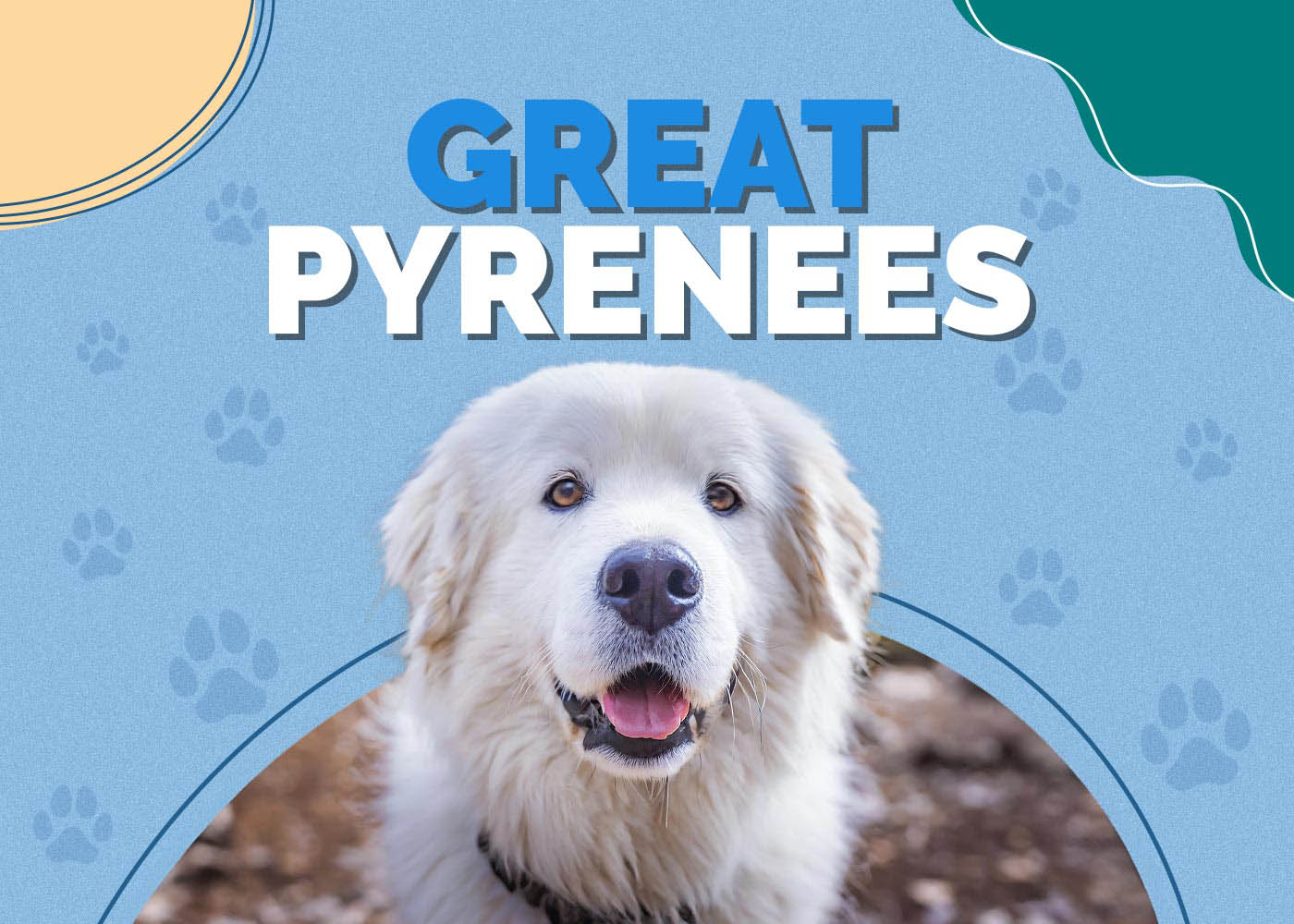
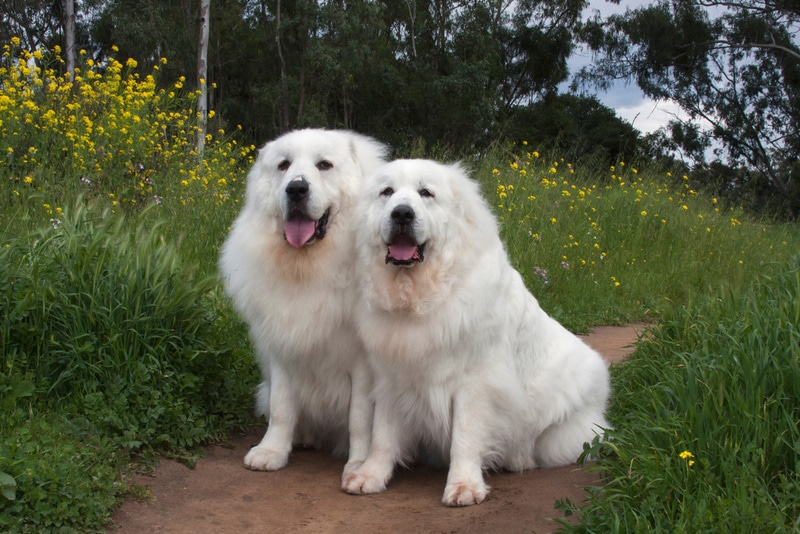
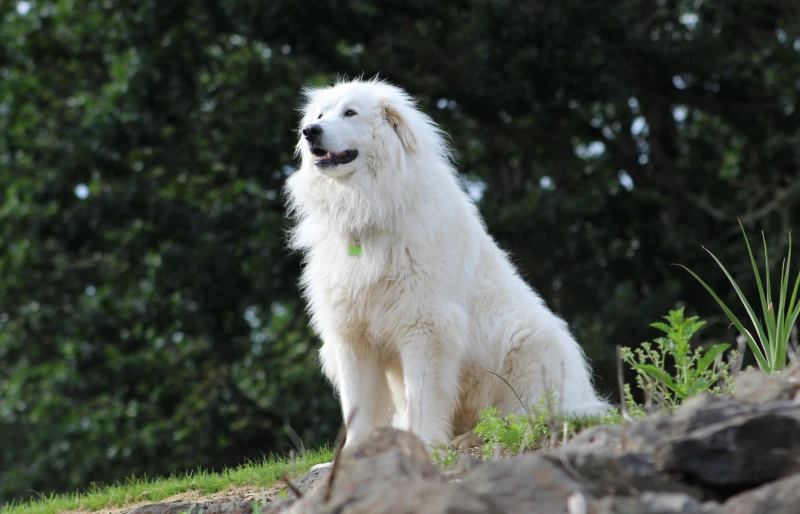
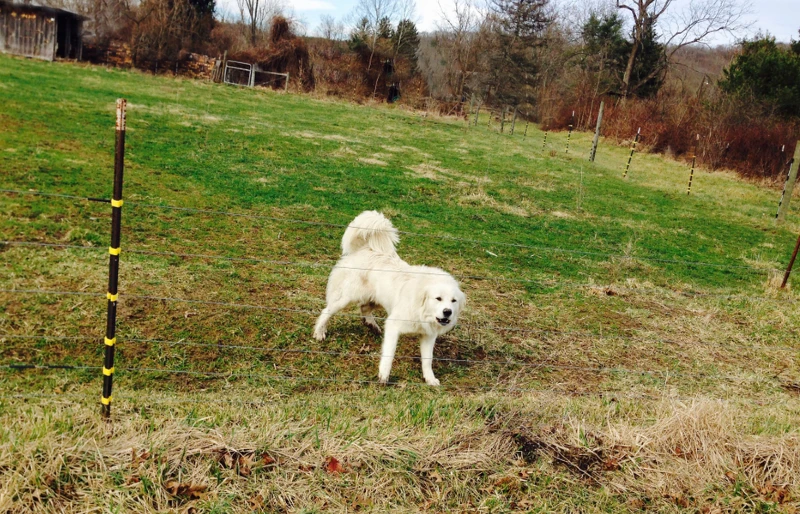
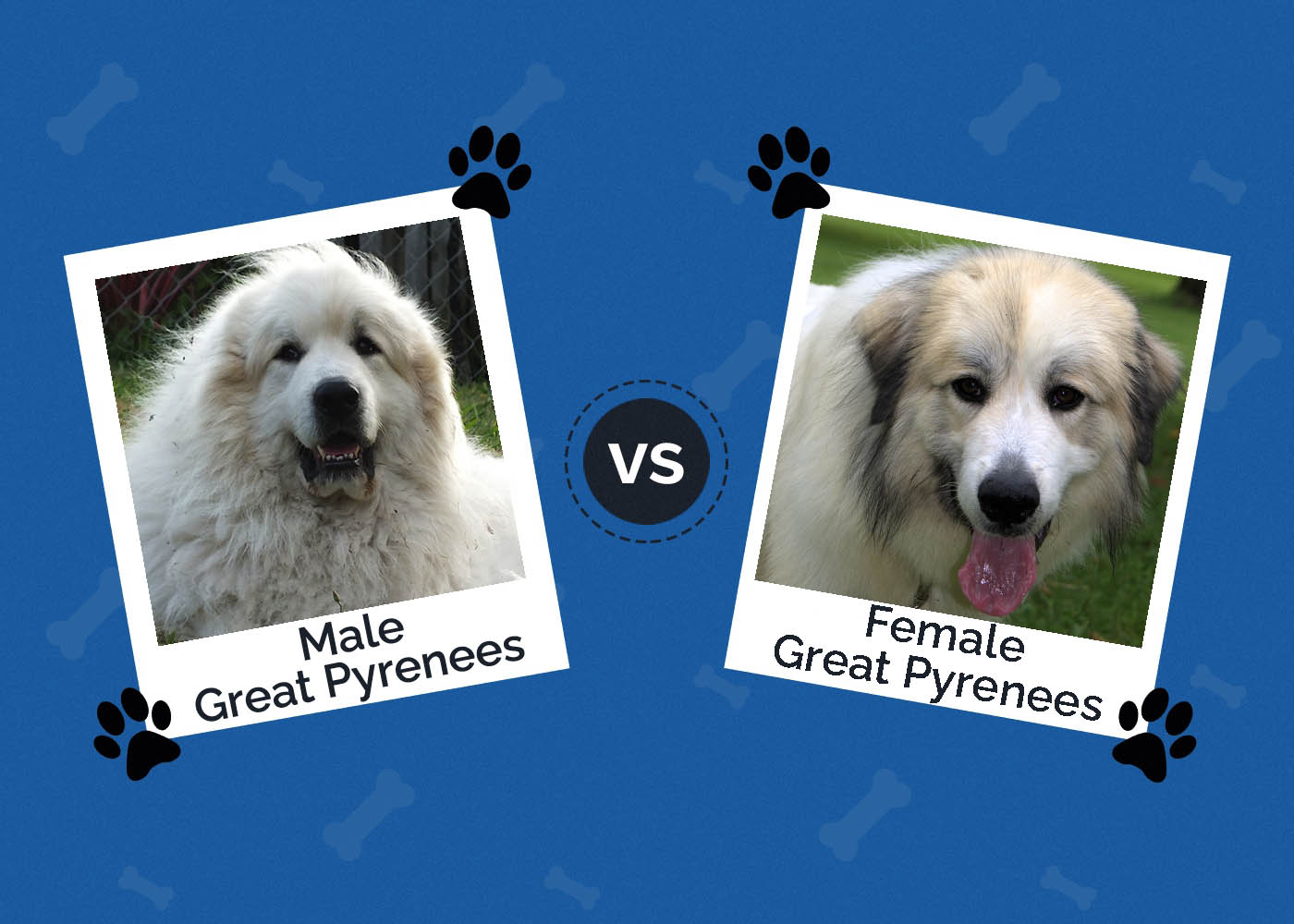
Great Pyrenees are large, livestock guardian dogs that are often kept as family pets today. However, unlike some other breeds, there is a significant difference between male and female Great Pyrenees. If you decide to adopt one of these fluffy dogs, it’s important to consider what gender is right for you.
Below, we’ll take a look at the size and temperament differences between male and female Great Pyrenees. This article should guide you to exactly what canine is best for you.

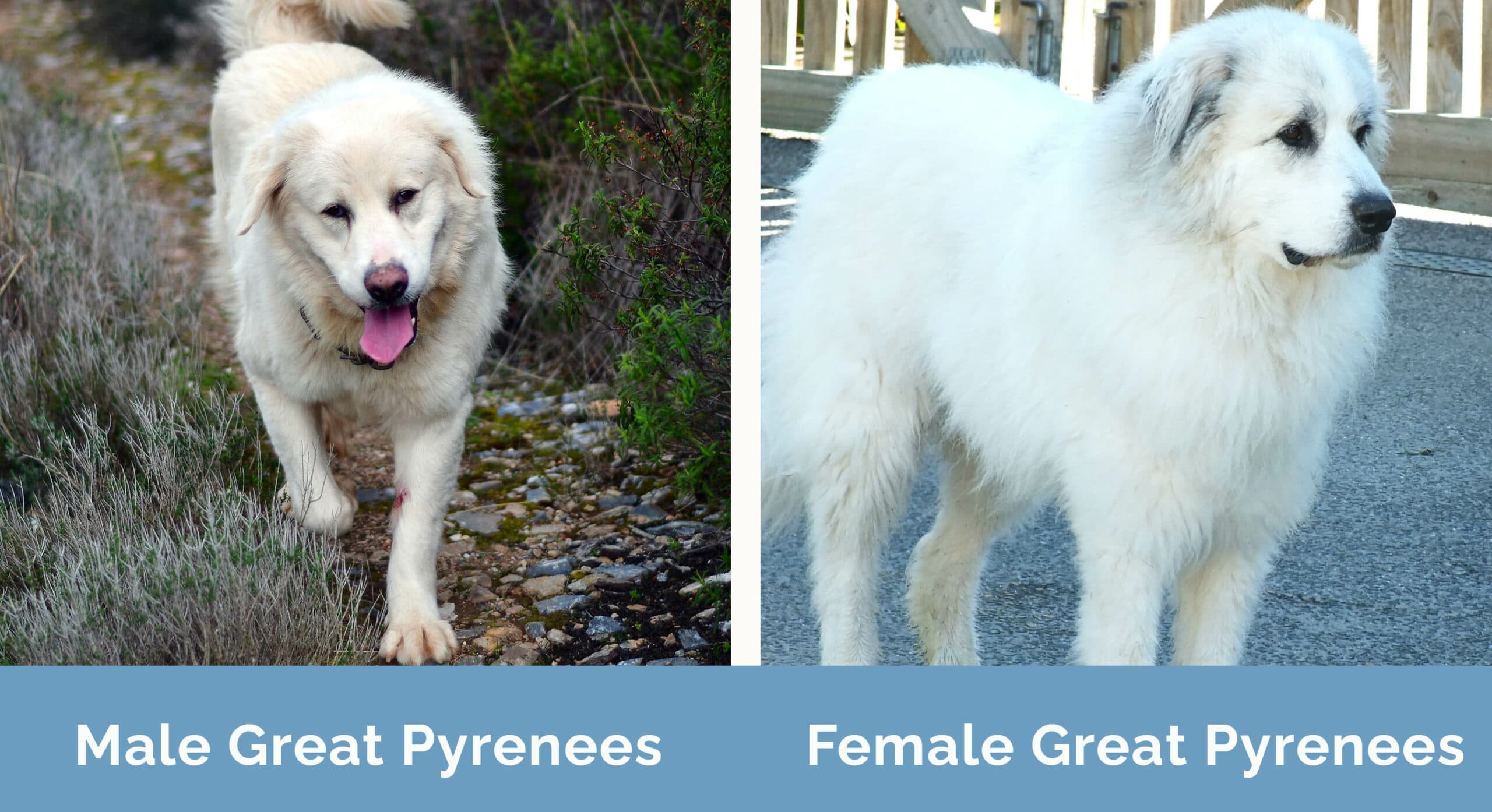
Visual Differences
At a Glance
Great Pyrenees 101
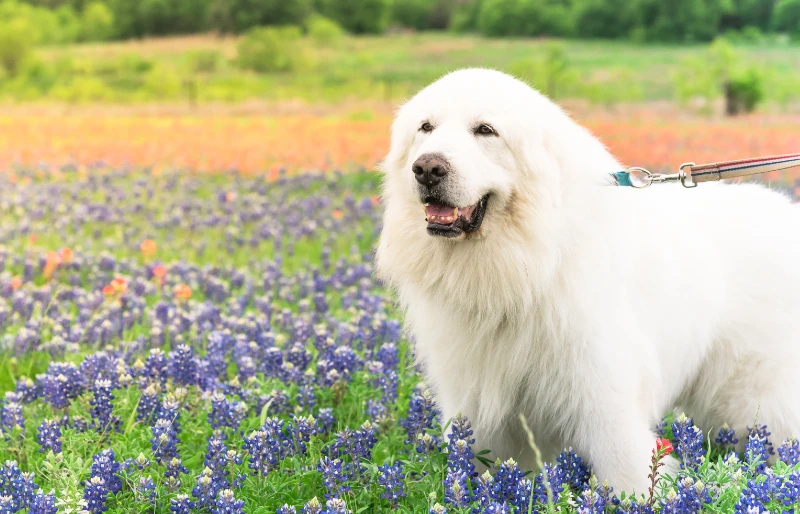
These large, white dogs originated from the mountains between France and Spain, called the Pyrenees Mountains, hence the dog breed’s name. They were originally used as livestock guardian dogs thanks to their gentle and protective nature. Their large size and thick coat allows them to withstand the cold, rugged conditions of the mountains.
These dogs can weigh up to 115 pounds, making them one of the biggest dog breeds around. Despite this, they are known for being gentle and affectionate. They’re very loyal and protective, requiring plenty of socialization so that they don’t see every stranger as a threat.
They aren’t the easiest to train, though. They were bred to guard sheep on top of a mountain alone. They didn’t need to listen to humans to do that, so they weren’t bred with obedience in mind. Early training can help break through some of their natural stubbornness.
Luckily, these dogs are pretty low-energy. They don’t need much exercise, though they do well with at least one longer walk a day. Their thick, double coat does require a significant amount of grooming, though. Otherwise, they can be prone to tangles.

Male Great Pyrenees Overview
Personality
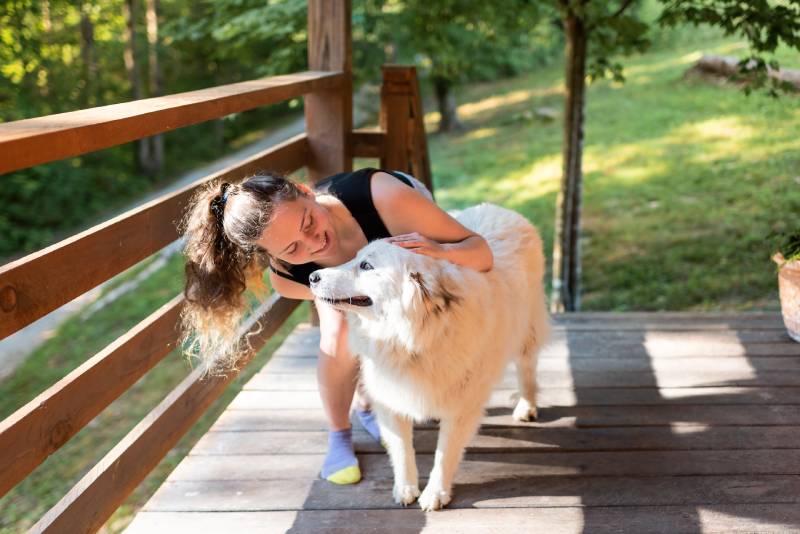
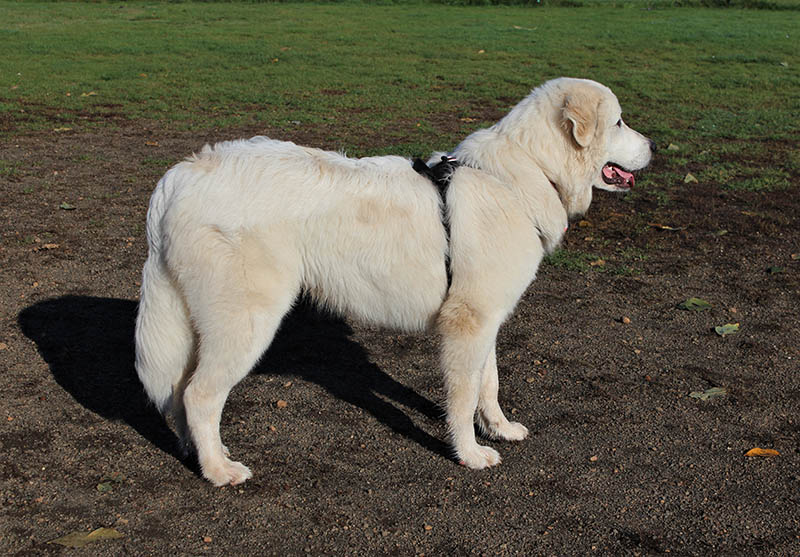
Male Great Pyrenees are known for being gentle and loyal. They’re protective dogs, but they are also very calm and stoic. They can make great family pets when properly socialized.
However, they can also be independent and stubborn. They don’t listen to their owners easily and often need plenty of socialization and training when they are young to grow into well-rounded adults.
Training
Training a male Great Pyrenees can be challenging, but it is important to start early. They are intelligent dogs, but they can be easily distracted. Positive reinforcement is the best way to train a Great Pyrenees, and it is important to be patient and consistent.
These dogs simply aren’t as obedient as other breeds, so don’t expect them to be.
Health & Care
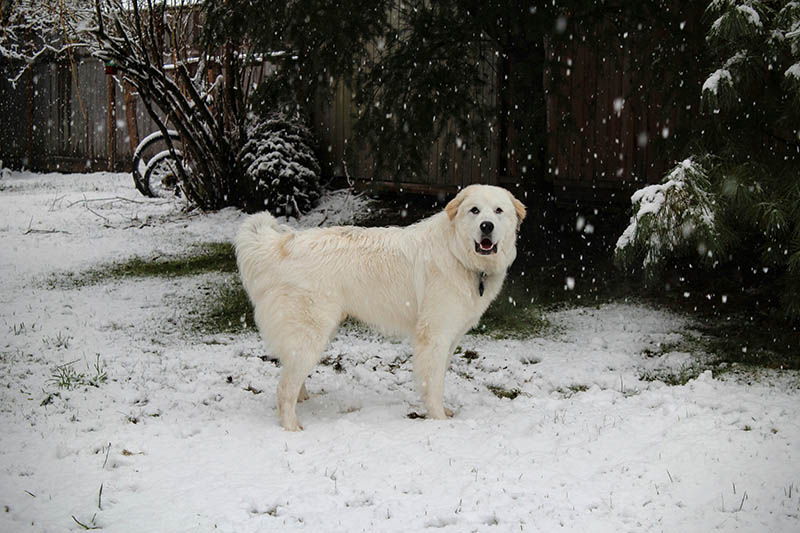
Generally, these are healthy dogs. They are prone to some joint problems, though, largely due to their big size. Purchasing from a quality breeder can help control some of these health issues. Luckily, they are not less healthy than females.
Breeding
Before breeding, it’s important that all dogs get checked for hip issues, which can be passed on to their puppies. Sometimes, dogs won’t show symptoms of these issues before they get quite old, so testing is important.
Males don’t have to go through pregnancy, but it’s important for them to be healthy before breeding.

Female Great Pyrenees Overview
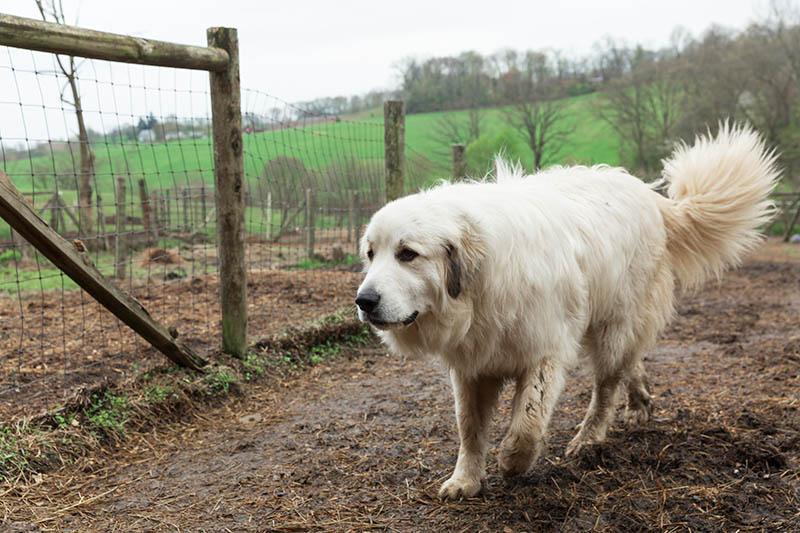
Personality
There aren’t many personality differences between females and males of this breed—females are also known for being loyal and protective. There aren’t any particular differences in their guarding instincts either—at least none that have been well documented.
They are also calm and stoic, especially when well-socialized. Of course, socialization and training are required for these dogs to be well-rounded.
Training
These dogs are fairly challenging to train, just like the males. They are intelligent, but they aren’t particularly obedient. Therefore, it’s important that you start training them early. Socialization is also key to preventing aggression, which can happen in females just as often as in males.
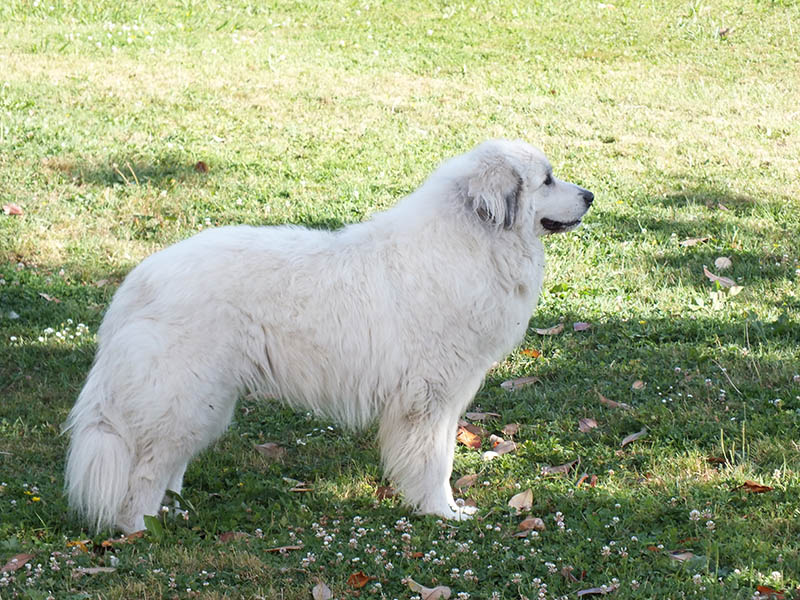
Health & Care
Females are prone to just as many health problems as males. They can get hip dysplasia, elbow dysplasia, and bloat. Most of these health issues are due to their larger size. Their joints simply have to put up with more weight, which causes a range of joint problems.
It’s important to take these dogs to the vet for preventative care, which can help reduce the chance of conditions developing beyond treatment.
Breeding
Females carry the brunt of the breeding. Therefore, it’s important that they are fed properly and taken for regular vet appointments before, during, and after pregnancy. Most vets recommend feeding pregnant dogs food formulated for puppies, as these include extra nutrients and calories.

Which Gender Is Right for You?
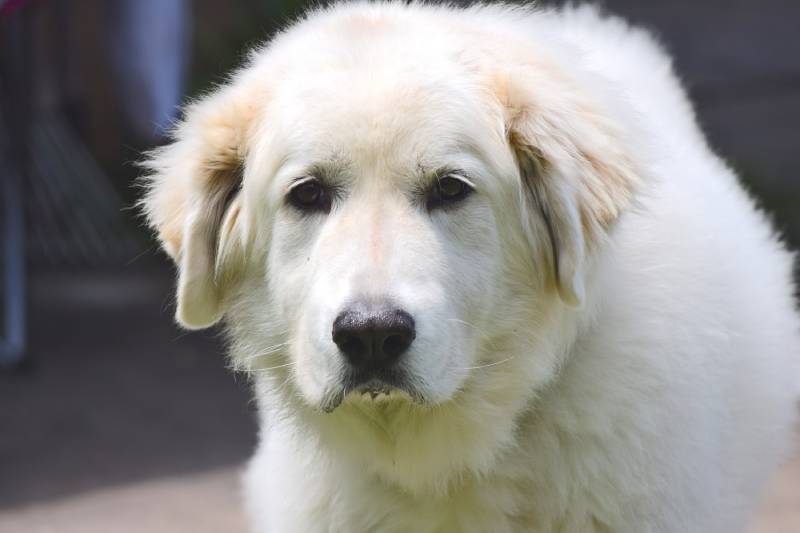
There are a few distinctive differences between male and female Great Pyrenees. However, these two genders are more alike than they are different. Male Great Pyrenees are larger than females typically, but this isn’t always the case. If you want a bigger dog, it is still often smart to choose a male instead of a female, though.
In terms of temperament and activity level, these dogs are basically the same. There aren’t any significant personality differences, and one gender isn’t more aggressive than the other. Some anecdotal evidence for temperament differences between genders does exist, but these are not backed by science.
See also:
Are Great Pyrenees Dogs Good with Cats? Vet-Verified Facts & Info
Pyrenean Mastiff vs Great Pyrenees: The Differences (With Pictures)
Sources
Featured Image Credit: (L) Webb Photography, Shutterstock | (R) Susie Prentice, Shutterstock
Get Hepper In Your Inbox


Pet care tips from our vets and experts, straight to your inbox.
You may opt-out at any time. View our Privacy Policy for more information.

Kristin is passionate about helping pet parents create a fulfilling life with their pets by informing them on the latest scientific research and helping them choose the best products for their pets. She currently resides in Tennessee with four dogs, three cats, two fish, and a lizard, though she has dreams of owning chickens one-day!
Join the conversation
Ask a question, share your story, or send private feedback.