Hepper is reader-supported. When you buy via links on our site, we may earn an affiliate commission at no cost to you. Learn more.
Senegal Parrot: Info, Care, Diet, Pictures & More


In this article
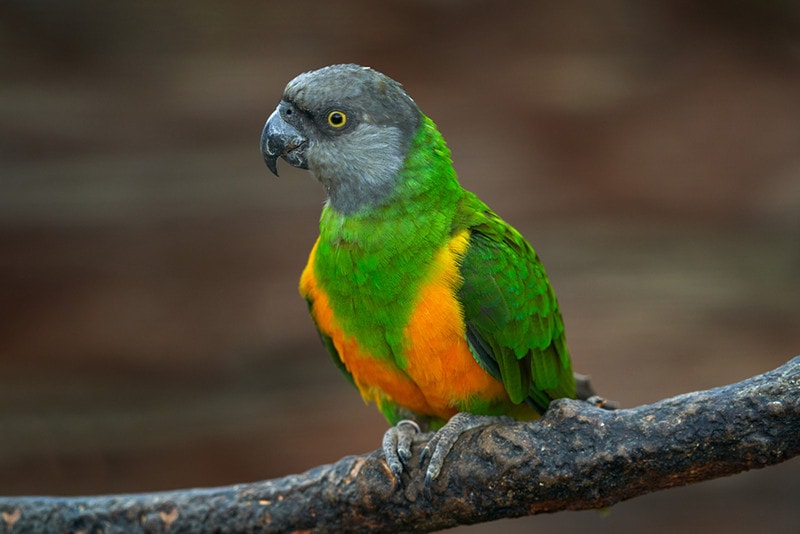
The Senegal parrot is a diminutive member of the Poicephalus genus, easily recognized by its gray head, large yellow eyes, orange belly, and bright green back. This charming bird has a cheerful but calm personality. It's not the most talkative of its family, but it manages to win hearts with its affectionate nature. As with all parrots, the Senegal should only be obtained from a reputable pet store or breeder.

Species Overview
| Color: | Charcoal-gray head, green back and throat, yellow-orange belly and rump |
| Size: | 9 – 10 inches in length |
| Weight: | 4 – 6 ounces |
| Wingspan: | 6 inches |
Like all parrots, Senegal parrots, affectionately called “Sennies,” are not the kinds of birds that can be left alone in a cage all day. Indeed, these sweet little charmers develop strong attachments to their human families, often becoming bonded to one person in particular. Although they're not particularly difficult to care for, it’s essential to give them plenty of attention every day. Fortunately, spending quality time with these little parrots isn't too hard a task, as they'll happily perch on your shoulder and affectionately rub their beak against your cheek.
Senegal Parrot Characteristics
History & Natural Habitat
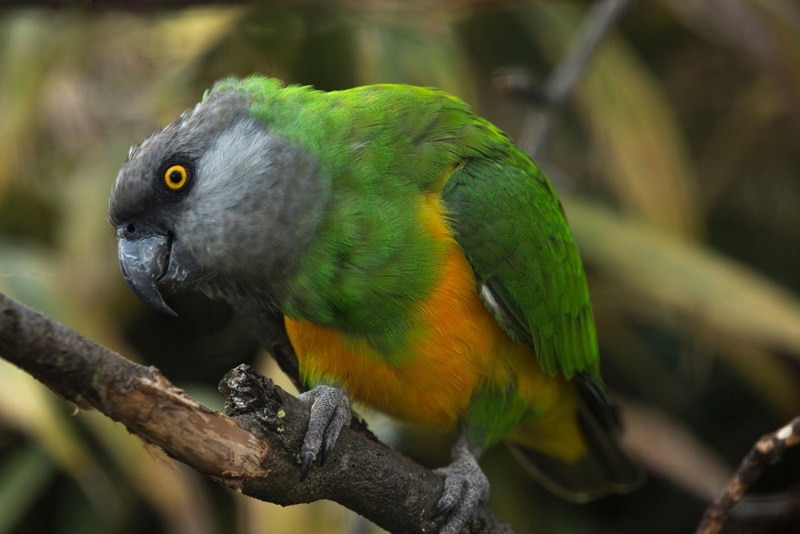
Wild Senegal parrots soar over the forests of West Africa, often in flocks of 10 to 20 individuals, foraging for fruits, seeds, and flowers. In agricultural areas, they are considered pests due to their penchant for feasting on crops like millet. They are listed as “Least Concern” in the IUCN Red List of Threatened Species.1
These birds reproduce readily in captivity, making them popular pets.

Things to Know When Owning a Senegal Parrot
Temperament
Adorable, smart, easy to train, sweet, and gentle, these little parrots are an endless source of joy for their lucky owners.
But what makes hand-fed Senegal parrots so charming is how easily they bond with their humans. They love spending time with their family members, sharing snacks, being entertaining with their cute antics, and mimicking various household sounds.
However, if you don't want your Sennie to become a "one person" bird, it is important that each member of the family interacts with it enough. Like certain dog breeds, these parrots tend to form strong bonds with one particular family member.
Sounds, Speech & Vocalizations
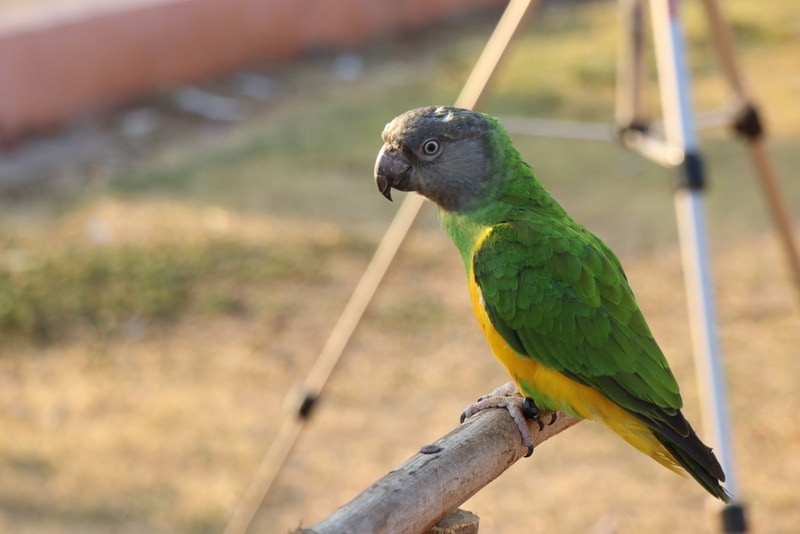
Senegal parrots can mimic certain sounds and mouth a few words, but they are not the most talkative birds. They are capable of learning around 10 words, and their voice, while less shrill than that of some of their noisier parrot relatives, consists mainly of a slight whistling or chuckling. If you live somewhere less tolerant of noisy avian companions, a Senegal parrot may be ideal for you.
Senegal Parrot Appearance
Immature Senegal parrots display less vibrant coloring than adults. Their heads are brownish and so are their eyes. It is only when they reach adulthood that they develop more "flashy" colors, though these are less intense compared to some other species of parrots.
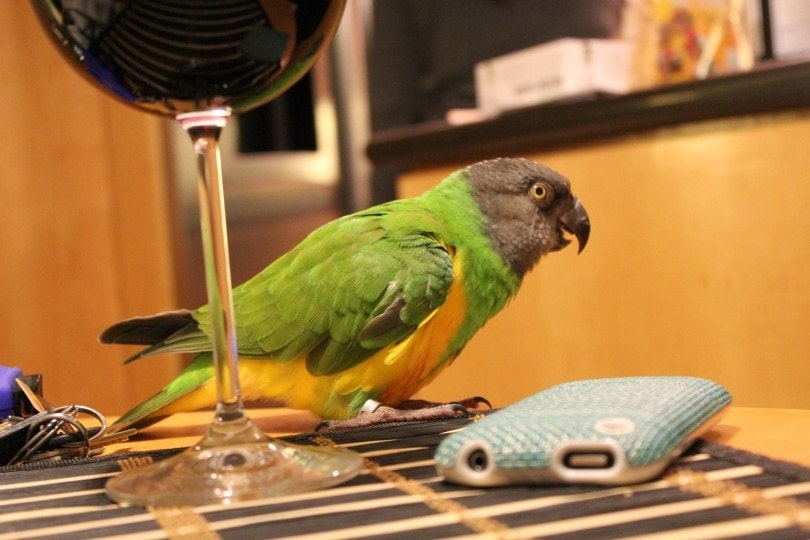
When these birds mature, their heads and faces become charcoal gray, while their backs and throats turn a vibrant shade of green. Their undercarriage and rump take on a warm yellow-orange hue. They can be easily recognized by the green "V" shape on their throat, which extends to their chest. Their beak remains gray and their eyes become bright and yellow.
It can be quite challenging to distinguish between males and females because they look quite similar. However, females tend to have a longer green "V" on their orange bellies than males.
Caring for the Senegal Parrot
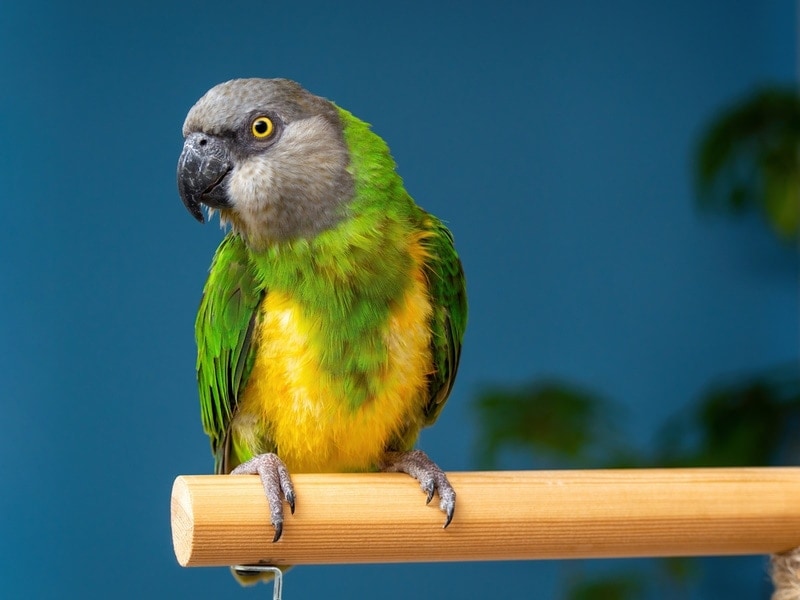
It's not too difficult to care for a Senegal parrot, as long as you're willing to give it plenty of attention and love every day. Pay close attention to its diet, and invest time in creating a safe environment for your feathered friend to thrive and be happy.
Diet & Nutrition
In their natural habitat, Senegal parrots feed mainly on fruits, seeds, and blossoms. As pets, these birds require a diet that is about 70% pellets, 20% vegetables, fruits, and greens, and 10% seeds and nuts. An all-seed diet should be avoided at all costs, as it can lead to nutritional deficiencies, obesity, and other diseases.
If your Senegal parrot regularly consumes pellets, supplements and vitamins are generally not necessary. However, if you want to ensure that your bird's food is meeting all its specific needs, consult your veterinarian for advice. They will be able to evaluate your parrot's diet and recommend any necessary changes.
Cage Requirements
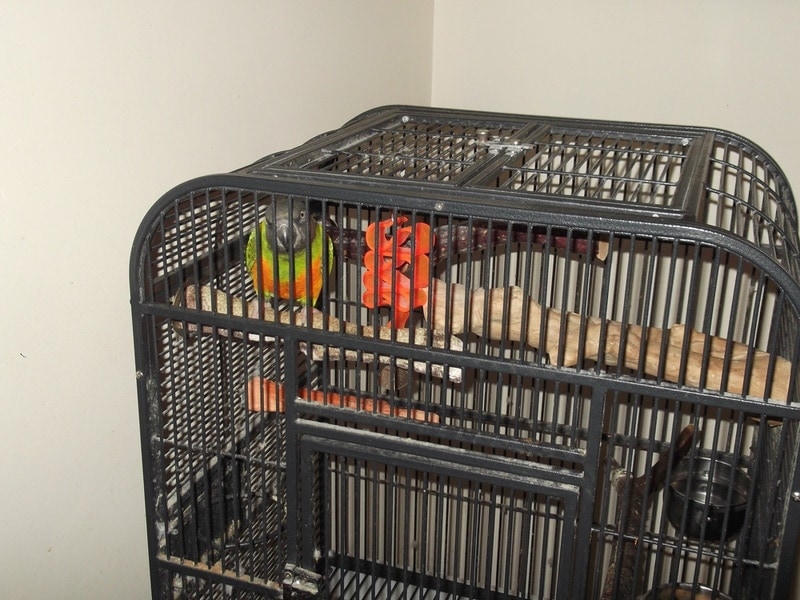
Any parrot cage or aviary must have enough space for them to be able to expand their wings fully without touching the sides. Many cages are tall, but often not wide enough. The more ideal scenario is to have a cage for protection when needed and sleeping in, with an open air area where they can hang out with their family during the day.
Exercise
Just because they're birds doesn't mean they don't need exercise! Indeed, like dogs and cats, Senegal parrots need playtime and daily exercise to stay in good shape and maintain a healthy weight. This is why they should be able to time outside of their cage and under your strict supervision. That said, they will often be happy just to perch on your shoulder while you go about your business.
Health & Conditions
Senegal parrots are hardy birds, but they can be affected by viruses, fungal diseases, and other contagious illnesses that commonly affect pet birds. This highlights the importance of regular check-ups, as the veterinarian can perform physical exams and identify any potential health problems.
A common health issue among Senegal parrots is aspergillosis. This fungal disease causes respiratory illness in pet birds by damaging the tissues of the upper and lower respiratory tract. Aspergillosis is difficult to cure, and treatments can spread over several weeks before it can be completely eliminated from the parrot's body.
Avian bornavirus (ABV) is another serious condition that can affect Senegal parrots, though it is more commonly seen in macaws and African grey parrots. It is a fatal, contagious neurological disease that mainly affects the nervous system of birds. One of the clinical signs is rapid and sudden weight loss.
Also, Senegal parrots can become overweight, especially if their diet consists mainly of seeds and nuts and they are confined to their cage all day.
Keeping your Sennie’s home clean, ensuring that their water supply is always fresh, and providing them with a high quality diet, are the best ways for you to help keep your parrot healthy.
3 Little-Known Facts About the Senegal Parrot
1. Senegal Parrots Can Be Lifelong Companions
Senegal parrots have a remarkably long lifespan, often exceeding 30 years when properly cared for. Some individuals can even reach the ripe old age of half a century! Therefore, this exceptional longevity underlines the level of commitment required by any potential owner.
2. Senegal Parrots May Experience Separation Anxiety
Senegal parrots in captivity need attention to thrive and be happy. In the wild, they are often seen in flocks of around 10 individuals. This social nature makes them particularly attached to their humans, which can lead to separation anxiety if left alone for long periods.
3. Senegal Parrots Need Frequent Handling
Although Senegal parrots are generally easy-going and calm, they can become nervous and nippy if they have not been sufficiently handled and socialized.
Conclusion
If you have fallen under the spell of the Senegal parrot, you are not alone! These adorable little clowns are an endless source of happiness and joy for their human families.
However, before you start looking for your perfect little winged companion in pet stores, you might consider adopting a Senegal parrot through a parrot rescue organization. If you prefer a breeder, be sure to vet them thoroughly before getting a baby Senegal parrot or adult.
In any case, make sure you have carefully weighed the pros and cons of taking in a bird with such a long life expectancy and a need for lots of love, care, and affection.
You might also want to check out: Dracula Parrot: Pictures, Personality, Food & Care Guide
Sources
Featured Image Credit By: Ondrej Prosicky, Shutterstock
Get Hepper In Your Inbox


Pet care tips from our vets and experts, straight to your inbox.
You may opt-out at any time. View our Privacy Policy for more information.
Genevieve, a biologist and science writer, who harbors a profound affection for capuchin monkeys, pumas, and kangaroos. This passion has led her to travel extensively, volunteering and working at wildlife rehabilitation centers in Bolivia, Guatemala, Canada, and Australia. Now residing in Argentina as a Canadian expat, Genevieve enjoys the view of horses and cows greeting her from the vast plains outside her home office window. She proudly cares for three rescued dogs—Lemmy, Nala, and Pochi—and a playful kitten named Furiosa. Sharing her extensive knowledge and love for animals brings her immense joy and fulfillment.
Join the conversation
Ask a question, share your story, or send private feedback.