Hepper is reader-supported. When you buy via links on our site, we may earn an affiliate commission at no cost to you. Learn more.
My Dog Ate a Tampon! Our Vet Explains What to Do

In this article
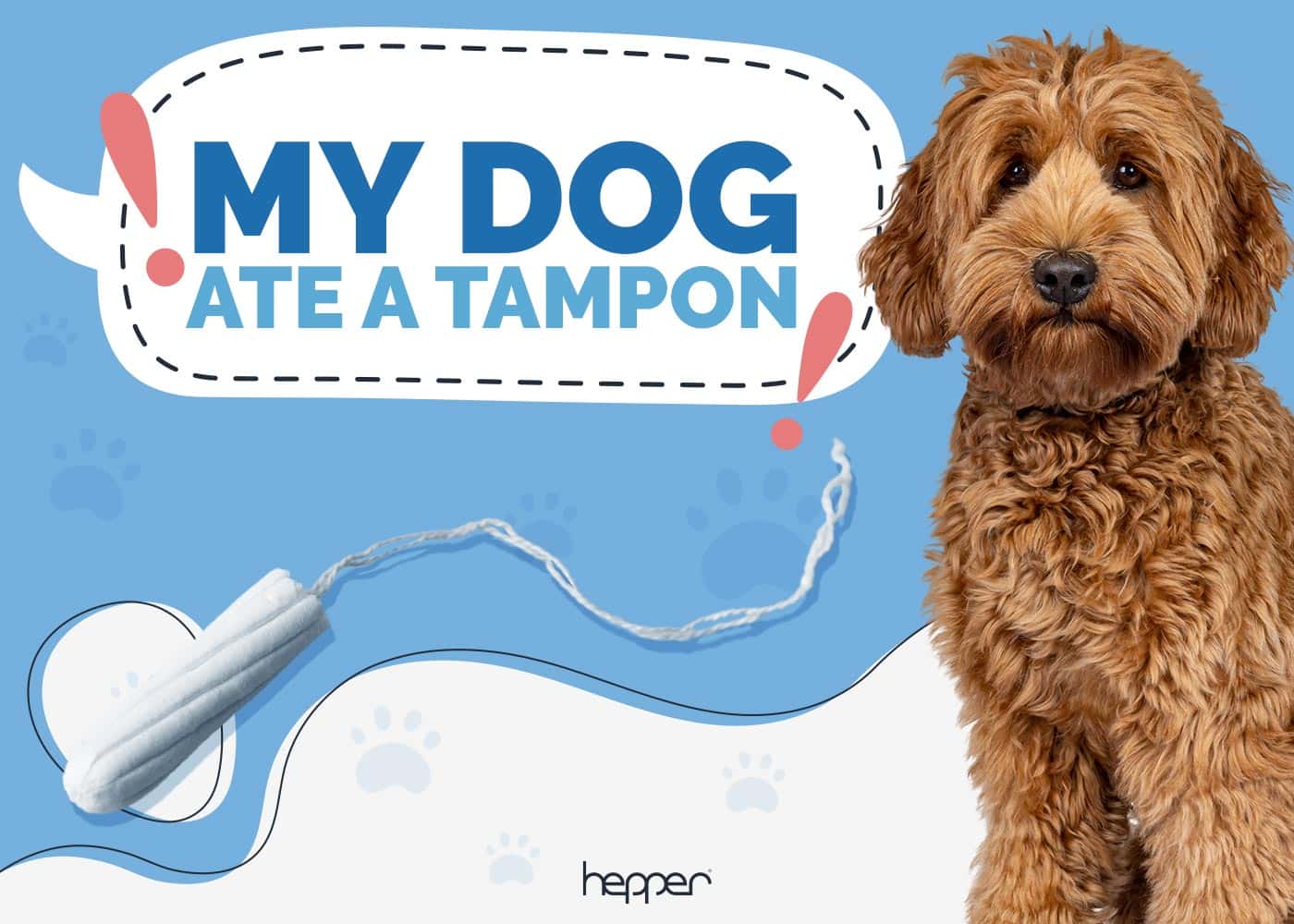
If your dog has eaten an unused or used tampon, go to the ER immediately. If you cannot get to the veterinary clinic for various reasons, monitor your dog for any signs of discomfort, whether it is a change in behavior or something else that makes you think that something is wrong with your dog. (e.g., lethargy, lack of appetite or defecation, etc.).
Read on to learn what can happen if your dog eats a tampon, the clinical signs that might appear, and what you can do to help your pet.

Is My Dog in Danger If They Ate a Tampon?
Any foreign object that your dog eats, including a tampon, can put your pet's life in danger. So, yes, your dog can be at risk if they eat a tampon.
Tampons are designed to retain liquids and moisture. As a result, unused tampons are even more dangerous because they will swell in your dog's throat or stomach, making them difficult to remove or pass.
Tampons (used or not) can put dogs' lives at risk in two ways:
For these reasons, it is recommended to call the vet and act immediately. Here is what you can do.
What to Do If Your Dog Is Choking on a Tampon
If an object blocks your dog's airways, it can kill them. Therefore, if you see your dog choking, open their mouth gently (make sure you don’t get bitten), and try to see the tampon. Don’t insert your hand without seeing the object because you risk pushing the tampon even farther into your dog’s throat and making them suffocate. Extract the tampon if you see it.
Signs That Your Dog Is Choking
Clinical signs that your pet is choking will be obvious and may include:
Act immediately if you notice these clinical signs. If you don’t see the tampon in your dog’s throat, try the Heimlich maneuver or call the vet immediately.
Heimlich Maneuver If You Have a Small Dog
If you have a medium or a large dog, you can apply the Heimlich maneuver when they are lying on the side or when they are standing.
Heimlich Maneuver When Your Dog Is Lying On One Side
Heimlich Maneuver When Your Dog Is Standing
If none of these methods work, contact the veterinarian immediately.
What to Do If Your Dog Swallowed a Tampon
If your dog swallowed a tampon with the plastic applicator on and it passed from the stomach into the intestine, it can cause bloody diarrhea and pain if it scratches the intestinal lining. If the tampon gets stuck in the intestine, it can lead to serious complications and even the death of your pet.
Do not induce vomiting unless your vet has recommended it. If you cannot go to the vet for various reasons, you can wait for a couple of days and see if your dog vomits or passes the tampon in their stool or if clinical signs occur.
Signs That Your Dog Has an Intestinal Obstruction
If the tampon has caused an intestinal obstruction (total or partial), the following clinical signs may occur:
If these clinical signs occur, you must take your dog to the vet as soon as possible. The intestinal blockage will not go away on its own, and severe complications will occur (e.g., intestinal perforation, peritonitis, sepsis), which can put your dog's life in danger.

Final Thoughts
Eating a tampon can be dangerous for your dog. It can get stuck in the throat and lead to suffocation or can end up in the stomach or intestine, where it can damage the mucosa or cause an obstruction. All these cases are severe and can lead to the death of your dog. For this reason, it is vital to act immediately.
If the tampon has led to suffocation, try to remove it by hand or apply the Heimlich maneuver. If you fail, take your dog to the closest ER clinic. If the tampon has been swallowed, do not induce vomiting at home, and contact the veterinarian. They can recommend taking your dog to the clinic or waiting a few days to see if your pet vomits the tampon, passes it in their feces, or if clinical signs occur.
Related articles:
Sources
Featured Image Credit: Lashchuk, Shutterstock
Get Hepper In Your Inbox


Pet care tips from our vets and experts, straight to your inbox.
You may opt-out at any time. View our Privacy Policy for more information.
Iulia Mihai is a veterinarian with more than 13 years of experience in pet pathology, laboratory, and cancer. She studied at the University of Agronomical Sciences and Veterinary Medicine of Bucharest, Romania Iulia earned a master’s degree in equine and pet pathology and studied epithelial cancer for her Ph.D. Dr. Mihai's passions for internal medicine and parasitology inspired her to volunteer at the faculty’s clinic in her third year of college. She has worked in a couple of veterinary clinics over the years as an internal medicine specialist, and loves to write and educate pet parents about pet nutrition, behavior, and diseases.
Iulia is a passionate veterinarian with a strong affinity for veterinary parasitology, internal medicine, and laboratory. She is excited to share her experience and knowledge with pet owners around the world through her writing and hopes to educate people on pet nutrition, diseases, and behavior.
Education
Iulia graduated from the University of Agronomical Sciences and Veterinary Medicine, Bucharest, Romania, in 2012 and has a Master’s degree in Small Animals and Equines Pathology and is certified in HAACP food safety system implementation. Iulia started her Ph.D. in epithelial cancer in dogs and cats in 2013. Her research is published in national and international veterinary journals.
Experience
Dr. Iulia has been a veterinarian for more than 14 years. She is experienced in animal pathology and laboratory and has experience with exotic animals, such as pet rats and ferrets. She also has skills in the field of clinical pathology, laboratory, microscopy, cancer, and imaging.
Join the conversation
Ask a question, share your story, or send private feedback.