Hepper is reader-supported. When you buy via links on our site, we may earn an affiliate commission at no cost to you. Learn more.
How Big Do Red-Footed Tortoises Get? Average Weight & Growth Chart
In this article
If the rich tapestry of the animal kingdom piques your curiosity, then the red-footed tortoise surely stands out with its vibrant colors and captivating personality. Their charm lies not only in their striking appearances but also in their intriguing growth journey. Imagine, these humble creatures can grow from a tiny hatchling to an adult male of up to 13.5 inches and a weighty 20 pounds! Meanwhile, the females, though slightly smaller, proudly flaunt their sizes of around 11.25 inches.
As we delve deeper into understanding their characteristics, feeding habits, environmental needs, and lifestyle, we begin to appreciate their uniqueness and the vital role we play in their lives. So, buckle up for this exciting adventure, and let's get to know these wonderful tortoises more intimately.

Red-Footed Tortoise Breed Overview
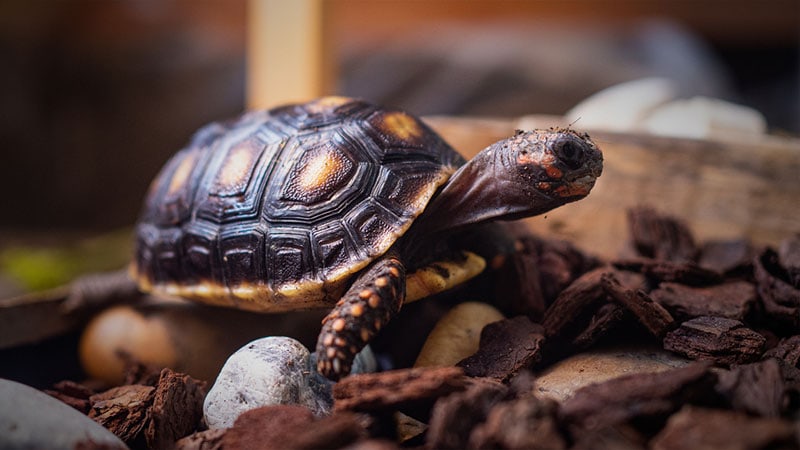
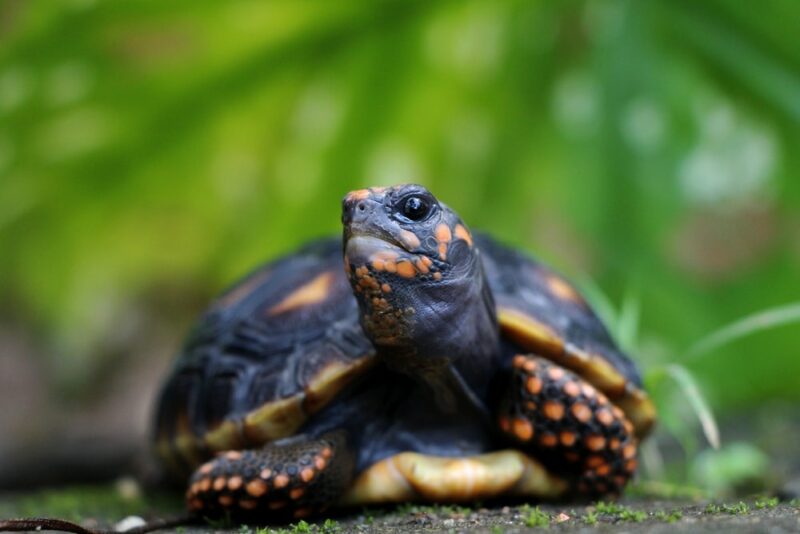
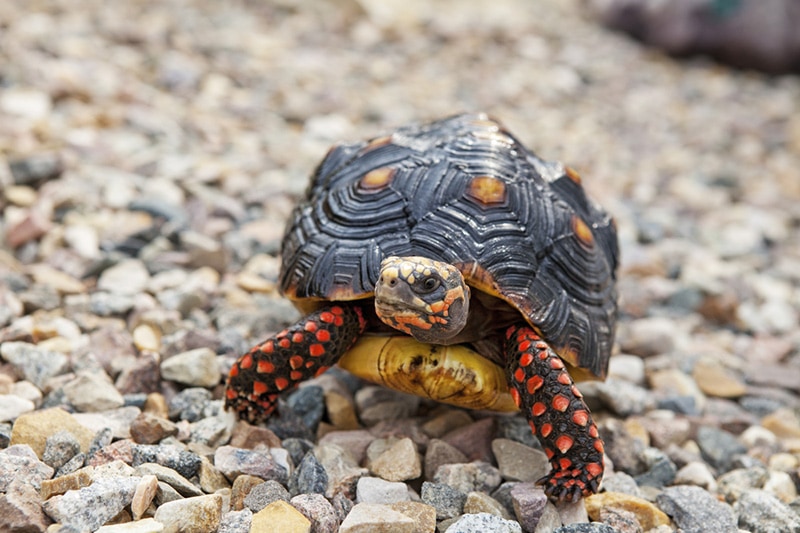
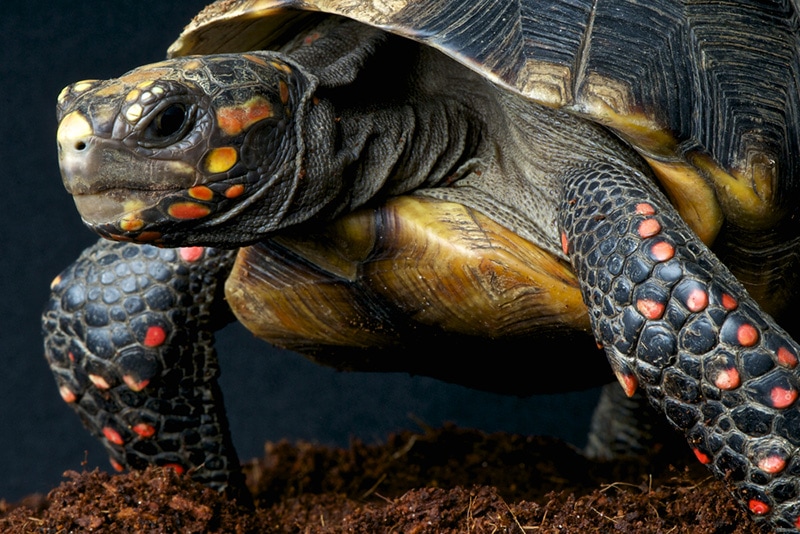
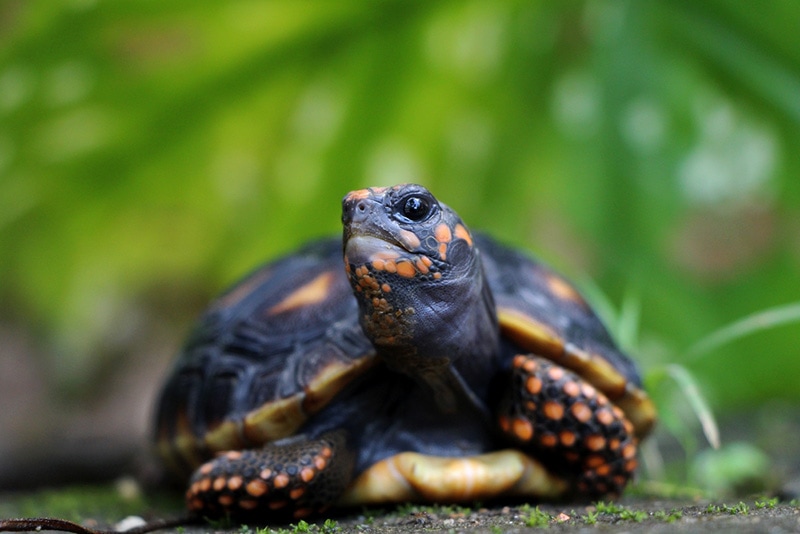
Originating from the varied ecosystems of South America and the Caribbean, these tortoises carry the essence of these diverse landscapes in their habits and traits. Their physical features are a canvas of contrasting colors. With skin that is primarily black, they bear shells in shades of black, gray, or brown. The youngsters often exhibit a splash of charm with yellow or tan accents adorning each shell bump. As they mature, they may develop vivid red markings on their heads, while splashes of orange, yellow, or red add vibrancy to their legs and tail.
But these tortoises are more than just their eye-catching looks. They are unique communicators, using head movements to signal and recognize each other. In terms of diet, they mostly prefer an herbivorous lifestyle, feasting on leaves, grasses, fungi, fruits, and flowers. Occasionally, they would indulge in small invertebrates, diversifying their diet and contributing to their health.
With good care, red-footed tortoises often celebrate half a century or more of life! So, welcoming these tortoises into your life is a long-term commitment filled with years of companionship and shared learning.
Red-Footed Tortoise Size & Growth Chart
Given their widespread geographical distribution, these tortoises display a varied range in size. To help illustrate this, we've compiled an easy-to-follow chart highlighting the average weight and length of these tortoises as they progress through their different life stages.
| Age | Weight Range | Length Range |
| Hatchling | 35–50 grams | 1.5–2 inches |
| 6 months | 250–300 grams | 3–4 inches |
| 1 Year | 500–750 grams | 5–6 inches |
| 2 Years | 4–6 pounds | 7–9 inches |
| 5 Years | 11–16 pounds | 9–11 inches |
| Adult Male | Up to 20 pounds | Up to 13.5 inches |
| Adult Female | Up to 20 pounds | Up to 11.25 inches |
When Does a Red-Footed Tortoise Stop Growing?
Upon hatching, red-footed tortoises are small but quickly grow, with their most significant transformations occurring in the first few years. This speedy growth phase slows down as they near maturity, typically around the age of 5 to 7. It's around this time that these fascinating creatures mostly reach their full size, with males typically outgrowing females slightly.
Yet, reaching maturity does not equate to a halt in growth. Rather, their growth continues at a much slower pace into their adult years. This continual growth, albeit at a reduced rate, is influenced by various factors, including a balanced diet and a well-maintained environment. Hence, these tortoises symbolize an enduring journey of growth and adaptation throughout their lifespan.
Factors Affecting the Size of a Red-Footed Tortoise
Size isn't merely a numbers game when it comes to red-footed tortoises; it's a complex interplay of various elements. Primarily, genetics set the stage, with male tortoises usually taking the lead in size. Additionally, a tortoise's lineage and its ancestors' geographical origins impart subtle differences in size among different tortoise groups.
However, natural factors aren't the only determining elements. Environmental factors and diet also play critical roles. By maintaining a diet rich in leaves, grasses, fruits, flowers, fungi, and an occasional treat of small invertebrates—akin to their natural eating habits—you create an environment conducive to optimal growth. This holistic approach, embracing both natural and nurturing elements, can significantly influence your tortoise's development and overall size.
Ideal Diet for Maintaining a Healthy Weight
Navigating the dietary needs of your red-footed tortoise may seem like a delicate balancing act. The secret? Replicate their natural diet. These tortoises feast on a variety of leaves, grasses, fruits, fungi, and flowers, and occasionally snack on invertebrates in the wild. This diverse menu not only satisfies their palate but also fuels their growth and overall health.
However, maintaining your tortoise's health isn't just about what they eat; it's also about how much they eat. Overfeeding or providing them with unsuitable foods can lead to unwanted weight gain or irregular growth. Thus, regularity and consistency in their diet, without any drastic changes or overindulgences, are vital. It's all about serving them a balanced diet to keep them healthy and happy.

How to Measure Your Red-Footed Tortoise
Got a tape measure at hand? Great! Let's jump into understanding how to accurately measure your red-footed tortoise. First, it's crucial to remember that patience is key here. Tortoises, like any other pet, may take some time to get used to the process.
Begin by ensuring that your tortoise is comfortable and calm. Hold them gently to avoid causing any distress. For measuring length, stretch out the tape measure from the front edge of the shell (just above the head) to the back edge (above the tail). This measurement is the straight carapace length, the most common measurement for tortoises.
For weight, use a kitchen or postal scale that has been calibrated accurately. Place your tortoise gently on the scale and note the reading. It is good practice to maintain a log of these measurements to monitor growth and health. After all, a happy and healthy tortoise is the ultimate goal.

Conclusion
Embarking on a journey with your red-footed tortoise is a commitment filled with joy and shared growth. It's essential to comprehend their growth patterns, size, and the influencing factors to create a nurturing environment. Remember, these captivating creatures thrive with consistent care, a balanced diet, and room to roam. The journey may be long, but the rewards are immeasurable. After all, nothing compares to the companionship of these endearing creatures, watching them grow, and learning along the way.
Sources
Featured Image Credit: Brenda Carson,Shutterstock
Get Hepper In Your Inbox


Pet care tips from our vets and experts, straight to your inbox.
You may opt-out at any time. View our Privacy Policy for more information.

Melody Russell is an experienced pet enthusiast with a background in the animal care industry. She has worked at a zoo, served as a dedicated pet sitter, and has a passion for breeding and raising leopard geckos. As a versatile freelance writer, she excels in various genres, crafting captivating stories, informative articles, and engaging social media content. You can find her cat page, TheCommonKitties_, on Instagram, where she shares the adorable antics of her beloved feline companions. With her practical expertise and creative flair, she is eager to contribute her skills in pet care and writing to make a positive impact on the lives of animals.
Join the conversation
Ask a question, share your story, or send private feedback.