Hepper is reader-supported. When you buy via links on our site, we may earn an affiliate commission at no cost to you. Learn more.
Roundworms in Cats: Our Vet Explains Causes, Signs & Treatments


We do our best as humans not to think about the small creatures that want to make a home in our bodies. The thought of worms squirming around our insides is enough to make even the most stoic among us cringe. Unfortunately for the feline population, though, worms often come as a package deal. Almost all cats will become infested with worms at some point in their lives, and it is up to us to prevent them as best we can.
Fortunately, the treatment and prevention of worms is usually quite simple. Continue reading to find out more!

What Are Roundworms in Cats?
Roundworms are among the most common parasites that infest cats. The two species that affect felines are called Toxocari cati and Toxocara leonina. These large white or light brown “round” worms (hence their name) can grow to be 3–6 inches long and in some cases, can be seen with the naked eye in a cat’s stool. Adult worms occupy the intestines of cats, feeding on the digested contents that have just been broken down by the stomach, using these to keep growing and continue their lifecycle.
While they spend most of the time in the guts of their hosts, they do go on a destination tour around the body. During the immature stages of the worm’s lifecycle, which we call the “larval” stages, they travel to the lungs, the liver, and in pregnant cats, the mammary glands. This is a crucial detail because it affects how cats are infested by roundworms and the clinical signs of roundworm infestation that they may show.

What Are the Signs of Roundworms in Cats?
Roundworm infestation can sometimes be silent. For many healthy cats, we may never know that they have roundworms. However, in very young kittens, elderly cats, or those that have underlying medical issues or are immunocompromised, a high worm burden may be extremely dangerous and in some cases, life-threatening.
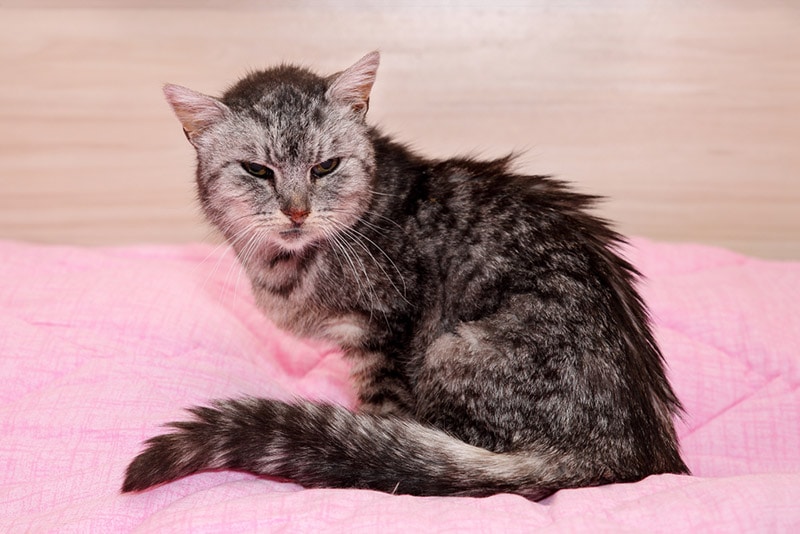
The most common signs of roundworm infestation are weight loss and a general sense of malaise. In kittens, you may simply notice that they have poor growth and look “lackluster.” Despite the weight loss, they often have a round pot-bellied appearance—an obvious sign (especially in kittens) of having worms.
You may also see diarrhea and vomiting, and sometimes, there will be live adult worms in the contents of the feces and vomit. The absence of worms, however, doesn’t mean the cat doesn’t have an infestation. The migration of the immature worms around the lungs may also cause coughing and pneumonia.

The 3 Potential Causes of Roundworms in Cats
Roundworms have a clever lifecycle that ensures that there are numerous ways for a cat to become infested with them.
1. Ingesting roundworm eggs from the environment
A roundworm’s eggs are extremely hardy. Expelled by adult worms in the feces of infected cats, they can live in the environment in the right conditions for months and years. Even after the feces have dissolved, they can remain in the soil, infesting any cat that happens to encounter them.
2. Ingesting an “intermediate” host that contains the larval stages of roundworms.
Other animals, such as rodents, birds, and insects, can act as intermediate or “transport” hosts. They can be infested by roundworms, but the worms cannot continue their development into adult worms and complete their lifecycle within these hosts. However, the larval stages can remain encysted within their tissues, capitalizing on a cat’s tendency to hunt, and then ingest these animals. After a cat has eaten their prey, the roundworms will continue their development into adult worms within the cat’s body.
3. Transmission through the mammary glands to the nursing young through the milk
When a queen is infested in late pregnancy, the transmission of Toxocara cati can occur through her colostrum and milk. Encysted larvae can remain dormant in the liver of a female cat, only to be activated in pregnancy, where they migrate to the mammary tissue, ready to infest the nursing kittens.

How Do I Care for a Cat With Roundworms?
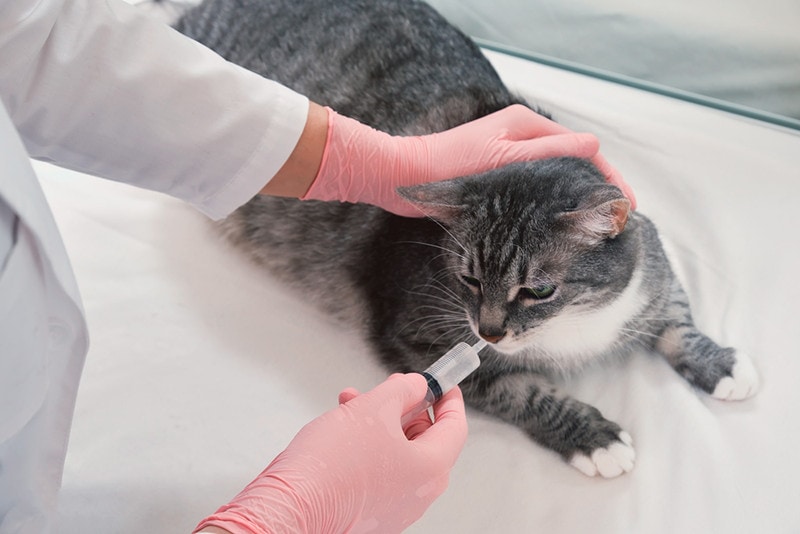
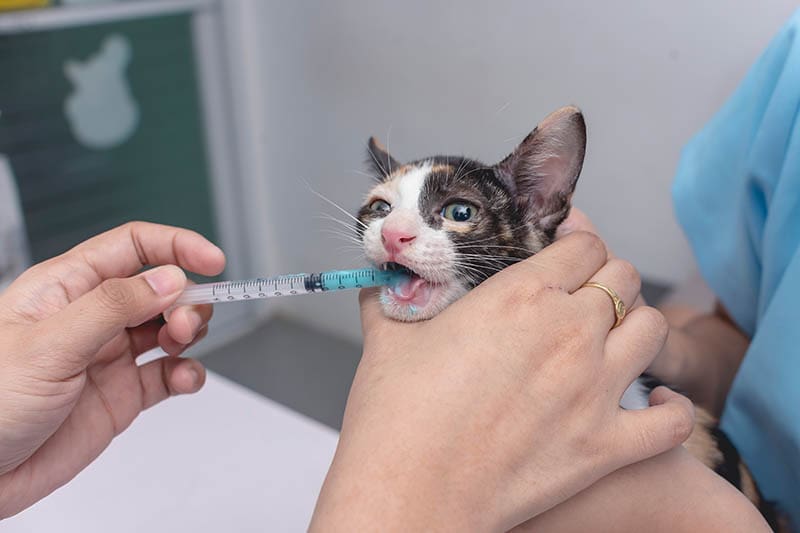
Fortunately, the treatment of roundworms in cats is relatively straightforward and affordable. It involves the cat taking a dewormer that is designed to eliminate the adult worms in their intestines. Since it does not act upon the immature stages of the larval cycle, multiple doses of the medication are usually required, to be given at 2–3-week intervals.
As is always the case with healthcare, prevention is better than a cure. Discussing roundworm prevention protocols with your veterinarian at their regular health checks is advised. If you have your cat on regular worming medication that is dispensed by your veterinarian, likely, your cat is already covered for roundworms.
Frequently Asked Questions (FAQs)
Do Roundworms Pose a Human Health Risk?
Yes, roundworms can impact human health, and children are especially vulnerable to Toxocara cati. While they cannot develop into adults in a human’s body, the larval stages of the worm can cause cysts in several organs (such as the liver, lungs, and brain), and rarely, cause blindness. Symptoms include coughing, fever, eye problems, and inflammation of the liver. However, many infested people do not demonstrate any symptoms at all.
If cats and children both live in the home, the cats should be on regular parasite prevention. To prevent any risk of human infestation, litter trays should be cleaned daily, and if the cats toilet outside, children should have limited access to those areas. Since eggs can accumulate in soil, a strict hygiene regime should always be followed, and you should ensure that any sandpits in your yard are kept covered to prevent stray cats from using them as their litter trays.
How Are Roundworms Diagnosed in Cats?
Roundworms can be diagnosed by a “fecal flotation test,” which involves using a sample of your cat’s stool. The eggs will be collected onto a glass slide, where they can be inspected under a microscope. Worm eggs have different characteristics, enabling vets to identify the worms wreaking havoc in their patient’s bodies and thus, the appropriate treatments and preventions.


Conclusion
To keep your feline and your family as healthy as possible, put your cat on a parasite prevention protocol that will eliminate the threat of roundworms. If you have recently acquired a kitten, start the deworming routine early; discuss the appropriate dewormer with your veterinarian at their health check-ups.
Sources
Featured Image Credit: Alexander Andrews, Unsplash
Get Hepper In Your Inbox


Pet care tips from our vets and experts, straight to your inbox.
You may opt-out at any time. View our Privacy Policy for more information.
Meg is a veterinary surgeon and writer originally from Australia, who currently is living and working in Scotland with her family. She is a passionate advocate of preventative medicine, client education and believes medicine never has a one size fits all approach. When not practicing veterinary medicine, her happy place is out walking the hills with her baby daughter and over-excited Labrador, and writing.
Dr. Meg is from Australia and currently lives with her family in Scotland. When she's not working, you can find her taking her clan out on the hills, writing, and consuming books. She enjoys the variety of general practice and the feeling that there is always something new to learn. There is never a boring day behind the doors of a veterinary clinic!
Education
Meg graduated in 2015 from James Cook University, Australia.
Experience
Dr. Meg has been in practicing veterinary medicine for over seven years. Before traveling and working in the United Kingdom, she spent her formative years after graduating from university obtaining a wide variety of experience in rural Australia, with a focus on both small animal and equine medicine. She has developed a keen interest in client education, learning over the years that once the patient has had the surgery or the medicine to "fix" an issue, it is ultimately awareness that improves patient outcomes.
Join the conversation
Ask a question, share your story, or send private feedback.