Hepper is reader-supported. When you buy via links on our site, we may earn an affiliate commission at no cost to you. Learn more.
Hookworms in Cats: Vet Reviewed Causes, Signs & Treatments


In this article
As cat owners, we want to protect our cats from tiny invaders that attack them. Some parasites are more obvious (like fleas), while some are more subtle. Gastrointestinal worms like hookworms are unwelcome parasites your cat or kitten can pick up and potentially pass to humans! To keep your cat safe, you must know what hookworms are and how to treat them. Read on to find out!

What Are Hookworms in Cats?
Hookworms are a common intestinal parasite. These nasty pests take their name from their uniquely shaped mouthparts, resembling hooks. These hooks allow the worms to latch onto the side of your cat's intestine and feed off their blood and intestinal lining. Most hookworms die in the first year or so of infection (but they'll still breed), but some worms have been known to live for several years or more!
The most common hookworms for cats to be infected with are Ancylostoma braziliense and Ancylostoma tubaeforme, the latter of which is present worldwide. These worms are tiny; hookworms that infect cats are only an ⅛ of an inch in length and so thin they're nearly invisible to the naked eye, but they can make their presence known!
The hookworms that infect cats are generally less aggressive in their feeding than other species (such as those found in dogs) and are often found in far fewer numbers. However, cats can become infected (albeit rarely) with the canine hookworms Ancylostoma caninum and Uncinaria stenocephala, which are more aggressive.
Hookworms are very specialized in what they do. They have sharp mouthparts that are effective at burrowing through the skin and tissues of their hosts, often using soft, bare parts of the cat (paw pads) as an entry point into their body. Disgustingly, feline hookworms like to "graze" and will eat their way along a cat's intestinal wall. When they drink blood, hookworms inject an anticoagulant into the wound they create to stop the cat's blood from clotting.
What Are the Signs of Hookworms in Cats?
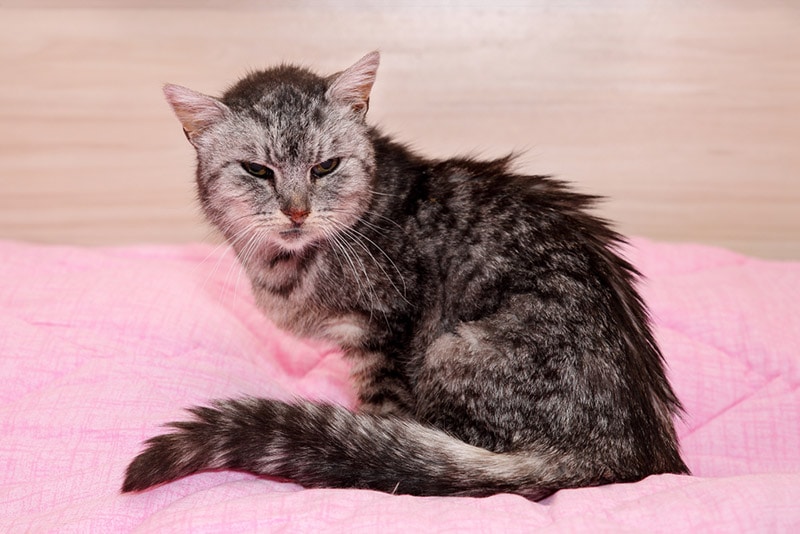
Not all cats show obvious signs, but hookworm infestation can be debilitating. The signs of illness aren't always subtle. Signs are usually more pronounced in kittens as they're much smaller and have less blood to spare than adult cats. The main signs of hookworms in cats are:
- Anemia (low iron levels in the blood)
- Black, tar-like poop
- Weight loss
- Diarrhea
- Unhealthy coat
- Dermatitis
- Pale mucous membranes
- Anorexia
- Lethargy
Kittens are particularly susceptible to hookworm infection. Because they have a smaller volume of blood, kittens are more likely to get severe anemia, which can be fatal if left untreated.
Cats and kittens will actively bleed into their intestines from a hookworm infection as the worms eat into their bowels. This means that very small cats, cats with poor health, and kittens can quickly be overwhelmed and die from the worms and the problems they cause.

What Are the Causes of Hookworms in Cats?
Hookworm infestations in cats are caused in one of three ways: via ingesting larvae, ingesting prey infected with hookworms, and walking over infected soil.
Hookworm Infections From Ingestion
Cats can get infected with hookworms by ingesting the larva. Hookworm larvae are commonly found in unhygienic areas exposed to feces, such as dirt or litter boxes. Female hookworms lay hundreds of eggs that are expelled with the infected cat's poop, which then hatch into Hookworm larvae.
These larvae can be picked up by the cat on their paws and ingested via licking or eating prey infected with hookworms (such as mice). The larvae travel down into the cat's digestive tract and begin their last growth stage into adult hookworms.
Hookworm Infections From Infected Milk
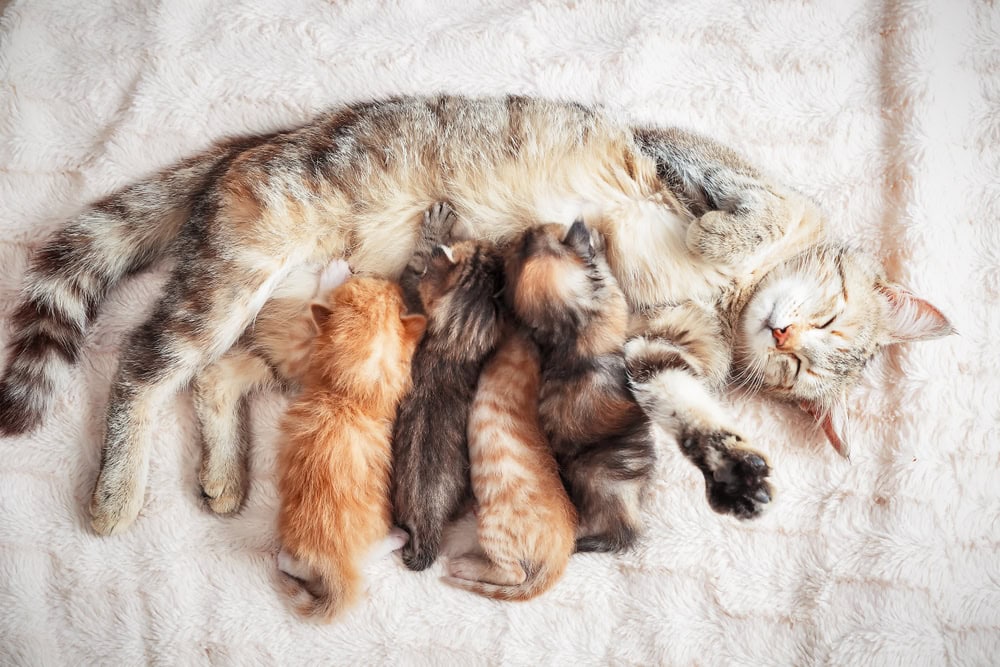
There have been no proven studies or evidence that cats can transmit hookworms from the queen to kittens, but this is observed in dogs.
Hookworm Infections From Infected Ground
Similarly to how an ingestion infection starts, an infected cat will poop and release hundreds of microscopic hookworm eggs from its body. The eggs will hatch into larvae, which will hunker down on the ground and wait. Hookworm larvae can survive for weeks before dying and are very mobile. After being picked up by an unsuspecting cat; they will then burrow up into a soft, hairless part of the cat's body (often the paw pads on the feet) when stepped on.
These larvae will travel through tissue and enter the lungs, moving up through them into the trachea and irritating the cat's airway. Finally, the cat will cough and swallow which forces the larvae into the esophagus and the digestive system. This means the larvae can begin their final stage of life and become adult hookworms.
Hookworm Life Cycle
Hookworms in cats begin their lives as eggs in the feces of an infected cat. When the cat poops, these eggs will hatch if the conditions are right. Once they hatch into the first stage of larval development, they feed off the poop to survive. This first larval stage can't infect cats, so it will spend its time eating and growing into the second larval stage. Even this second stage is non-infective and only grows into the third larval stage.
The third larval stage of hookworms is the active, mobile stage that does not eat but can infect new hosts. The larvae will begin to look for new hosts and move about vigorously, penetrating the skin of the new host cat if it finds one. They will journey through the cat's body, traveling through tissues and the circulatory system until they reach the lungs.
The cat will cough and swallow the larvae into the digestive tract, where the larvae will wait until the final growth (adult) worm stage is reached. If a cat eats the third-stage larvae, they will settle in the digestive system and grow to the final stage.
The final stage is the adult hookworm stage. Adults will latch onto the intestinal walls, feed on the blood and tissue, and mate. Female hookworms can lay hundreds or even thousands of eggs a day, depending on the species, which exit the body in the cat's poop and begin the cycle again.
How Do I Care for a Cat With Hookworms?
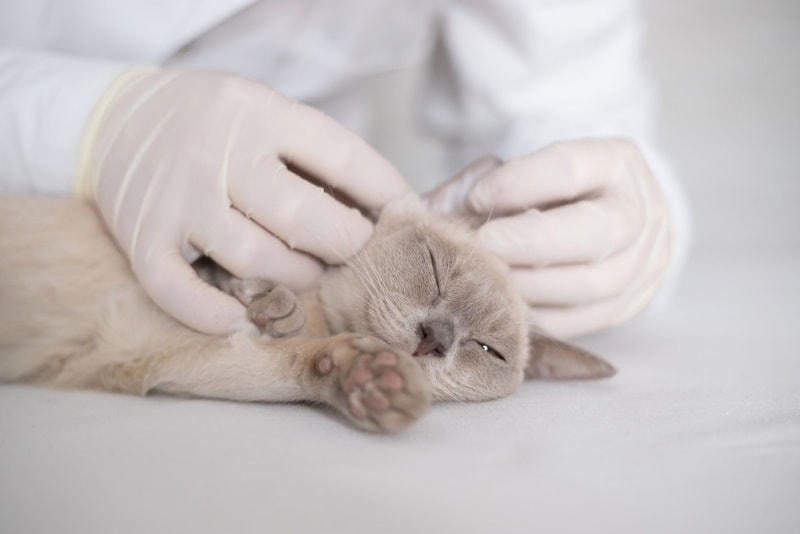
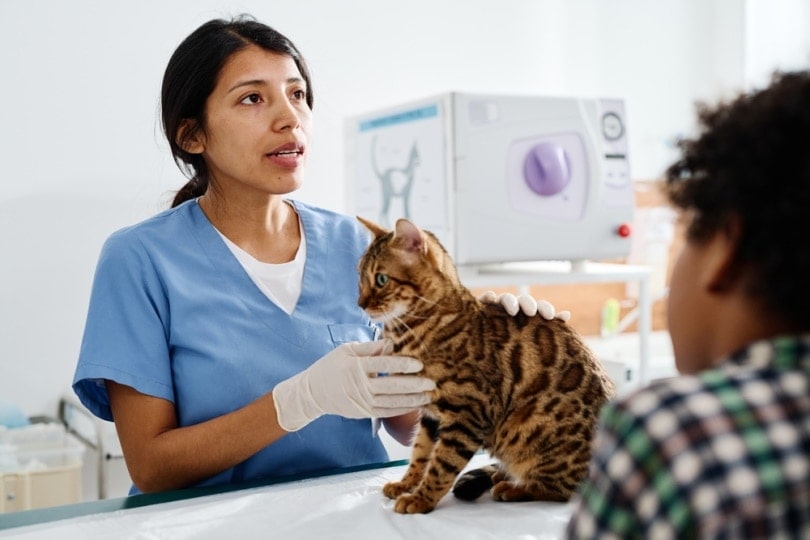
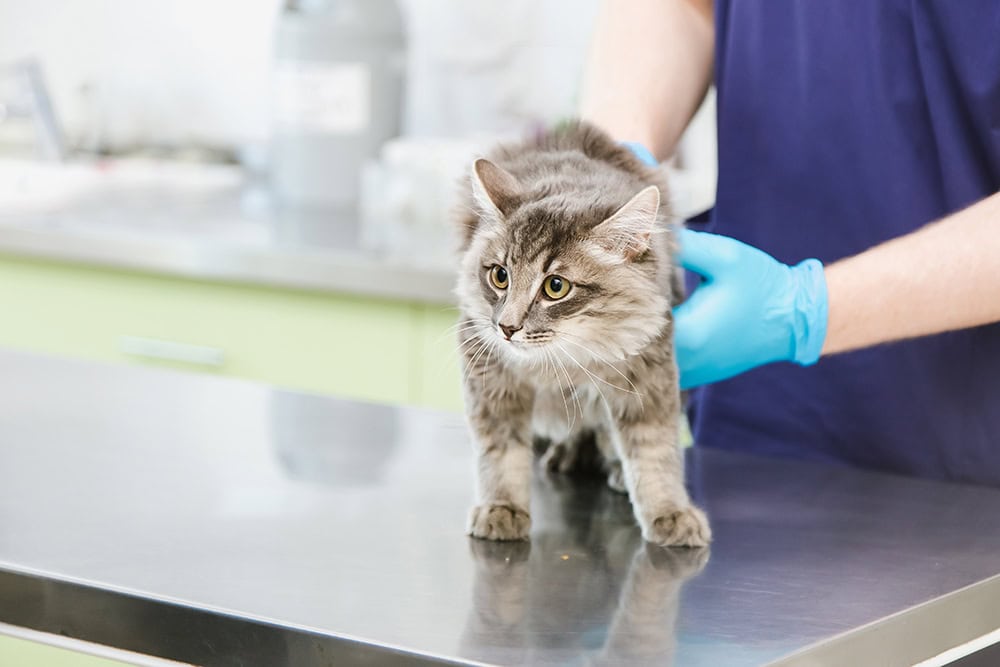
Treatment and care for a cat with hookworms are relatively simple if the cat is healthy and the infestation isn't extreme. However, if you notice any signs of a hookworm infection in your cat, you must take them to the vet to get checked.
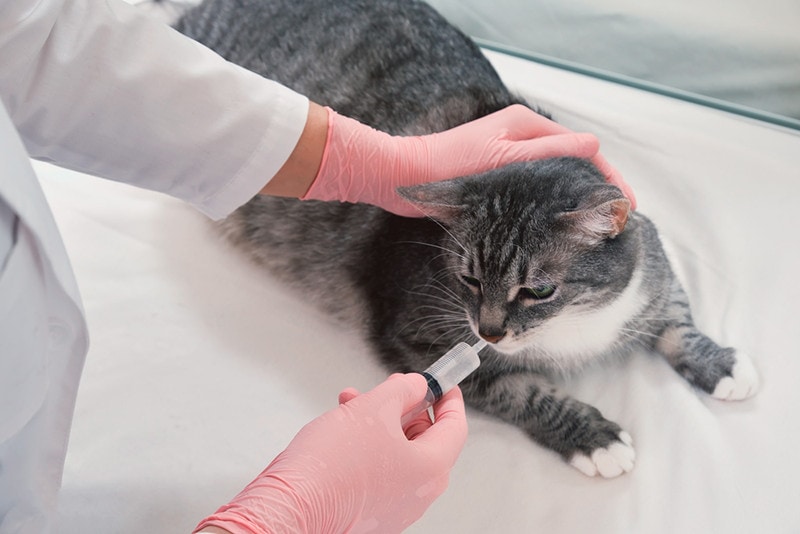
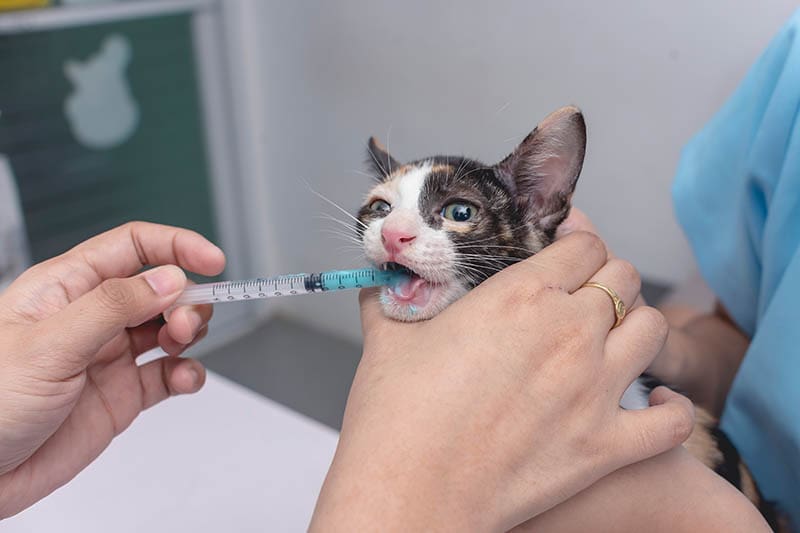
The vet will offer treatment depending on your cat's condition and the severity of the infection, but an anthelmintic (anti-worm) medication is usually the only treatment needed. It can come in tablet, topical spot-on, or injection form. The vet will likely give your cat the drug themselves, but you might have to do it yourself at home. Follow your vet's instructions on how and when to administer the medication, as often at least two doses are needed to ensure all the hookworms are killed.
Cleaning the environment is vital to prevent re-infection, especially litter boxes and the surrounding areas. Additional medications or treatments might be required at the veterinarian practice to support your cat and help them to recover, particularly if they are older or very young and have a heavy infestation.
Frequently Asked Questions (FAQs)
How Are Hookworms in Cats Diagnosed?
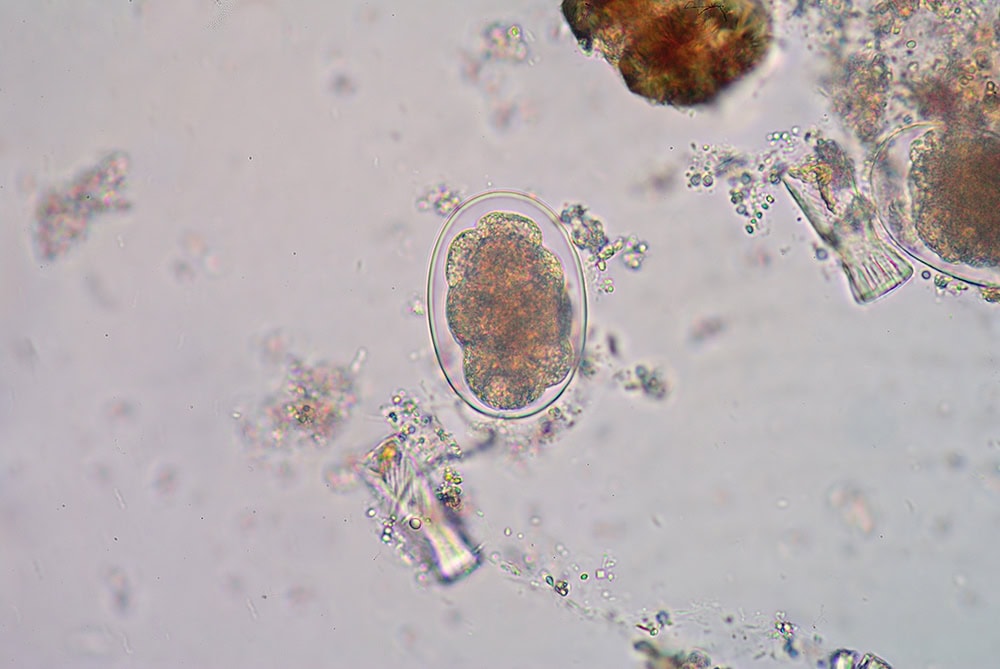
Hookworms are usually diagnosed by a test called fecal floatation. Your vet will mix a poop sample from your cat with a solution that makes the hookworm eggs float to the top of the sample tube and press them on a glass slide. Since hundreds of eggs are produced daily, they are easily seen under the microscope. Adult hookworms are so tiny that they're rarely seen in poop.
Can I Get Hookworms From My Cat?
People can't get intestinal hookworm infections from cats. However, the larvae can still attempt to burrow into our skin (but they don’t usually get very far). This condition is known as cutaneous larva migrans and causes intense itching.
How Can I Prevent My Cat From Getting Hookworms?
Cleanliness is essential to preventing hookworm infections, including keeping your cat's litter box clean. Regular treatment with a dewormer is recommended, up to once a month, in high-risk areas. Your vet will be able to advise what the best preventative worming schedule will be for your cat. Ensuring any rodent infestation is controlled is very important, as they play an important part in the transmission of hookworms. Lastly, kittens should always be wormed regularly in the first few weeks of life.
Conclusion
Hookworms in cats are intestinal parasites that feed off intestinal blood and tissues. They have a complex life cycle of many parts, but only the third larval stage can infect cats. Hookworms can cause internal bleeding and anemia, so they need to be treated by your veterinarian with an anthelmintic sooner rather than later. Cats can get hookworms from walking in larvae-infected environments or by ingesting hookworm eggs or prey infected with them. Hookworms can harm people by burrowing into and moving around within the skin.
Related Read: Botflies in Cats: Vet-Reviewed Causes, Signs & Treatment
Sources
https://www.aavp.org/wiki/nematodes/strongylida/ancylostomatoidea/ancylostoma-tubaeforme/
https://www.hospitalveterinariglories.com/hookworms-in-cats/?lang=en
https://todaysveterinarypractice.com/parasitology/feline-helminths-capc-recommendations/
https://www.petmd.com/cat/conditions/infectious-parasitic/hookworms-cats
Featured Image Credit By: Libre, Shutterstock
Get Hepper In Your Inbox


Pet care tips from our vets and experts, straight to your inbox.
You may opt-out at any time. View our Privacy Policy for more information.
Beth is a mom to two babies: one with four legs, and one with two. Beth has years of practical experience as a veterinary care assistant, working in both the operating room and in consult, expanding her knowledge to gain certification in her favorite subject: feline behavior and well-being! When she's not writing about her favorite topics (cats, dogs, and creature comforts), she's looking after her two-year-old daughter and her energetic eight-year-old Nebelung, Kiba. When she gets a moment's respite, Beth loves to read fiction books. Horror is her number one genre, with fantasy and rich history being her second option.
Join the conversation
Ask a question, share your story, or send private feedback.