Hepper is reader-supported. When you buy via links on our site, we may earn an affiliate commission at no cost to you. Learn more.
My Cat Has Worms, How Should I Clean My House? Vet-Approved Tips


In this article
We love our kitties and are concerned when they're infected with worms. The thought of worms in the house is enough to make your skin crawl. While reading this post, you may wonder if your cat is depositing worms all over your home.
There’s no need to panic, but if your cat has worms, you must thoroughly clean your home. That way, the worms will not transfer to your other pets or people in the house. In this post, we'll share tips on cleaning your home from top to bottom.

Can Cat Worms Transfer to Humans?
Many cat illnesses can’t be transferred to humans. Parasites are the exception, but that doesn’t mean your cat is dying or your home is filthy. Animals contract worms all the time for many different reasons.
Like fleas and mosquitoes, some parasites spread infections from one animal to another. However, cats come in contact with soil that has parasitic eggs in it. Other times, kittens contract worms from their mother’s milk.
Cat worms are more common in kittens and less common in adult cats, but cats of any age can get worms. The most common types of intestinal worms that cats contract are:
Cats are also the definitive host for Toxoplasma gondii, and although it is a single-cell parasite, not a worm, it is the agent of Toxoplasmosis. This disease represents a risk to the fetus if a pregnant woman gets infected. The eggs are shed in cat feces, so pregnant women are not recommended to scoop or clean litter boxes.
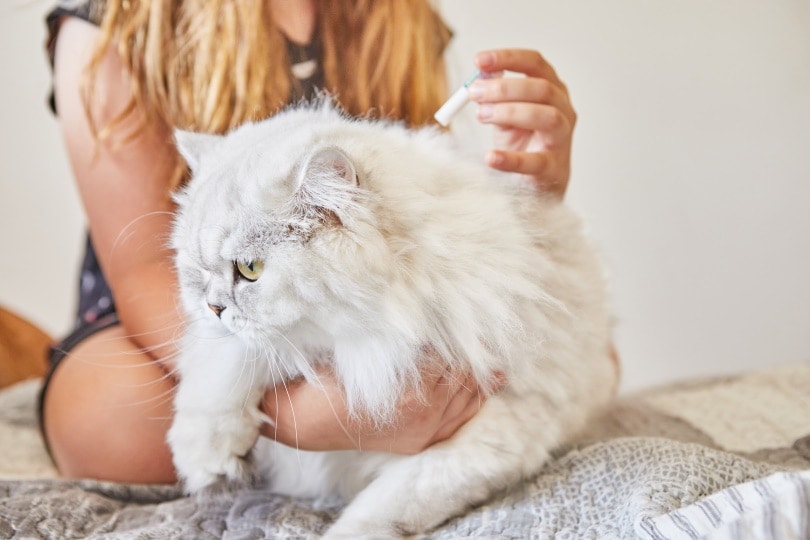
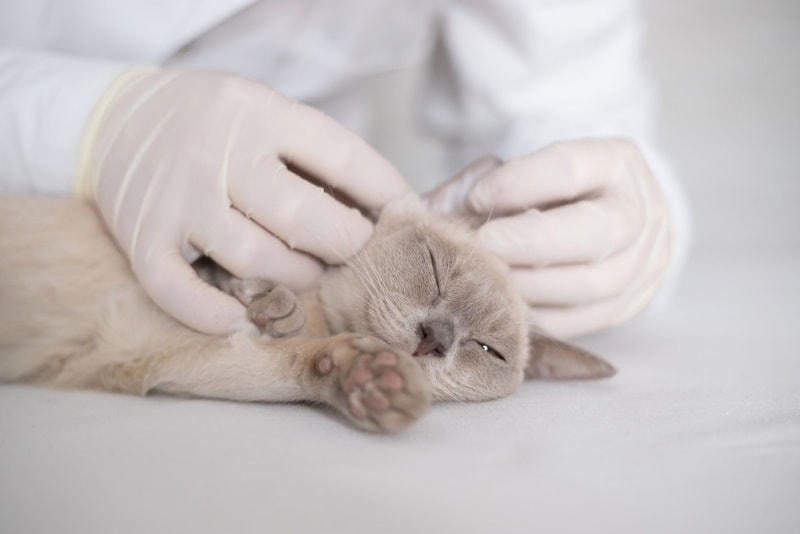
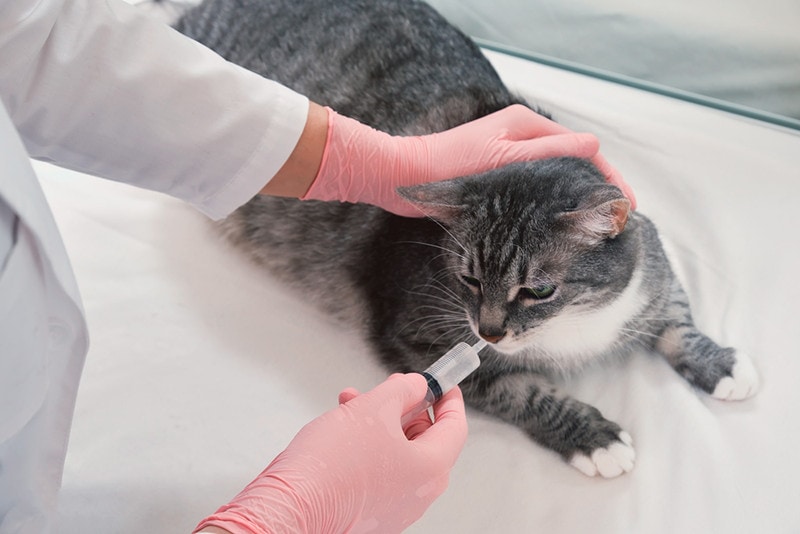
If your cat is suffering from a parasitic infestation, they need to receive treatment as soon as possible, and you need to start disinfecting your house. So, let’s jump into your supplies list so you can get started.

What You Will Need
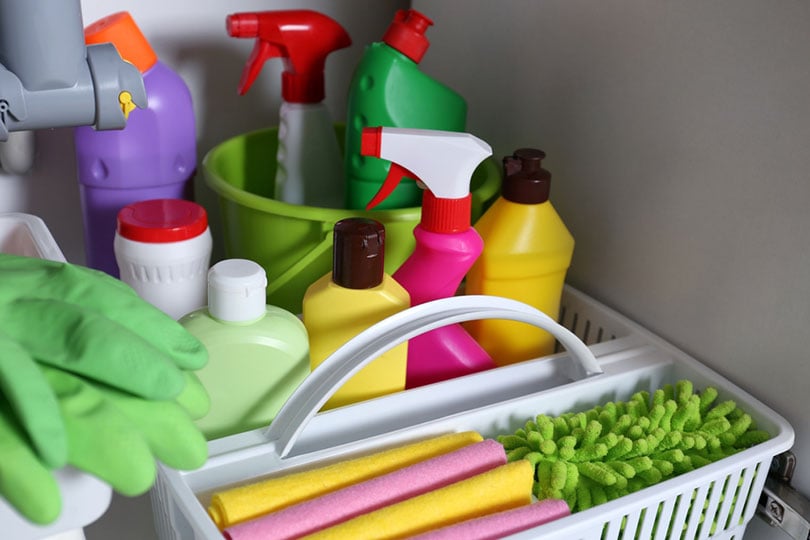
Most of these items you should have in your house already. If you don’t, they’re not expensive, and some are optional. Here’s your list of cleaning materials:
Most of the items listed are disposable. You don’t have to use disposable items if you don’t want to. If you use reusable items, like rubber gloves, you’ll also need to disinfect them.
How to Rid Your House of Worms
The following steps can be used to rid your house of worms. Before you begin, ensure no other animals are around since you’re dealing with chemicals. If you have other pets, chances are they are infested, too; speak to your veterinarian about possibly deworming all your pets simultaneously. For safety, please keep all your pets in a separate area while you work with the disinfectants.
1. Make Your Cleaning Solution
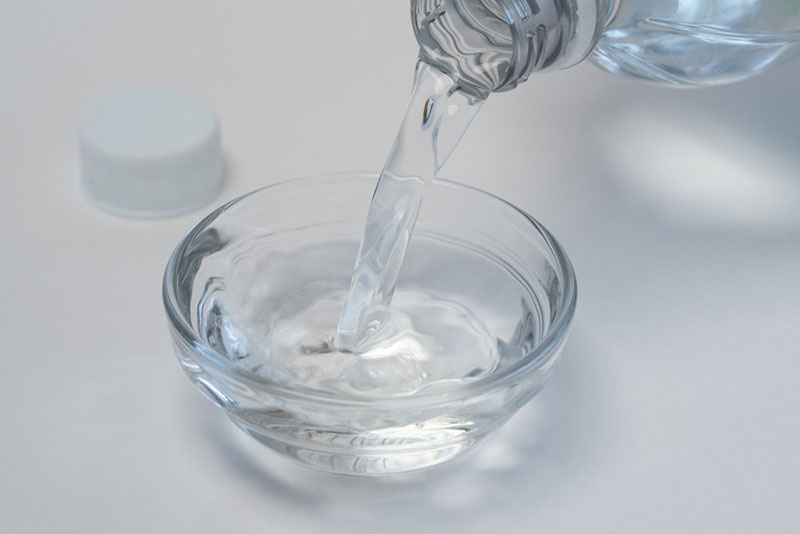
You'll need to make two cleaning solutions: one with bleach and one with vinegar. You’ll use a bleach solution most of the time, but you can use the vinegar solution when bleach is too strong.
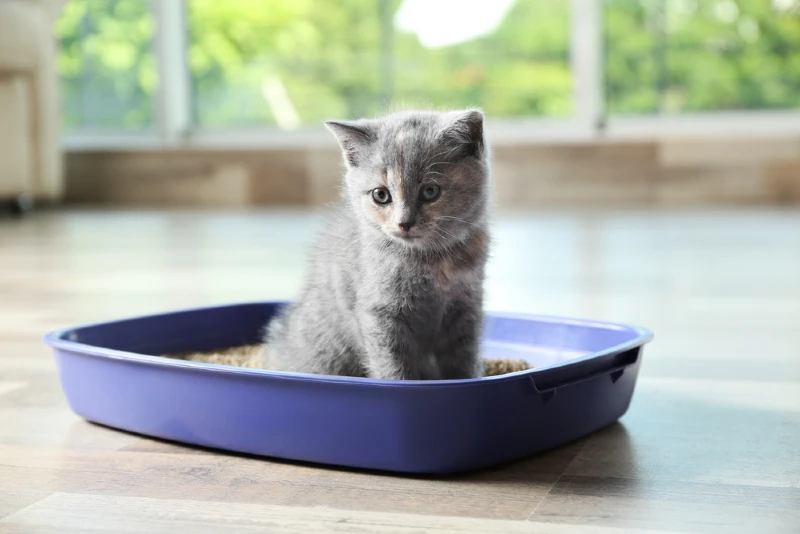
2. Disinfect Litter Boxes
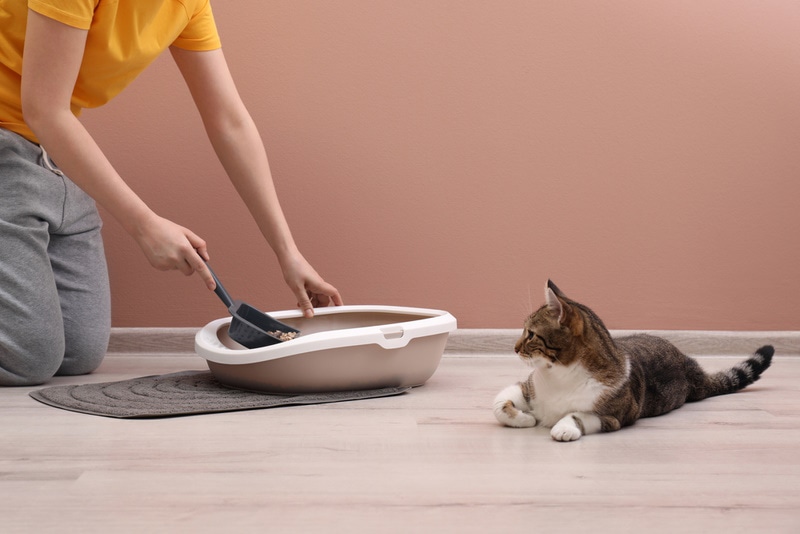
Empty your cat’s litter and use paper towels and the bleach solution to disinfect the litter box. Bleach is intense, so you may need to set the litter box outside to air out. Your cat won’t want to use a litter box that reeks of bleach.
That is where disposable litter boxes come in handy. You’ll need to disinfect the litter box more than once until the worms are gone. Disposable litter boxes will save you the hassle of worrying about where your cats will go to the bathroom. You can also use a cardboard box with litter as a temporary solution. However, you’ll need to line the cardboard box with a plastic liner.
3. Disinfect Clothing and Linens
After the litter boxes are disinfected, it’s time to start a load of laundry. This step is essential because cats like to lay on laundry and linens. You can do this step later if you don’t have a washing machine at home. If you do, start a load of laundry now and move on to the next step.
You can disinfect your laundry with a splash of color-safe bleach or vinegar in each load.
4. Disinfect Cat Trees and Toys
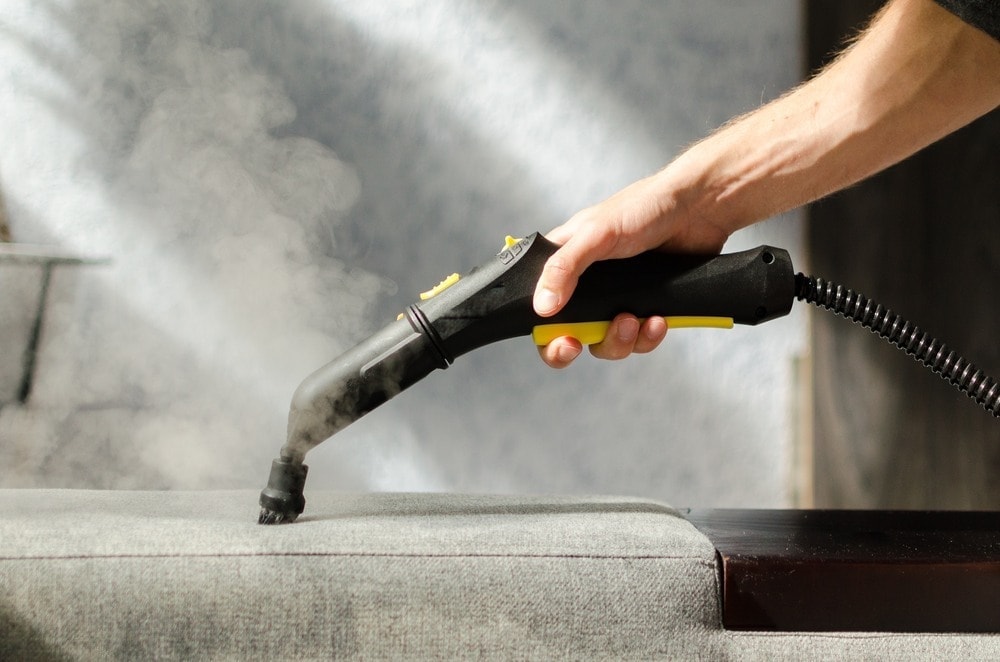
This step requires several products, one of which is a steam cleaner. The steamer is optional but highly recommended. You don’t want to use bleach for this step since cats come in contact with these products regularly.
You can usually throw cat toys in the washing machine or wipe them off with a disinfectant. Cat trees will require some manual labor.
The following video is an excellent example of properly cleaning and sanitizing a cat tree:
5. Disinfect Furniture
Disinfect all your chairs, couches, and mattresses with a vinegar solution. You can use the bleach solution if it’s okay to use on your furniture. Steaming is recommended but optional.
6. Disinfect Surfaces
Disinfect all surfaces with your bleach solution. Avoid using bleach or vinegar if your surfaces are made of marble or other porous surfaces. Hot, soapy water is best for cleaning porous surfaces.
7. Disinfect Carpeting and Rugs

Parasites can live on carpets and rugs for a long time. A steam cleaner is the best way to disinfect most carpets and rugs and kill the remaining parasites. Large rugs and carpets need special attention based on the material they’re made from. Be sure to read the labels on your rugs. Thankfully, some small rugs can be thrown directly into the washing machine.
We understand that not everyone has access to a steam cleaner. You can always use a vinegar solution on your carpet and rug with the help of a scrub brush, or try renting a carpet cleaning machine.
8. Disinfect Bare Flooring
Bleach is safe to use on non-porous, bare flooring, so grab your mop and start cleaning! Use the vinegar solution if you have wood floors.
How Long Until the Worms Are Gone?
Obviously, this is a lot of cleaning, and it needs to be done regularly until your veterinarian has given your cat a clean bill of health. Depending on the parasite and the treatment, a full deworming schedule can take up to a month to complete. This involves a second and sometimes third dosage every 2 weeks to ensure that all parasites are killed.
You may be unable to do this much daily cleaning, and that’s okay. There are habits you can establish to make the process easier. Remember that parasites can spread to other animals in the house, and some vets recommend quarantining your cat.
We know that is hard, but keeping your cat secluded is the best way to stop the spread of parasites in the house. Don’t forget to give your infected cat a different litter box if they live in a multi-cat household.
Some other habits to apply include:
Symptoms Of Worms In Humans
You shouldn’t have any issues if your cat is undergoing treatment. You're likely disinfecting your home regularly and washing your hands like a champ. Still, humans can contract worms, so be on the lookout for these symptoms:
Most intestinal worm infestations in humans can be treated with medication. Like your cat, you may notice worms in your stool. A doctor may want a stool sample to confirm you have worms and then start you on treatment. Pregnant women should ask their doctor for further instructions on dealing with animal parasites.

Final Thoughts
Finding out your cat has worms is always bad news. They’re unwelcome parasites that affect animals and homes. Dealing with these nasty critters is demanding and stressful, and most of us are busy enough as is.
Luckily, your cat should be fine, and disinfecting your home regularly makes a difference. It is a lot of work, but it pays off. We hope this step-by-step guide for cleaning your house helps. Just make sure to get your cat to the vet and start treatment as soon as possible.
Related Reads:
Sources
Featured Image Credit: lapsa03, Shutterstock
Get Hepper In Your Inbox


Pet care tips from our vets and experts, straight to your inbox.
You may opt-out at any time. View our Privacy Policy for more information.
Cassidy is a vet tech and pet sitter who has more recently become a pet writer. She loves cats and dogs and has had dozens of pets over the years. Her specialty is the human-animal bond.
Cassidy and her husband currently live in Kansas with a German Shepherd named Raven, two cats named Lucy and Streudel, and several backyard chickens.
Join the conversation
Ask a question, share your story, or send private feedback.