Hepper is reader-supported. When you buy via links on our site, we may earn an affiliate commission at no cost to you. Learn more.
Do Frogs Have Hair? Amphibian Anatomy & Vet Approved Facts


In this article
We brush and bathe our pets, as it is essential to take good care of their hair for their comfort and health. But if you're interested in amphibians, specifically frogs, have you ever wondered if they have hair?
The answer is no. Frogs can’t have hair because not only are they incapable of growing hair, but it would also literally kill them if they did.
If this sounds interesting, read on as we discuss why frogs can’t and shouldn’t have hair.

Why Don't Frogs Have Hair?
There are several reasons that frogs don’t have hair and instead have skin that serves them quite well.
1. They Don’t Have Hair Follicles
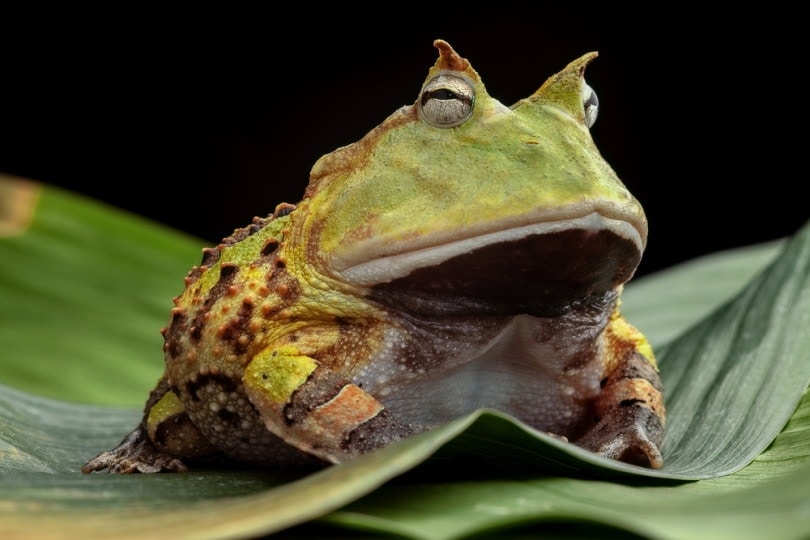
Frogs aren’t physically capable of producing hair because they do not have follicles for the hair to grow out of. Hair is a filament composed of keratin that grows out of the follicles located in the inner layer of skin (the dermal layer). Without hair follicles, frogs just can’t grow hair.
2. They Need Their Skin to Breathe
Frogs breathe through their skin, and anything covering it could suffocate them. Frog skin is semi-permeable, which enables them to take in oxygen from their environment, both on land and in water. This is why frogs can swim underwater for long periods.
Hair covering the skin would hinder or prevent the absorption of oxygen, which would also affect the frog’s ability to live in the water.
3. They Have Different Thermoregulation Mechanisms
Mammals need hair for protection against extreme weather; it adds a layer of insulation against frigid weather or the harsh sun. They are also warm-blooded and use various methods to regulate their temperature, such as panting, sweating, and shivering.
Frogs are ectothermic, or cold-blooded, and regulate their temperature via their surroundings. They change their location to a cooler place to cool down and move into the sun to warm themselves. There are also species that change their skin color to absorb more heat.
4. They Need to Keep Hydrated
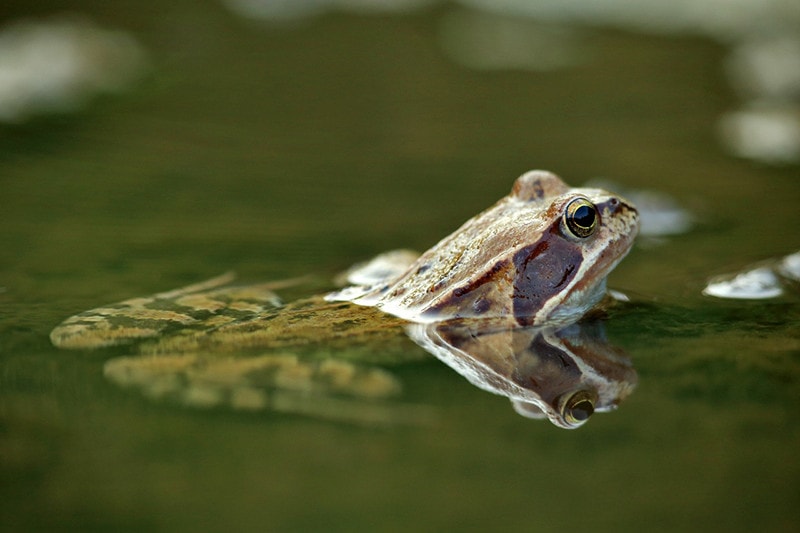
Frog skin absorbs oxygen and moisture, which keeps them hydrated. Frogs get moisture from the soil, air, and water. A covering of hair could prevent them from absorbing enough water, which could lead to dehydration.
5. Their Skin Is Protective
When you touch a frog’s skin, it tends to feel wet and somewhat slimy. Frogs have mucous glands that provide a protective layer on their skin against microorganisms. Since frogs spend most of their time in damp and humid environments, they need that layer to protect themselves against dangerous fungi, bacteria, and algae.
Additionally, most species of frogs have toxins on their skin, which protect them against predators. Hair would hinder these toxins and the mucus, which would leave them quite vulnerable.
Frogs With Hair-Like Strands
Out of 7,627 species of frogs, there is just one frog that appears to have hair-like strands.
Hairy Frog
You would think that with a name like “hairy frog,” they would be covered in hair. That said, when you look at them, they certainly seem to have hair! They are also sometimes referred to as the horror frog or Wolverine frog.
But this hair-like filament is actually dermal papillae, which contain arteries and blood cells. It's thought that they provide these frogs with extra oxygen.
Only the male Hairy Frog grows this fringe during mating season on their flanks and thighs, and they require the dermal papillae because they spend so much time in the water guarding their eggs.
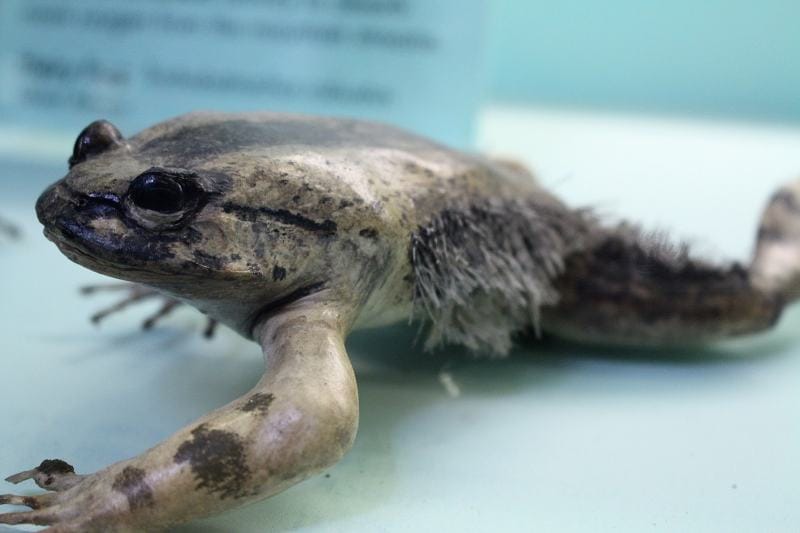
These frogs are found in Central Africa and are also known as wolverine frogs and horror frogs. However, the reason for these nicknames is not because of the “hair” but for another super unique trait. As part of their defense, the hairy frog literally breaks the bones in their toes, which then slice through the frog’s skin and turn into sharp claws! Using their new weapons, they can protect themselves and their eggs by kicking out at a predator.
Eventually, the bones move back into place, and the wound heals until the next time!
Final Thoughts
Frogs have unique skin designed for living in a specific environment. It’s semi-permeable and enables oxygen to flow in, which helps them breathe. It also produces mucus, which provides extra protection for the frog.
At the very least, hair would be a hindrance, and at the most, it would be deadly. Even the frog that has “hairy” in their name doesn’t actually have hair, but rather appendages that provide them with extra oxygen.
That said, there are over 7,000 species of frogs, and many may still be undiscovered. When you consider how vast the world is, we might discover a new frog species with locks of hair that work to their advantage (though it’s unlikely)!
Featured Image Credit to: Paul Reeves Photography, Shutterstock
Get Hepper In Your Inbox


Pet care tips from our vets and experts, straight to your inbox.
You may opt-out at any time. View our Privacy Policy for more information.
Kathryn was a librarian in a previous lifetime and is currently a writer about all things animals. When she was a child, she hoped to work in zoos or with wildlife in some way, thanks to her strong love for animals. Unfortunately, she's not strong in the sciences, so she fills her days with researching and writing about all kinds of animals and spends time playing with her adorable but terribly mischievous tabby cat, Bella. Kathryn is hoping to add to her family in the near future – maybe another cat and a dog.
Join the conversation
Ask a question, share your story, or send private feedback.