Hepper is reader-supported. When you buy via links on our site, we may earn an affiliate commission at no cost to you. Learn more.
Vizsla vs. German Shorthaired Pointer: The Main Difference (With Pictures)
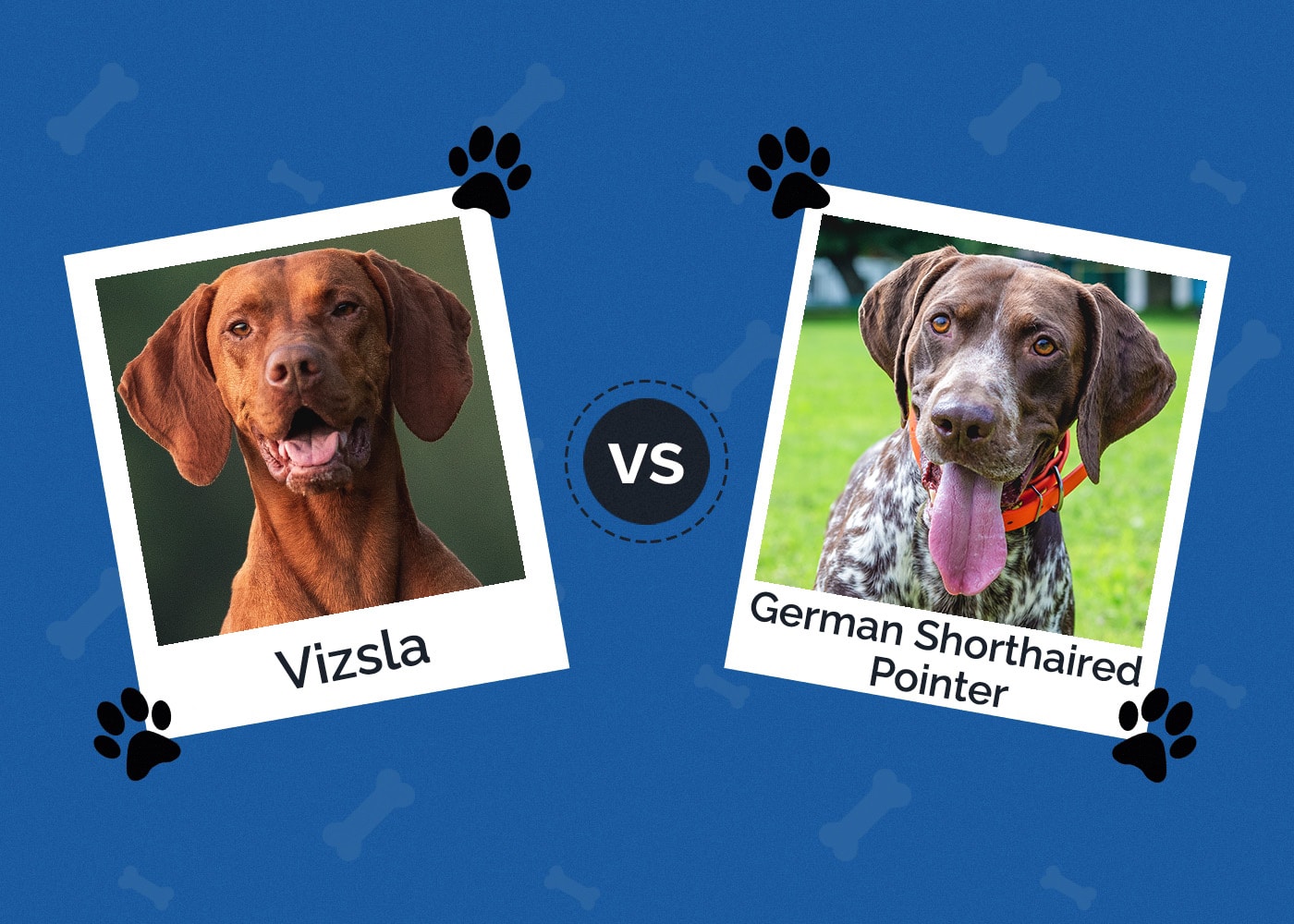
If you’ve had your eye on the Vizsla and the German Shorthaired Pointer but aren’t sure which breed will be the better fit for your family, you’re not alone. These two breeds share quite a few similarities, but there are notable contrasts between them too.
In this article, we compare the Vizsla and German Shorthaired Pointer and highlight their similarities and differences, so you will have a better picture of which breed might be best suited to be your new companion.

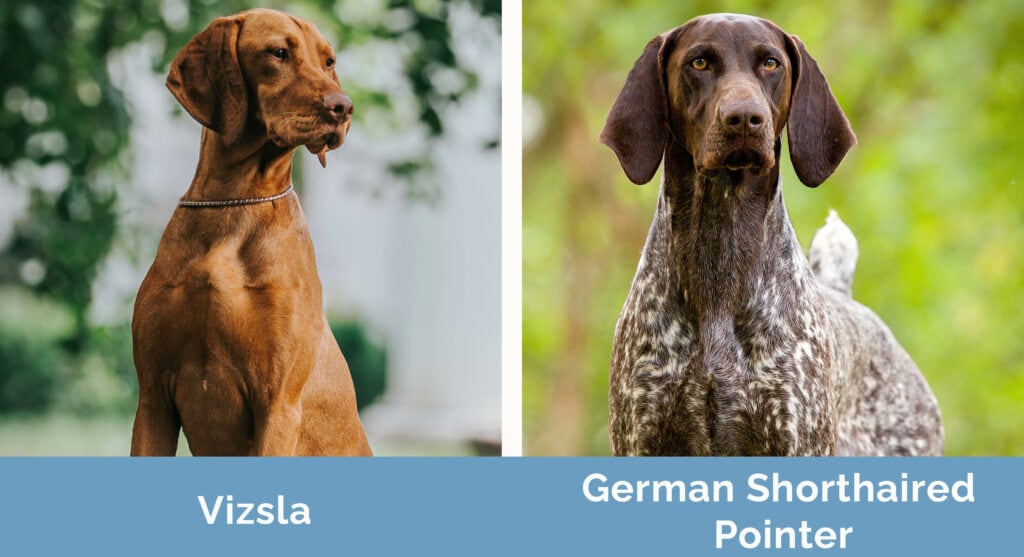
Visual Differences
At a Glance
Vizsla Overview
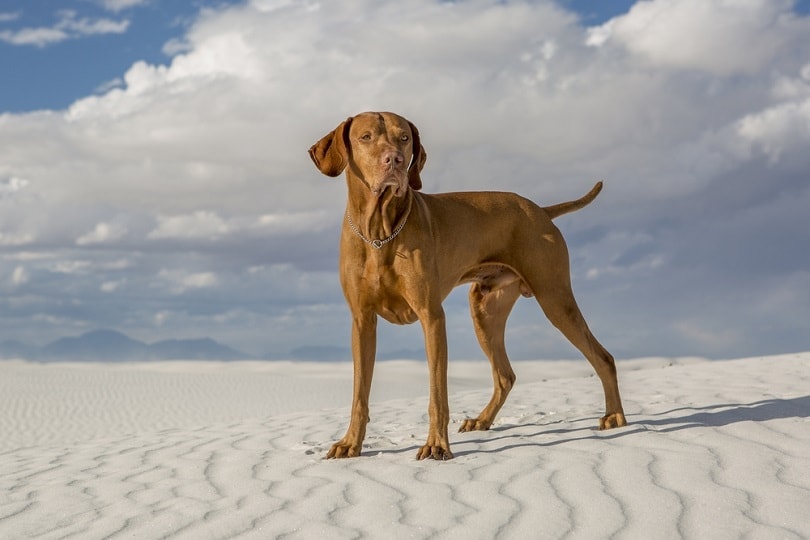
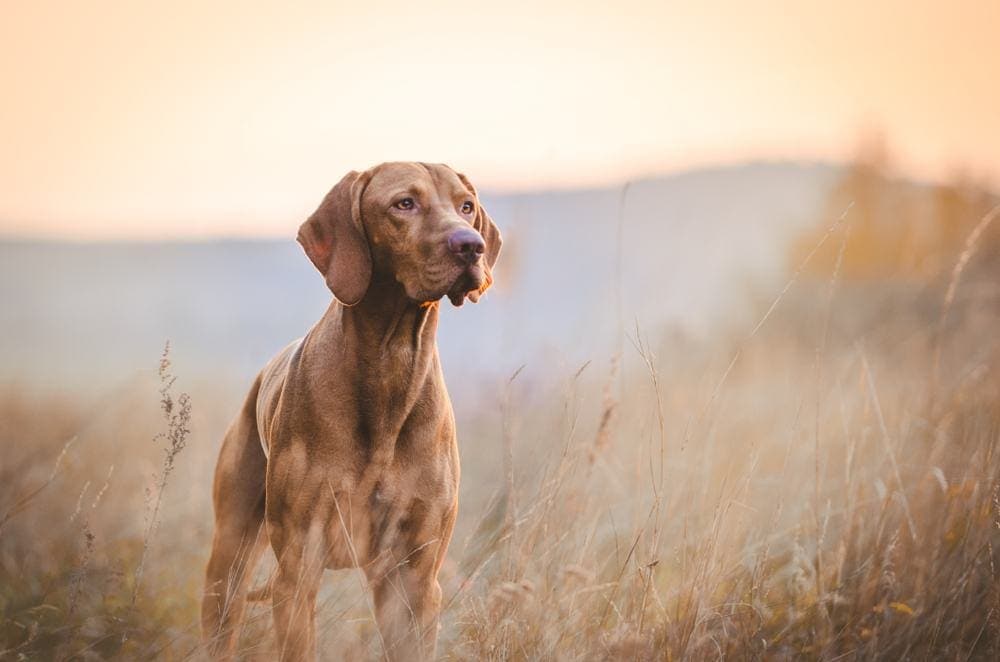
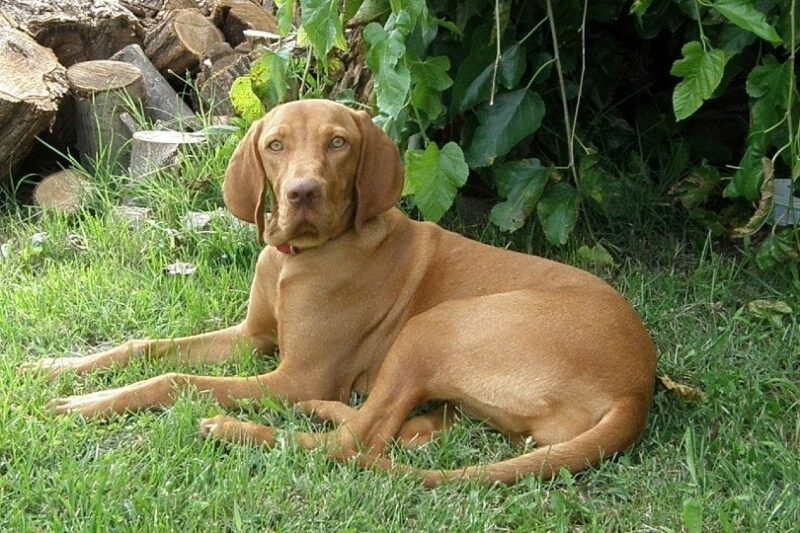
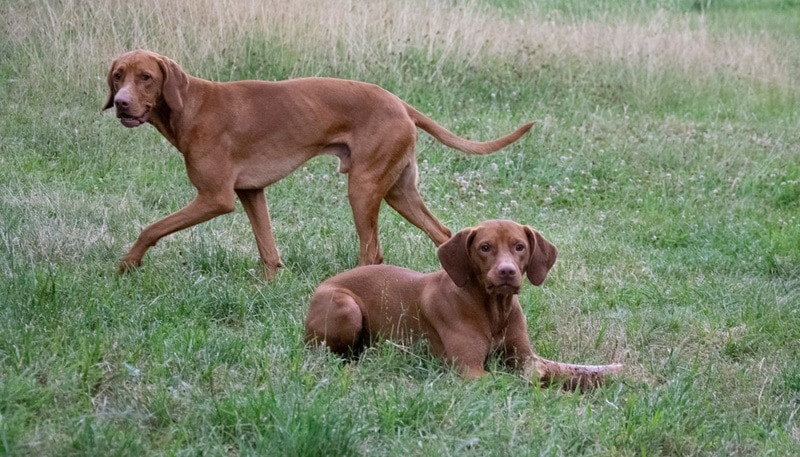
The ancestors of the Vizsla were bred in Hungary by the Magyar warriors, who bred agility and swiftness into their horses and hunting dogs. These red dogs were able to keep up with the horses and were refined by Hungarian nobility and warlords, which led to the Vizslas that we know today.
They were used primarily for hunting birds and hares and were eventually bred for pointing and retrieving. The first Vizsla came to the States in 1950 and was recognized by the AKC in 1960. As of 2022, the Vizsla is the 32nd most popular breed out of 285.
Personality / Character
Above all else, Vizslas are energetic. They are also intelligent and affectionate and have been called “Velcro dogs” due to their strong attachment to their family. They are friendly, social, and quite gentle, so they make amazing family dogs.
Vizslas are great with children and other dogs, but you should be careful with smaller animals. They might be okay with the family cat, provided that both the cat and the dog have been well-socialized. But rabbits, gerbils, and other pocket pets aren’t a good idea because Vizslas have a high prey drive.
Since the Vizsla forms strong bonds with their people, they are more prone to separation anxiety. If you spend extended periods away from home, the Vizsla might not be the best breed for you.
Training
Vizslas are highly intelligent and sensitive dogs, so they need training with positive reinforcement and never with any harshness. They are also quite easily distracted due to that high prey drive, so training sessions must capture their interest.
Overall, though, Vizslas enjoy having a job to do and will take to training quite well, especially since they are the focus of your attention. Keep in mind that training the Vizsla is essential because they can be unmanageable without it.
Exercise
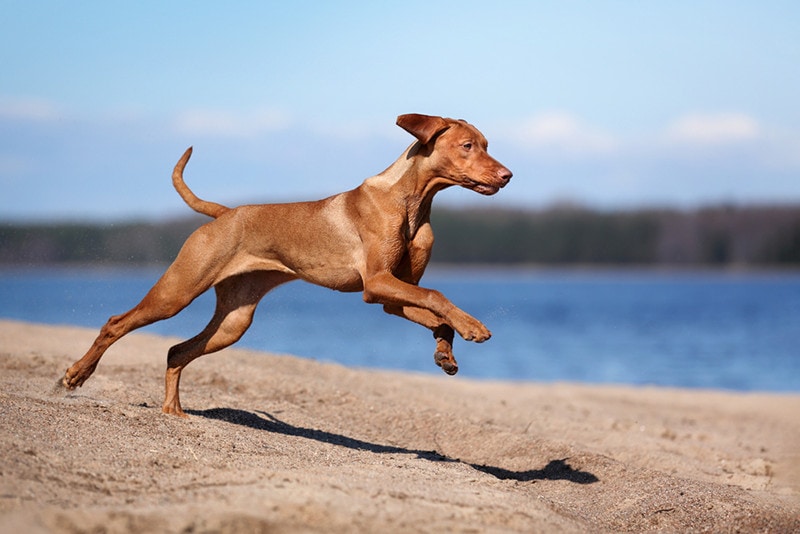
This is one of the most important aspects of owning a Vizsla! These dogs are high energy and require a minimum of 1 to 2 hours of exercise every day, and it needs to be more than just a walk and chasing a ball for a while. Vizslas need high-intensity exercise off the leash every day.
Without the right amount of activity, Vizslas will become destructive. You’ll want to walk, run, hike, and play with your dog as much as possible.

Health & Care
Vizslas are generally a healthy breed, but there are a few health conditions that they are prone to. Hip dysplasia is a common disorder in large breeds, and it’s possible for them to suffer from seizures, hypothyroidism, and progressive retinal atrophy.
Grooming the Vizsla is easy. They have short and sleek coats with no undercoat, so they don’t shed as much as many other breeds. They only need an occasional brushing with a rubber glove or grooming brush. They can get a bath when they get dirty, and they’ll need nail trims and ears cleaned every few weeks.
Suitable for:
Vizslas are great for extremely active single people or families that plan on spending time outdoors with their dog. Having a home with easy access to outdoor space is a must, and someone should be home most of the time. Vizslas do best with an experienced dog owner who knows how to train an energetic dog.

German Shorthaired Pointer Overview
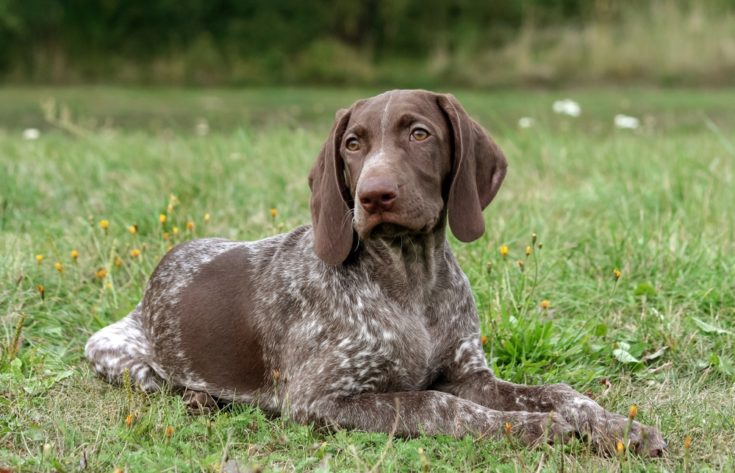
The German Shorthaired Pointer (GSP), like the Vizsla, was bred to be a hunting dog. They come from Germany but haven’t been around as long as the Vizsla, as they were bred sometime in the 1800s.
German hunters needed an excellent hunting dog, and breeders worked on perfecting a tracking hound and pointing dog. But it was Prince Albrecht zu Solms-Braunfels who was instrumental in the development of the GSP.
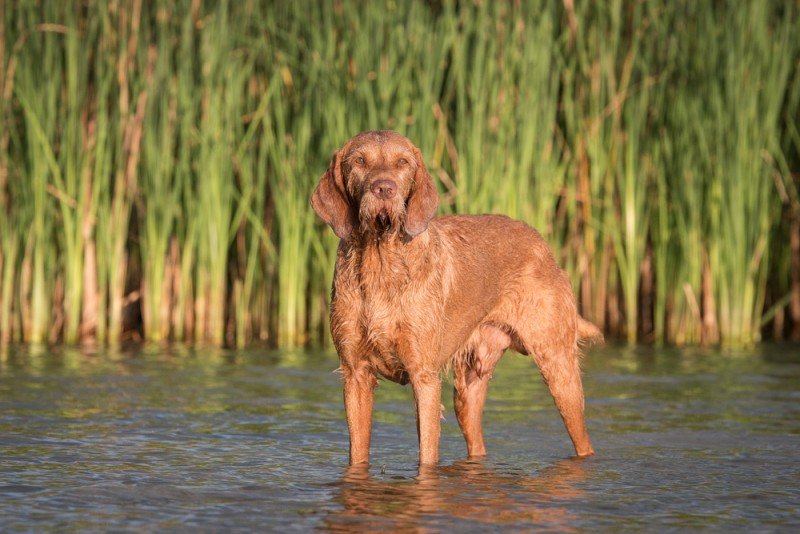
The GSP was bred to be a well-rounded hunting dog. Not only are they pointers, but they are also water dogs and excellent swimmers. The first GSP to make it to the States was in 1925 and was recognized by the AKC in 1930. Currently, they are the 9th most popular breed out of 284.
Personality / Character
GSPs are high energy, intelligent, playful, and friendly. They are excellent family dogs and are wonderful with kids, but they might be too rambunctious for young children.
GSPs bark at strangers, so they make good watchdogs, and while they are social, they might be reserved around people they don’t know. GSPs are also good with other dogs but shouldn’t be in a home with smaller pets because of their high prey drive.
Training
GSPs are intelligent and eager to please, so they take to training well. But they also can be independent, which makes them challenging to train at times. You’ll need to be consistent, use positive reinforcement, and try to keep the training sessions interesting and short.
Early training and socialization are essential for this breed, particularly around smaller animals. This can help somewhat with their high prey drive.
Exercise
GSPs are exceptionally energetic dogs, so they need plenty of exercise! This is where both the GSP and Vizsla are similar. The GSP needs 1 to 2 hours of daily high-intensity exercise, which must include active playtime, long walks, hikes, and the chance to run off leash.
GSPs need a job to do and require mental stimulation, or they can become destructive. This involves not only playtime and running but also doing scent work and even puzzle games, all of which will keep them healthy and happy.

Health & Care
GSPs are healthy dogs, but they are prone to hip dysplasia, elbow dysplasia, gastric dilatation and volvulus (also known as bloat), aortic stenosis, and progressive retinal atrophy. If you get your dog from a breeder, they will be screened for any health conditions.
Grooming the GSP is almost as easy as the Vizsla because they have short hair, but unlike the Vizsla, they have a double coat, so they will shed more.
They’ll need brushing once every few days with a grooming glove or brush and more frequent brushing in the spring and fall when they shed more. Beyond this, give them an occasional bath when necessary, trim their nails, and clean their ears every other week or so.
Suitable for:
GSPs will need an active family or a single person to take them out for extensive walks and playtime. Giving them a chance to swim would be ideal because they excel in the water.
You’ll need a large home with easy access to the outdoors (so no small apartments). While GSPs can experience separation anxiety, they are independent and do fine when left alone at times.

Which Breed Is Right for You?
These two breeds have more similarities than differences, but the latter could be the deciding factor for you.
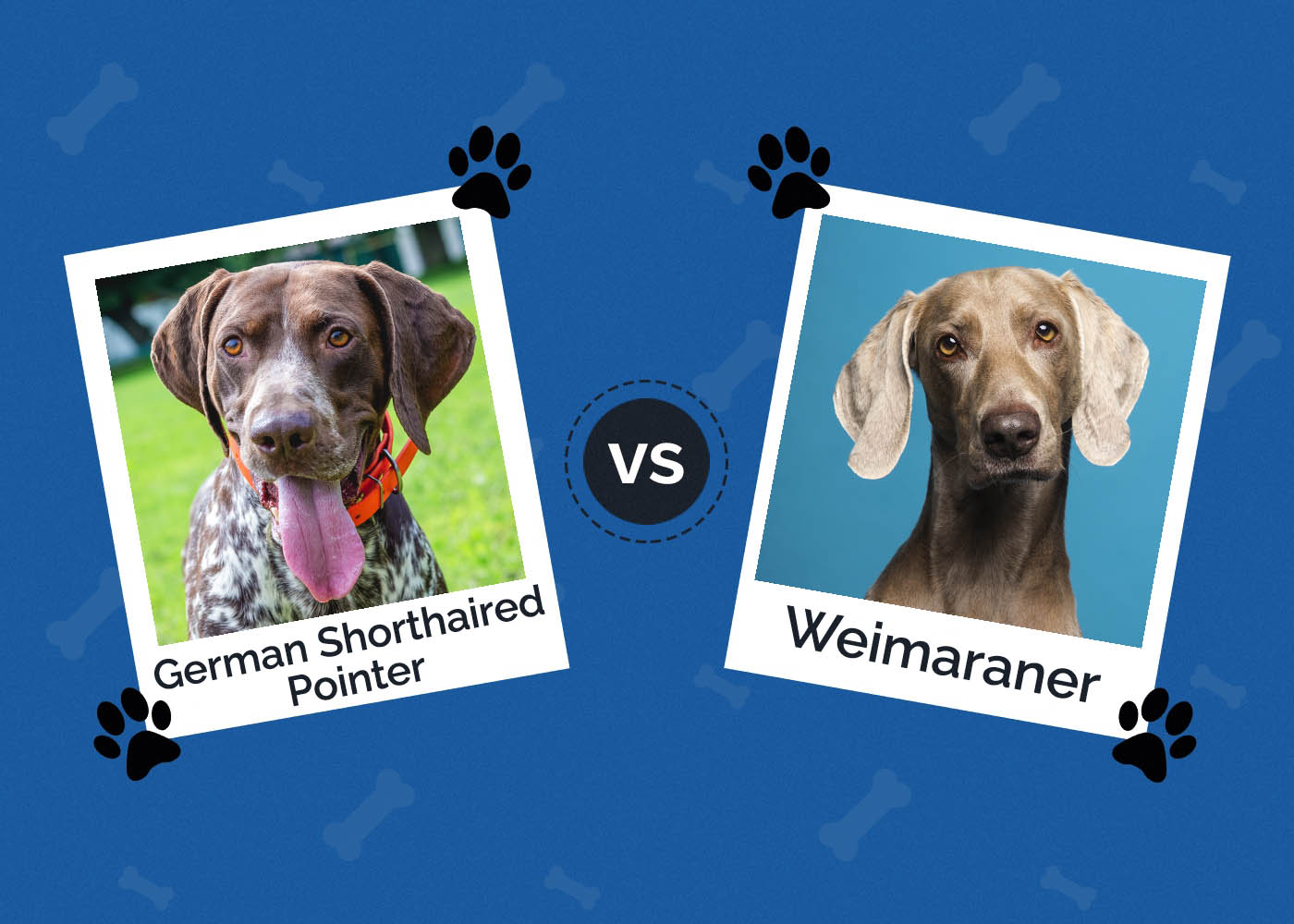
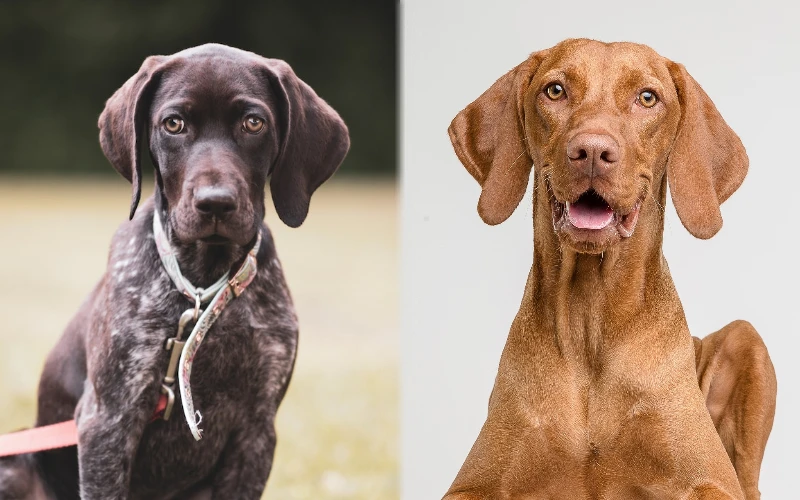
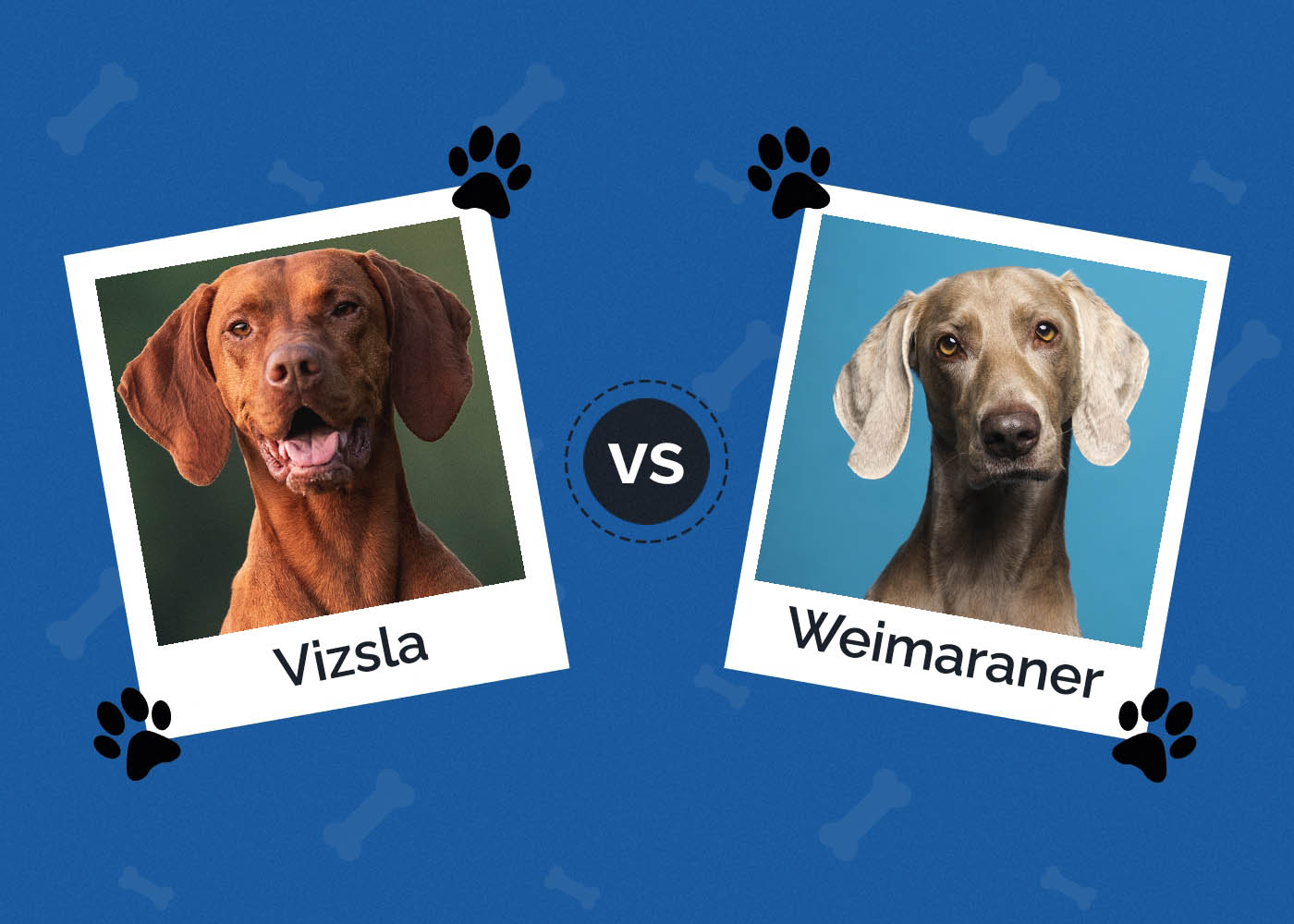
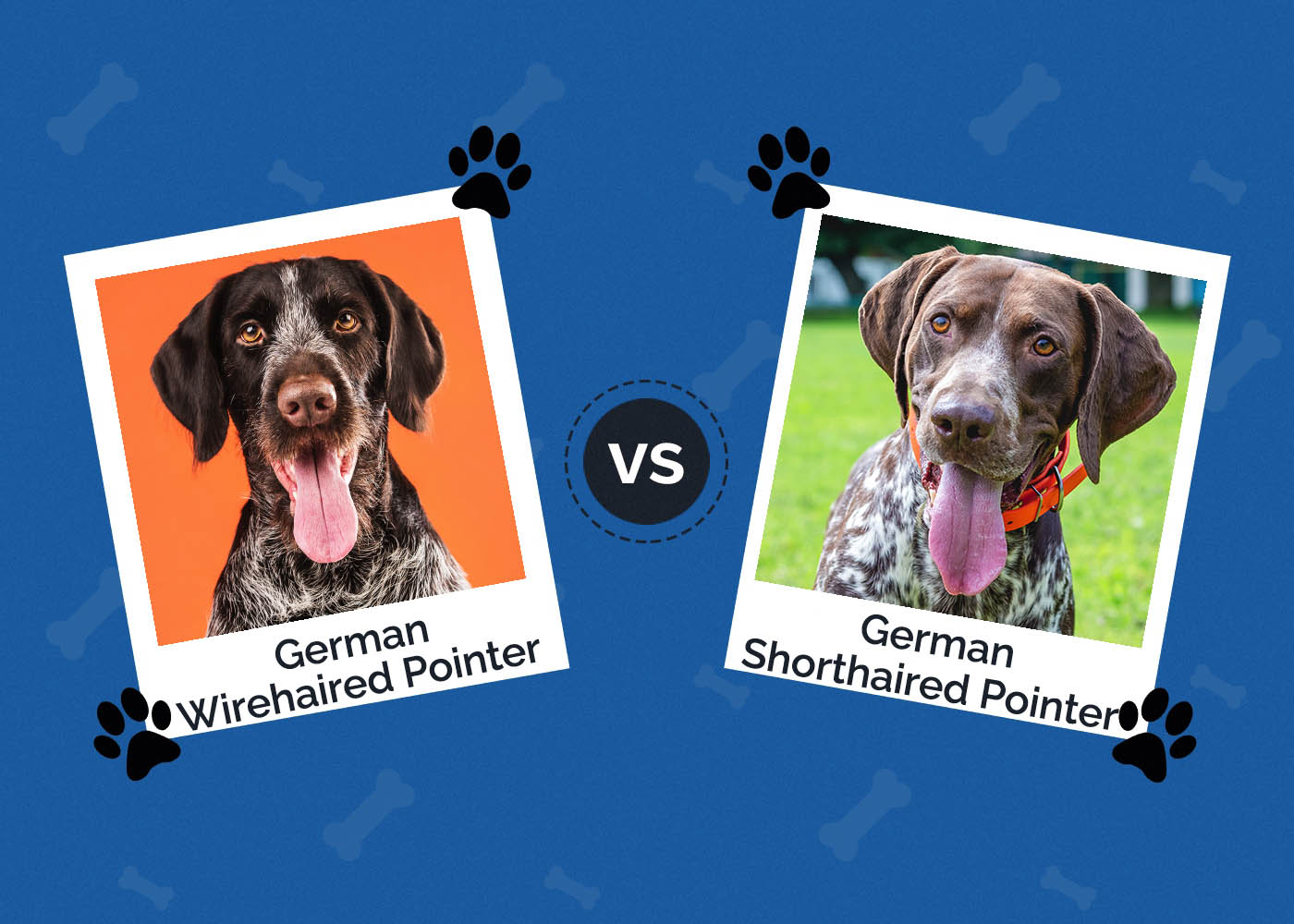
If the dog’s appearance makes a difference to you, both breeds are a similar size and have a similar body structure with floppy ears. The Vizsla is a reddish-russet color, but the GSP comes in various colors, with liver and white with patches and ticking being the most common.
The Vizsla is slightly easier to groom and sheds a bit less, but they are needier than the GSP. The GSP is the better choice if you must spend time away from home. But if you have a pet cat, the Vizsla is the better choice because they are more tolerant of smaller pets than the GSP.
Finally, the GSP is a more popular dog than the Vizsla, so they will be easier to find. Finding a Vizsla breeder might be more of a challenge, and they might be more expensive.
Just remember that if you’re more of a couch potato, neither of these breeds will be a good fit. They must receive the right kind and amount of exercise!
Overall, both breeds are absolutely fabulous, and the Vizsla or the German Shorthaired Pointer will make an excellent companion for the right family!
See Also:
Sources
https://www.petmd.com/dog/conditions/musculoskeletal/c_dg_hip_dysplasia
https://www.petmd.com/dog/conditions/endocrine/c_dg_hypothyroidism
https://www.petmd.com/dog/condition/progressive-retinal-atrophy-in-dogs
https://www.petmd.com/dog/conditions/musculoskeletal/c_dg_elbow_dysplasia
https://www.petmd.com/dog/conditions/digestive/gastric-dilatation-volvulus-gdv-syndrome
Featured Image Credit: (L) Liudmila Bohush, Shutterstock | (R) MVolodymyr, Shutterstock
Get Hepper In Your Inbox


Pet care tips from our vets and experts, straight to your inbox.
You may opt-out at any time. View our Privacy Policy for more information.

Kathryn was a librarian in a previous lifetime and is currently a writer about all things animals. When she was a child, she hoped to work in zoos or with wildlife in some way, thanks to her strong love for animals. Unfortunately, she's not strong in the sciences, so she fills her days with researching and writing about all kinds of animals and spends time playing with her adorable but terribly mischievous tabby cat, Bella. Kathryn is hoping to add to her family in the near future – maybe another cat and a dog.
Join the conversation
Ask a question, share your story, or send private feedback.