Hepper is reader-supported. When you buy via links on our site, we may earn an affiliate commission at no cost to you. Learn more.
What Are Dog Hackles? Here's What They Mean
In this article
Dogs communicate using both verbal and nonverbal means. Verbal means include barking, whining, and growling, and depending on the sound, you can quickly assume a dog’s intent.
In combination with verbal means, a dog may use non-verbal ways such as tail wagging, ear movement, and raised fur to pass information. Raised fur is referred to as hackles and can be compared to goosebumps in humans. Let's dive deeper into what dog hackles are and what pet owners can do when a dog raises its hackles.

What Are Dog Hackles?
Hackles are the fur running from the head along the neck, back, and sometimes to the tail. The name "hackle" was inspired by a short plume of colored feathers attached to military headdresses. The artificial feathers are sewn on the headdress to make it larger and more colorful.
When a dog hackles, it involuntarily raises fur on aforementioned areas through piloerection. According to Science Direct, piloerection is a rapid contraction of muscles around the hair follicle as a reflexive response from sympathetic nerves causing the relaxed hair shaft to take an upright position. The response signal, in turn, is generated by the environment or what the dog is feeling, smelling, or hearing and sent to the brain through sense organs.
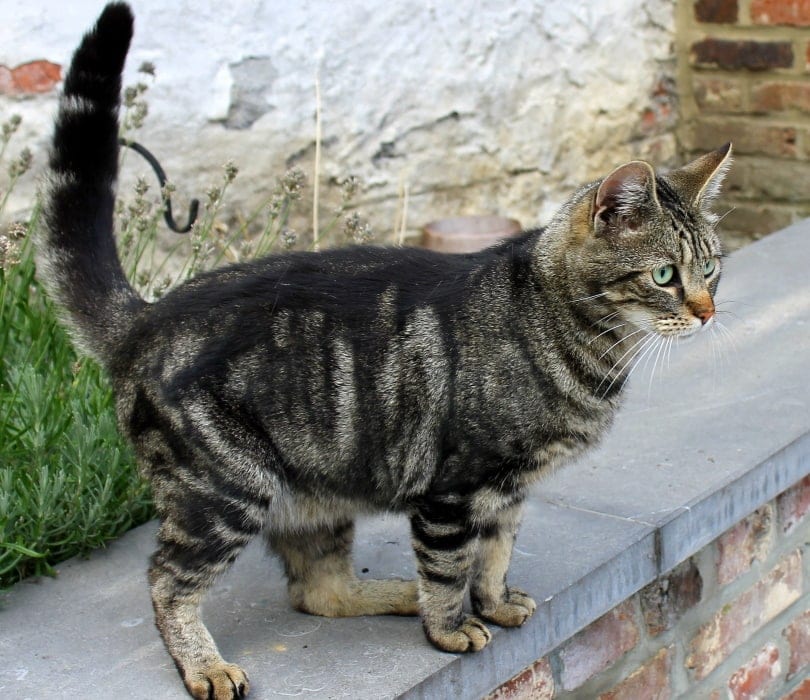
Dogs are not the only species with the ability to hackle. Cats, roosters, and porcupines all hackle to respond to stimuli. Rooster hackles are more pronounced, with bright colors concentrated around the neck and the saddle.
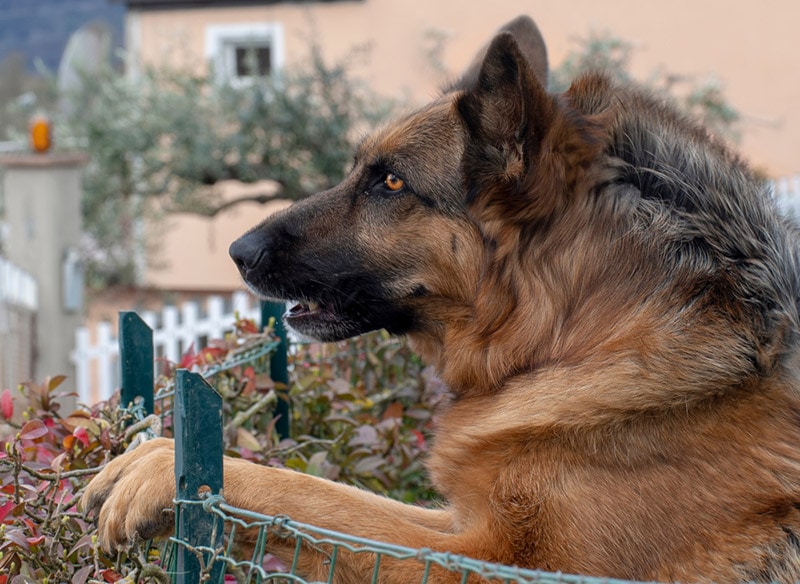
The 5 Reasons the Dogs Hackle
Traditionally, pet parents were stuck with the idea that raised hackles were a sign of nervousness and anger. While that's true, scientists and animal behavioral psychologists have expanded the list.
1. Aggression
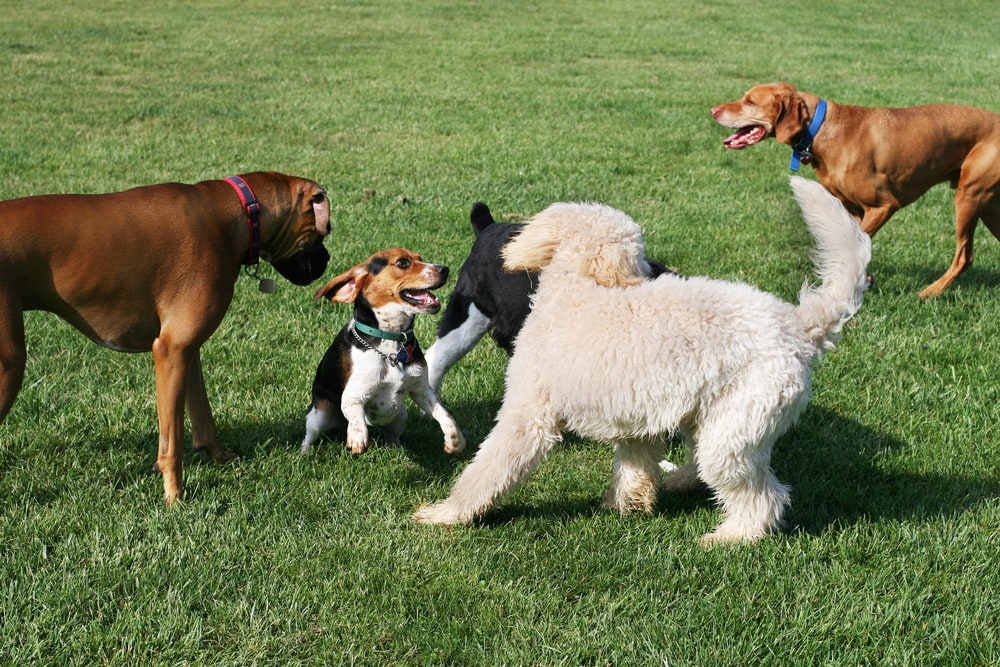
Dogs often portray aggressive behaviors by raising hackles to appear larger and more intimidating. This usually happens when they are around other pets or when playing.
Aggression is a natural behavior and is used to establish hierarchy. You should not be worried when there are no physical altercations.
2. Fear
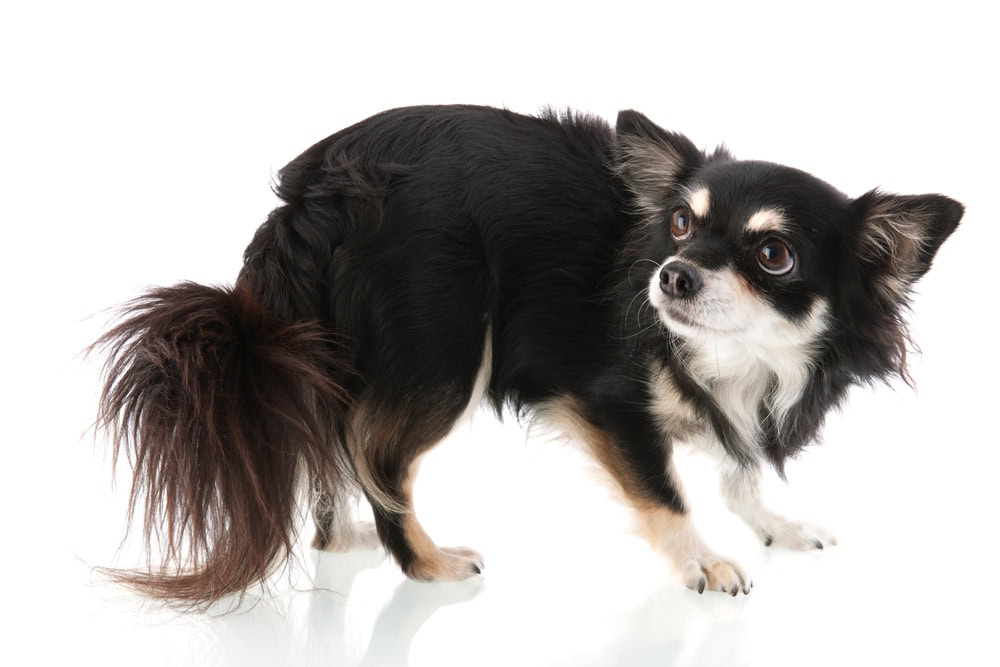
Fear is an unpleasant emotional reaction caused by uncertainty or pain. It may be due to dog-to-dog encounters, loud sounds such as thunder, or new smells.
It causes psychological changes, and the process begins with the production of adrenaline, a hormone that triggers a flight or fight response. When a dog prepares to face the situation head-on and fight, adrenaline increases blood flow to the muscles and tightens them, raising hackles.
Similarly, flight muscles tighten when a dog is in fear, and the process causes raised hackles. Additionally, hackles make a dog appear larger to discourage the threat from pursuing it.
3. Excitement
Excitement is another emotional response intricately linked to hormones. In humans, simple acts like listening to music release dopamine, a reward or feel-good hormone which, when we are emotionally connected to the song, causes goosebumps. Of course, this is due to the relationship between hormones and muscles.
Dogs are loyal creatures and will emotionally connect to their owners. When the owner is not around, the dog feels sad. But when they return home, a sudden surge in dopamine and excitement causes the raised hackles.
4. Insecurity
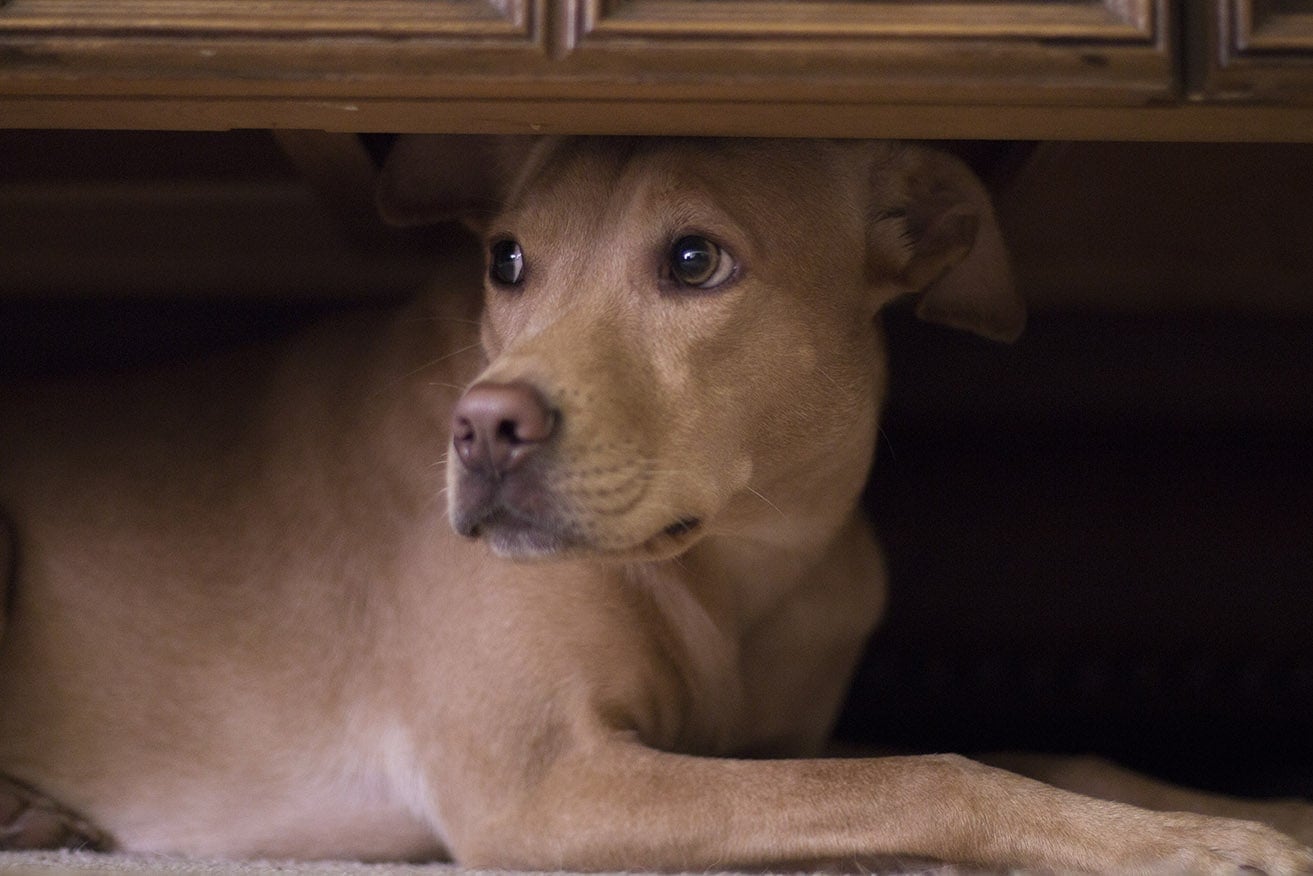
Insecurity is a feeling of uncertainty portrayed by anxiety. Most animals, including dogs, have experienced some form of insecurity and raised hackles are a physical response to it.
Insecurities may result from a new pet or a visitor in the house. Your absence also causes insecurity.
5. Illness
During a severe infection, a dog will raise hackles to respond to new body changes. As the body mounts its defense against infections, the hypothalamus senses the body is too cold and sends signals to the liver and muscles to raise the temperature.
Muscles will expand and contract rapidly to generate heat, causing raised hackles. Additionally, a dog will raise hackles to insulate the body against heat loss.

Do All Dog Breeds Have Hackles?
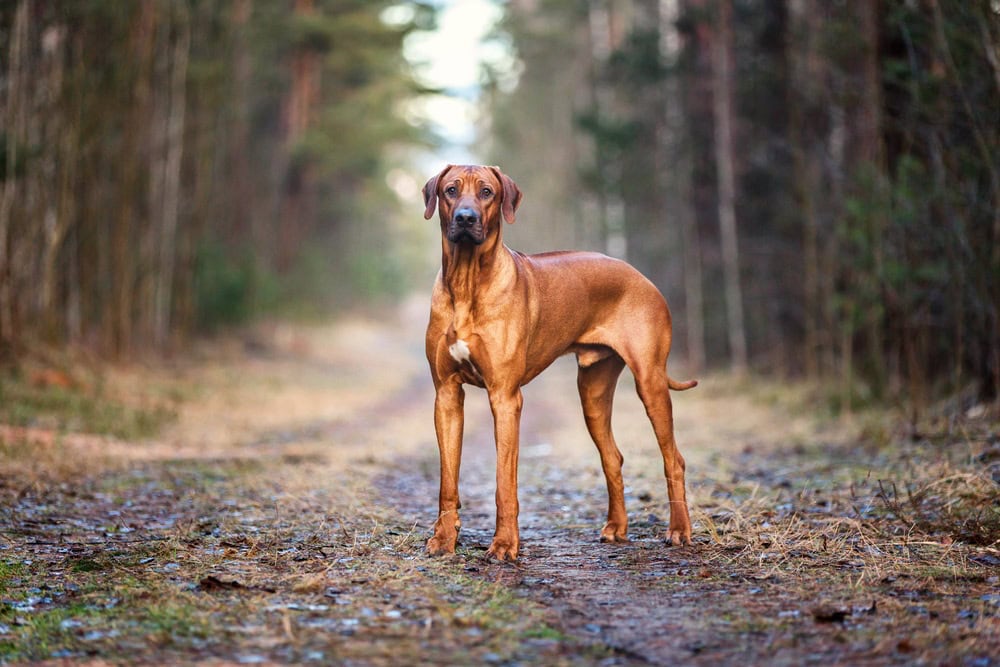
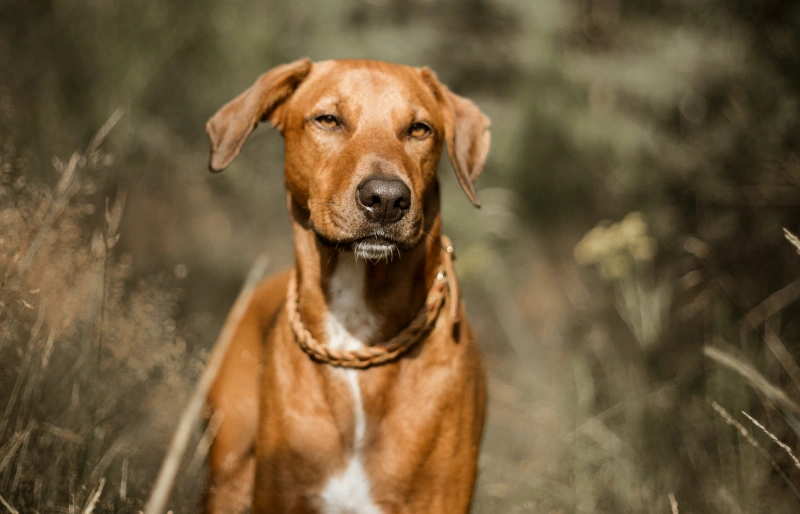
All dog breeds have hackles. However, the feature is more evident in some dog breeds than others. For example, raised hackles are rare in a Rhodesian Ridgeback, whose hallmark is a strip of backward-growing fur on its back that resembles a mohawk. In fact, when faced with a situation that calls for raised hackles, it may be difficult to spot physical changes.
Besides Ridgebacks, some dog breeds, like Labradoodles, have curly fur all over their bodies. However keen you might be, spotting raised hackles on Doodles is almost impossible. One reason is their fur is long and heavy, making it impossible for tiny muscles around the follicles to erect individual hairs. Besides that, the wavy pattern causes visual distortion.
Generally, all dog breeds have hackles. But hackles are clearly visible in short-haired dog breeds such as Great Danes and Labradors compared to dogs with curled fur or unique genes that cause backward-growing fur on their backs.
How Do You Differentiate Between Hackles and Normal Fur?
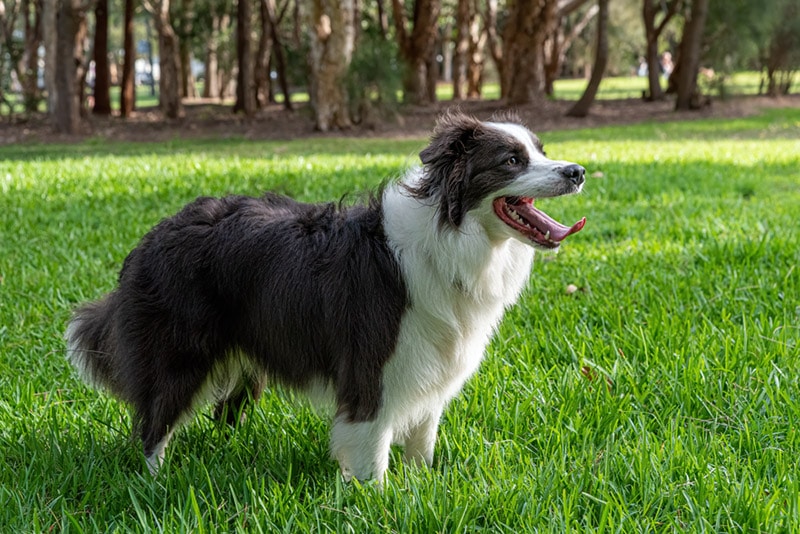
The main difference between hackles and a Ridgeback's naturally raised fur is that hackles are short-lived while fur is permanent. Hackles appear briefly, and once the dog relaxes, they will disappear. Ridgeback's raised fur is permanent despite its current mood.
What Should You Do When a Dog Raises Its Hackles?
Raised hackles are straightforward responses to a stimulus. But the course of action that follows will be critical.
1. Determine the cause
As we have highlighted, raised hackles result from multiple causes, such as sickness, anxiety, aggressiveness, and excitement. Determine the root cause before taking further action.
2. Work on the stimuli
Next is to work on the stimuli. If the stimuli is another animal that your dog recognizes as a danger, safely remove the animal or your dog. Conversely, when a dog raises hackles due to anxiety and could harm other pets, calm it down.
Regardless of the stimuli, it is important to pay attention to other nonverbal and verbal cues as well. They will give you a detailed picture of the dog's emotional status and help you narrow down the list of actions.
3. Participate in activities that will make the dog less anxious
After calming down the dog, participate in activities that will boost its confidence. Let it socialize with other dogs in the park, participate in relationship-based training and explore new environments such as hiking trails on its own.
These activities alleviate stress and anxiety.

Conclusion
Dog hackles are piloerections on the neck, back, and tail of the dog. They appear when a dog is happy, excited, scared, or aggressive due to the effects of dopamine, adrenaline, and other hormones that cause muscles to tighten. Hackles are also visible when the dog is sick.
While raised hackles are a natural response to stimuli, they are more visible in short-haired dog breeds than in dogs with long and curly fur. In Rhodesian Ridgebacks, unique genes that result in raised back fur make it difficult to spot raised hackles.
Sources
Featured Image Credit: Juergen Bauer Pictures, Shutterstock
Get Hepper In Your Inbox


Pet care tips from our vets and experts, straight to your inbox.
You may opt-out at any time. View our Privacy Policy for more information.

Nicole is a lover of animals of all sizes but is especially fascinated with the feline variety. She’s the proud mom of Baby, a Burmese, and works every day so he can relax in the sunshine or by the fire. She’s always had a cat in her home and has spent countless days with others, observing behaviors and softening up even the grouchiest of the lot. Nicole wants to share her kitty expertise with you so you and your cat can live happy, healthy, and care-free.
Join the conversation
Ask a question, share your story, or send private feedback.