Hepper is reader-supported. When you buy via links on our site, we may earn an affiliate commission at no cost to you. Learn more.
What Size Dog Crate Do I Need? Here's How to Choose
In this article
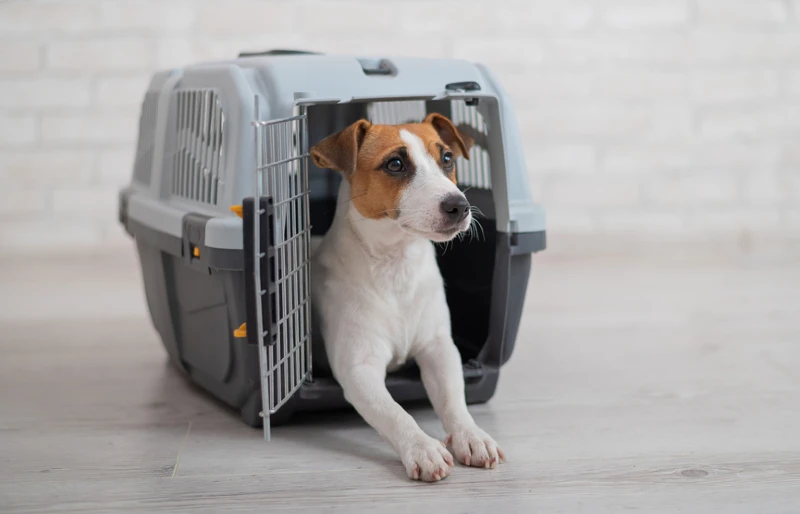
Even if you have a well-behaved dog, crate training is an essential safety component throughout your dog’s life. They can be used for housetraining puppies, managing problem behaviors (like destructive chewing), and traveling.
If you’re wondering what size dog crate you need, we have all the details.

Types of Dog Crates
A dog crate, or dog cage, is a portable enclosure that you can use to confine your dog for short periods. Though people often use “crate” and “kennel” interchangeably, the latter is a larger, semi-permanent structure that has space for eating, sleeping, playing, and toileting.
There are numerous types of dog crates on the market, including:
Crates often have a range of features as well, including single door, double door, or triple door, furniture-style, sliding doors, stackable design, divided, and more. You can even get crates with built-in mats and waterers for travel.

Dog Crate Sizes
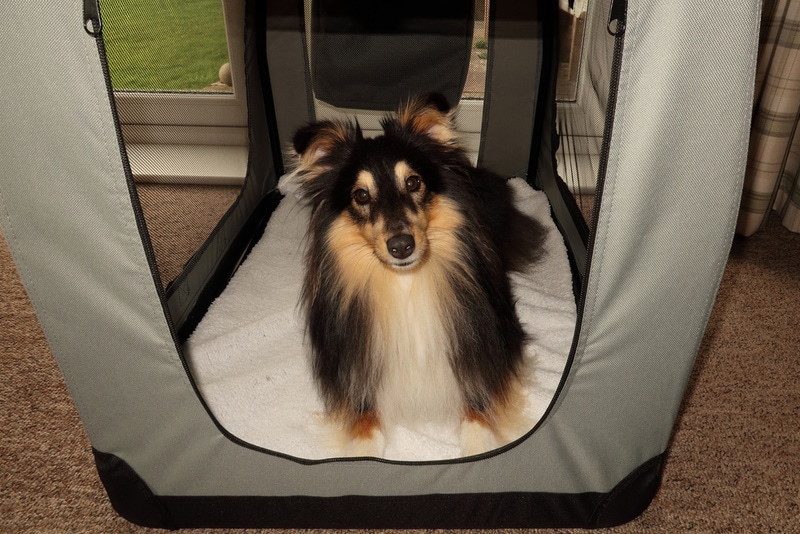
Choosing a dog crate comes down to your dog’s size and breed 1.
Extra Small: 18″ x 18″ or 18″ x 24″
Extra-small crates come in 18″ x 18″ or 18” x 24”. The smaller of the two is appropriate for dogs under 24 pounds, such as a Chihuahua. The larger of the two is appropriate for dogs under 30 pounds, such as a Cairn Terrier or Affenpinscher.
Small: 24” x 18” or 24” x 24”
Small crates come in 24” x 18” or 24” x 24”. The smaller of the two is appropriate for dogs under 30 pounds—though slightly longer than the extra-small crate allows—such as the Scottish Terrier or Skye Terrier.
The larger of the two is for dogs under 38 pounds and is appropriate for breeds like the Cocker Spaniel, Boston Terrier, or Bichon Frise.
Small/Medium: 24” x 30” or 24” x 36”
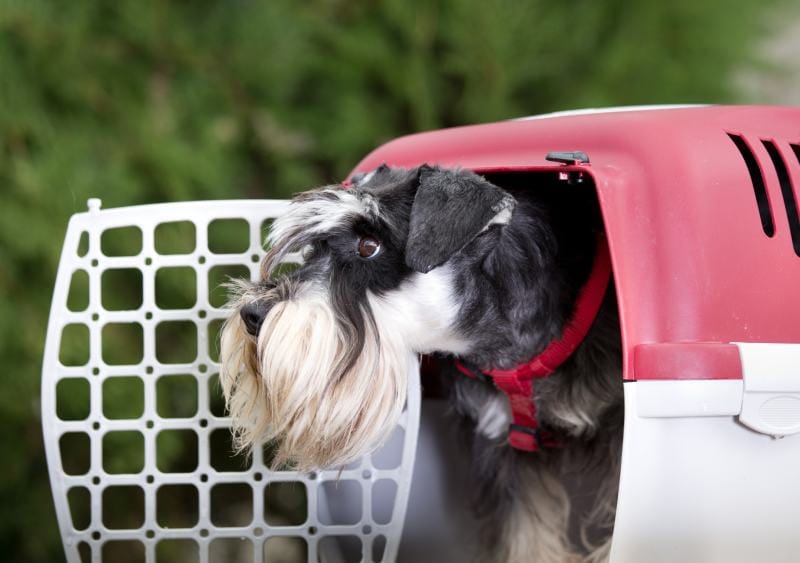
A small/medium crate comes in 24” x 30” or 24” x 36” and works for dogs under 40 pounds, though the two lengths ensure that longer breeds have enough space. The smaller version is appropriate for a standard Dachshund, Cardigan Welsh Corgi, or Italian Greyhound, while the larger version is appropriate for a Poodle or Schnauzer.
Medium: 30” x 24” or 30” x 30” or 30” x 36”
Medium crates come in three sizes for different breeds:
Medium/Large: 36” x 24” or 36” x 30” or 36” x 36”
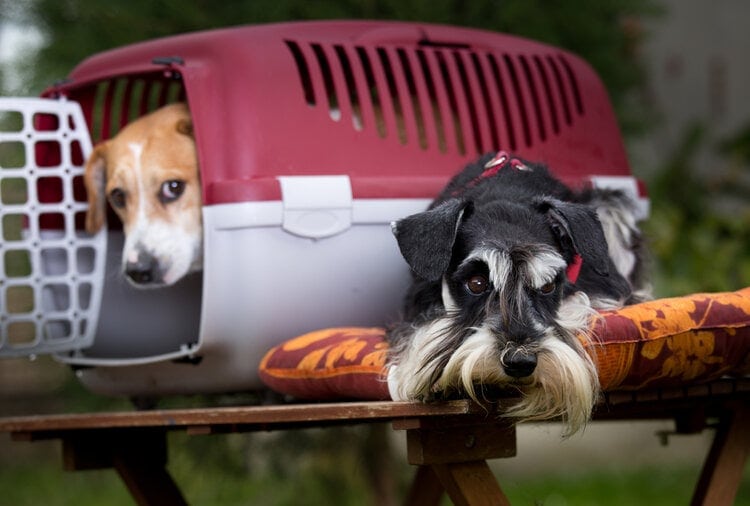
Medium/large crates come in three sizes for different breeds:
Large: 42” x 30” or 42” x 36”
Large crates are appropriate for large dog breeds that weigh between 80 and 100 pounds. This includes the Alaskan Malamute, the Malinois, and the Airedale Terrier.
Large/Extra-Large: 48” x 24” or 48” x 30”
Large/extra-large crates are appropriate for dogs that are 80–90 pounds or 80–100 pounds but need more length or height than a large crate offers. This may include the Boxer, Tervueren, Akita, Bloodhound, or German Shepherd.
Extra-Large: 48” x 36”
Extra-large crates are appropriate for dogs up to 100 pounds. This may include the Siberian Husky, Standard Poodle, Weimaraner, and Newfoundland.
Extra-Extra Large: 60” x 36” or 72” x 36”
Extra-extra-large crates are necessary for large or giant breeds. The smaller of the two is appropriate for dogs that weigh 100-150 pounds, such as the Anatolian Shepherd, Bernese Mountain Dog, or Bullmastiff.
The larger of the two is appropriate for dogs that weigh 150–180 pounds, such as the Scottish Deerhound, Leonberger, or Irish Wolfhound.
How to Measure Your Dog for a Crate
The breeds listed for each size are examples of dogs that typically fit in these crates, but that may not suit your dog. It’s best to measure your dog to ensure that you’re getting the right size to keep your dog comfortable.
Here’s how:
Measure Your Dog’s Length
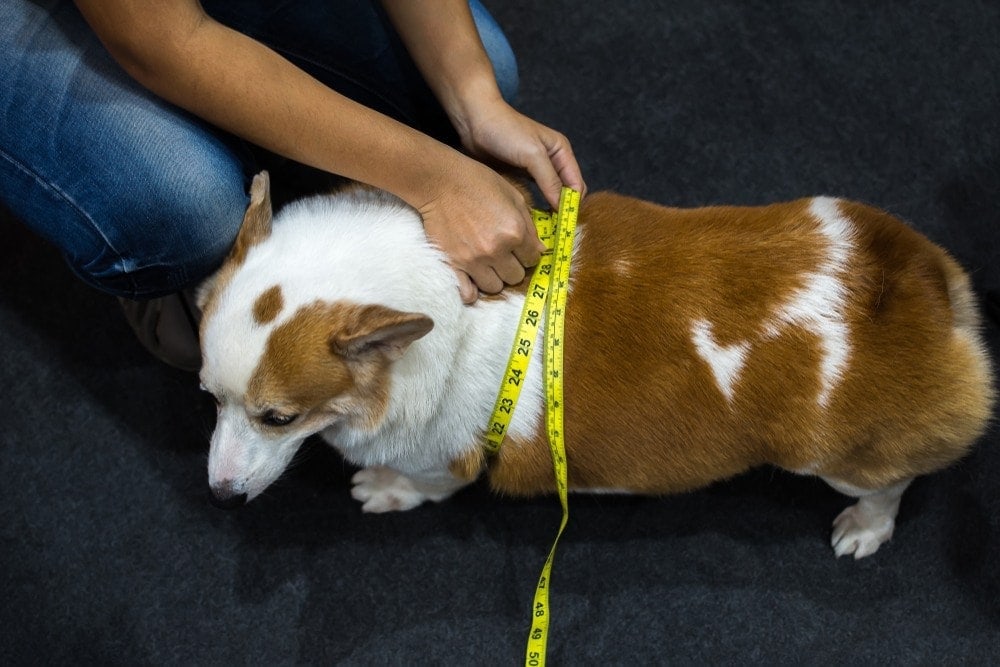
With a measuring tape, measure your dog from the tip of its nose to the end of its tail. Add four inches to the measurement to give your dog enough length for comfort.
Measure Your Dog’s Height
Measure your dog in a sitting position from the floor to the top of their head, or for breeds with erect ears, the tip of their ears. Add four inches to this measurement. This will ensure that your dog can sit comfortably without bumping the top of the crate.
Choose Crate Size
Use the length and width measurements to determine your dog crate. If your dog is in between crate sizes, choose the bigger size. Smaller dogs can slip through the grates if you try to get them too big of a crate.

How Big Should a Dog Crate Be?
Your dog crate should be big enough to allow movement, but you don’t need a lot of extra space. If you want your dog to have a little extra room to move around, you can go one size bigger.
Remember, the crate is not a playpen or kennel. Your dog doesn’t need a small apartment as a crate, as it will only be used for short-term confinement.
If you have a puppy, you want a crate that’s only about four inches larger than the puppy. Otherwise, your puppy will be able to make a mess and sleep on the other end, which defeats the purpose of creating for house training.
If there will be a dramatic difference between the size of your dog as a puppy and as an adult, either use a divider to limit the puppy’s space or plan to purchase a puppy crate and an adult crate.

Why Is Crate Training Important?
According to the Association of Professional Dog Trainers, crates are a good short-term training tool that you can use throughout the dog’s life.
For puppies, crates can be used to house train and keep your puppy safe while you’re not actively supervising. Otherwise, puppies can get into trouble with destructive chewing or counter-surfing.
Crates are also helpful if you’re traveling and need to restrain your dog in the car or on a plane. You then have the crate with you for short-term confinement in hotels or vacation rentals (which is often required).
If your dog is injured and needs to be confined, having crate training in advance can help to minimize stress while your dog recovers. It’s also important for your dog to become accustomed to the crate in case you need to board it or leave it overnight at the vet clinic.
When introduced correctly, a crate becomes a safe and secure place, like a “den” that your dog can use as it pleases. You may find that your dog goes in the crate on its own.
Tips for Crate Training
Crate training is a valuable training tool, but it can be stressful.
Here are some tips for success:
The crate should be used as a short-term confinement tool, not a place for your dog to live for 8- or 10-hour days.
Conclusion
Whether you have a new puppy or an older rescue dog, crate training should be part of your training program. It’s not only useful for keeping your dog safe when you can’t supervise, but it can become a source of comfort and safety in your home. Make sure you get the right size crate for your dog to make the experience a positive one.
Sources
Featured Image Credit: Reshetnikov_art, Shutterstock
Get Hepper In Your Inbox


Pet care tips from our vets and experts, straight to your inbox.
You may opt-out at any time. View our Privacy Policy for more information.

Nicole is a lover of animals of all sizes but is especially fascinated with the feline variety. She’s the proud mom of Baby, a Burmese, and works every day so he can relax in the sunshine or by the fire. She’s always had a cat in her home and has spent countless days with others, observing behaviors and softening up even the grouchiest of the lot. Nicole wants to share her kitty expertise with you so you and your cat can live happy, healthy, and care-free.
Join the conversation
Ask a question, share your story, or send private feedback.